
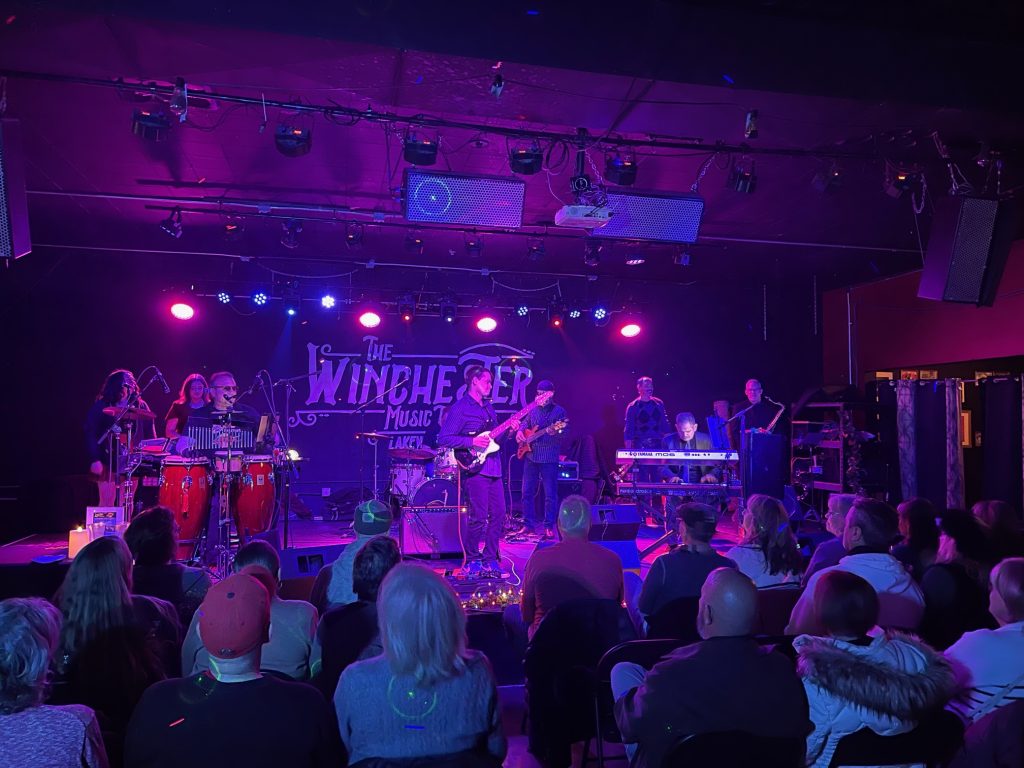
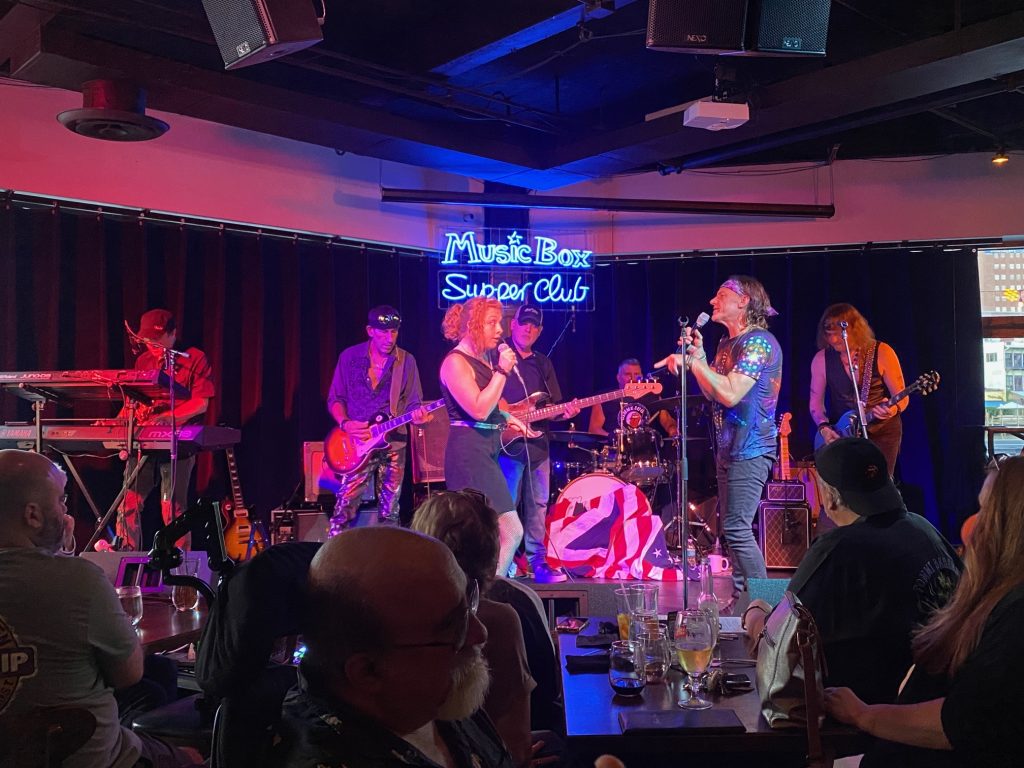
On a Friday night last summer in Northeast Ohio, the past was present—onstage, mic-checked, and sold out. In the packed Music Box Supper Club in the Cleveland Flats, a band called Mister Breeze struck up the opening chords of “Free Bird” to end a raucous show, and for the moment it didn’t matter that Lynyrd Skynyrd couldn’t possibly be in the building. The distinctly silver-tinted crowd sang loud, certain and grateful, slow dancing and settling their checks with the wait staff. They were home by 11.
Across the region, from lakefront bars to old-school theaters, tribute bands are turning nostalgia into one of the most reliable tickets in live music. Live music original to Queen, Nirvana, Led Zeppelin, the Eagles, ABBA, Fleetwood Mac and scores of other acts is filling clubs and outdoor stages in a fractured digital age where the surest way to bring people together is to give them something they know by heart.
“Without tribute bands, the ecosystem—the venues and clubs that play live music as we know it—would be gone,” said Andy Singer, CEO & founder of the National Tribute Band Association, based in Orange, Calif. “There’s no way a venue can sustain without tribute bands anymore.”
Advertisement

Once considered novelty acts on local calendars, tribute bands are indeed now a central part of the region’s live music economy. Industry data and local booking trends suggest demand is not only stronger than it was a few years ago, but part of a longer-term shift reshaping how venues, musicians and audiences approach live entertainment.
“The cities have the big venues, but it’s really spreading out,” said Tim Eastgate, front man of a Tom Petty tribute band called King’s Highway. “Some of the smaller cities and burgs, whoever has venues that can handle the tribute acts, are inviting them in. There’s an awful lot of people who show up everywhere” for tributes to their favorite bands, he said, citing tiny Urbana, Ohio, as an example. “Tribute is big. I know some tribute groups that are making over 20 grand a show. And it’s growing into music that is, let’s say, less old than me.”
Eastgate meant groups from the 1990s and onward, like Nirvana, Metallica, even Lady Gaga. He’s 71, an age fairly typical for local tribute band leaders who have witnessed the exponential growth of tribute acts since they started their bands 10 or 15 years ago after years of playing in less glamorous settings.
“I got tired of playing in bars,” said Ron White, also 71, whose band, Out of Eden Ohio, is an Eagles act. “I didn’t even know there were tribute bands 15 years ago. But I told my bass player I’ve had enough of making $35 a night playing in bars until 2 in the morning. I wanted more out of music.”
Greatest hits
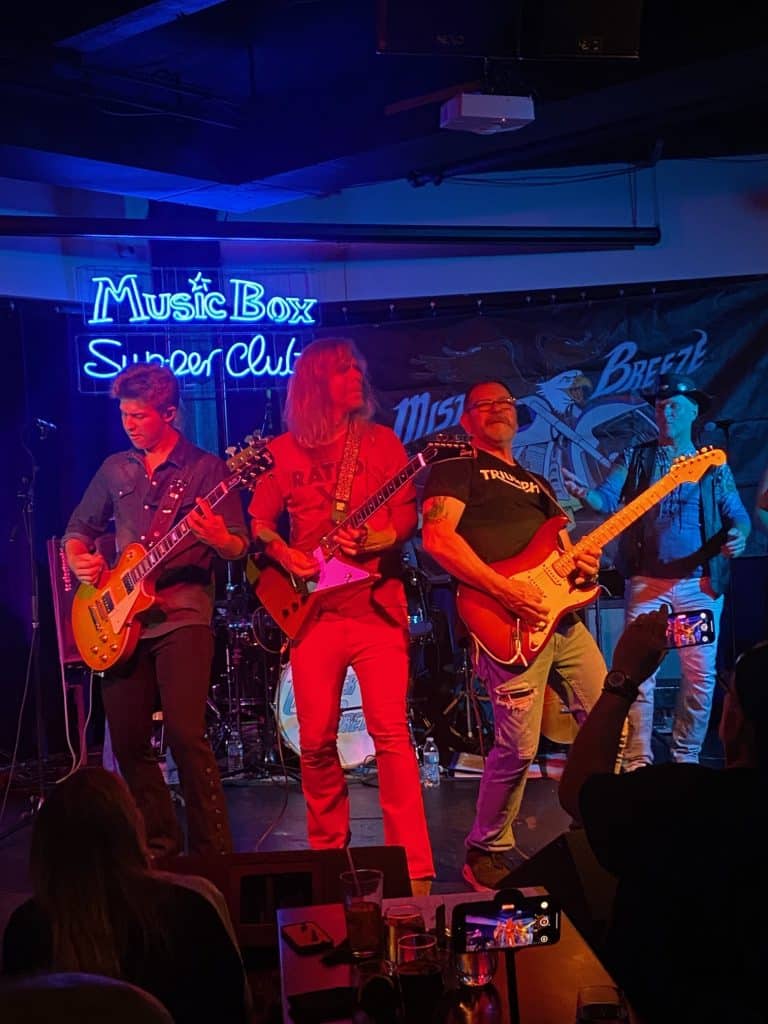
The performers may not be the original beloved artists, but the music is geared toward note-for-note covers of classic, well-known songs. With Mister Breeze, for example, “Free Bird” was completed with the act’s guitarists accelerating into one of rock’s most recognizable climaxes—a sustained, multi-ax onslaught that builds into a fast, spiraling run of notes. The prolonged, electrified crescendo from that August night was practically indistinguishable from the hit record heard countless times on FM radio since it was released 52 years ago.
“I think you need to be as close as possible,” said Eastgate. “I think note-for-note is the greatest way to tribute somebody’s hit.”
“As a fan of Heart’s music, I feel it’s very important,” agreed Monique Bennett, who fronts a local Heart tribute called Straight On. “I like to imagine original members are out in the crowd watching us … and be like, ‘Wow, they’re doing a really good job with this song.’”
“I can’t even believe sometimes what I’m hearing,” said Matt Miller, chairman and chief executive of the Music Box, which became employee-owned in 2025. “They’re really working on their craft, their music skills, to replicate what people want to hear.”
Miller observed that tribute bands, while a much bigger part of his lineup these days, are simply a natural progression from some of the best-selling albums of all time: greatest hits compilations. “This kind of dynamic has been around the industry almost forever,” he said.
Still, over the last 10 years, the number of tribute bands have “grown enormously,” he said, and that has coincided with what he calls “a challenging decade” for discretionary spending and spiking ticket prices for big name original acts. Ticket buyers are voting for tribute bands with their own pocketbooks.
So it follows that “venues chase ticket buyers,” Miller said. “For us, it was an easy transition into presenting a lot of this music because we are able to sell more tickets to these types of shows. Our job is to find the very best of the tribute bands. The very best Fleetwood Mac band, the very best Rolling Stones band.” For the former, that might mean Rumours. For the latter, perhaps Gimme Sugar.
Saturation
There are plenty of quality local tributes, Miller noted, to the point these days that some have “gotten to the level where they can actually tour behind it now.”
Singer said that nationally, the tribute market is “saturated,” a word repeated by many of those interviewed locally for this story. There are perhaps 15,000 or more tribute bands in the United States and Canada alone. Nationally, tribute acts are drawing an estimated 1.7 million ticket buyers annually, according to online estimates.
“Beyond the ability to look the part, dress and play the part with talent, a great tribute band needs to engage the fans before, during, and after the shows,” said John Stebal, drummer for The FM Project, a Steely Dan tribute. “Many bands can play cover songs, but a good tribute band tends to embody a band’s ethos.”
Some bands take the act as far as it can go, with costume changes and different band members portraying individual members of the original superstar act. That’s the case for Hard Day’s Night, a local Beatles tribute act dating back to 1997 that performs sets that honor the early years of the Fab Four, with mop top wigs, Cuban boots and matching suits, as well as later years with Sgt. Pepper outfits. They even perform the late, non-touring “studio years.” The equipment is brand-true to the Beatles, too.
“Over the years, we’ve invested a fair amount of money in getting the correct guitars,” said Frank Muratore, an original member of the band who plays and sings the role of Paul McCartney, to the degree that he taught himself to play left-handed with an authentic Hofner bass. Muratore’s son, Michael, has played the part of John Lennon since 2005. His George Harrison, John Auker, has been with them since 2012. That kind of consistency “is hard to do” in the tribute world, he said, where the vagaries of family obligations and day jobs often interfere with the love of playing music live to appreciative fans.
Muratore said he appreciates non-Beatles tributes that concentrate mainly on the music, but that certain acts absolutely need an identifiable leader. A Stones band needs a swaggering Mick Jagger. A Fleetwood Mac tribute needs its Stevie Nicks in black, flowing layers. There’s not much of a U2 act without a good Bono impersonator. “When you have a lead singer that’s dynamic like that, it’s harder to do,” he said.
Tommy Lee Thompson, a musician who has been playing in bands since the late ’70s, performs as both Elton John and Billy Joel since 2017 as Bennie and The Big Shot, though some shows are exclusively one or the other. “I was really amazed at how big it got, very quickly,” Thompson recalled about being asked to play in a Journey tribute band some 15 years ago. “I thought it was just going to be another bar band that played their music. But people would be waiting all day long as if it was really Journey.”
Elton and Billy are still with us, but not touring these days. “People can’t see the real thing, so they come for the next best thing,” said Thompson, who performs from Key West to Canada in addition to plenty of Northeast Ohio shows. He too cites “attention to detail” as the key to a solid tribute act. Over the years, “I really learned what people responded to. When I started the beginning notes of ‘Tiny Dancer,’ everyone stopped what they were doing and they looked, and they’d come up and surround the piano and sing along.”
The joints
For tribute bands, the region’s “sweet spot” is venues with capacities between about 200 and 1,200—large enough to generate meaningful revenue but small enough to fill consistently. That tier includes rooms at House of Blues, the Agora, the Beachland Ballroom, the Winchester in Lakewood, and suburban theaters and community performance spaces throughout Lake, Geauga, Summit and Lorain counties, like the Mentor or Columbiana amphitheaters. Other seasonal outdoor series and festivals in parks and town squares add dozens of additional summer opportunities.
“The tribute band scene today is much more viable than it was 10 to 15 years ago,” said Stebal, who also owns a long-standing drum store in Willowick. “Tribute bands are finding popularity because they can really tap into the emotional authenticity of that era. And for music lovers of all kinds, this becomes a doorway to discovering more about Northeast Ohio’s local musicians at the same time.”
Jeff West, drummer for Super Troupers, a popular local ABBA tribute band that regularly sells out the Music Box, concurred. “It’s not really us,” he said. “We’re all veterans and have been around, but really the music sells itself. It’s the musicianship.”
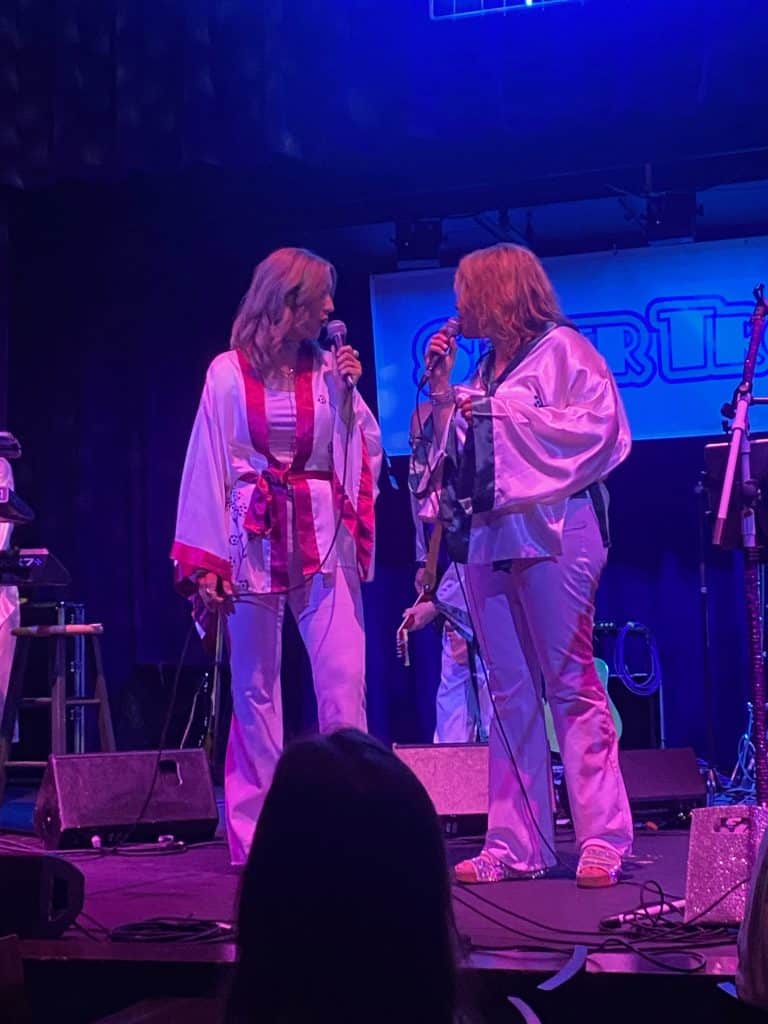
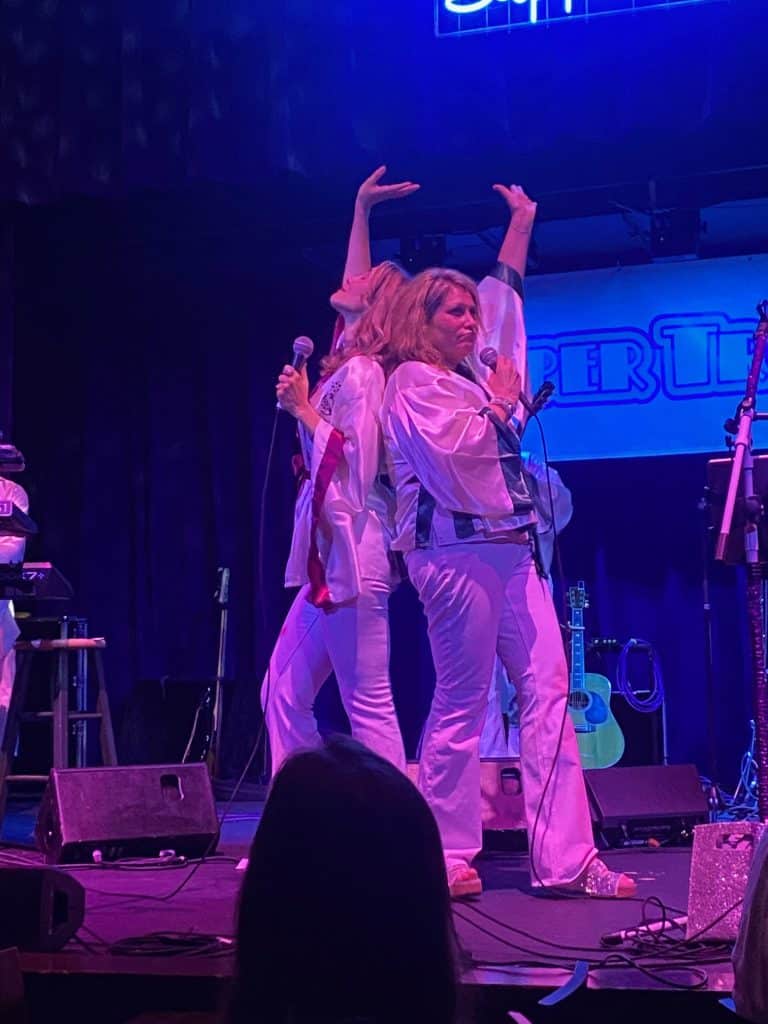
“For us, that’s what it’s all about,” said Bennett. “We’re about the quality of the music.”
Like sex, nostalgia has always sold well as entertainment. But in 2026, legacy artists from the classic-rock era tour less frequently, have retired, or have died. Tribute acts allow fans to again experience that music live—often performed with high production values and those faithful renditions of beloved tunes.
At the same time, ticket prices for major touring acts have climbed sharply. Tribute shows typically cost from $20 to maybe $75 a ticket, making them an accessible night out for families and older fans on fixed budgets. (Last summer, tickets to see Neil Young—still in great form at 80—at the Blossom Music Center in Cuyahoga Falls cost $340 for one local couple nearing retirement age, who said it was a great show. The same couple in October saw a nationally touring Neil Young tribute band called Broken Arrow at the Music Box for $46. They said it was a great show.)
Streaming has also broadened the audience. Younger listeners are discovering classic catalogs through playlists, social media and family influence, while Millennials and Gen Z are fueling demand for tributes to 1990s and early-2000s artists, like the Dave Matthews Band. The result is a cross-generational crowd that plays well in a region known for its strong music heritage.
A review of a portion of the National Tribute Band Association database of bands reveals this trend for more contemporary acts. Levitating is a Dua Lipa act out of Los Angeles. There are Foo Fighters bands in Texas (Fool Fighters) and Oregon (Big Foo). The seven-member Haus of Monsters from New York City calls itself the “ultimate Lady Gaga tribute experience.” A ticket to a Taylor Swift show too dear? An act called Reputation out of Dallas will save you some money, but we’re not sure what the hardcore Swifties might think about it.
There are also what are called “honor genres,” acts that highlight the best of Broadway musicals, or the 1950s, the Woodstock festival, “The Last Waltz” movie featuring The Band, or the ’80s—though these might not fall under the strict definition of a tribute band. There are plenty of country acts, too, which track alongside their rock counterparts in one major factor: If a performer or group has enough hits for at least a 90-minute show, there is probably an audience out there for a tribute show.
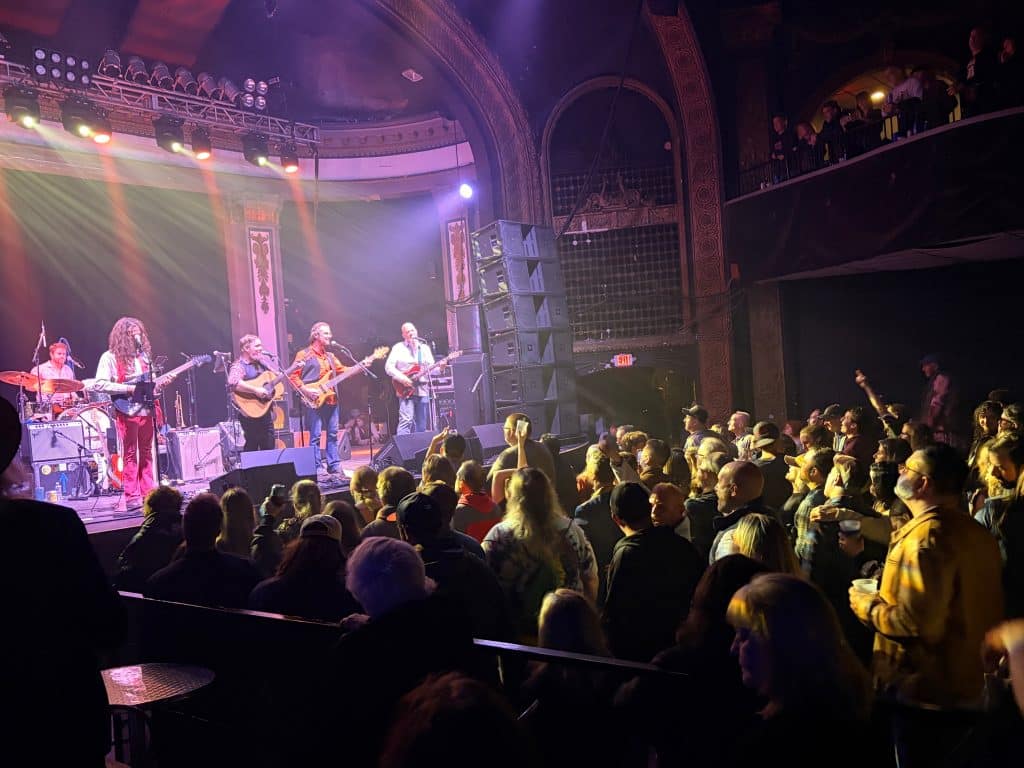
“Follow us”
There is also a strong correlation with the rise of social media over the past 20 years. These days, people choose their entertainment lanes carefully, and with ease. And social media stratification doesn’t just fragment attention—it reorganizes it into durable, identity-driven niches that serve as a sort of fast lane for tribute bands.
“Through channels like Facebook, Instagram, and TikTok, tribute bands can share performance videos, interact with fans, and announce upcoming shows, significantly increasing their reach,” says AmericanRockScene.com, which reports on music trends. Tribute bands are thus perfectly adapted to those channels, serving stable micro-communities that social media both creates and sustains through targeted advertising for the entertainment dollar.
Miller said he rarely saw major venues of 1,000 seats or more feature tribute acts until the last four or five years. Now, it’s becoming the norm. (The Music Box seats 250 in its downstairs section; its upstairs stage has a capacity for 350. In 2025, the venue staged 300 shows and sold about 65,000 tickets.)
Some of the increased demand was born out of the COVID lockdowns of 2020 and 2021, those interviewed for this story said. In that intervening half decade, there has been a growing popularity for live entertainment in general—people are dying to get out, and venues are obliging with sold-out shows.
A market built for tributes
In Northeast Ohio, where Cleveland’s deep rock history meets a dense network of mid-sized venues, the model fits especially well. The Cleveland area has roughly 40 active live-music venues, one of the highest concentrations in the state. Regional leaders have also made live entertainment a priority through initiatives such as the Cuyahoga LIVE! task force, aimed at expanding audiences and supporting performers.
For venue operators, tribute acts offer predictability and reduced risk. For the bands, local club shows typically pay between $300 and $1,200 per performance, with stronger regional acts earning $500 to $2,500 once they demonstrate consistent ticket sales. Summer outdoor concerts and municipal series often fall into the $1,000 to $4,000 range.
Festival appearances and larger theater dates can command even more, while established regional headliners with strong followings can rake in significant fees for corporate events and other premium bookings. Many groups expand their revenue through merchandise, VIP packages and repeat bookings at seasonal series.
Structural factors suggest the trend is likely to continue: aging legacy artists, rising concert costs, and a live-music economy that rewards recognizable content. In Northeast Ohio, those forces align with a long-standing culture of live performance and a network of venues sized perfectly for the format.
For audiences, the appeal remains simple. The songs are familiar, the tickets affordable. Shows are like seeing old friends. And they’re home by 11.