
The Witcher 3: Wild Hunt has gone down as one of the most influential open-world games of all time, universally lauded for its writing and quest design. And while The Witcher 3 established CD Projekt Red as a powerhouse, the long and winding road of Cyberpunk 2077’s development isn’t quite the same story.
But years after its disastrous launch, perhaps the most remarkable thing I’ve found about Cyberpunk’s transformation is that it’s arguably a better “role-playing” game than The Witcher 3, in terms of the quintessential idea that the genre stands for. And that largely comes down to two key factors: strong world design and a truly inspired take on the malleable choice-driven protagonist.
Minor spoilers for Cyberpunk 2077 ahead.
Gonkbrain

The most important divergence between Cyberpunk and The Witcher 3 comes down to how the player themselves is integrated into the world, and how you experience and interpret your role in said world; along with V’s design as a character, and how Cyberpunk wants you to embrace its dynamic role-playing systems.
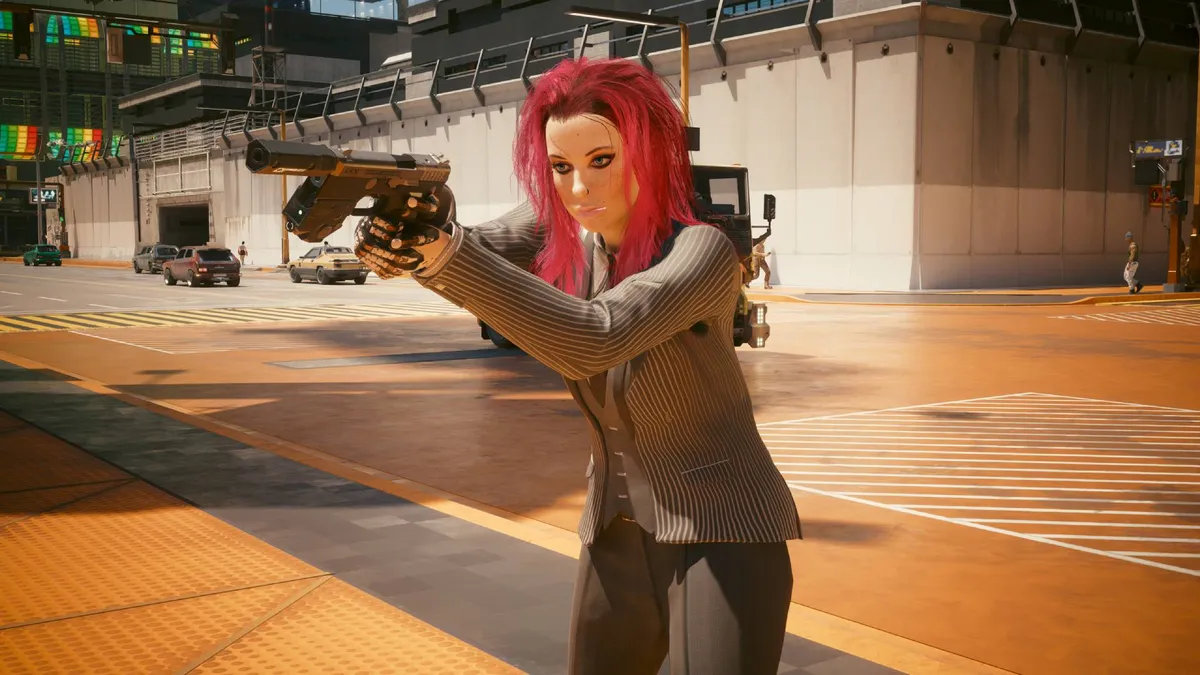
This is first realized with the three different background options (Lifepaths); Nomad, Street Kid, and Corpo. These aren’t simple background choices like in a tabletop campaign, but rather key inflection points that change how V interacts with the world, what dialogue choices you get, and your understanding of their role.
For example, Nomad makes your V a serious outcast, starry-eyed at the overwhelming metroscape of Night City. Meanwhile, Corpo makes V far more cynical, someone who’s seen the darkest depths of the city and lived to tell the tale, with the scars to show for it.
Each Lifepath integrally, and brilliantly, shifts your understanding of V’s role in the world. The extra wrinkle that makes V even more fascinating is the ghost trapped in their head, the spirit of Johnny Silverhand – constantly judging your actions from a specific moral, anarchist standpoint.
From there the game starts to layer in your details and choices. But perhaps the most crucial difference between Cyberpunk and The Witcher is how the game integrates you into the world.
In first-person, you’re seeing the world of Cyberpunk through V’s eyes, with the entire direction of the game built to strengthen that viewpoint. Early story beats, like the death of your partner Jackie, feel so much more visceral because you’re seeing him bleed out in your arms. It gives everything a sense of immediacy. If a negotiation in the middle of conversation goes wrong, there’s no fade to black or cutscene transitions, the dialogue simply ends as characters immediately start gunning you down.
The first-person viewpoint is brilliantly used to reinforce the brutality of Cyberpunk’s world, but also plays into V as a character. There’s even some fun subtlety in how you never see V’s face except for in reflections and two key moments at the beginning and ending of the game – illustrating how much “your” V has changed. Cyberpunk’s writing and storytelling simply wouldn’t work the same in third-person, it’s integral to the game’s vision.
Sword at the gunfight
These little moments add up to make V who they are – crucial little decisions that call morality and introspection into question
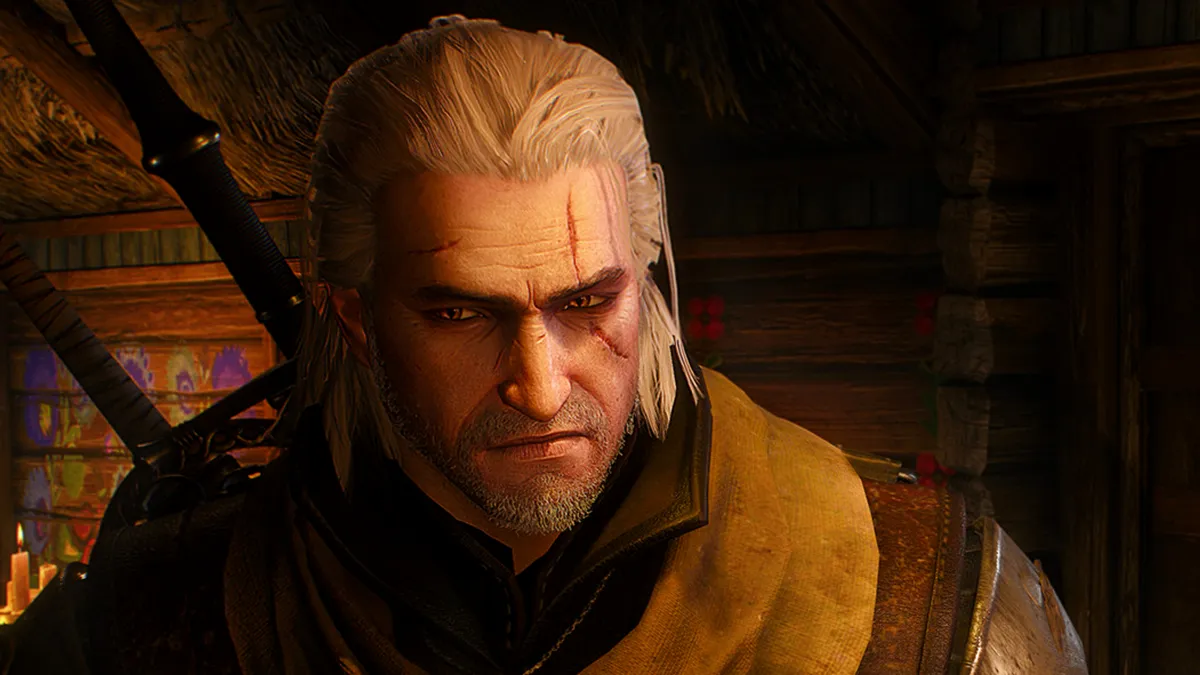
Both Geralt and V adhere to the style of protagonist popularized by Mass Effect’s Commander Shepard, pre-designed characters that have their own pasts and personality, but give you some degree of freedom in their morality and how they interact with the world.
But what’s remarkable about V is how well they build on the idea of Geralt – a character that has a defined history with the setting of Night City, but allows for incredible levels of freedom in how you build that story.
While Geralt can make world-altering decisions across The Witcher 3, it’s all within a certain framework that can’t betray his morality. The same isn’t true for V. Cyberpunk’s lifepaths give you tangible backstories that percolate over time, affecting the world, your intrinsic idea of who V is, and even more interestingly, who Johnny Silverhand thinks V is.
Take the game’s very best quest, Sinnerman. One of Cyberpunk’s most harrowing side stories, and a prime example of how the game’s side content not only enhances the game’s themes, but V as a character. In Sinnerman you’re tasked with helping a death row inmate named Joshua Stephenson, who’s found god and wants to make a braindance that recreates the crucifixion of Jesus Christ – so that others can experience it.

The questline explores heady ideals like penitence and faith, telling a harrowing self-contained story while also making V, and the player, question their own thoughts on faith and religion. But perhaps the most affecting moment comes in the final quest, when V can decide if they’ll help nail Stephenson to the cross themselves.
It’s a moment that’s treated with extreme reverence, highly affecting whether you choose to do it or turn it down – and crucially that decision heavily influences who V is as a person. As someone with only a few days to live, V naturally questions faith and ideas of what comes next, and this moment is an encapsulation of the headcanon created for your own version of the character. But Johnny himself also has heavy thoughts on your actions, providing an extra layer of critique that forces you to confront how other people might interpret your actions.
It’s these little moments that add up to make V who they are – crucial little decisions that call morality and introspection into question, rather than just changing the state of the world. In The Witcher 3, those moments are delivered with a more authorial direction, telling you what Geralt or other characters believe. But in Cyberpunk, you’re the author.

The icing on top is how the levelling and skill systems, especially the updated Phantom Liberty version, help reinforce that role-playing as V. A gruff no messing around V might invest in heavy weapons and strength, letting you obliterate enemies quickly when negotiations fall through.
A more tactful V might invest in their Cyberdeck and hacking abilities, relying on subterfuge to set enemies up for failure before they even know it. Cyberpunk, crucially, gives you vastly different gameplay options, all with the intention of reinforcing each player’s unique narrative interpretation.
It’s that variance that makes Cyberpunk feel like such a massive step forward for CD Projekt Red, even after the impressive job the studio did with The Witcher. It’s a game that truly, completely embraces the very idea of role playing, even if it took all too long to get there.
Check out these thrilling games like Cyberpunk 2077 if you’re itching for more futuristic RPG mayhem.