
There’s a new science fiction film in theaters that is largely based on science fact.”Project Hail Mary,” from directing duo Phil Lord and Christopher Miller, is adapted from the novel of the same name by noted sci-fi author Andy Weir.Related video above: Astronomers have discovered how planets formWeir, a former software engineer and self-proclaimed “lifelong space nerd,” is known for his realistic and clear-eyed approach to scientifically technical stories. “Project Hail Mary” has plenty of real science in it, whether it be space mathematics, physics, or astrobiology.Weir’s previous film adaptation was “The Martian,” a similarly nerdy story about an astronaut surviving alone and abandoned on Mars. This time, he brings his scientific chops to a less familiar terrain. Slight spoilers to follow.The film’s story leans heavily on real science done by the National Aeronautics and Space Administration, more commonly known as NASA. The film’s namesake project is even comprised of the space programs of other nations, such as Roscosmos from Russia, the Chinese space program, and the European Space Agency. The story involves a last-ditch effort to save Earth’s dying Sun, and an amateur amnesiac astronaut named Ryland Grace (played by Ryan Gosling) tasked with solving scientific problems in a far-off galaxy. Because of this, the story relies on work NASA has done regarding exoplanets, or planets outside our solar system.Much of the story takes place in the very real Tau Ceti extrasolar system, a nearby star system very similar to our own, at least in the grand scheme of space. Tau Ceti is a G-type star, similar to our own Sun, and is approximately 12 light-years away from Earth. It is located in the constellation Cetus, the sea monster, and is orbited by four planets. “τ Ceti” is just one scientific designation, and the star is sometimes designated as HD 10700, though the film usually shortens it to just Tau. Two of these planets were once thought to have been in the “habitable zone,” which mirrors our own survivable orbital place in relation to the Sun. However, later measurements found that those two candidates are not as confirmed as once thought.Real science has rarely ever stopped science fiction, though. As a nearby star with possibly habitable planets, Tau Ceti has long been the setting used by sci-fi authors and storytellers. Isaac Asimov used it for his “Robot” series. Arthur C. Clarke’s “Rama” spacecraft came across a mysterious tetrahedron in the Tau Ceti system. Authors Ursula K. Le Guin and Kim Stanley Robinson also set stories in Tau Ceti, and it also serves as the extrasolar setting of the 1968 Jane Fonda film “Barbarella.” Most recently, the Bungie video game “Marathon” is set in the far-off system, serving as part of the background story for the extraction shooter, about a large-scale plan to colonize the Tau Ceti system.For “Project Hail Mary,” Tau Ceti is where Grace meets a certain friendly alien eventually named Rocky, voiced by Rocky’s lead puppeteer James Ortiz.Rocky himself hails from the 40 Eridani A system, a real star that is part of a triple-star system about 16 light-years away and includes 40 Eridani B and 40 Eridani C, which orbit each other much more closely than their larger counterpart. 40 Eridani A — also known as Keid, from the Arabic word for “eggshells” — is a K-type yellow-orange star located in the constellation Eridanus, named for an ancient Greek river.40 Eridani A is also known as the system that contains the fictional planet Vulcan, the home of Spock in “Star Trek.” The star system also shows up in Frank Herbert’s “Dune” books as the home of at least one alien race. These fictional planets were likely based on the idea that the star was originally thought to be able to sustain life in its orbit; however, in 2024, new data revealed that what scientists thought was a planet near 40 Eridani A was actually an astronomical illusion.Weir told Scientific American how he came up with the concept for Rocky’s species by starting with the hypothetical planet’s atmosphere. Weir said that the planet he envisioned had a heavy, opaque atmosphere with an intensely hot star in close orbit. These specific conditions created the stony, blind spider creature that we know as Rocky.Science isn’t just inspiring the story; it also inspired the direction behind the camera as well.In one scene, Grace has to contain a sample while on a spacewalk, and he captures the sample using infrared light. Infrared light is one type of light that is outside of the human visible spectrum. So, how to shoot a scene that we couldn’t normally see?Lord and Miller explained their technique in a short video for IMAX, which is the large-scale format in which the film was shot. They used two cameras for the scene and pulled the infrared filter out of one of the camera rigs, while setting up a bunch of blinking infrared lights in the frame. This meant they now had two views of the scene: one in visible light and one in infrared light.”It was one of these movie magic things where, to the naked eye, it looked like a guy in a space suit standing around looking at his hands … but when you looked at the camera with the infrared filter out, it was just beautiful,” Miller said.Non-visible light photography is also an important part of modern astronomy. NASA and other researchers and astrophotographers often mix layers of visible, infrared, and ultraviolet light to examine stars and galaxies. The usually invisible wavelengths are helpful to see space dust, gases and further and older stars that regular photography misses. Even the credits incorporate real astrophotography into the final moments of “Project Hail Mary.” The movie tapped an award-winning Australian astrophotographer named Rob Prazeres, who goes by the name deepyskyjourney on Instagram, to feature his work. The only difference between his work of capturing space data in images and what ended up on the big screen was that he gave them “starless versions” of his photographs to make it easier to place credit text over them. Prazeres noted that he was touched by the fact that the producers of the film “wanted the real thing.””In a world where CGI and AI are everywhere, it meant a lot to know they were genuinely excited to use real astronomical data and real structures from the night sky, rather than generating something from scratch,” Prazeres wrote on his website. “It felt like a win not just for me, but for the astrophotography community, too.” The film is in theaters now.
There’s a new science fiction film in theaters that is largely based on science fact.
“Project Hail Mary,” from directing duo Phil Lord and Christopher Miller, is adapted from the novel of the same name by noted sci-fi author Andy Weir.
Related video above: Astronomers have discovered how planets form
Weir, a former software engineer and self-proclaimed “lifelong space nerd,” is known for his realistic and clear-eyed approach to scientifically technical stories.
“Project Hail Mary” has plenty of real science in it, whether it be space mathematics, physics, or astrobiology.
Weir’s previous film adaptation was “The Martian,” a similarly nerdy story about an astronaut surviving alone and abandoned on Mars. This time, he brings his scientific chops to a less familiar terrain. Slight spoilers to follow.

The film’s story leans heavily on real science done by the National Aeronautics and Space Administration, more commonly known as NASA. The film’s namesake project is even comprised of the space programs of other nations, such as Roscosmos from Russia, the Chinese space program, and the European Space Agency.
The story involves a last-ditch effort to save Earth’s dying Sun, and an amateur amnesiac astronaut named Ryland Grace (played by Ryan Gosling) tasked with solving scientific problems in a far-off galaxy. Because of this, the story relies on work NASA has done regarding exoplanets, or planets outside our solar system.
Much of the story takes place in the very real Tau Ceti extrasolar system, a nearby star system very similar to our own, at least in the grand scheme of space. Tau Ceti is a G-type star, similar to our own Sun, and is approximately 12 light-years away from Earth. It is located in the constellation Cetus, the sea monster, and is orbited by four planets. “τ Ceti” is just one scientific designation, and the star is sometimes designated as HD 10700, though the film usually shortens it to just Tau. Two of these planets were once thought to have been in the “habitable zone,” which mirrors our own survivable orbital place in relation to the Sun. However, later measurements found that those two candidates are not as confirmed as once thought.
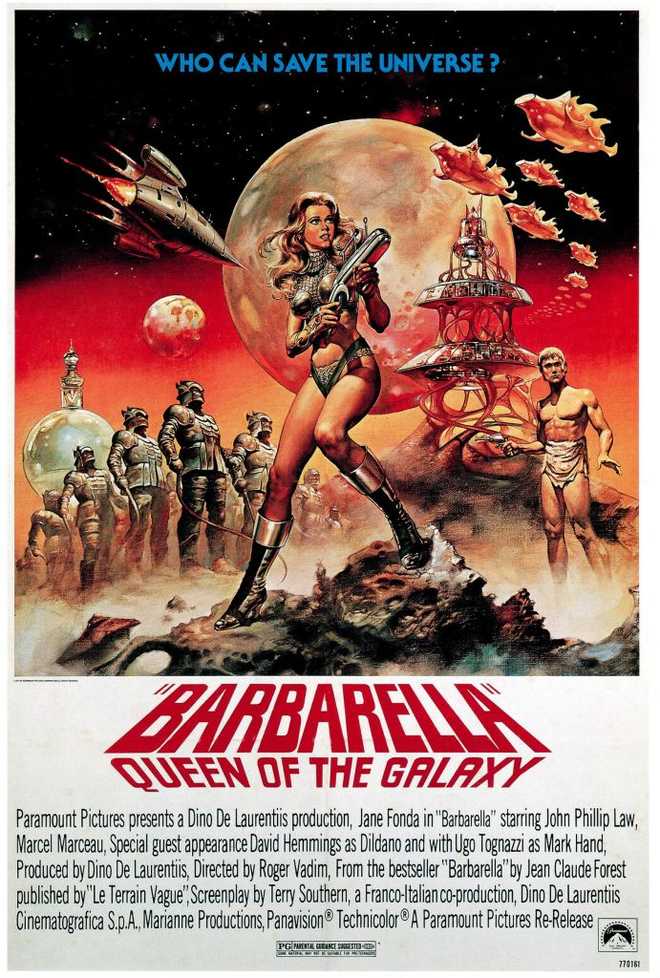
Real science has rarely ever stopped science fiction, though. As a nearby star with possibly habitable planets, Tau Ceti has long been the setting used by sci-fi authors and storytellers. Isaac Asimov used it for his “Robot” series. Arthur C. Clarke’s “Rama” spacecraft came across a mysterious tetrahedron in the Tau Ceti system. Authors Ursula K. Le Guin and Kim Stanley Robinson also set stories in Tau Ceti, and it also serves as the extrasolar setting of the 1968 Jane Fonda film “Barbarella.” Most recently, the Bungie video game “Marathon” is set in the far-off system, serving as part of the background story for the extraction shooter, about a large-scale plan to colonize the Tau Ceti system.
For “Project Hail Mary,” Tau Ceti is where Grace meets a certain friendly alien eventually named Rocky, voiced by Rocky’s lead puppeteer James Ortiz.
Rocky himself hails from the 40 Eridani A system, a real star that is part of a triple-star system about 16 light-years away and includes 40 Eridani B and 40 Eridani C, which orbit each other much more closely than their larger counterpart. 40 Eridani A — also known as Keid, from the Arabic word for “eggshells” — is a K-type yellow-orange star located in the constellation Eridanus, named for an ancient Greek river.
40 Eridani A is also known as the system that contains the fictional planet Vulcan, the home of Spock in “Star Trek.” The star system also shows up in Frank Herbert’s “Dune” books as the home of at least one alien race. These fictional planets were likely based on the idea that the star was originally thought to be able to sustain life in its orbit; however, in 2024, new data revealed that what scientists thought was a planet near 40 Eridani A was actually an astronomical illusion.
Weir told Scientific American how he came up with the concept for Rocky’s species by starting with the hypothetical planet’s atmosphere. Weir said that the planet he envisioned had a heavy, opaque atmosphere with an intensely hot star in close orbit. These specific conditions created the stony, blind spider creature that we know as Rocky.
Science isn’t just inspiring the story; it also inspired the direction behind the camera as well.
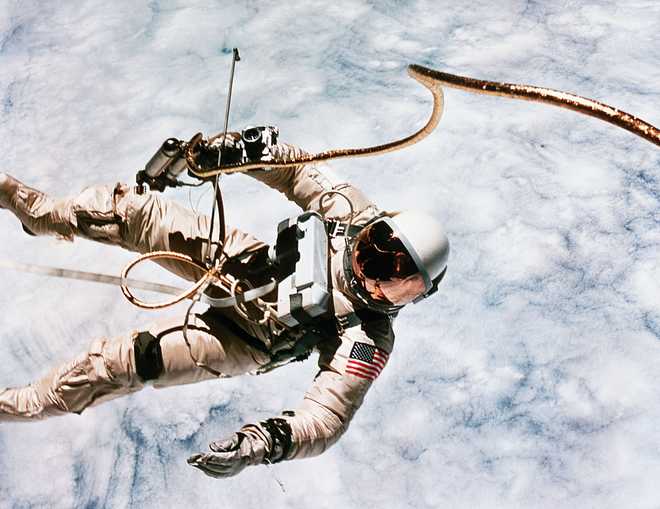
In one scene, Grace has to contain a sample while on a spacewalk, and he captures the sample using infrared light. Infrared light is one type of light that is outside of the human visible spectrum. So, how to shoot a scene that we couldn’t normally see?
Lord and Miller explained their technique in a short video for IMAX, which is the large-scale format in which the film was shot. They used two cameras for the scene and pulled the infrared filter out of one of the camera rigs, while setting up a bunch of blinking infrared lights in the frame. This meant they now had two views of the scene: one in visible light and one in infrared light.
“It was one of these movie magic things where, to the naked eye, it looked like a guy in a space suit standing around looking at his hands … but when you looked at the camera with the infrared filter out, it was just beautiful,” Miller said.
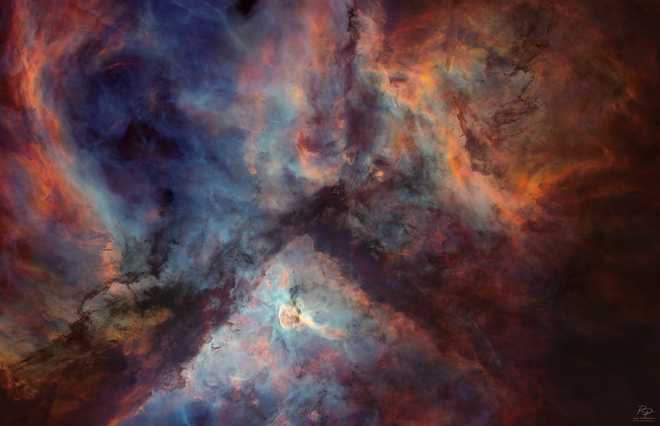
Non-visible light photography is also an important part of modern astronomy. NASA and other researchers and astrophotographers often mix layers of visible, infrared, and ultraviolet light to examine stars and galaxies. The usually invisible wavelengths are helpful to see space dust, gases and further and older stars that regular photography misses.
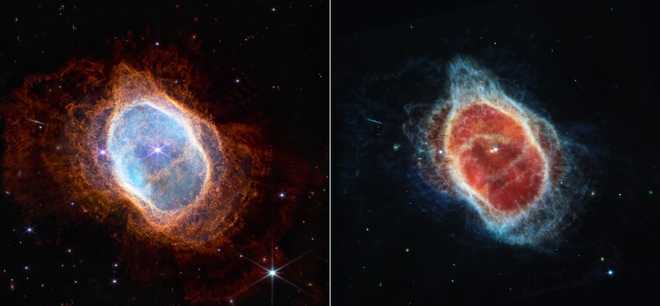
Even the credits incorporate real astrophotography into the final moments of “Project Hail Mary.” The movie tapped an award-winning Australian astrophotographer named Rob Prazeres, who goes by the name deepyskyjourney on Instagram, to feature his work.
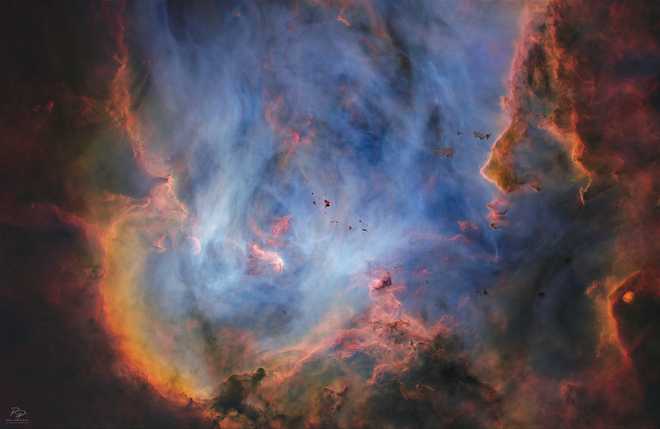
The only difference between his work of capturing space data in images and what ended up on the big screen was that he gave them “starless versions” of his photographs to make it easier to place credit text over them.

Prazeres noted that he was touched by the fact that the producers of the film “wanted the real thing.”
“In a world where CGI and AI are everywhere, it meant a lot to know they were genuinely excited to use real astronomical data and real structures from the night sky, rather than generating something from scratch,” Prazeres wrote on his website. “It felt like a win not just for me, but for the astrophotography community, too.”
The film is in theaters now.