
Gucci. Saint Laurent. LOEWE. They’re some of our favorite luxury brands, and it’s safe to say we love the clothes and we love the collections… but do we love the casting? The lack of curves? This Fall/Winter 2026 season at fashion week, I genuinely felt like the omission of real bodies on the runway was actually too much of a distraction to ignore, despite some incredibly exciting designer debuts and celebrity comebacks.
Demna’s Gucci debut was one of the most highly anticipated shows of the season and, as a result, featured a star-studded cast of iconic models, both past and present. Of course, it’s exciting to see the likes of Kate Moss and Emily Ratajkowski on the runway, but how thin they were? And how thin everyone else was, too? I have to say, that’s a lot less exciting.
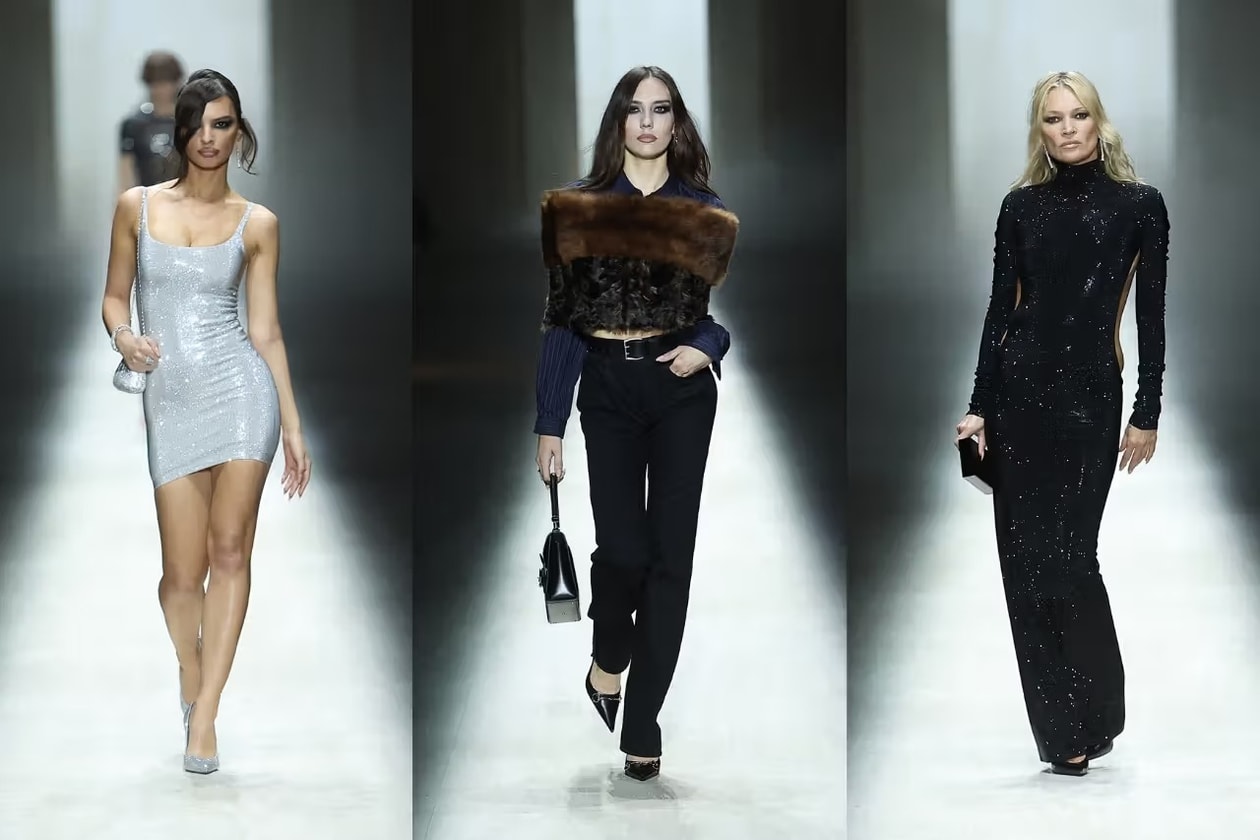
Of course, it wasn’t just Gucci. There was a distinct lack of anything other than ‘thin’ at almost every luxury designer show I went to this season. It made me wonder, why exactly don’t these bigger brands seem to care about showcasing any sort of inclusivity at their shows? Do those models not go to the castings? Do they show up and not get chosen? Is there no one in the room who asks those questions?
According to model Monet Lauren, represented by Next Model Management, “curve models are being seen at castings, but that doesn’t always translate to the final shows,” suggesting that somewhere along the line, there’s a disconnect. “There’s clearly an openness at the casting stage, but a gap when it comes to execution on the runway. I do think we should be taking a closer look at designers who choose to exclude models based on race and body composition,” she tells us.
And the worst part? The already minute representation we had for bigger or more realistic body types is decreasing. Coupled with the rise of the GLP-1 movement (weight loss drugs like Ozempic and Mounjaro), it feels like part of a vicious cycle where we see less and weigh less. Lauren cites Felicity Hayward’s Including the Curve report as her best source of data and what she discovered wasn’t what I hoped to hear.
“Unfortunately, representation has decreased tremendously,” she explains, adding that “Out of around 4500 models at Paris Fashion Week, only 18 of them were curve models, compared to 29 the previous season. Felicity wrote that this is the lowest figure since her records began.”
It’s not just Hayward who’s tracked the difference, either. Vogue Business started its size inclusivity report back in 2023, and according to Features Director Lucy Maguire, in that time, they’ve actually seen size inclusivity on the runway regress considerably.
“Plus-size representation is currently at its lowest point since we started collecting data seven seasons ago, tied with FW25, which had the same proportion (0.3%). Mid-size representation is also down, from 3.8% for FW23 to 2.1% for FW26,” Maguire tells us. But it’s not just the plus-size category that’s getting smaller; it’s all of them.
We’ve known for a long time that plus-size representation isn’t where it needs to be, and that it’s something that bigger fashion brands often take a tokenistic approach. But when non-plus-size models are barely even a sample size anymore, what hope do any of us have of feeling represented?
“Even within the straight size category, which we define as sample size US0-4, models are absolutely shrinking. It’s a bleak picture, and now, in our current socio-political climate, it seems like many brands have stopped pretending to care,” Maguire adds.
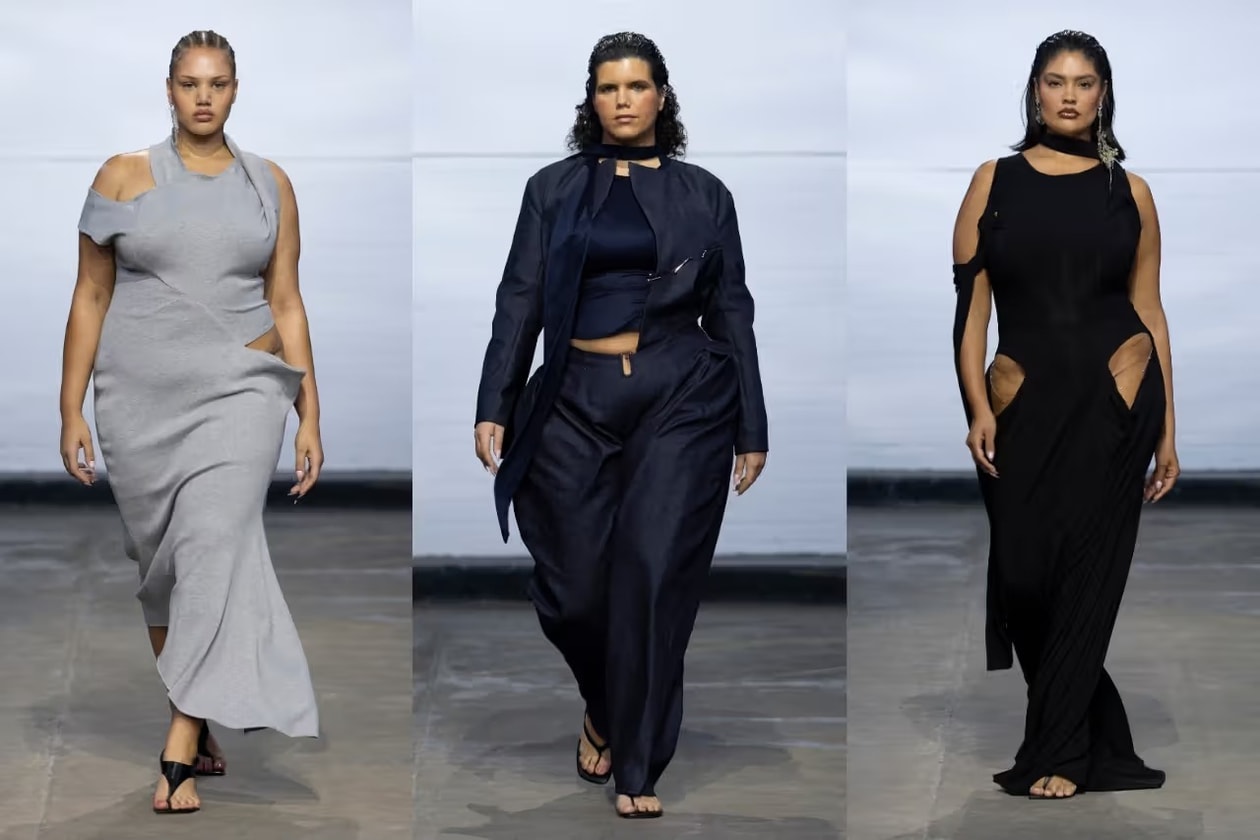
The one positive remains, though: emerging designers will always make the effort. Over the years, we’ve championed names like Karoline Vitto and Sinead O’Dwyer for their consistent efforts in casting, plus-sized designs, and authentic inclusivity, along with the likes of Sinead Gorey and Ashley Williams. It’s something Maguire has noticed in the report, too, as it’s those few names who continually increase the percentages in each city they showcase.
“Smaller, more emerging designers absolutely lead the charge when it comes to size inclusivity. There’s a particular cohort, including but not limited to Karoline Vitto, Sinead O’Dwyer and Ester Manas, who have worked tirelessly to drive size-inclusive fashion. They really are the blueprint for how to produce size-inclusive collections and shows, and the industry can learn a lot from them,” Maguire adds.
The question we ask ourselves is, why is it always up to the emerging designers? Sure, they have more to prove in terms of standing up against major labels with far more financial support and industry backing, but why are they the only ones that even seem to consider realistic casting and including more of their audience?
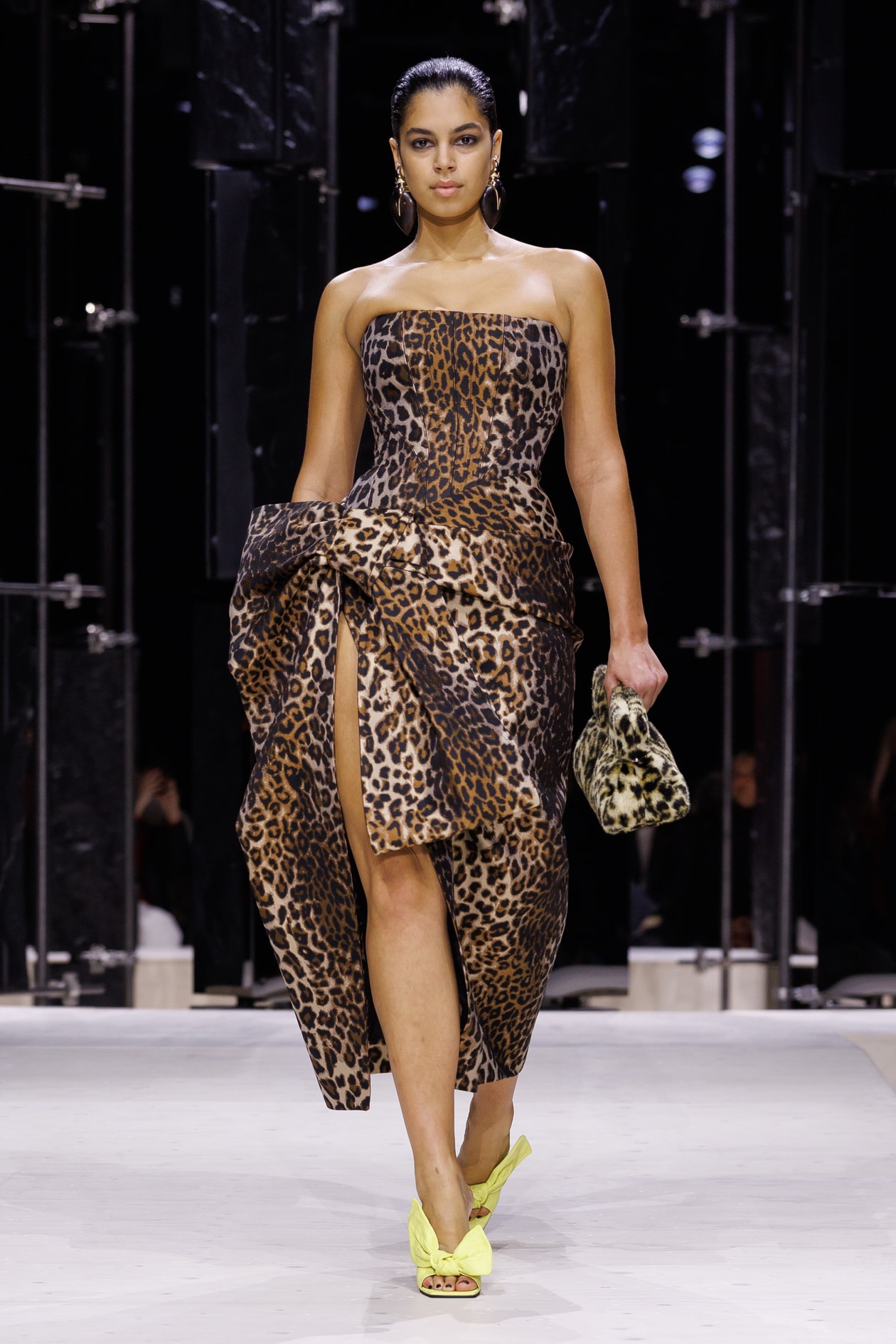
This season, Balenciaga and Givenchy were two of the only luxury brands that featured even mid-size models in their runway shows. According to Maguire, “it’s amazing, but we often don’t see consistent plus-size looks from major houses. And while I’m mentioning those two brands, it’s important to note there are plenty of major labels that have never, in all our time of tracking, featured one model beyond sample size.”
For Maguire, part of the mystery is the fact that the majority of these bigger brands do actually produce plus-size clothing, as it’s another element that the size inclusivity report is beginning to track. “I wish more people knew that no matter how tiny models are on the runway, many big labels do make clothes for them,” she adds.
You’d think that by now, we’d all be past the idea that luxury brands only want a certain type of person wearing their clothes. That surely can’t be the case anymore.
Which brings me to my next point: the damage this decreasing representation has on the people around it. Chloe Rosolek is a casting director who worked on Karoline Vitto’s recent FW26 showcase, providing us with one of the few beacons of hope that curvier women have right now.
Speaking about her experience on Instagram, Rosolek explained: “Growing up as a teenage girl, surrounded by only heroin chic body types in advertisements, really messed with my self-esteem. In 2016, it felt like things were finally starting to shift. It was so cool to see curve models begin to have a place in high fashion. I could finally recognise myself in some of the women I saw in editorials and on the runway, and it made me realise how important visibility is for the youth.”
And it’s true, it felt like somewhere along the way, there was a turning point. It felt like brands cared and things were changing. But this season, it felt nothing like that at all.
“We’re back to pretending those women don’t exist,” Rosolek continued, adding, “I see fab and stylish women every day on the streets of New York who aren’t sample size. Luxury fashion houses act like allocating three or four looks is impossible, whilst emerging brands continue to try to make a change. It is perpetuating a misogynistic view of women deeply rooted in fat phobia and patriarchal beauty standards. Just do better, it’s honestly so boring at this point.”
And she’s right, it is boring. But it’s not just that. It’s confusing, it’s concerning and unfortunately, it’s only getting worse.