
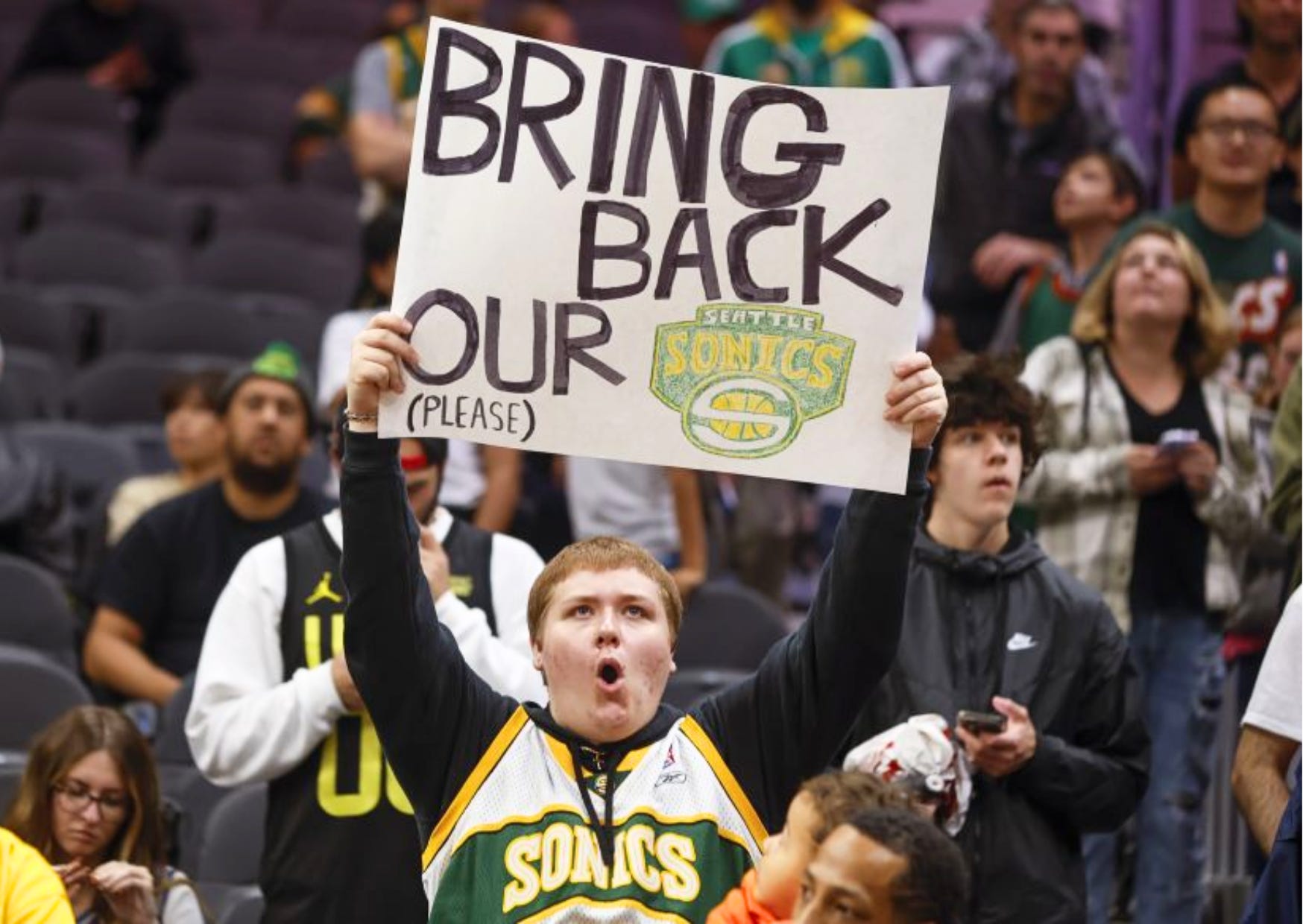
On Wednesday, March 25th, the NBA’s Board of Governors voted unanimously — all 30 owners in favor — to formally explore adding expansion franchises in Seattle and Las Vegas. This will be the league’s first expansion since the Charlotte Bobcats joined the NBA in 2004, a 22-year gap that will likely culminate in the most financially consequential expansion in North American sports history.
Franchise bids are expected to come in at $7-10 billion per team, with many NBA insiders privately indicating that the floor is closer to $8 billion. At $16 billion in total expansion fees, each of the NBA’s 30 owners would receive a one-time, up-front payment of $533.3 million. More importantly, expansion fees are excluded from revenue sharing, meaning owners get to keep all of this money to themselves.
To be clear, this week’s vote does not guarantee that the NBA will add two new expansion teams. It simply begins the process of determining whether the league should add two new expansion teams. Potential investor groups will now submit detailed proposals, including financial disclosures, arena plans, and org charts, with the NBA planning to put its finalists up for a formal vote by the end of 2026.
But let’s not kid ourselves: With so much money at stake, an uncertain future for media rights post-2035, and some unique tax incentives that make it a financial no-brainer for owners, NBA expansion has always been a matter of when, not if.
So for today’s newsletter, we’re going to dive into the details. We’ll start by talking about what NBA Commissioner Adam Silver had to accomplish before exploring expansion. But then I want to get into the good stuff, including how the league’s 30 owners did the math on expansion fees vs. revenue-sharing dilution, potential frontrunners for ownership groups in Seattle and Las Vegas, and why those markets are uniquely positioned over others to see immediate financial success.
Let’s get into it…
NBA Commissioner Adam Silver has been extraordinarily transparent about the league’s expansion plans. For at least the last 4-5 years, Silver has repeatedly said that the NBA would consider adding two expansion teams, but that he had identified two major preconditions before expansion could be taken seriously: a new collective bargaining agreement (CBA) and a new national media rights deal.
Both of these preconditions were important for different reasons.
-
CBA: The NBA’s Collective Bargaining Agreement (CBA) began on July 1, 2023, and runs through the 2029-30 season. In some ways, finalizing a new CBA was even more important than the NBA’s media rights deal. That’s because a fresh CBA guarantees labor peace, at least through expansion, while also serving as the official document excluding expansion fees from being included in Basketball Related Income (BRI). In other words, if players wanted to receive a share of the expansion fees, they would have needed to negotiate that into the last CBA agreement, which they failed/didn’t try to do.
-
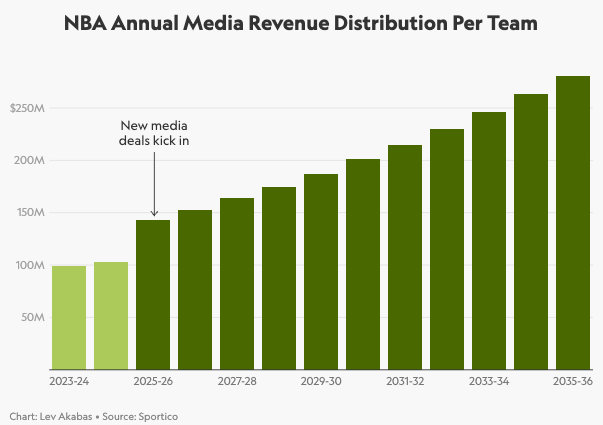
Media Rights: In July 2024, the NBA signed an 11-year, $77 billion deal with ESPN/ABC, NBC, and Amazon Prime Video. That deal, which began this season, tripled the league’s annual national TV revenue, from roughly $2.66 billion to an average of $6.9 billion per year. Each team’s annual media revenue distribution immediately jumped from $103 million in 2024 to $143 million in 2025, with payouts increasing approximately 7% annually. That means each team will be getting a $281 million annual TV payout by 2035-36.
In addition to checking both of these boxes, recent change of ownership deals for the Los Angeles Lakers ($10 billion) and the Boston Celtics ($6.1 billion) — two of the league’s most valuable franchises — provided real-world data points that Silver and the NBA’s Board of Governors could use as expansion fee guidance.
The single most important financial concept governing whether NBA owners support expansion is the trade-off between dilution and a one-time payment.
Under the NBA’s $77 billion media rights deal, the league’s 30 teams currently split approximately $6.2 billion annually in national rights revenue.
The NBA’s new media rights deal also includes escalators, but for simple math, let’s assume each team receives $206 million in national media distributions from the league office each year. If you add two more franchises, the denominator then increases to 32. As a result, each team’s annual share drops to approximately $194 million — a $12 million annual reduction per existing owner. Over the 11-year media deal, that’s roughly $132 million in aggregate lost revenue per team.
At a blended expansion fee of $16 billion (two teams at $8 billion each), the money split among 30 existing owners yields $533.3 million. This creates an enticing payback period. Owners are modeling the $533.3 million check as a prepayment covering approximately 44 years of the $12 million annual dilution gap.
This is largely the reason why owners unanimously voted to approve the league’s expansion process. In exchange for a modest reduction in their annual media slice, owners get a guaranteed $533.3 million cash distribution today. This money doesn’t have to be shared with the players, of course, but it is also tax-efficient, as expansion fees are treated as a return of capital or capital gains. That reduces the tax rate from the 37% on ordinary income to a maximum of 20% for capital gains.
But then there’s an even deeper argument for why this deal is actually even better than the math suggests. With Seattle and Las Vegas expected to be among the NBA’s top ten highest-revenue-generating markets immediately upon entry, the league’s 30 owners expect the addition of these two markets to drive meaningful revenue growth. For example, if expansion teams in Seattle and Las Vegas provide enough value to increase the league’s next media rights deal by 5% or more, the dilution from 30 to 32 teams would be entirely offset by a larger overall media pie.
It’s also worth mentioning that the NBA’s current expansion plan throughout Europe only makes these numbers more attractive. With a plethora of overseas investors looking to be a part of the NBA’s new European league, including the owners of Paris Saint-Germain, Real Madrid, and AC Milan, the expectation is that NBA Europe could potentially net the league’s existing owners another $5 billion in expansion fees. Along with all the same benefits mentioned above — no revenue sharing and tax efficiency — that’s another $166.6 million per owner, without any dilution of their current revenue-sharing agreement in the U.S.
The NBA’s eventual expansion to Seattle and Las Vegas has been the worst-kept secret in sports for the better part of a decade. Given that the NBA has, perhaps intentionally, telegraphed its expansion plan, many people believe the league has already soft-circled potential ownership groups. Adam Silver says that isn’t true, publicly stating during his latest press conference that potential investors should call PJT Partners — the league’s investment bank — for more information.
That said, Silver doesn’t need to call out favorites by name. There are already clear frontrunners based on the assets required to land an expansion team, including everything from billions of dollars in capital to an NBA-ready arena.
Jeff Bezos is the entertaining answer in Seattle, but the clear frontrunner today is Samantha Holloway. Holloway took over majority control of the NHL’s Seattle Kraken when her father, David Bonderman, passed away in 2024. Bonderman was well known in the NBA as a minority owner of the Boston Celtics prior to his death (and the team being sold last year). And while Holloway might have to get creative with financing, she has already made several strategic moves to prepare.
In the lead-up to the expansion vote, Holloway restructured her sports business. First, Holloway launched “One Roof Sports and Entertainment,” which will serve as a holding company for all of her sports assets. Then, just 2-3 days before the NBA’s Board of Governors vote, the Kraken’s ownership group, which is led by Holloway, announced it had acquired a majority stake in Climate Pledge Arena.
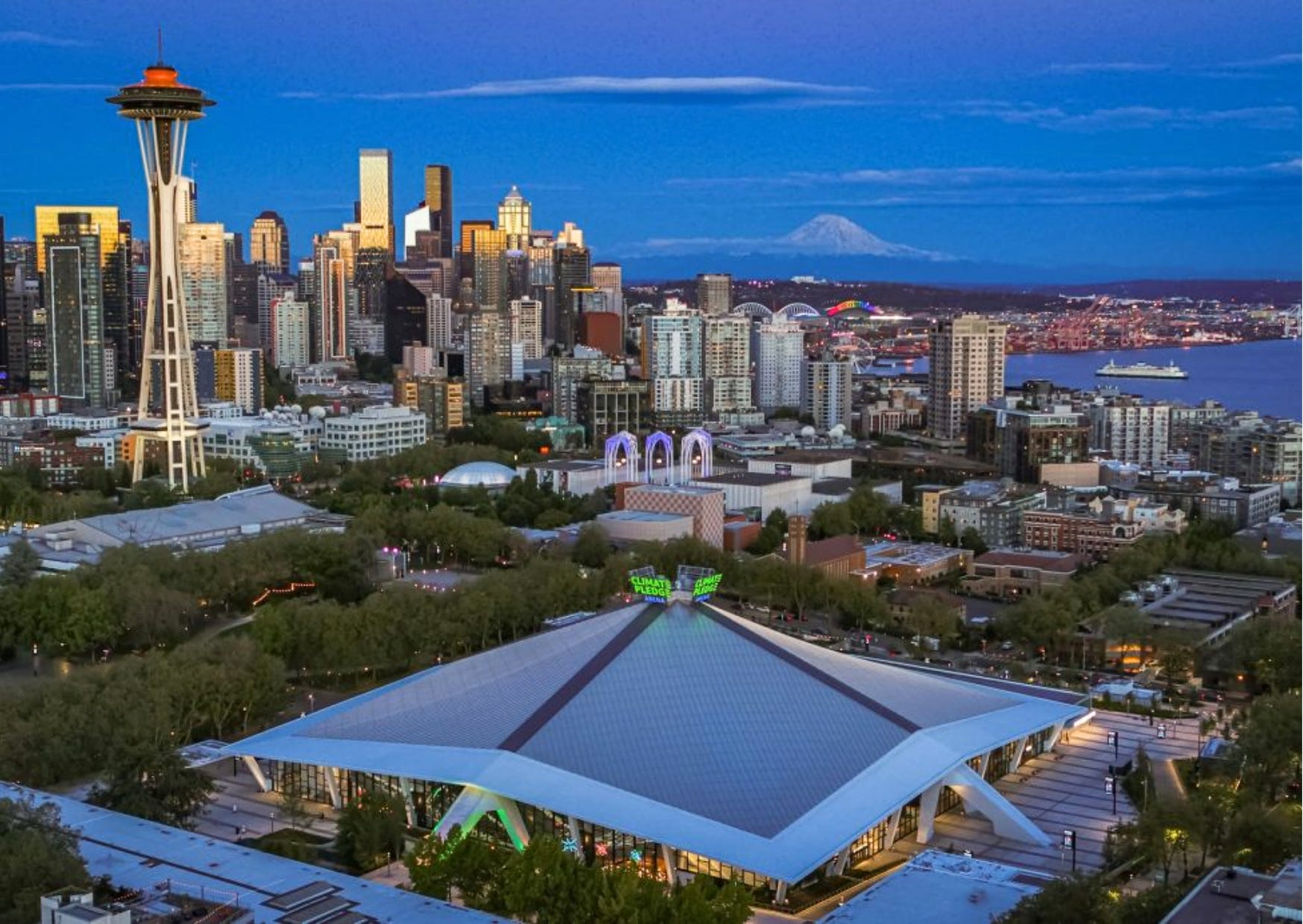
Home to the NHL’s Seattle Kraken and WNBA’s Seattle Storm, Climate Pledge Arena would be one of the most arena-ready expansion situations in NBA history.
In 2021, Climate Pledge Arena completed a $1.2 billion privately financed renovation. The venue, which is 80% underground, now has around 18,300 seats, making it larger than roughly a dozen current NBA arenas. Climate Pledge Arena also has 400+ underground parking spaces, 59 luxury suites, and even a locker room space set aside during renovation for a potential NBA expansion team.
But Holloway’s decision to acquire a majority stake in the arena wasn’t just a financial one. By becoming the majority owner of the arena, the Seattle Kraken ownership group has effectively positioned itself as the only bidder in Seattle that controls both the venue and the team’s infrastructure. I’m not saying they would do this, but if someone else ended up competing with Holloway for the bid, what’s to say the Kraken don’t draw up an extremely unfavorable lease agreement?
Las Vegas is a little more up in the air than Seattle. The belief was always that LeBron James would parlay his partnership with Fenway Sports Group, which began with an investment in Liverpool FC 15 years ago, into becoming the face of an expansion team in Las Vegas, primarily funded by the private equity group.
However, with LeBron James publicly declaring this week that he is no longer interested in pursuing an expansion team — likely because FSG believes an $8 billion price tag is too high — the door has opened in Las Vegas for new bidders.
Magic Johnson and Shaquille O’Neal have both independently met with local politicians about a potential bid, but Bill Foley is still in the driver’s seat.
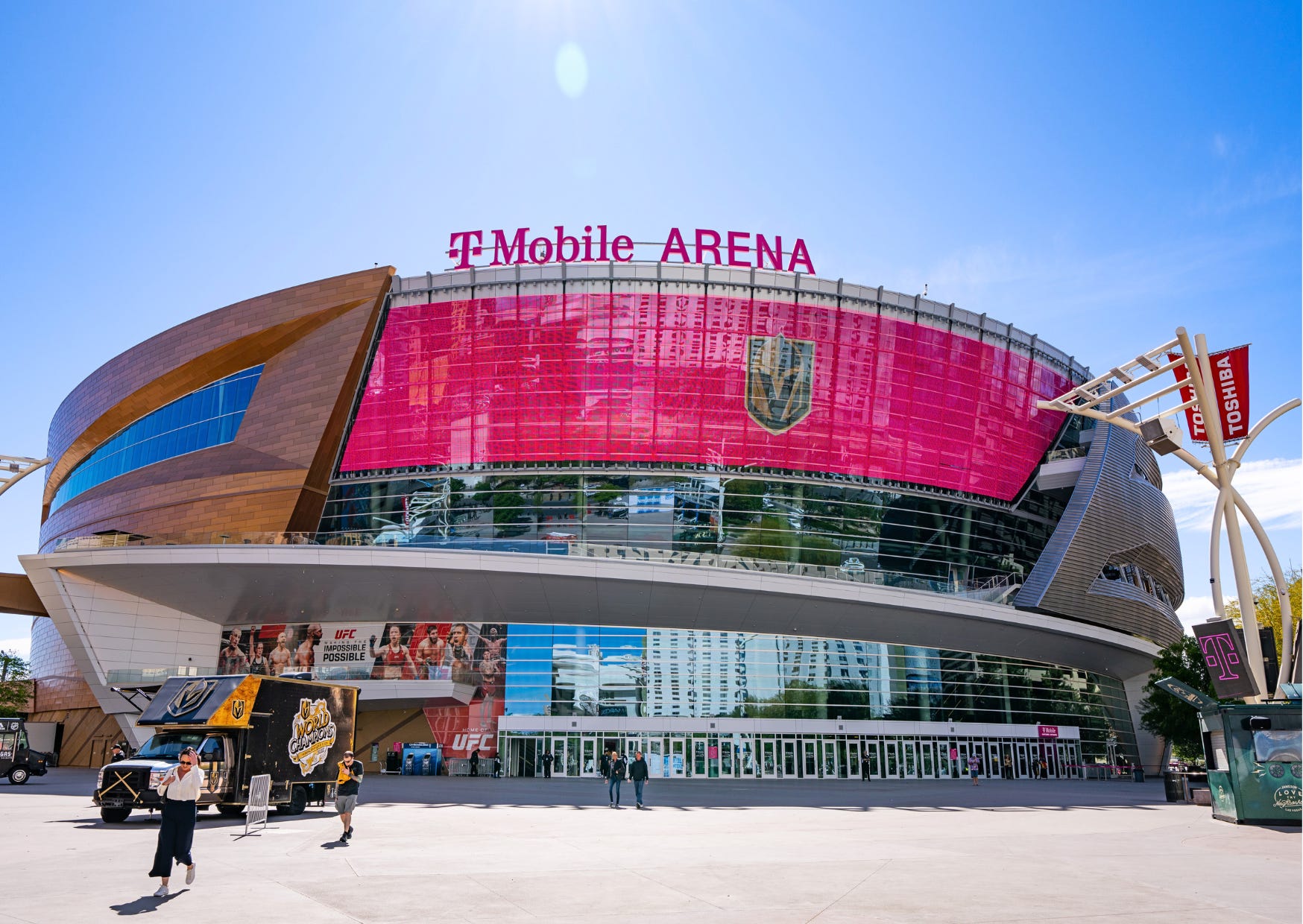
Similar to Samantha Holloway in Seattle, Foley owns the NHL’s Vegas Golden Knights, a 15% stake in T-Mobile Arena, and has already committed $300 million to upgrade the venue. His track record building a championship NHL franchise from scratch — Conference championship in year one, Stanley Cup in year six, and playoffs in 7 of 8 seasons — is also likely to appeal to existing NBA owners.
The NBA already has a relationship with T-Mobile Arena via the NBA Cup (formerly the In-Season Tournament). But if Foley wins the expansion bid, he says the $300 million earmarked for renovation will be used to add another 1,000 to 1,200 seats, potentially making it one of the NBA’s ten largest arenas by capacity.
The NBA has recently altered some of its ownership and financing requirements to attract investment from institutional investors, including private equity, endowments, pension funds, and sovereign wealth funds.
But if we avoid getting too far into the details around which funds can invest and how many teams they can buy into, the ownership structure for an expansion team is simple: the controlling owner needs to own at least 15% of the team, institutional funds (private equity) can own up to 30%, and the remaining portion of the cap table (55%) can be filled out with up to 25 individual minority owners.
At an $8 billion expansion fee, excluding debt financing, the controlling owner would have to put up at least $1.2 billion, institutional funds could invest up to $2.4 billion, and the remaining $4.4 billion could be funded by minority investors.
Some people will inevitably say that $8 billion for an NBA expansion team is wildly overpriced. With uncertainty surrounding future media rights deals and nearly all of the league’s most successful teams currently valued at less than $8 billion in the private market, maybe that is true. However, the NBA picked Seattle and Las Vegas for a reason, and there are things I believe people are overlooking.
For starters, even if we ignore the fact that Seattle is one of the country’s top 15 TV markets (and the second-largest market without an existing NBA team), Seattle’s ownership group will immediately gain brand equity by leveraging the SuperSonics’ incredibly valuable intellectual property. That’s because, as part of the agreement signed when the SuperSonics moved to Oklahoma City, the team’s new ownership group agreed to transfer all IP associated with the SuperSonics (name, logos, colors, etc.) back to any new team owner in Seattle at no cost.
And while Las Vegas represents a fundamentally different market thesis than Seattle — Las Vegas is the 40th largest U.S. television market — the city has a number of unique factors that extend beyond traditional analysis. That includes an international tourism business that attracts 40 million visitors annually, high-end hospitality offerings that command premium pricing, and an existing basketball culture through a 20-year relationship with the NBA Summer League.
This is why the Las Vegas Raiders have the NFL’s second-highest ticket prices and were able to sell 100% of their personal seat licenses (PSLs) before Allegiant Stadium opened in 2020. Relying on tourism to fill seats will likely lead to a less-than-ideal homecourt advantage, but it can certainly help increase revenue. And for a league whose national media rights fee is set in stone for the next decade, increasing gameday revenue is the fastest way for a new owner to reach breakeven.
If you enjoyed today’s newsletter, share it with your friends.