
Modern Hollywood has put more stock in franchises and cinematic universes than ever before. In the past, a film would be released and do well, prompting a sequel. Now, before a film is even greenlit, there have to be considerations about how it could continue down the line. Though the likes of the Marvel Cinematic Universe, Star Wars, and Jurassic World may be some of the most dominant film franchises in the world in terms of money brought in, they’ve frequently run into bumps along the way creatively, thanks to the number of cooks in the kitchen. It’s a very rare feat for a movie franchise to not only have one primary author but continue to find success.
Today, though, 47 years ago, on March 28, 1979, the seed of one of the most underrated movie franchises of all-time would be released when Phantasm arrived in theaters. Following in the footsteps of other notable independent horror movies of the era like Halloween and The Texas Chainsaw Massacre, the film was produced on a reported budget of $300k thanks to local investors, and would go on to gross over $22 million at the time of its release (equivalent to $103 million in 2026). The brainchild of writer/director Don Coscarelli, Phantasm was a single movie that scared audiences with its frightening visuals and unique storytelling. The success of that movie would go on to birth one of those franchises with one architect, one with a powerful influence on an even bigger franchise.
Phantasm Remains an Underrated Franchise With a Singular Creative Voice
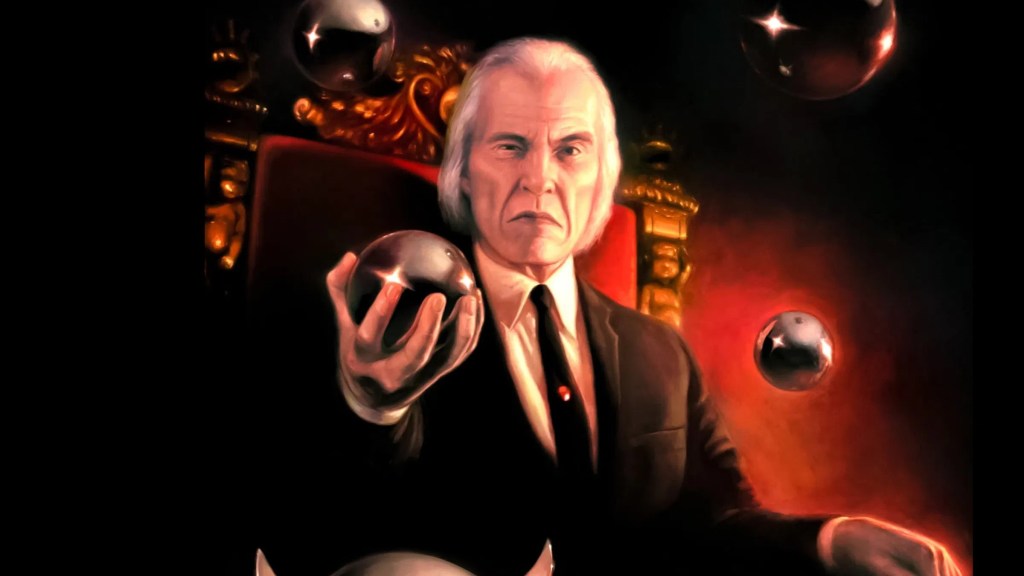
Phantasm is a supernatural horror movie set against the backdrop of a small Oregon town, where young Mike Pearson (A. Michael Baldwin), his older brother Jody (Bill Thornbury), and their ice-cream salesman best friend, Reggie (Reggie Bannister), investigate the strange goings-on at a mysterious funeral home. It sounds totally normal on the surface from there, but the evil Tall Man (Angus Scrimm) and his flying chrome spheres of death and his dwarf slaves from an alternate dimension defy explanation and make Phantasm one of the most distinct and bizarre horror movies of the era.
The success of the original Phantasm spurred hopes for a follow-up, especially from Hollywood studios, but Coscarelli maintained that he had no ideas for a sequel following the conclusion of the first movie. That said, he did eventually come up with an idea, which gave us Phantasm II, a sequel, like Halloween II, that was picked up by Universal Pictures as they expanded their horror portfolio. Even though the sequel failed to match the financial success of the original, it expanded the scope of Phantasm as a franchise and revealed the blueprint for its future as Mike and Reggie battle The Tall Man and his sinister intentions around the country and across dimensions.
Though it wasn’t much of a success, Phantasm II gave way to Phantasms III, IV, and even a fifth film (“Ravager”) just ten years ago. Unlike almost every other franchise in the entire history of feature films, Phantasm largely hails from a singular creative voice in Coscarelli, who wrote and directed the first four films (and wrote/produced the fifth). Though the fact that the film is in the horror genre may be a turnoff for some, plus the fact that many of its most bizarre narrative choices are never explained in great detail, Phantasm is a rare gem. The fact that one mind forged all of the creative decisions in an entire film franchise is incredibly rare, and something worth celebrating. Not only is the world richer for having Phantasm in it, but we need more franchises to follow in its footsteps.
The Phantasm-Star Wars Connection
Though modern reappraisal has found its way to Phantasm with a lot of love for Don Coscarelli’s work, for decades, it was a cult franchise known to a select few. One of those few who loved the film was none other than J.J. Abrams. As fans may know, the co-creator of Alias and Lost seemed destined to work in movies from a young age, with stories about his early exploits in film (like being hired by Steven Spielberg to restore his Super 8 movies) having made the rounds for years.
Abrams’ love for Phantasm goes even deeper, though, as he was inspired by Coscarelli’s producing a movie with such an enormous scope with no Hollywood tools and a small budget. It also didn’t hurt that Coscarelli previously became the youngest director whose movie was released by a major studio (after Universal released his movie Jim the World’s Greatest in 1976), an inspiring feat for a young film fan eager to also get into the business. Fast forward to the 2000s, when Abrams reached out to Coscarelli just to chat and confirm he loved the movie (leading to Phantasm‘s main antagonist, Angus Scrimm, appearing in Alias). Abrams wanted to show the original Phantasm to the staff at Bad Robot, but learned from Coscarelli that the prints were all in bad shape. As a result, Abrams and his team spearheaded a full restoration of Coscarelli’s classic, one of the reasons that led to the film surging in modern popularity even more.
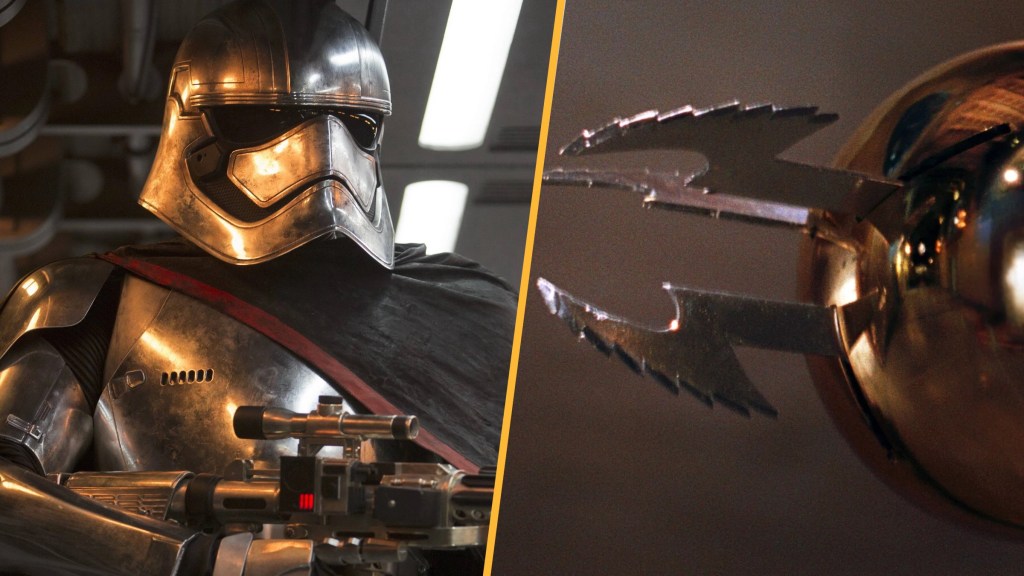
It would have been enough for that to be how Abrams expressed his admiration for Phantasm, but he took it a step further. As you may recall, Star Wars: The Force Awakens introduced a slew of new characters, concepts, and worlds into the larger canon (thanks, in part, to now being a franchise that no longer has a singular voice). With his authority as the director of the first Star Wars movie in a decade, Abrams had the chance to pay tribute to Phantasm on a global scale. One of the new characters in the film, as you may recall, is none other than Gwendoline Christie’s character, Captain Phasma. Though the name alone makes it clear what the reference is, Abrams took it a step further by making sure Captain Phasma was suited up in that eerily reflective chrome, just like the flying spheres from Coscarelli’s movie.
Now, Phantasm occupies one of the most distinct places in film history. On top of being a success story for indie film at its roots, the series was able to maintain a level of narrative freedom by never having to bend to the whims of major studios and their shareholder ownership. That narrative freedom was further defined by Don Coscarelli’s distinct storytelling style, where the answer to one question only creates two more. Though the series may not be for everyone, the devoted fanbase it has created remains loyal, even if they’re behind the camera on a billion-dollar franchises that THEY didn’t create.