
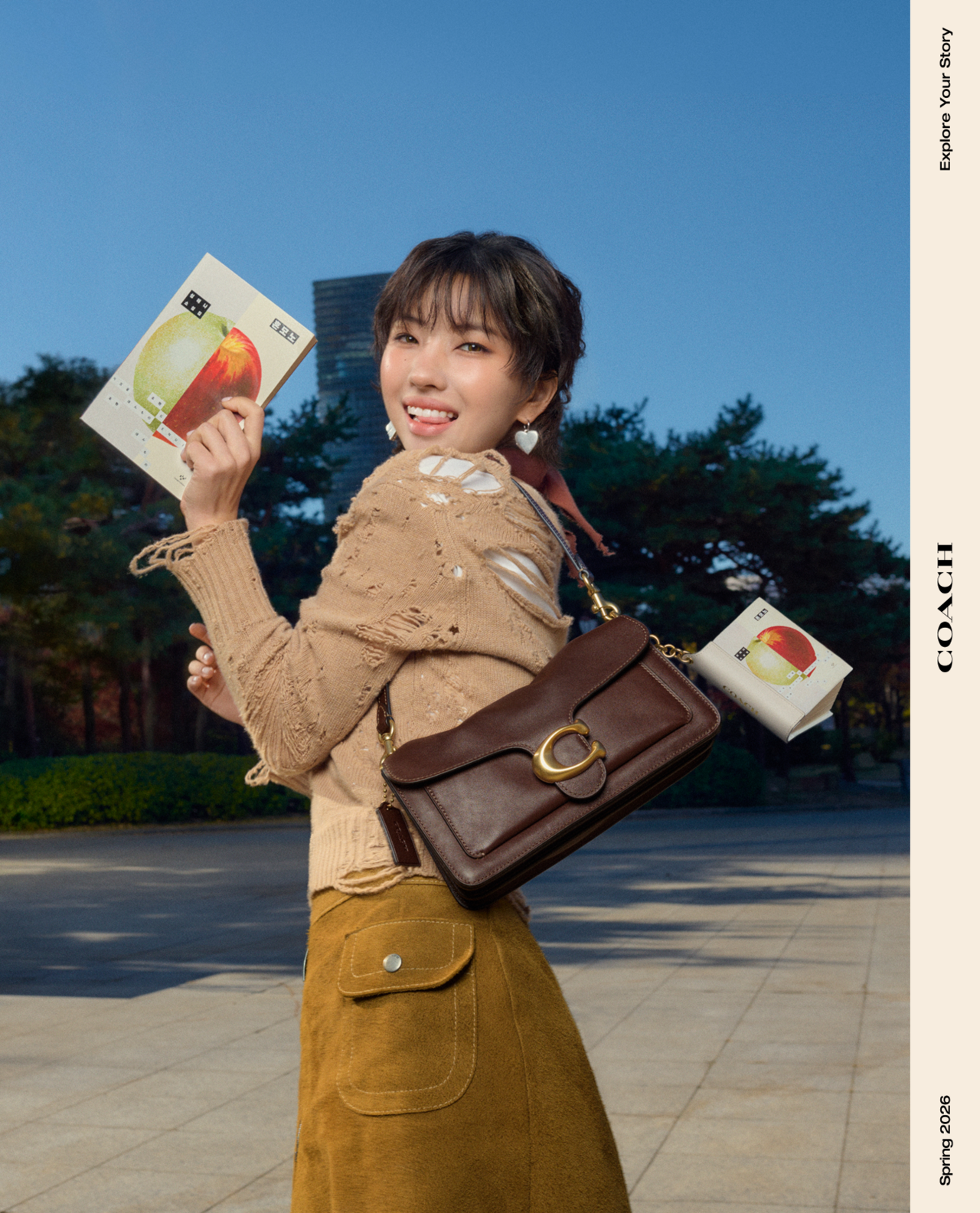
By now, most Generation Z consumers have likely fastened at least one charm to their bags, a personal “it” item signaling taste and identity. Along with Korea’s ongoing “text-hip” trend, an unexpected object has begun to dangle from straps: books.
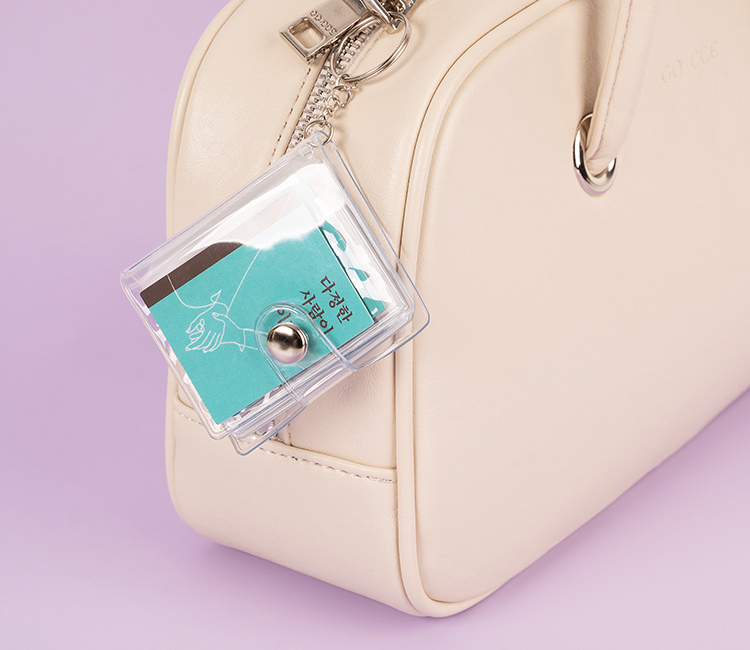
Not tucked inside a backpack but clipped to the outside, books are emerging as accessories.
They are not just in fashion but part of a global luxury fashion moment. In late February, Coach, the American luxury lifestyle brand, unveiled its spring/summer 2026 campaign “Explore Your Story,” featuring a collection of book-themed bag charms.
The brand describes the miniature books as readable, complete with printed text and “inspired by a renewed cultural embrace of long-form storytelling.”
“In a world shaped by fragmentation, digital overload and constant acceleration, many described books and long-form storytelling as a refuge — a way to slow down, reflect and feel a sense of belonging,” said Joon Silverstein, the company’s chief marketing officer, in a statement.
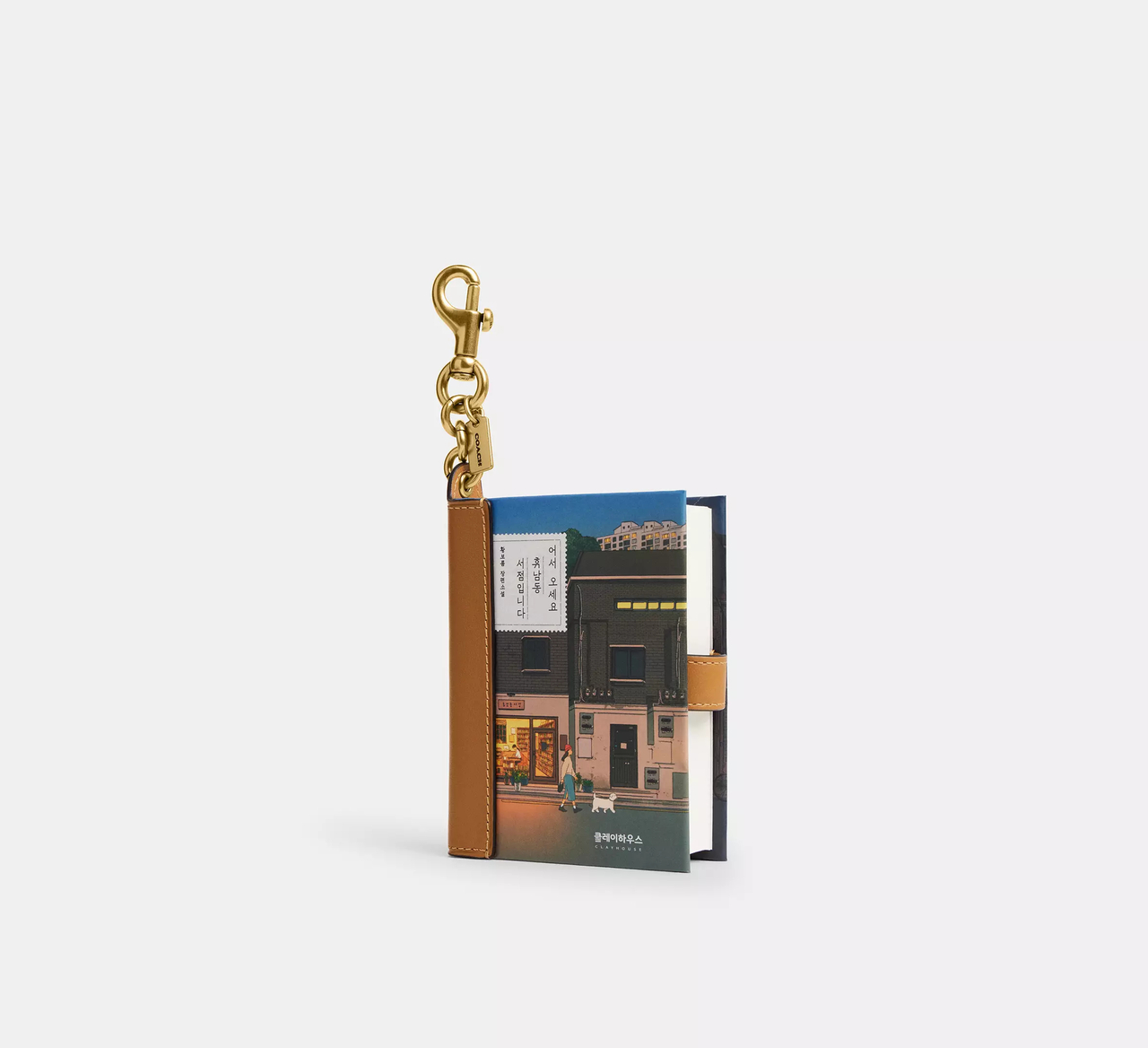
Among the 12 book titles, two Korean works were included: “Welcome to the Hyunam-dong Bookshop” by Hwang Bo-reum and “Honmono” by Sung Hae-na.
Coach described Hwang’s international bestseller as “an inspiring tale of starting over,” a novel that reflects on “the beauty of slowing down, being present and building community in an increasingly disconnected world.” The latter, a breakout bestseller in Korea last year, was introduced as “a complex meditation on what it means to be real in a changing world,” exploring “the vulnerability, honesty, and emotional courage it takes to choose authenticity over perfection.”
The charms sold out quickly in North America, with more yet to be released; the collection is expected to be available more broadly in early April.
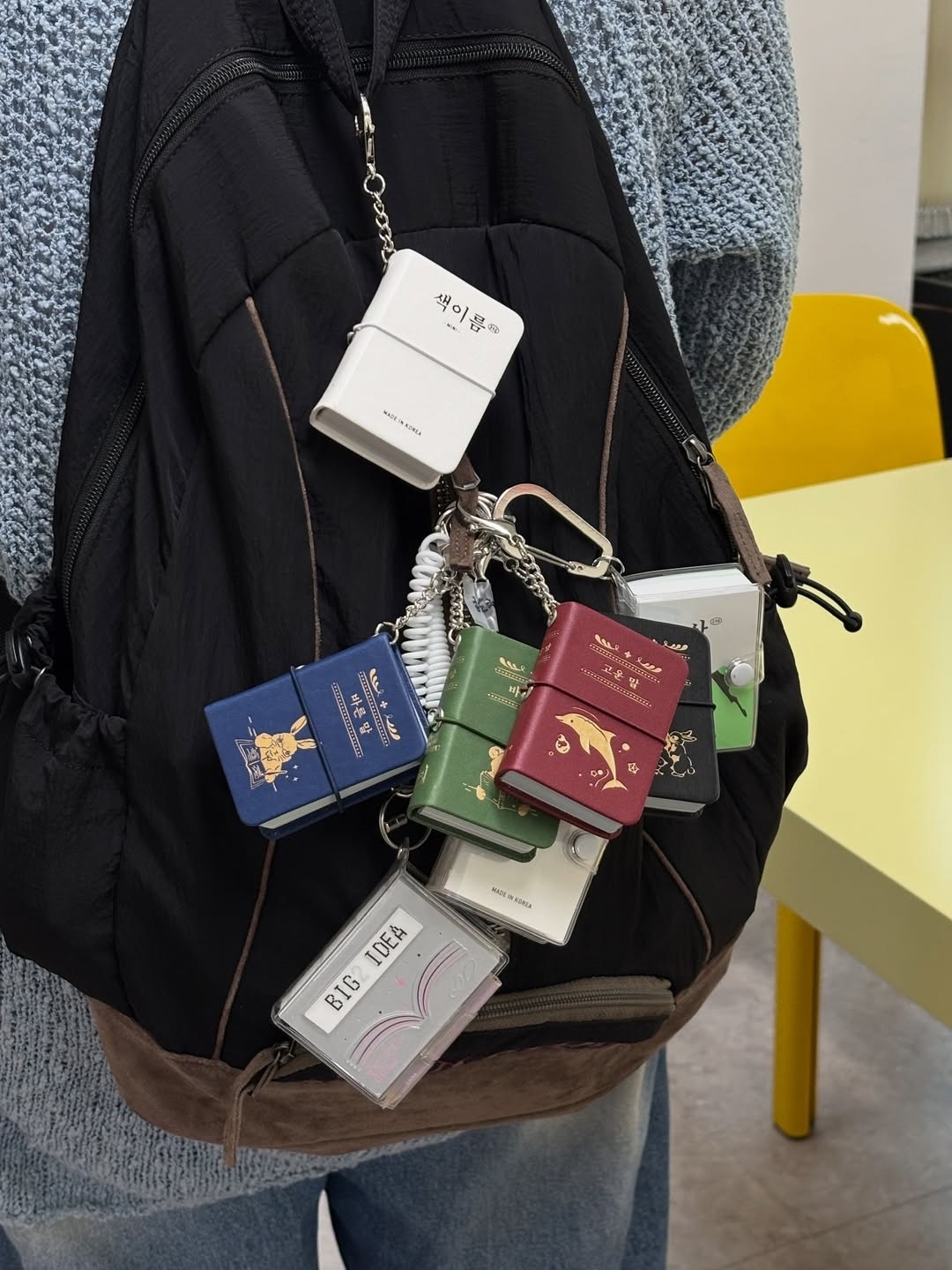
In Korea’s publishing scene, miniature book charms have also evolved into a broader fashion moment. The “text-hip” trend, in which younger generations view reading and writing as stylish, reflects a broader turn toward books as tools for self-definition and personal expression.
Industry data backs this up: People in their 20s are increasingly turning back toward books, and they were the only age group to post an increase in reading rates, even as overall adult readership declines, according to a report released earlier this month by the Culture Ministry.
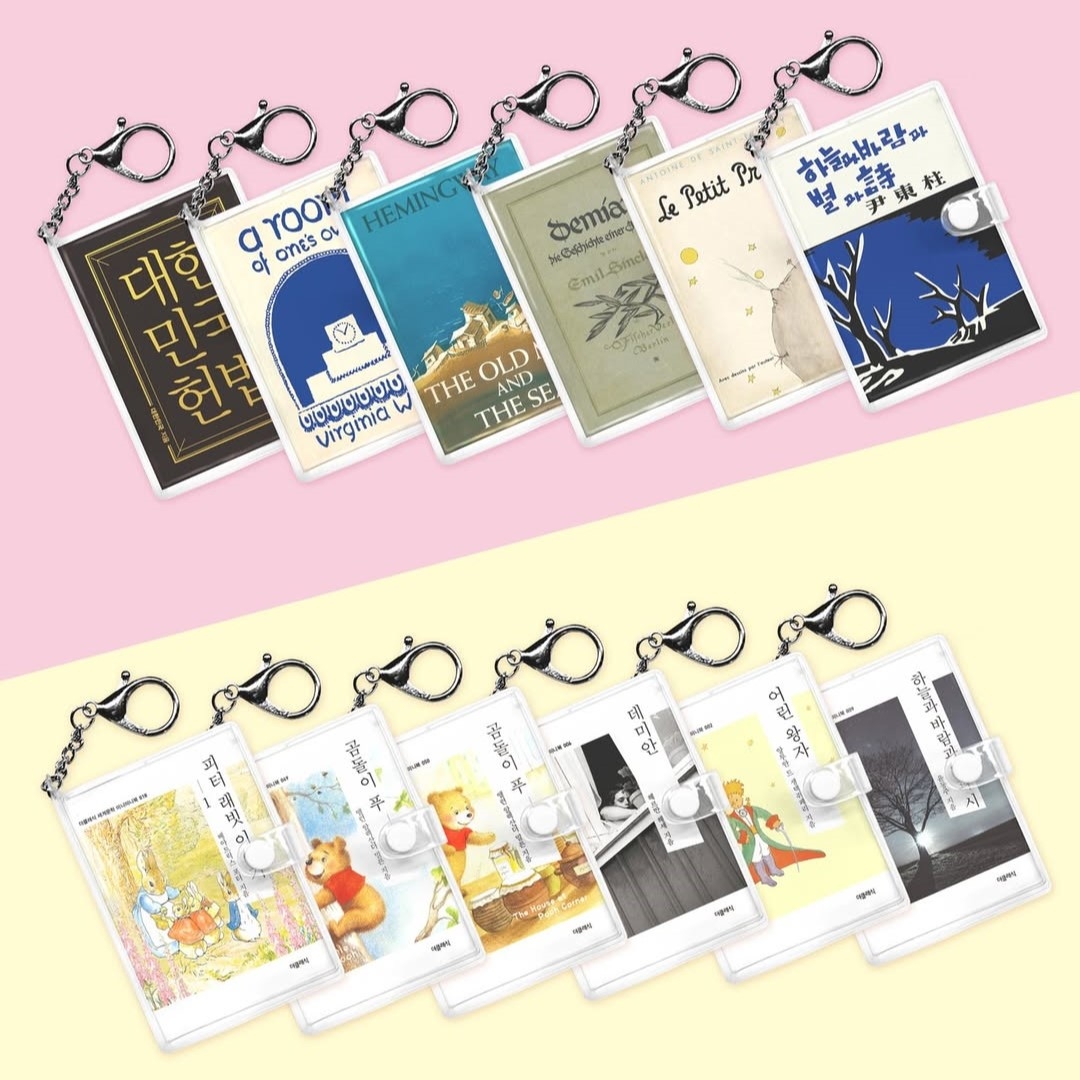
Publishers have responded by reimagining books as mini objects of design and utility, producing charm-sized editions as collectible goods.
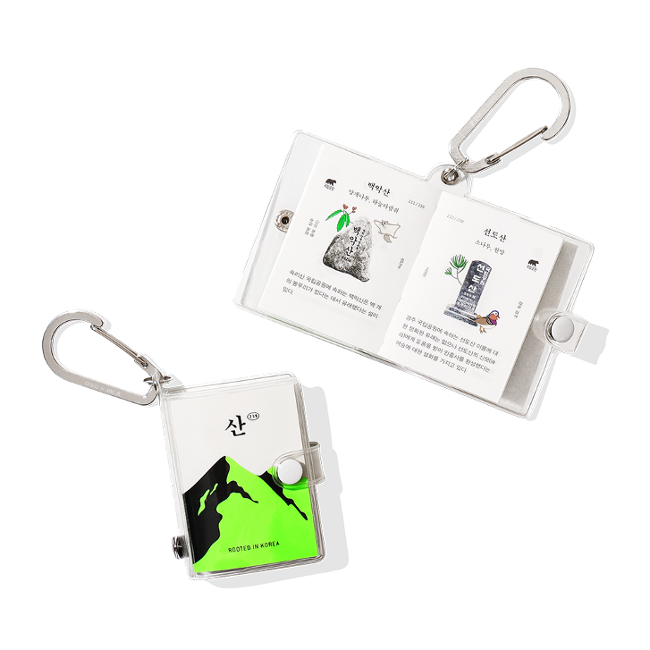
In particular, “Mountain 239” from the design company OIMU won a bronze medal on March 12 at the Best BookDesign From All Over the World competition in Germany, organized by Stiftung Buchkunst, the German foundation for book design, in partnership with the Leipzig Book Fair.
Measuring just 50 millimeters wide, 68 millimeters long and 20 millimeters thick, the book is designed to be clipped to a bag or belt for climbing. Each page introduces one of 239 mountains across the Korean Peninsula, offering key details such as location, elevation and national park designation, along with practical guidance for hikers — from how to respond to encounters with wild animals to basic first aid and emergency contacts.
The book had already drawn attention last year after winning the top prize at Korea’s Most Beautiful Book competition, hosted by the Korean Publishers Association and the Seoul International Book Fair, where it became a surprise hit.
The jury then said the book charm expands the boundaries of what a book can be, designed not only as a readable medium but as a portable, practical object — one meant to be clipped to a bag — making the very act of carrying it part of its pleasure and appeal.
hwangdh@heraldcorp.com