
Nearly two decades after Hawaiʻi promised to end pay-to-play politics, we are still trying to fix the same broken system and are at risk of getting it wrong again.
In 2005, after a series of corruption scandals, lawmakers passed one of the most ambitious bans on contractor donations in the country. It was supposed to fundamentally change our political culture. But a loophole meant it applied only to contracting companies, not to their owners, executives or family members.
That loophole has defined the system ever since.
Now, the Legislature faces a critical choice: fully close the loophole for good or again risk reforms that will leave the original system of political influence intact.

House Bill 1519, introduced by House Judiciary Chair David Tarnas, arrived already compromised. It included a “same-branch” limitation that bans contractors from donating only to the branch that awards their contracts. More than 99% of state contracts are executed by the executive branch. That means the ban would largely apply to the governor and lieutenant governor, while leaving out state lawmakers who control the budget and decide which projects get funded.
That is not where influence ends. It is where it begins.
Contractors do not just seek influence after contracts are signed. They invest in relationships with legislators who appropriate funds, and county officials who control zoning, permitting, and project approvals. Records show donations spike before project approval and contract awards.
As HB 1519 moved through the House, it was further weakened, stripping out the counties entirely. Counties control zoning, permitting and project approvals. The Maui case, where a contractor secured millions in no-bid contracts while making political contributions, helped reignite this issue in 2020. Under the current bills, that nexus would remain untouched.
Sen. Karl Rhoads took a different approach. Senate Bill 2530 covered all state and county contractors and grantees above a meaningful threshold, and was part of the Hawaiʻi Campaign Spending Commission package introduced by Senate President Ron Kouchi.
Then it crossed into the House.
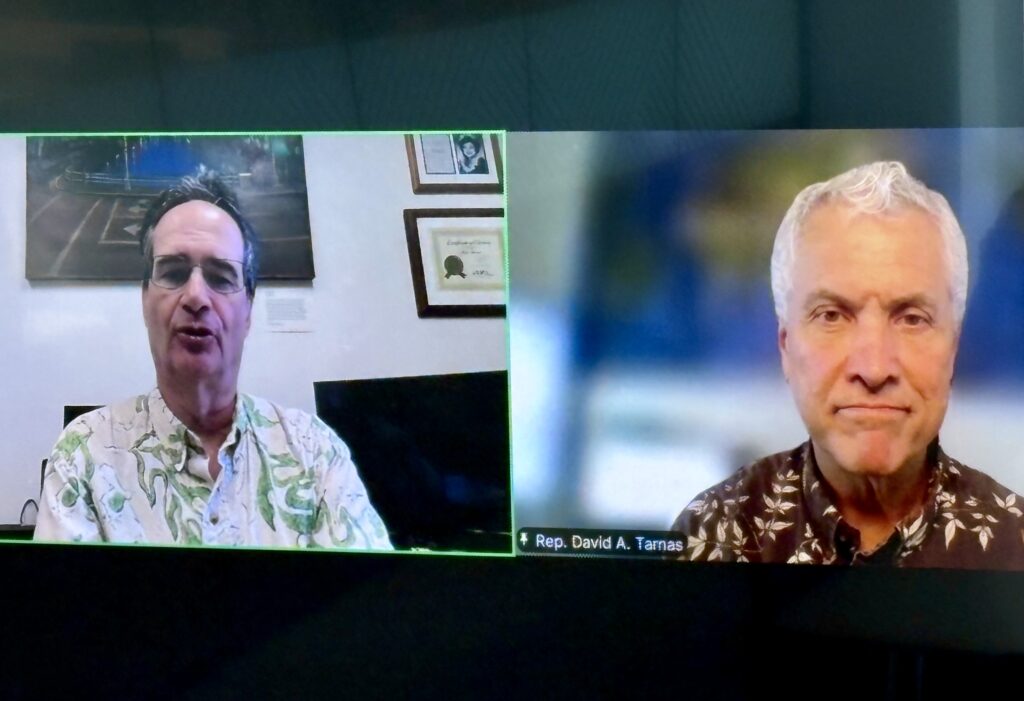
Rep. Tarnas cut out SB 2530 and replaced it with the weaker HB 1519 language, arguing it was the only version that could pass conference. Given what happened last year, he may not be wrong.
In turn, when the House version reached Sen. Rhoads’ committee, although it wasn’t clear from the hearing, the committee report reflects he amended it to remove the same-branch limitation and to add back county officials. He did remove family members, even though households often max out contributions in tandem. A reasonable amendment would restore the ban as “spouses and dependents.”
Now, the committees most affected by contractor money are next in line to decide whether to strengthen this reform or keep it as is.
These committees sit at the center of the process. They decide what gets funded, how much, and which projects move forward. For contractors, that makes them one of the most important points of access in government. It is no coincidence that lawmakers on these committees consistently receive maxed-out contributions from industries that rely on public spending.
Since the previous Senate version passed out of the Ways and Means Committee with limited amendments, there is reason to believe that the amendments Sen. Rhoads made to the House version hold, even though Senate leadership has long benefited from the current system.
That is why what happens next in House Finance matters so much, and why Rep. Chris Todd, chair of the House Finance Committee, now faces a genuinely consequential decision.
Rep. Todd is new to the Finance chair. He did not build the system. He has not yet benefited as much as his Senate counterpart, Donovan Dela Cruz, has. Todd has the power to send a stronger bill to conference, one that removes the same-branch limitation, restores the county requirement and reaffirms the family member provision. That would give conferees something real to work with and put meaningful pressure on the final outcome, rather than surrendering the negotiation before it starts.
Are lawmakers willing to meaningfully change a system that has benefited them, or will reform once again be diluted at the final stage, where so many good-government bills quietly die?
From Honolulu’s rail to large-scale housing developments, major contractors have consistently directed contributions to those shaping the pipeline of projects. Some of the city’s largest contractors are among the most consistent donors to county officials, underscoring the intertwining of public contracts and political donations.
None of this is about blocking development or punishing contractors. Hawaiʻi needs housing, infrastructure and investment. Those projects should move forward on merit, not on who has spent years cultivating relationships with those controlling the money. A real contractor ban does not stop good projects. It ensures they are chosen for the right reasons.
Sen. Rhoads advanced a bill worth passing. It was weakened in the House. Now the question is whether it will be restored by Chair Todd and the Finance Committee before conference.
The difference between real reform and more of the same comes down to whether those loopholes are finally closed.
