
Greece’s cruise sector is entering a new phase of expansion, with recently published statistics showing record ship calls, historic passenger highs and a rapidly widening network of ports welcoming large vessels across the country.
Get the latest news straight to your inbox!
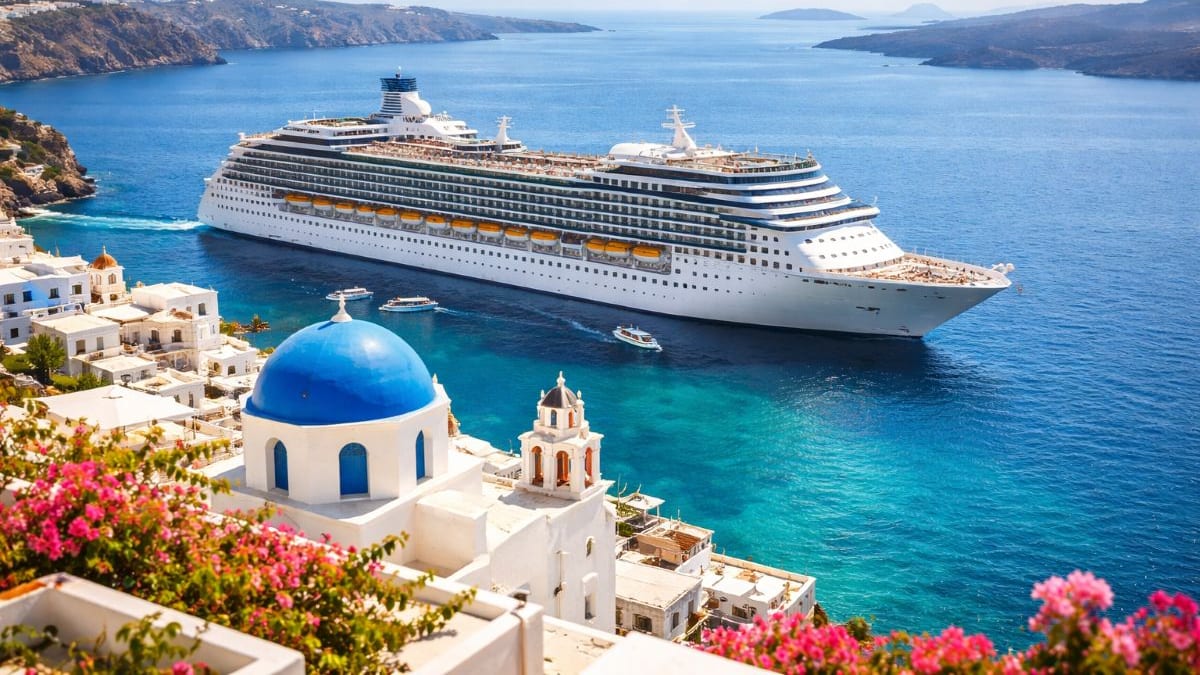
Image by International Cruise News: Latest Cruise Line & Cruise Ship News
Record Cruise Traffic Across Greek Ports
Data released over recent months by Greek port associations and industry publications indicate that 2023 and 2024 marked a turning point for the country’s cruise activity. In 2023, 49 Greek ports reportedly received more than 5,200 cruise ship calls and just over seven million passengers, an all-time high in vessel arrivals and one of the strongest seasons for passenger volumes on record.
Hellenic port statistics for 2023 show double digit percentage growth compared with 2022, both in terms of ship calls and passenger movements. At the same time, analysts note that average ship occupancy has increased, meaning that each visit now brings more passengers than in earlier record years. Industry coverage highlights that this combination of more calls and fuller ships has lifted Greece into the top tier of global cruise destinations.
Preliminary figures and forecasts for 2024 and 2025 point to another set of record seasons. Sector reports describe a strong pipeline of pre booked itineraries, with Greek ports benefiting from robust demand for Eastern Mediterranean cruises and itinerary changes prompted by volatile conditions on some traditional long haul routes.
Bank of Greece data on cruise travel receipts underline the scale of the expansion. Cruise tourism revenue in 2024 is reported to have exceeded one billion euros, rising by more than 20 percent year on year and reinforcing the role of cruising as a major contributor to the country’s wider tourism performance.
Piraeus Leads a Growing Homeport Network
The Port of Piraeus, serving the Athens metropolitan area, remains the country’s primary cruise hub and a central driver of recent growth. Published figures show that Piraeus handled around 1.5 million cruise passengers in 2023, a sharp increase from approximately 880,000 the previous year, alongside more than 760 cruise ship calls. The port has maintained its position as Greece’s leading cruise gateway for a tenth consecutive year.
In 2024, Piraeus set a new historical passenger record. Public information released in early 2025 indicates that the port surpassed 1.7 million cruise passengers, while cruise arrivals also edged higher. Forward bookings suggest that cruise calls could approach or exceed 900 in 2025, which would mark another high point for the port’s cruise operations.
The recent surge is closely linked to a structural shift toward homeporting, in which cruises start and end at Greek ports rather than making only transit calls. Piraeus has emerged as a preferred embarkation and debarkation point for major cruise brands, aided by its proximity to Athens, international air connections and ongoing investments in terminal facilities and pier extensions designed to handle larger vessels.
Homeporting activity has also spread beyond the capital. Thessaloniki, in northern Greece, has been gradually developing as an alternative starting point for itineraries in the northern Aegean and the wider region. Other ports including Heraklion on Crete and Corfu in the Ionian Sea have also increased their share of turnaround calls, contributing to a more balanced national cruise network.
Island Hotspots Register Double Digit Surges
Alongside Piraeus, several island destinations have reported rapid expansion in cruise traffic. According to industry summaries of 2023 port data, Santorini received about 800 cruise ship calls and roughly 1.3 million passengers, while Mykonos welcomed close to 750 calls and around 1.2 million passengers. Both islands recorded double digit growth over 2022 and rank among the busiest cruise destinations in the Mediterranean.
Corfu, Rhodes, Katakolo and Heraklion also posted substantial increases in cruise arrivals in 2023, consolidating their role as staple calls on Eastern Mediterranean itineraries. The pattern continued into 2024, with published coverage pointing to heavier scheduling in the shoulder months of spring and autumn, as cruise lines extend their operating seasons around Greece.
Industry observers note that the geographic spread of this growth is significant. While the Cyclades islands remain marquee stops, strong demand is also evident at ports in the Dodecanese, the northern Aegean and the Ionian Sea. Smaller and emerging ports are seeing more calls from mid sized and expedition style vessels, reflecting travellers’ interest in lesser known Greek destinations beyond the most famous islands.
For local economies, the impact is becoming visible in higher seasonal employment, increased spending on shore excursions, transport and dining, and new investment in waterfront infrastructure and services. Municipal authorities and port organisations have been upgrading berths, passenger terminals and transport links in response to rising ship traffic.
Port Network Expansion and Infrastructure Upgrades
The expansion of Greece’s cruise port network is underpinned by a wave of infrastructure projects aimed at improving capacity and guest handling. In Piraeus, port authority reports outline major works to expand the southern passenger port area in order to accommodate more and larger cruise ships. The project includes new berths capable of serving the latest generation of cruise vessels, alongside upgraded terminal buildings and security facilities.
Elsewhere, ports such as Thessaloniki, Heraklion and Corfu have invested in deepening berths, modernising terminals and improving transportation connectivity to city centres and archaeological sites. Industry publications describe coordinated efforts between port companies and regional authorities to secure funding for projects that can spread cruise benefits more evenly around the country.
Digitalisation and operational improvements are also part of the expansion story. Several ports are deploying updated reservation, traffic management and passenger information systems intended to streamline ship turnarounds and reduce congestion on peak days. These initiatives are designed to help ports manage higher call volumes without compromising service quality.
At the national level, Greece’s position on international cruise maps has been supported by active promotion at global trade events and by close alignment between cruise development and the broader tourism strategy. Publicly available planning documents emphasize attracting higher value visitors and encouraging longer stays before and after cruises, especially in Athens, Thessaloniki and other major gateways.
Managing Growth, Sustainability and Future Prospects
The rapid acceleration in cruise arrivals has raised questions about sustainability and local capacity at some of Greece’s most popular islands. Discussions reported in domestic media highlight concerns about congestion at narrow harbours, pressure on local infrastructure and the need to protect sensitive cultural and natural sites from over tourism.
In response, national and local authorities have begun exploring measures such as daily caps on cruise visitors to certain destinations and new environmental and infrastructure fees for disembarking passengers. Recent legislative initiatives have introduced differentiated charges by port and season, with higher fees at peak periods for heavily visited islands like Mykonos and Santorini. These steps aim to fund infrastructure upgrades and encourage a more even distribution of cruise traffic throughout the year and across the country.
Despite these challenges, industry projections for 2025 and 2026 remain strongly positive. Cruise lines are adding more Greece focused itineraries, often combining marquee islands with rising destinations on the mainland and in the eastern Mediterranean. Analysts point to continued double digit growth potential over the medium term, supported by strong global demand for Mediterranean cruising.
With record calls already logged and new port projects advancing, Greece is positioning itself as a long term hub for cruise tourism in the region. The challenge now lies in sustaining growth while managing capacity, ensuring that the benefits of the cruise boom are shared widely among coastal communities and preserving the appeal of the country’s iconic seascapes for future visitors.