
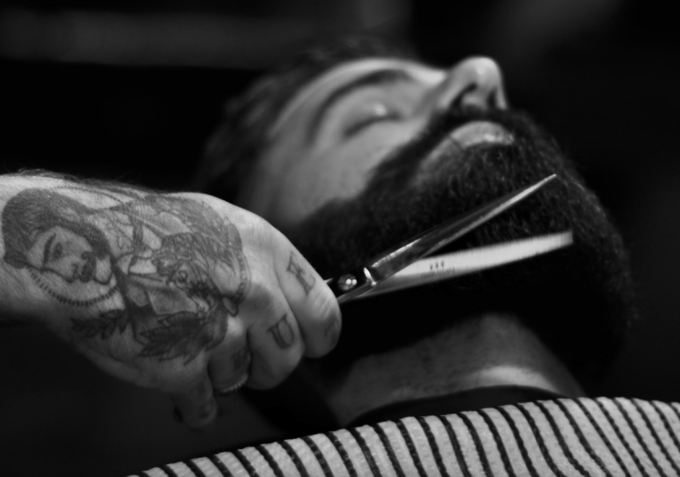
Photo by Nathon Oski
After being out of fashion since the beatnik-hippie era of the 1950s through early ‘70s, beards, mustaches and the perpetual 5 o’clock shadow are back. Trumpsters — including Donald Jr., Sec. of Commerce Howard Lutnick and Sen. Ted Cruz (R-TX) — are sporting whiskers. There are a number of ways men can fashion their beards and Men’s Health identifies 29 “best beard styles.”
One commentator, Andreas Ramos, recalls that he “first saw beards in Nashville in 2009.” He notes, “It was the working-class guys who first had rough beards. Finally, it started showing up in the college-educated classes and somewhere in 2012, it exploded. By late 2013 and early 2014, everyone everywhere had a beard.” He adds, “In 2014, we talked about this. I repeated what I saw a few years earlier in Nashville. But everyone said it was a San Francisco / Brooklyn hipster thing and the working classes copied the upper classes.”
So, why the appeal of beards over the last decade or so? Numerous commentators concur with a 2013 Voice of America assertion, “facial hair is more than a fashion statement.” As a BBC report noted, “The beard became almost the emblem of manliness, upheld as a symbol of natural male strength. Today, in an era where the campaign for gender equality sees more women recognized in positions of power than ever before, men are growing strong beards and stroking them for added measure.” Another source claims, “a beard can signal maturity, masculinity, confidence, and even a sense of warmth or protection.”
Equally significant, “Beards offer a layer of protection against external elements. They can shield the face from harmful UV rays, reducing the risk of skin cancer. Additionally, beards can trap dust and pollen, acting as a filter and possibly reducing the risk of allergies.”
However, others have raised deeper concerns linking a beard with masculinity. Helen Fisher, PhD, a biological anthropologist and a senior research fellow at The Kinsey Institute, Indiana University, offers a very simple explanation: “Like the lion’s mane: facial hair signals testosterone, lots of it, along with youth, virility, assertiveness and readiness.” The keyword is “signals.”
Tamsin Saxton, a professor of psychology, found the increase of unshaven men corresponded to historical periods when masculine identity is threatened, especially when a greater proportion of single men were competing for fewer women.
And our current era is one in which many men feel threatened. No less an authority of masculinity than Donald Trump insists “manhood is under attack.”
Andrew Smiler, PhD, a developmental psychologist, argues that concerns about “masculinity” resurface every two to three decades amidst times of social and economic crisis. He notes that this occurred during the Great Depression, during the 1960s and ‘70s (amidst the civil rights movement, counterculture and second women’s movement) and in the early-20th century and the shift to a services-based economy. This shift occurred as more women graduated high school, went to college and entered the labor movement (as a two-income family became essential) and – mostly male – manufacturing jobs declined.
The American Psychological Association (APA) indicates other factors driving this shift. There’s been an increase in male deaths due to what is known as “deaths by despair” – four times the number of men commit suicide than women, and twice as many die from drug overdoses. In addition, women live longer than men – in 2023, women live 5.3 years longer. And more men feel lonely than women – a Gallup study found about 35 percent of men felt lonely compared to 18 percent for women; most revealing, while nearly 60 percent of women sought treatment, only about 40 percent of men did.
One commentator noted, “Looking back through history, beard styles often follow particular eras. In fact, you can roughly identify a historical period by its facial hair.”
This is clearly revealed in U.S. presidents: Abraham Lincoln, the 16th president (1861-1865) was the first president; Benjamin Harrison, the 23rd president (1889-1893), was the last president to have a full beard while in office. JD Vance is the first vice president with a full beard since Charles Fairbanks, who served under Pres. Theodore Roosevelt (1905-1909).
Yes, beards are back – and the only thing that Vance and NYC Mayor Zoran Mamdani seem to have in common is their beards.