
Ten years ago, when it came time to revamp the UConn Honors Program for a new generation, program director Jennifer Lease Butts knew there was an invaluable resource to tap – right here on campus.
UConn is recognized across the country for its research in gifted education. It is, quite literally, home to the National Center for Research on Gifted Education, as well as the Renzulli Center for Creativity, Gifted Education, and Talent Development. And the latter’s namesake, Joseph Renzulli, is one of the world’s foremost experts in the field. His three-ring model of giftedness has become foundational for gifted education at all levels.
What better way to design a curriculum for Honors education at UConn than to implement findings from research conducted right here at UConn?
Thus, the UConn Honors Program was (re)born.
“It was really about wanting to build something different, to make Honors education at UConn a signature feature – to bring in elements that were research-based, that were intentional,” says Lease Butts. “Anybody can require a thesis. But if you don’t know why you’re requiring a thesis, then it’s just a paper.”

Lease Butts worked with then-Vice Provost for Academic Affairs Sally Reis (another nationally prominent gifted education researcher based at UConn, who happens to be Renzulli’s research partner and wife) and Jaclyn Chancey ‘13 Ph.D., to form a committee in charge of revising the Honors curriculum. They worked to adapt the key findings from Renzulli’s and Reis’ research into meaningful experiences for college students.
“When I joined UConn Honors in 2013 … we had ‘pillars’ that talked about what we did, but nothing talked about why,” says Chancey, who is now the Associate Director of the program. “I realized that those pillars, as well as the values expressed by our staff, aligned with the different Renzulli models. I proposed what eventually became the theoretical model” for the program.
Chancey was able to integrate findings from her own doctoral research conducted at UConn, which focused on supporting gifted college students, and built upon the foundational research of Renzulli and Reis.
“The entire process — from having the initial idea, then working with the task force to create the new curriculum, and finally seeing the students engage with it and thrive — is without a doubt the most satisfying experience of my career,” Chancey says. “It was a fantastic team effort, and I’m very proud that we have, to the best of my knowledge, the only college or university program in the world explicitly based on these models.”
Today, the UConn Honors curriculum boasts an evidence-based set of unique opportunities for students, organized under the three pillars of exploration, creativity, and leadership.
It was a fantastic team effort, and I’m very proud that we have the only college or university program in the world explicitly based on these models.
Honors students can choose to pursue extra depth in their major, graduating with the distinction of Honors Scholar. Or, they can add on to this by taking additional Honors courses across a breadth of fields and pursuing extra co-curricular experiences, earning them the University Honors Laureate distinction.
“UConn classes are plenty difficult already; with Honors classes, it’s really about going deeper,” says Lease Butts.
Going Deep
Renzulli loves to tell the story of how he became interested in gifted education. Early in his career, he was working as an elementary school teacher and was asked by the district superintendent to start a Saturday program for students with IQs of above 130 (this used to be considered the “official” cutoff point for giftedness).
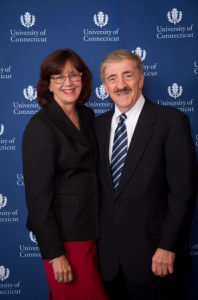
“I knew that I had a lot of students in my general science class who were just as interested and as talented in science as those high-IQ kids,” Renzulli says. “So I started sneaking these new kids into my Saturday program. And they did just as well – in many cases, better.”
This strengthened his growing conviction that giftedness was something more dynamic – and expansive – than the way it was traditionally imagined. His subsequent research into this topic led him to develop the three-ring model of giftedness. Beyond thinking of giftedness as only linked to IQ (or above-average ability), Renzulli showed that it was also tied to task commitment and creativity.
When Renzulli was able to get this research published – a tough sell, he says, since most journal editors at the time were staunch adherents to the 130-IQ cutoff point – it “just got legs.” Then it ran away on those legs. Today, it is the most widely cited article in the field.
From there, Renzulli went on to develop the Enrichment Triad Model of gifted education, which is designed to encourage creative productivity. Beyond just getting good grades, creative productivity is what happens when students are excited and engaged, using their gifts to positively impact the world around them.
The Enrichment Triad Model emphasizes three different types of enrichment activities for students: general exploratory activities (like a guest speaker in a classroom), group training activities in areas like creative and critical thinking skills, and investigation of real-world problems. It’s no coincidence that the UConn Honors curriculum also prioritizes all three.
For example, a requirement for the University Honors Laureate track is called Academics in Action, an activity that combines a student’s academic knowledge and creativity to produce something that is shared with an authentic audience. Lease Butts champions Academics in Action for its multi-modality, allowing students to explore interdisciplinary interests without being constrained to their major field of study.
“It’s common for us to have students who are interested in neuroscience, and then they’re also writing for the Long River Review,” she offers as an example. “Academics in Action really gives them a way to add in that additional element.”
Another Renzulli model, Operation Houndstooth, is also foundational to the current structure of the Honors Program. Operation Houndstooth (so named for the interlocking geometric shapes in the houndstooth pattern) considers interlocking traits in gifted individuals that can encourage them to use their gifts for social good.
“For example, we have an entire set of offerings around ‘Staying Whelmed,’ which are essentially about supporting our students as people and ensuring that they have the tools they need for creative productivity,” says Chancey. “We also do a lot around community, leadership, and service that connect to Houndstooth’s goals of creative productivity towards the common good.”
Finding Sparks
Another staple of the Honors curriculum is co-curricular activities which enhance and support students’ learning. From lecture series to film screenings to community-building events, the Honors calendar stays packed with opportunities.
This, too, is based on research. Reis has found that creative productivity and engagement are often sparked by experiences like this.
“If you study adult gifted individuals who have gone on to make big and important intellectual or creative contributions, it almost always goes back to an experience that inspired and engaged them – a field trip, a project, a lecture they attended,” says Reis.
There’s no telling what will spark someone’s interest or alter the course of their lives. So the Honors Program provides as many opportunities as possible for students to have these moments – whether related to their major area of interest or something completely unexpected.
For Reis, these experiences are all about instilling the values of creative productivity in students, setting them up for lifelong learning and success. She emphasizes that they help students think about education beyond just the typical classroom environment, equally championing creative problem-solving and expression.
“We hope to increase the reservoir of highly creative and productive people in all areas,” Reis says. “We want more creative students, in all majors, who think about solving important problems.”
Proof Positive
During the 2016 refresh of the Honors Program, Lease Butts not only wanted to make the curriculum “more responsive, and more reflective of new thinking on what an Honors curriculum can and should be” – she also wanted to expand the program’s reach.
“If you want an Honors education at UConn, it’s our job to make sure you have one,” Lease Butts says. “That’s been very, very important to me – that no matter what campus your feet are on, you can get an Honors education if you want one.”
Her efforts have paid off. Currently, there are over 2,400 students enrolled in the Honors Program across 77 majors, at all UConn campuses offering undergraduate degrees. Since 2002, the number of Honors students at UConn has more than doubled.
Additionally, a third of incoming Honors first-years in 2023 were first-generation college students, reflecting Renzulli’s principle of purposely opening gifted education opportunities to people who have been historically excluded from them.
The program is ranked in the top 10 nationally, and its alumni have gone on to achieve prominence in many fields.
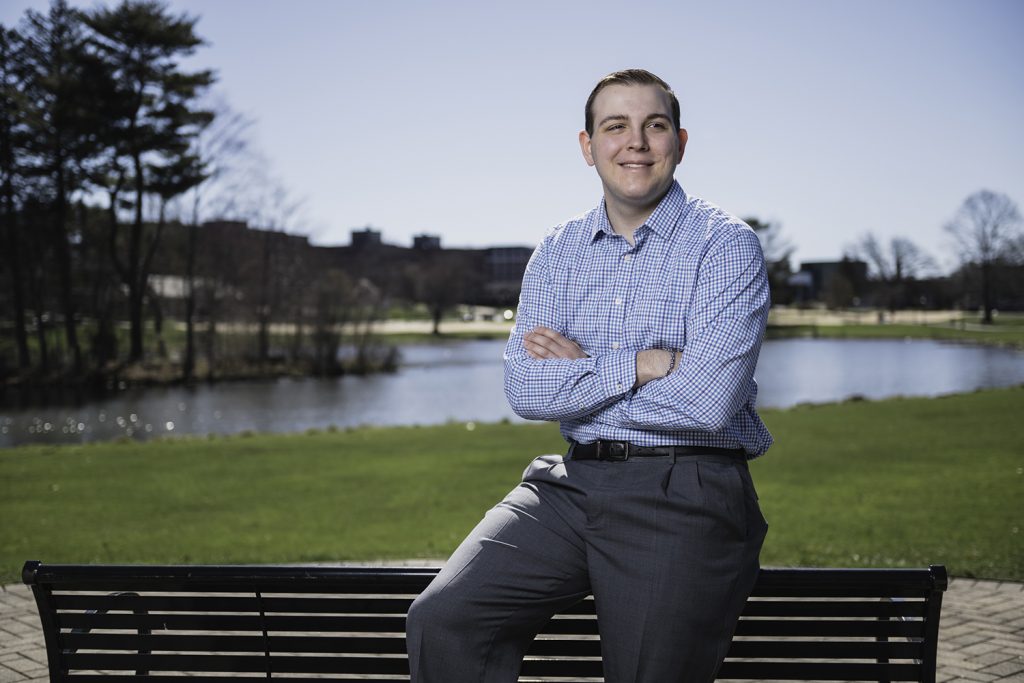
“At UConn, the Honors program has brought me closer to like-minded people who are driven to succeed in all ventures creative,” says Alex Renzulli, a first-year student in Honors and the Department of Digital Media & Design, who is the grandson of Sally Reis and Joe Renzulli. “In the program, I’ve found friends, peers, and mentors who shape my time by collaborating on projects and activities. My collective of wonderful people has created an experience built upon teamwork and, simply, fun.”
“The Honors Program is so much more than the coursework that goes into Honors Scholar or University Honors Laureate – it’s about the structured opportunities to explore your passions and interests,” says Christian Chlebowski ’24, ’24 MSA, who graduated with two bachelor’s and master’s degrees simultaneously. “As an Honors Guide for Peer Success, it was always a joy to walk down Fairfield Way after the Honors Program Welcome during Week of Welcome and recognize and strike up conversations with first-year Honors students. Oftentimes, those conversations were the first of many chats I had with peers about coursework, life at UConn, and dreams for life after UConn. That’s what the Honors Program provides – an opportunity for connection, growth, and discovery.”
Since graduating from UConn, Chlebowski has held an internship in finance for the Walt Disney Company and worked for the Governmental Accounting Standards Board (GASB). He’s now working as a senior associate at the accounting firm KPMG.
“So many of my post-UConn experiences tie back to skills I developed and refined in the Honors Program,” Chlebowski says. “It’s because Honors challenges students to think inter- and multi- disciplinarily, and challenges students to push themselves in general (while staying ‘whelmed,’ of course!), that it sets students up for success beyond Storrs.”