
“The Ames Research Center was very instrumental in helping us do some modeling to reduce those vibrations and make it a smoother and a more positive ride as the crew goes up,” Cobb said.
Once those checks are complete, Orion will perform a translunar injection burn — the “push” that sends the spacecraft from Earth’s parking orbit — sending the crew on a four-day journey toward the moon. The spacecraft will travel more than 230,000 miles from Earth and carry its human passengers about 4,600 miles beyond the moon’s far side, farther than any humans have traveled before.
For scientists, the mission is also a chance to gather new data about the moon and the deep space environment.
“We’re also going to be doing lunar science on board the Orion vehicle, taking pictures and giving descriptions and annotating what they see,” Young said, adding that astronauts will act as field observers, documenting what they see in real time.
The moon preserves a record of impacts and geological processes stretching back billions of years — a history largely erased on Earth by weather, oceans and plate tectonics.
“The moon is a witness plate for our entire solar system and also for us here on Earth,” Young said. “By studying the moon, we learn about Earth and the evolution of the entire solar system.”
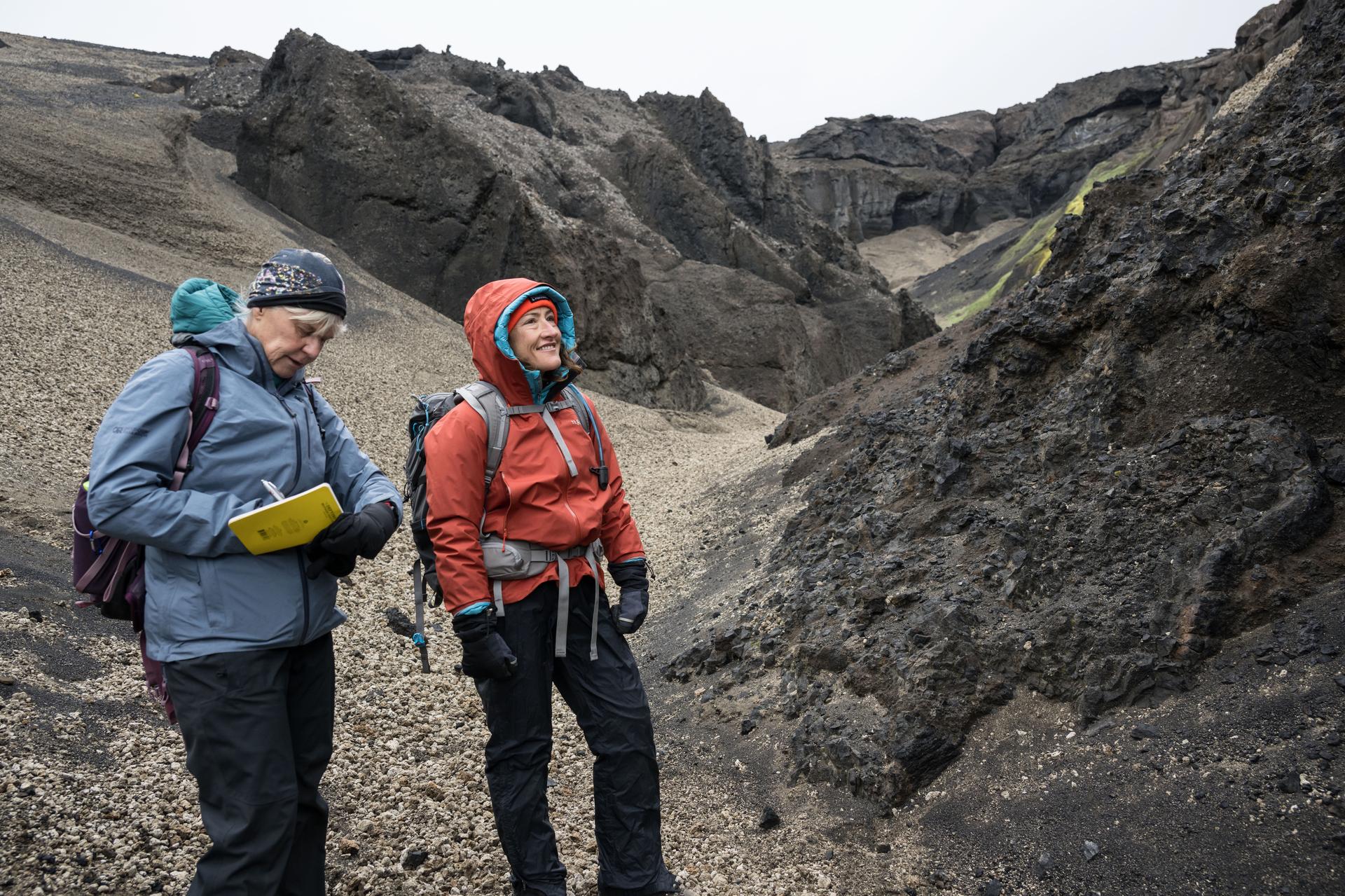
Observations from Artemis II will help scientists identify areas for future exploration, including the lunar south pole.
The mission also includes research into how astronauts’ bodies respond to deep space conditions, especially radiation. Unlike astronauts aboard the International Space Station, Artemis II’s crew will travel beyond Earth’s protective magnetic field.
“We’re actually beyond the sort of protective bubble of the Earth,” said Dr. Nicola Fox, associate administrator for NASA’s science mission directorate.
To study these effects, the mission will track how the human body responds to microgravity and radiation, data that could shape medical planning for future missions. “As we’re thinking about sending our astronauts to Mars, we’ll be able to look at how individual people respond,” Fox said.
In addition to human health research, Artemis II will carry small satellites and experiments to study radiation and solar activity — factors critical for long-duration missions.
These satellites will look “at things like radiation exposure of solar winds, solar X-rays,” Cobb said, “things that will have eventual impact when we try to continue to fly humans in deep space.”
After looping around the moon, Orion will return using a “free-return” trajectory, also known as a “figure-eight,” relying on the combined gravity of the Earth and moon to guide it home.
“It’s a very clever and complex orbit,” Cobb said, describing how the trajectory uses the moon’s gravity to “harness” a fuel-efficient path back to Earth.
The spacecraft will reenter Earth’s atmosphere at high speed, generating temperatures near 3,000 degrees Fahrenheit before deploying parachutes and splashing down in the Pacific Ocean.
For NASA, Artemis II is part of a broader effort to establish a sustained human presence on the moon and eventually send astronauts to Mars.
“I’m just so excited that we’re standing on the precipice of this next generation of human exploration,” Young said.
Viewers can watch a live stream of the Artemis II launch via NASA’s YouTube channel. The two-hour launch window starts at 3:24 p.m. PDT.