

New findings from an underwater archaeological investigation near Asini in Argolis, Greece, are offering fresh insight into a submerged harbor complex that remained in use across multiple construction phases.
The latest fieldwork took place from September 29 to October 1, 2025 in waters near the archaeological site east of Tolo. The area is characterized by a natural harbor and a hill that strengthened its defensive position, helping sustain habitation from prehistoric times through the historical period.
Greece expands underwater archaeology research in Asini, Argolis
The 2025 excavation forms part of a five-year research program launched in 2022, following a pilot survey in 2021. The project brings together Greece’s Ephorate of Underwater Antiquities, the Swedish Institute at Athens, and Stockholm University, with additional participation from the University of Gothenburg and the Nordic Maritime Group.
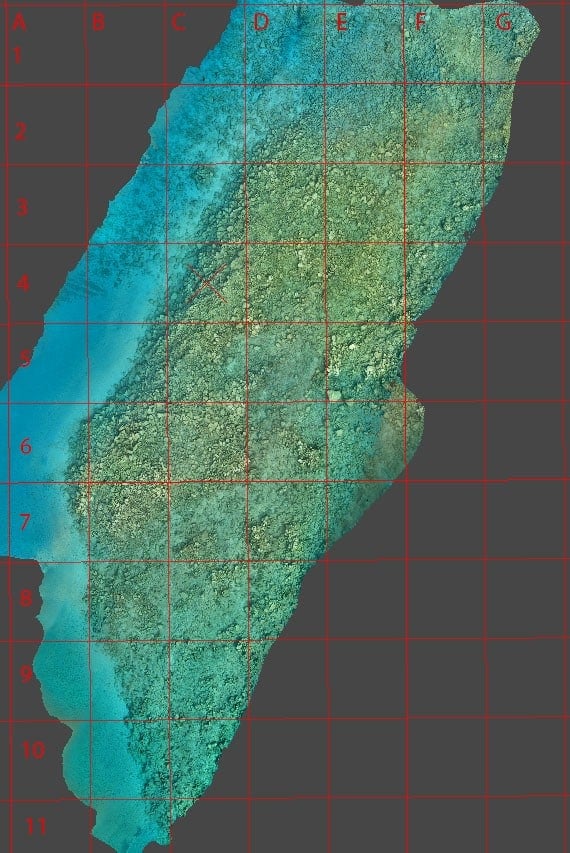
The research, carried out from 2021 to 2025, has mapped the scale and character of a large artificial harbor installation located east of the Kastraki area in Asini, a historic site in the Argolis region of southern Greece. Its main feature is a substantial man-made platform built in shallow water, highlighting sophisticated maritime engineering and the strategic use of the coastline in antiquity.
2025 season focused on dating and function
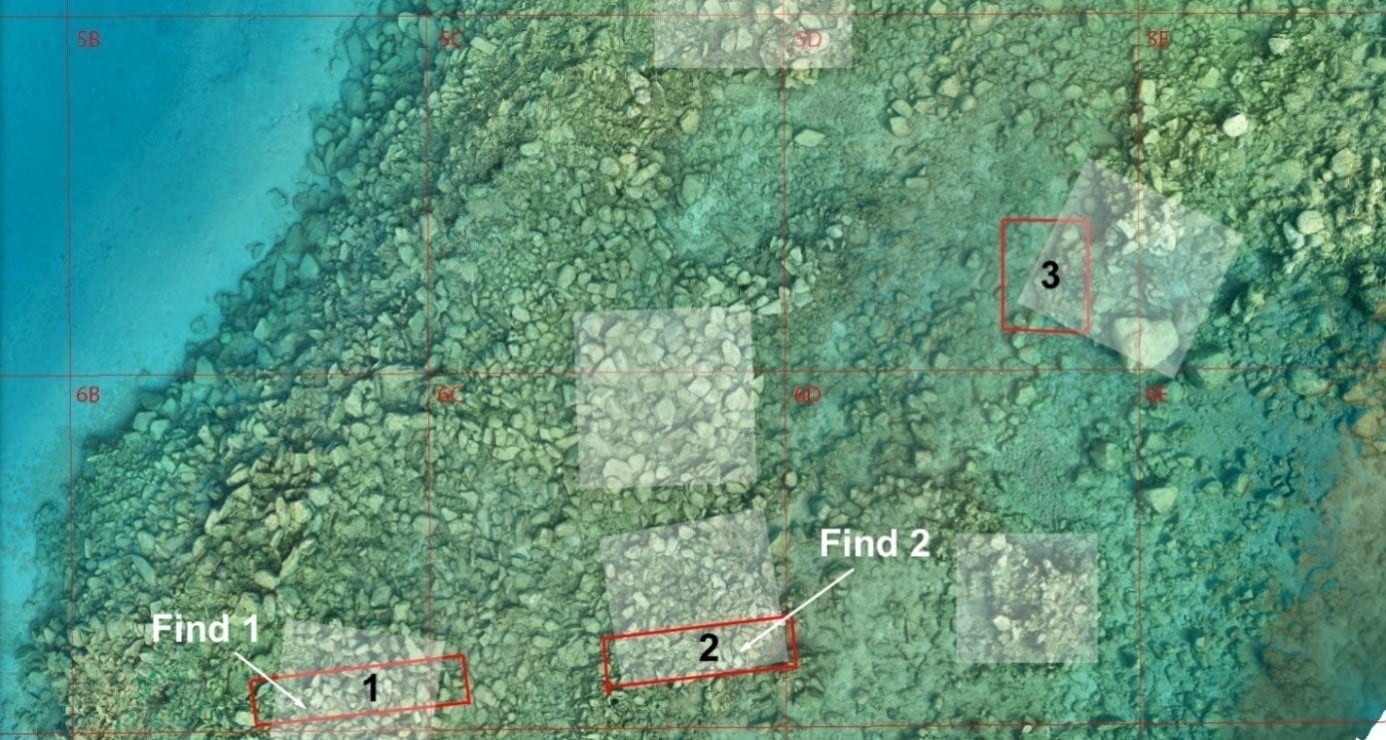
This year’s campaign aimed to date and further investigate the structures identified atop the underwater platform in order to clarify their purpose. At first glance, the platform appears as a broad accumulation of stones.
Closer examination, combining a three-dimensional model created from the 2021 and 2022 surveys with direct underwater investigation, revealed stone-built features that stand out either because of their distinctive shapes or because they incorporate stones of a particular size. To establish the age of these structures, researchers moved stones from three of them to determine whether datable objects had survived between the layers. The effort yielded limited results, with only two ceramic sherds recovered from among the stones.
Evidence points to multiple building phases at Asini
The 2025 field season led researchers to an important conclusion. The roughly square structures atop the platform most likely belong to different chronological phases and probably represent the remains of pier foundations constructed with wooden caissons filled with stones. After the timber decayed, only the stone fill remained.
Researchers believe these caisson-based installations postdate the platform itself, indicating that the harbor infrastructure continued to evolve after the original structure was already in place.
Roman-era platform kept serving Argolis harbor activity
Earlier field seasons had already suggested that the platform itself, particularly its clearly defined western extension, dates to the Roman period. Archaeologists base this interpretation on amphora fragments recovered from within the structure.
With its distinct outer edge, the platform resembles a quay that originally projected above the waterline. As sea levels rose, the structure sank below the surface. By constructing piers with timber-framed foundations atop the submerged platform, ancient users were able to keep the area in operation for loading, unloading, and boarding activities.
International team presses ahead with Asini harbor study in Argolis, Greece
Further analysis of the three-dimensional model, together with the dating of materials collected during earlier research seasons, will help guide future interpretations of the submerged structure and its role within the harbor of Asini.
On the Greek side, Dr. Panayiota Galiatsatou, a diving archaeologist with the Ephorate of Underwater Antiquities, directed the marine excavation. Representing the Swedish team, Professor Ann-Louise Schallin, scientific director from Stockholm University, and Dr. Niklas Eriksson, field director from the same university, led the project.
The wider team also included Paraskevi Micha, diving archaeologist at the Ephorate of Underwater Antiquities; Spyridon Moureas, diving technician; BA Jens Lindström from the Nordic Maritime Group; and MA Staffan Von Arbin from the University of Gothenburg.