
In some of Mikel Arteta’s discussions with players’ camps — covering fitness issues and the various complications of this campaign — there has often been a rallying cry at the end: “We have a title to win.”
Of course, it’s not just about that. Arsenal aren’t the only team in such a position. Arteta can still aim for the classic treble of Premier League, Champions League and FA Cup. Manchester City, meanwhile, can still secure a domestic treble — its second.
While this certainly raises the stakes for this weekend’s FA Cup games and the remainder of the season, and while the achievement of both teams is undeniably impressive, there is a more fundamental issue worth discussing.
It concerns the value placed on managers’ approaches, the broader debates around the modern Champions League, and the recent conversations about Arsenal’s injury problems.
The campaigns of Arsenal and City mark the sixth and seventh examples since the start of 2020–21 — essentially, the Covid break — that a season has reached April and a team can still go for at least some form of treble.
In the decade before that, there were only three such examples from the Premier League. In the decade before that, it was five.
Such a drastic increase — a situation only matched by Manchester United and Chelsea going for almost everything in the 2006–07 campaign — runs parallel to a much more meaningful shift. It’s actually a simple stat that fully shows just how much has changed. Things weren’t “always like this.”
Before 2008, there had famously only been four trebles involving the European Cup/Champions League. They were Celtic 1966–67, Ajax 1971–72, PSV Eindhoven 1987–88 and Manchester United 1998–99.
So, only one from the major leagues. The feat had, for five decades, been considered close to impossible in some of the biggest competitions — to say nothing of how the now-humble double used to carry mystical qualities in English football.
And since 2008? There have been seven in 17 seasons, with Barcelona and Bayern Munich doing it twice each.
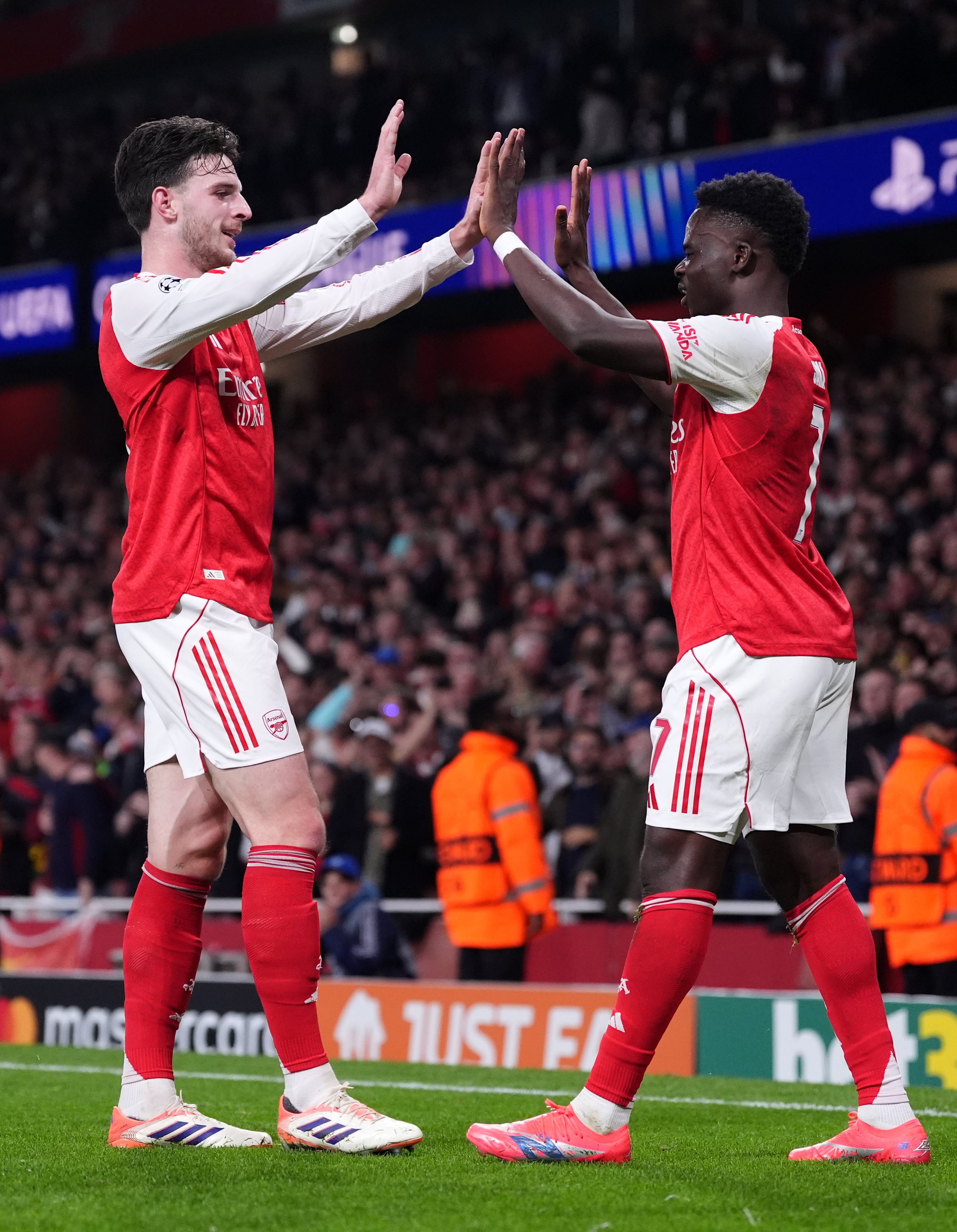
Such a rudimentary comparison reveals more about the worrying concentration of wealth in European football and the circumstances that led to the Super League than any other stat.
You don’t even need to go over the important ground, like how the Champions League and everything around it just funnels more and more money to the same few clubs in a self-perpetuating system.
What is perhaps most relevant here, however, is how little will there is to solve any of that.
Such questions are occasionally put to Uefa leadership, and many of the most well-meaning would love to tackle it. “There’s just not much energy to actually do it,” as one senior source complains.
Some of the same leadership merely throw their hands up about how Bosman completely changed “the European space,” which reflects how long they have been in the game. A core of them are now close to retirement.
This has bred a certain conservatism — or at least a staleness — about how the system should be.
Put bluntly, there is not exactly much new thinking or innovation about how any of this could be restructured.
The same path has been followed for three decades, which is perhaps inevitable since it involves many of the same figures, like Florentino Pérez.
Hence it has been left to more diverse new bodies, like the Union of European Clubs — who have just signed up another historic Uefa club competition winner in Aberdeen — to posit solutions. They worked for 18 months on various financial models, only to realise the landscape had so many individual exceptions that certain ideas became “a sprawling mess.” The body’s officials eventually arrived at the elementary but obviously effective solution: just change the distribution of prize money so that more clubs have a chance at becoming commercially attractive. Rather than 74 per cent of all prize money going to qualified clubs, only 50 per cent would. The rest would be distributed through the Europa League and Europa Conference.
Rather than perpetuating a further problem of a Partizan Belgrade dominating Serbian football because they win one European match and receive so much money, the plan is that more money simply goes to the individual leagues — rather than the clubs — to share out.
It all seems so obvious.
Except, the description within Uefa has been that this is “extreme,” even though it would merely start to return European football closer to what it was for most of its existence. The continental governing body is currently in a partnership with European Football Clubs — the main club representative body, previously the European Club Association — so these ideas won’t even really be considered.
And yet there is also the possibility that Uefa themselves have inadvertently come up with the most extreme counter-measure you can, at least as regards the wealthiest league. It has already been discussed in this newsletter how the expanded Champions League has created chaos for Premier League clubs.
Or, in a rather delicious irony, the increased money from more European matches can’t actually be spent on the type of squad required to successfully navigate everything. English requests to increase Champions League squads to more than 25 players have been rejected.
And this is generally why teams don’t yet win quadruples. Something eventually has to give.
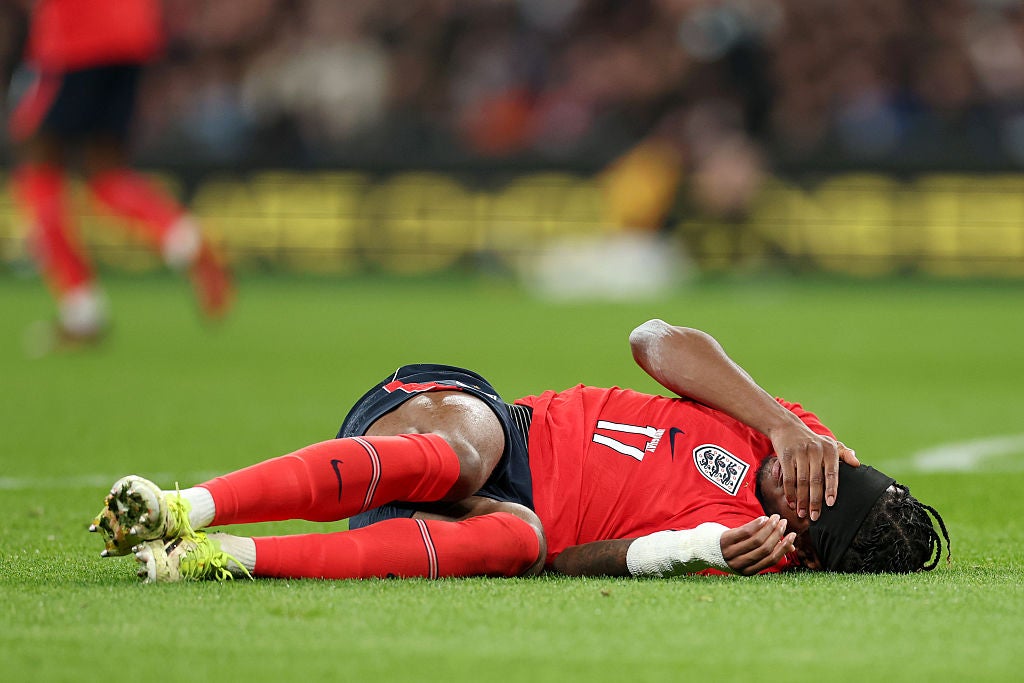
This is exactly what Arsenal found, as they just looked jaded in that Carabao Cup final second half. They’d had the emotionally taxing win over Everton eight days before, and a demanding Champions League game against Bayer Leverkusen in between.
That partly explains the number of international withdrawals last week – Arsenal themselves had 10. It isn’t exactly a mystery. Managers like Thomas Tuchel are as worried, since they want their best players fresh. National team staff could immediately see that many Arsenal players had played a huge number of minutes this season, due to games every three days almost all season, so even the slightest concern — or “discomfort,” as Tuchel put it — was sufficient to send players back. Declan Rice, for one, had been close to the edge before that Carabao final.
Is it possible that Arsenal could find themselves in a 2026 version of what Don Revie’s Leeds United regularly went through in the 1970s?
By being good enough to go for everything, you end up with very little.
While that has brought more focus within the game on the perceived intensity of Arteta’s training, this is also why the Arsenal manager has built a squad this big.
And it’s also where this weekend could further influence the title race. If both Arsenal and City get through to the semi-finals of the FA Cup — against Southampton and Liverpool respectively — it’s just more congestion. The rare free midweeks remaining are consumed by rearranged games.
Even Pep Guardiola’s team could face a crunch right at the end. They still need to play their game in hand against Crystal Palace, after all, but that is complicated by the London club’s own ongoing participation in the Conference League.
Everyone, in so many ways, is needing to find new solutions to so many new problems.
Constantly going for trebles has left clubs with the same singular complaint.
Get Inside Football direct to your inbox

The article above is an excerpt from the Miguel Delaney: Inside Football newsletter.
Members of Inside Football and Independent Premium subscribers can get the full column – plus additional reporting from inside the Premier League – delivered to their inbox every Friday.
This week’s members-only newsletter also includes:
- The wait for a Man City verdict rumbles on – but a theory develops
- Spurs turning to Roberto De Zerbi sparks ‘shock’ – and intrigue
- How Italy lost their way – leading to more World Cup heartbreak
Simply sign up here.
Once you join, the full Friday edition of Miguel Delaney: Inside Football will be delivered to your inbox.
The members-only newsletter is sent at midday every Friday.