
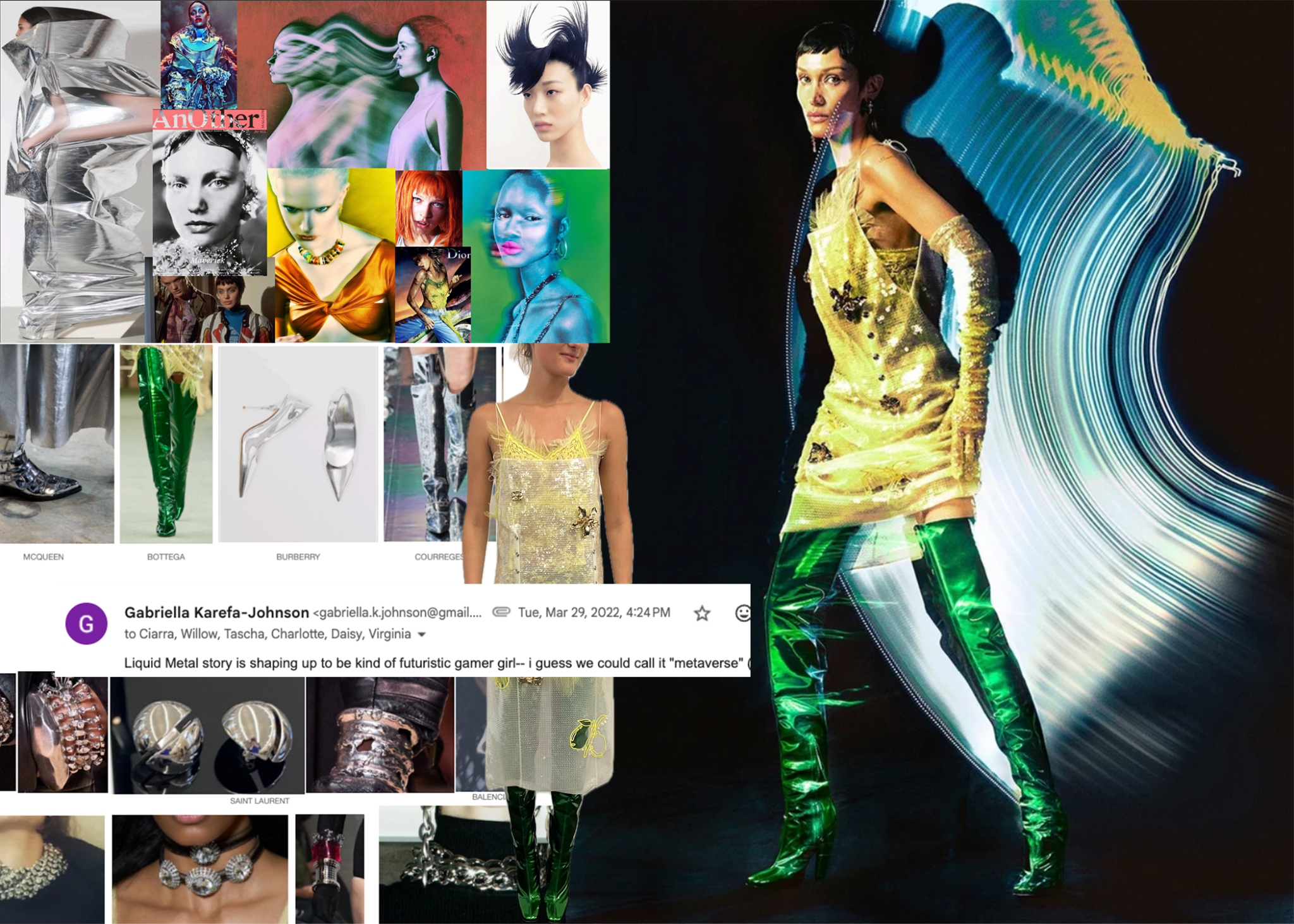
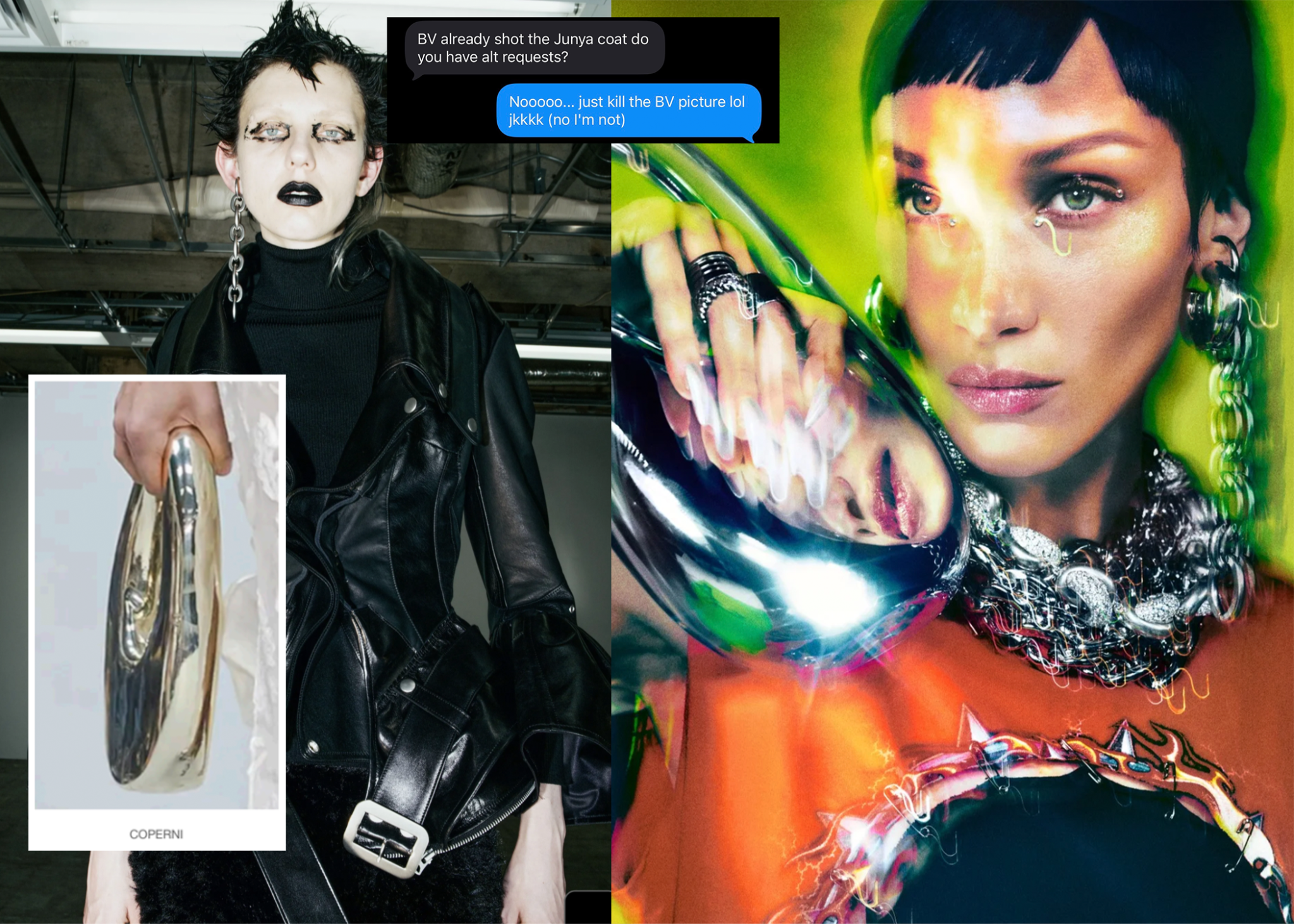
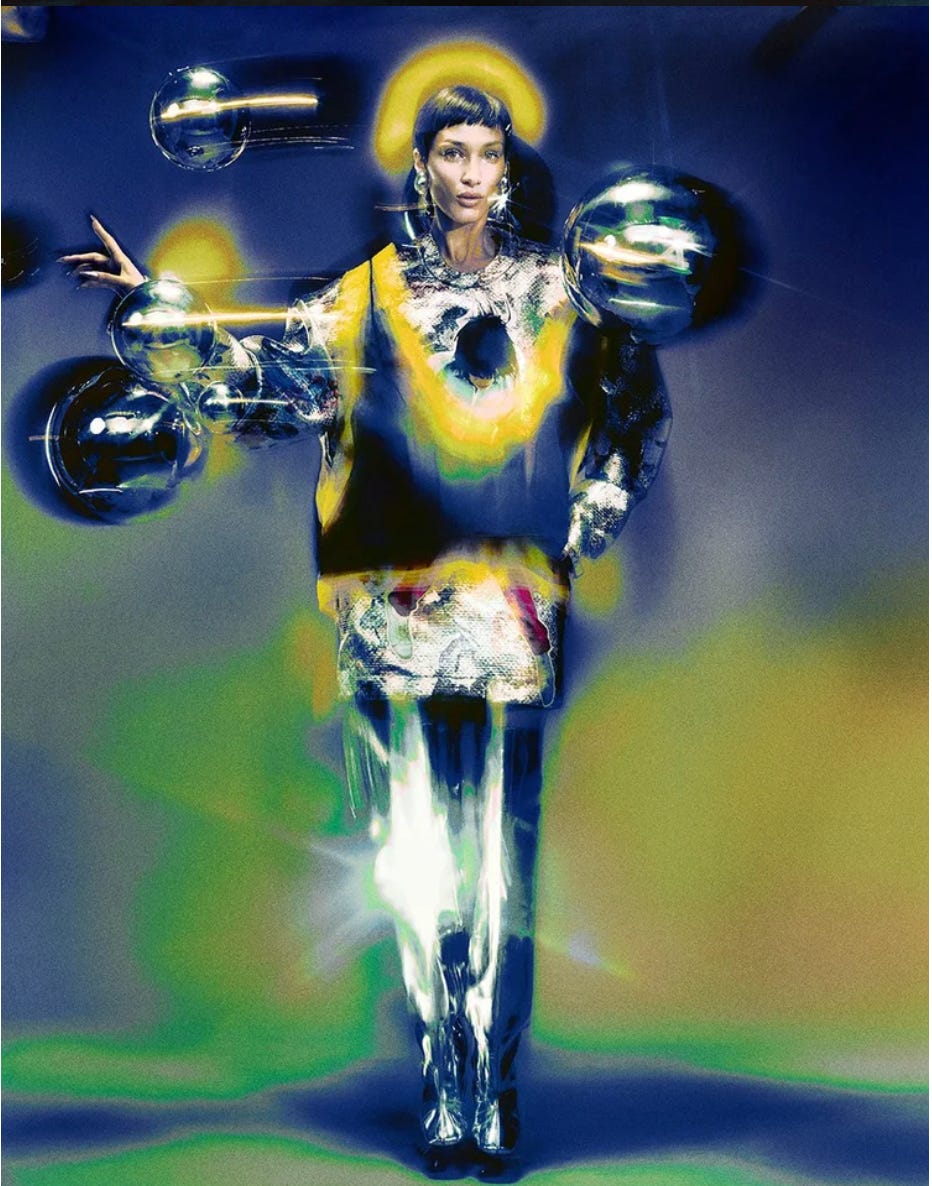
Some of my favorite pictures of Bella Hadid were taken by Elizaveta Porodina and styled by me for Vogue Magazine. The story was called “Liquid Metallics” my exploration into the hyper glossy, chromatic accessories we were seeing on the runway that season, and glitchy, techy way designers were engaging with synthetic plastic fabrications and embellishments like mirrored leather, pailettes, and rhinestones. The muse was equal parts Angelina Jolie in Hackers and Milla Jovovich in the The Fifth Element… classic GKJ mashup.
Actually, the whole thing was so damn Brain Matter coded, let me just share a couple quick process-to-product collages and a link to the full story here:
Elizavetta was the only photographer that could have pulled it off, and she hadn’t yet made her Vogue debut so it was risky! But the images set the internet on fire… They made waves, because of the subject of course, but also because they didn’t look like Vogue. They looked like the internet in 2021.
The story was met with mixed reactions inside the Condé Building but beloved everywhere else. And, it’s because Elizaveta’s approach to taking pictures is not only entirely unique, but was then, and still is, ahead of it’s time.
For years, and I say this as someone who lived inside those years and at times attempted to participate, a particular coldness has colonized the editorial image. Fashion pictures kind of turned into concepts of a fashion picture. Color was something to avoid. Lighting became at once much more warmer or much colder than natural and not far enough in either direction to be fantastical. It seemed to be the case that a singular, instantly identifiable visual voice stopped being an asset for the photographers making the images, and became a liability. Something that marked you as unbendable, unamenable, too “specific,” too much.
What replaced specificity in magazine shoots was a kind of house style that metastasized across mastheads: the magazine’s identity swallowed the photographer’s vision.
I am pro-visual identity and actually love the idea that a magazine can be organized under the same aesthetic principles but when there isn’t variety in the voices shaping those principles– when there isn’t diversity– the proof of concept suffers. Especially when different magazines use the same photographers as each other.
Only the most industry validated voices survive that system, and if you make the same image for every outlet well… the fatigue is fast to set in.
If you made pictures that were ebullient, colorful, energetic, and constructed with the specific intention of pleasing the eye, you were often categorized using fashion’s most insidious slur: commercial. To make something automatically registrable as beautiful was to be suspected of pandering, or worse, not understanding the intellectual elitism implicit in “taste”. To want to please the viewers was unserious. A lesser valued pursuit. As if difficulty and legibility were the only available metrics for a good photograph. As if the desire to be brought in, to feel something, to be entertained, were signs of a weak visual appetite.
I suppose this is the real world application of algorithmic thinking… wonder and discovery fall behind “proven” or “valid”work.
But when one can recognize the outlet before you can recognize the artist, and contribution becomes a sort of compliance, we’re in the danger zone.
I’ve understood this moment as a symptom of something far broader than aesthetics. To me, it signals a cultural conservatism that positioned narrowness and palatability as refinement.
Maximalism, decoration, joy were all coded as cheap, but restraint became the marker of intelligence.
The effect on working photographers is real and lasting. I don’t mean to say that some of the more often employed devices for a “good” fashion image have not become legitimate aesthetic preferences that have defined entire art practices and marketing models: sad models contorted into odd shapes, muted tones, orange light etc, etc. But I do think it is demonstrative of a concerted effort to alienate the very audience that props up these businesses under the guise of elevating them.
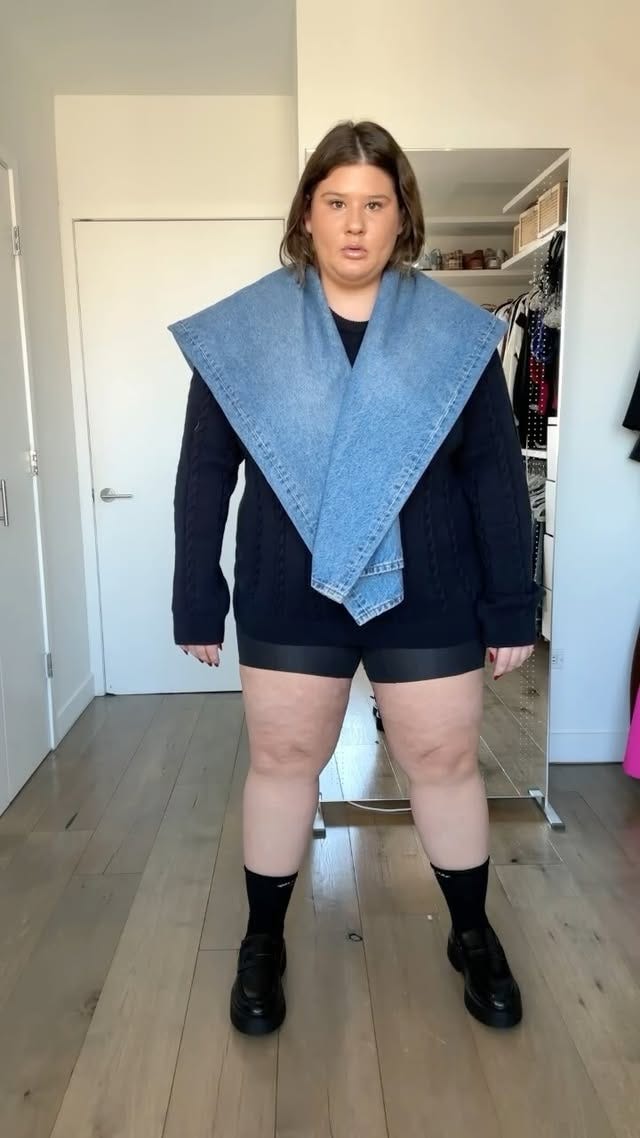
One very prime example is Zara, a retailer that has over the last few years tried to surpass their fast fashion designation by employing more “editorial” standards in image making.
I CRACK UP every time I see one of Remi Bader’s realistic Zara hauls mimicking the editorialized e-comm images.
I concede that I could be projecting as someone who has fought for legitimacy while operating between the world of mass appeal and the various micro niches that make up capital F fashion, but the capacity to speak to a wide audience– to make pictures that cross distance– has somehow become something to manage rather than deploy. I sat at the smaller colder tables and resisted the urge to flinch, because I understood the assignment: make myself smaller, fall in line. Assimilate and they will want you.
Nobody wants that. Not really. Not the photographers, not the readers, not even the editors enforcing the doctrine. We want to feel something. We want to find pleasure almost everywhere, when the baseline condition of being alive in 2026 already asks quite a lot.
Which is why the visual shift happening in editorial fashion image making right now matters.
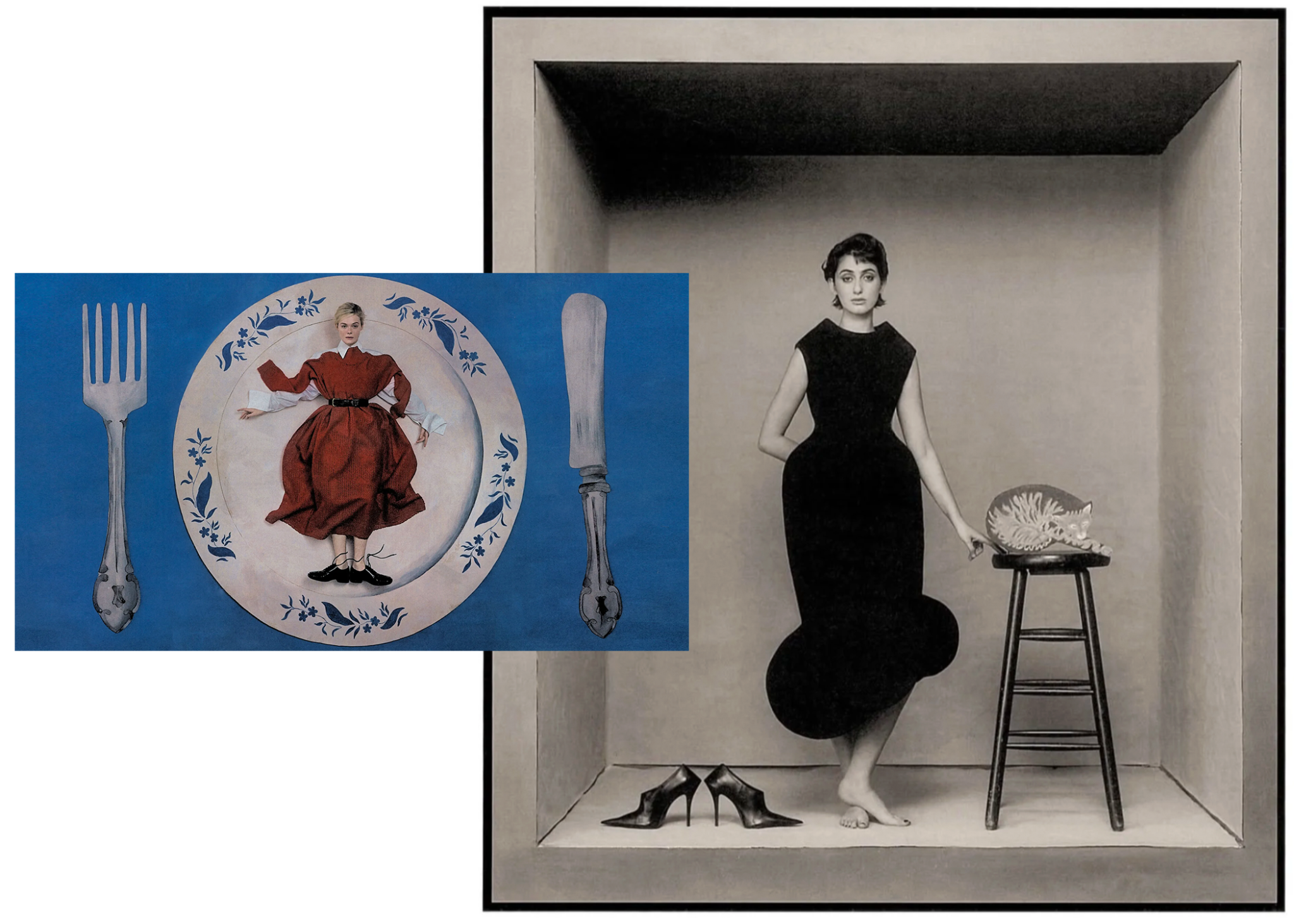
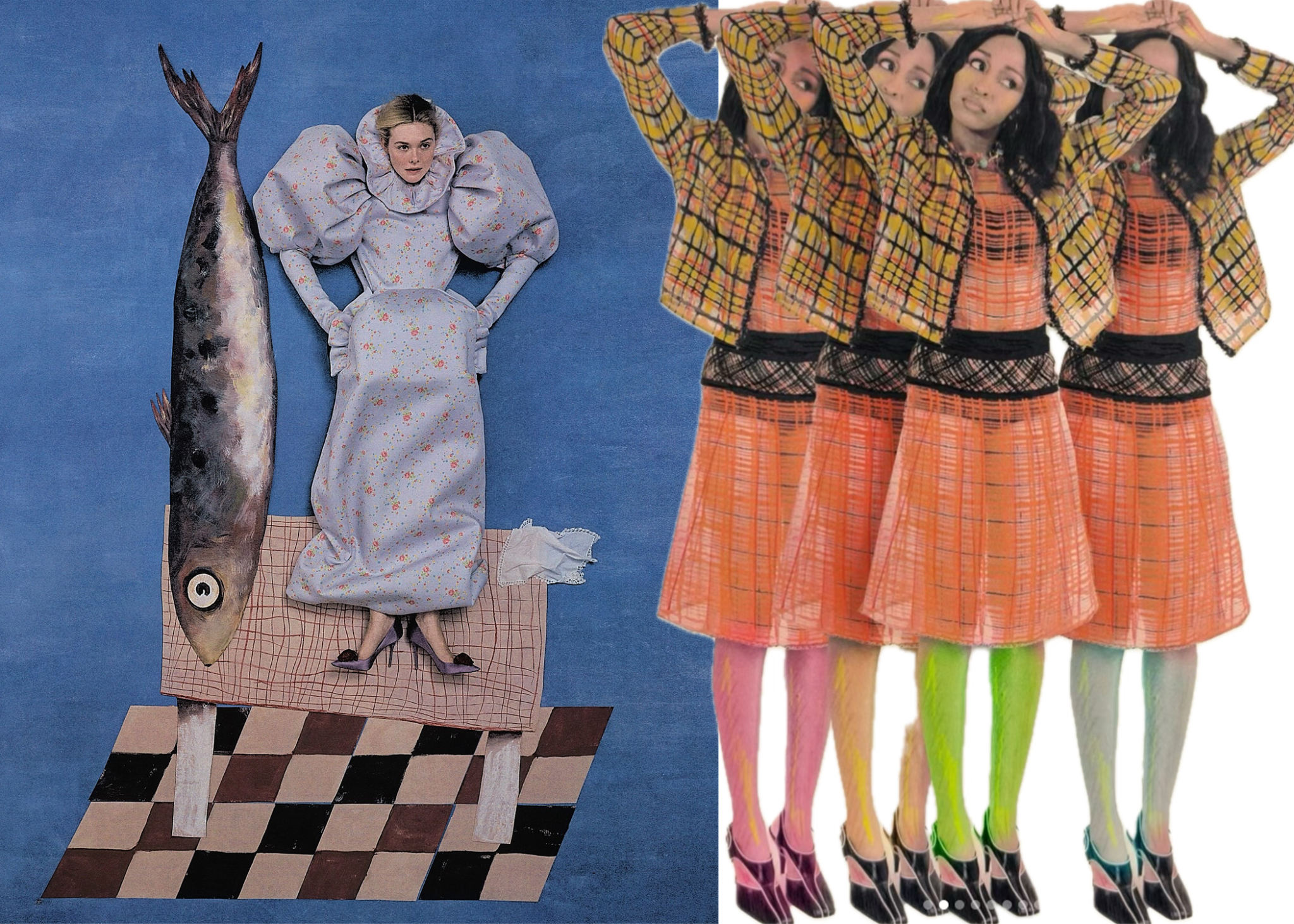
Let’s start with Szilveszter Makó. His photographs of Rama Duwaji, first lady of New York, for The Cut have moved through the internet with a force comparable to a massive socio-cultural event.
The images are radical because they demonstrate the mutual confidence and stylistic integrity of both a subject and image maker in total control who haven’t asked for permission to step outside of the status quo. Equally, the artist’s story of Elle Fanning for the cover of Who What Wear, also carries the specific electricity of work that refuses to negotiate with institutional timidity. The colors do what colors want to do… and the pleasure is the point. It is not art because it makes you feel like you’re missing something, it’s art because it makes you feel at all.
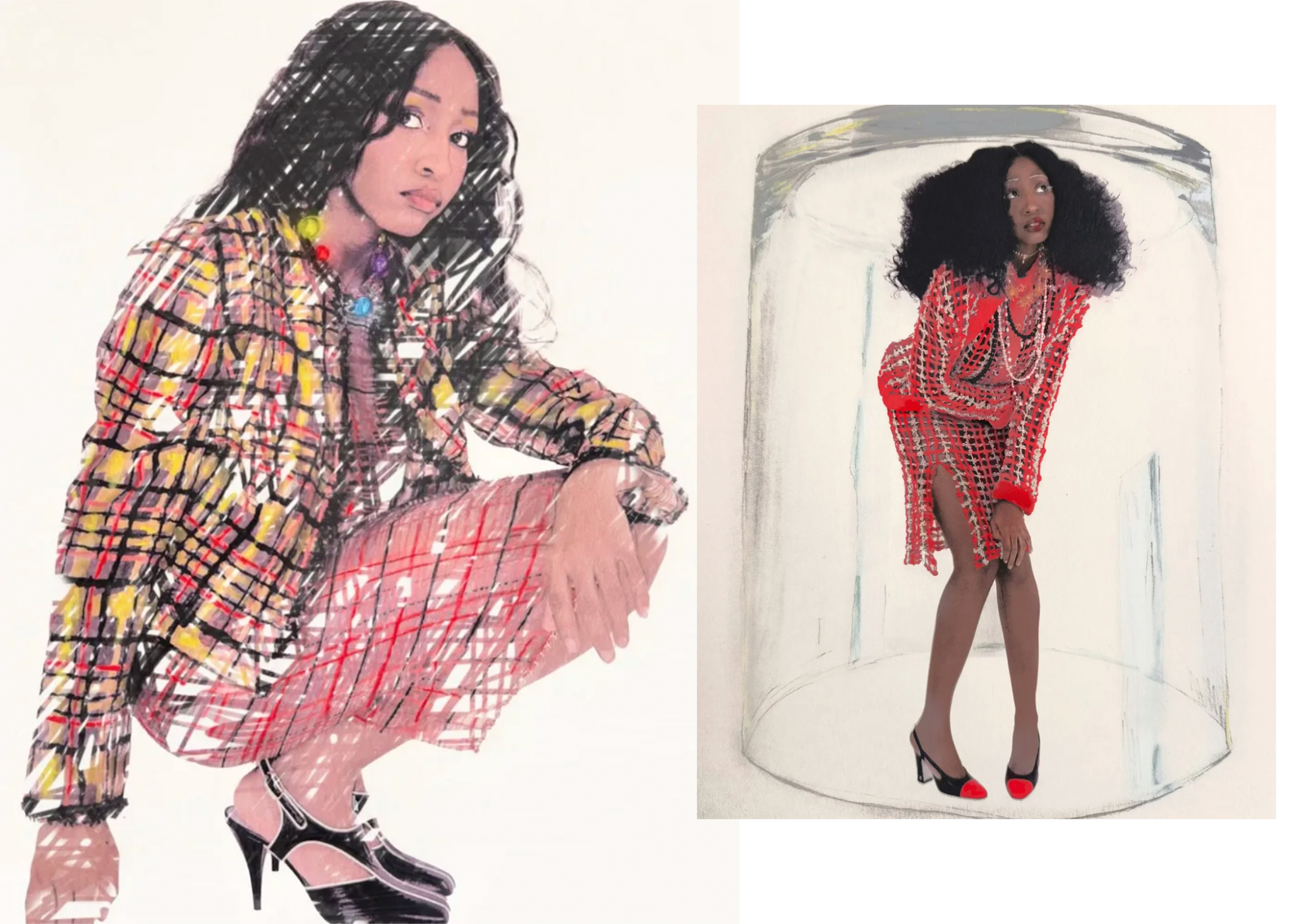
More recently, Jaša Muller’s photographs of Ayo Edebiri for Paper understand something about contemporary portraiture that many larger operations are still fumbling toward: that a picture can be genuinely whimsical, bright, and quirky and genuinely serious at the same time. Also, that an image can be sweet without being saccharine. He gets that these are not competing propositions.
Elizaveta Porodina’s broader body of work is a great capstone for this little Thursday morning exploration. Her picture has always operated in this register. They look like they were made by someone who never once accepted the premise that restraint is a virtue. She is as prescient a figure as working photography has produced in the last decade, and still, there have been conversations that the picture is “too specific.” Mostly, at the big three monthly fashion titles stateside.
I could give you receipts, but I’m experimenting with entering my demure era. Plus, it’s hard to come to any other conclusion once you start noticing where many of these images have appeared. Who What Wear. Paper. The Cut. Institutions that have never tried to play the game or compete with the big dogs. Titles that are not condescending to their audiences for fear that they will not value demonstrations of taste that meet them where they are, as opposed to that which is handed down to them from an altitude boasting more rarefied air.
Aside from a fearless devotion to their own style, these three photographers have a couple of other things in common:
-
the ability to deliver a fashion image with true and earned impact.
Their photographs go VIRAL.
-
Their practices and processes lionize the handmade. Their work INSISTS that a human made it. The specific weirdness of it means it can’t really be averaged into existence. Of course as they make more work prompts could attempt to capture the magic but, don’t you at least love that they’re trying their hardest to resist their own cannibalization by AI. If you follow Makó, actually, you’ll notice he often calls out those trying to completely rip off his work.
And, I’ve been really sitting with this as I’ve planned out my season– who I want to work with and why. And I’ve come to the conclusion that what matters most is going where you are wanted. I can’t say for sure that these photographers have been locked out of the supposedly prestigious rooms, I am encouraged to pursue. But I can say that they simply don’t subscribe to the system that polices the door. The hierarchy that deems fewer eyes are more superior to more eyes, that treats wider reach as evidence of dilution, is an elitist construct, and a particularly insidious one because it has so successfully sold itself as discernment. These photographers declined the transaction, and I think that is pretty fucking punk. They went where they were wanted. The response, the virality, the culture-wide conversation the images have generated, is its own verdict.
The larger outlets will catch up. Slightly too late, and will boastfully flaunt ownership of a movement they initially dismissed. But that doesn’t matter. The photographs exist, and they found their audience without waiting for entrée into an inflexible pre-existing canon.
So, to get to the ever-loving point: make what you actually want to make. BRING ON THE CRAFT. Get into the color, the bombast, the genuine desire to give someone looking at your work the feeling that something was made for them to enjoy. This does not have to come at the expense of aspiration, but for too long that aspiration has looked rigid–refined in a way that says if you don’t get it, it’s w o r k i n g. Fashion, like any industry built on the designation of value, often falls into the trap of trying to extract more than it returns. The photographers who are making the most vital images right now seem to understand that. Makó is someone with whom I have spoken to on multiple occasions– he chooses projects that afford him creative autonomy, control, and a deeply collaborative process that his work requires– regardless. He also prefers covers. I get the sense that he enjoys reach, and the trust that comes with setting the definitive statement for the issue. He and many others demand the respect that their singular vision deserves. And they are not waiting to be legitimized. If it’s good enough, everyone comes eventually. They always do.
Hit the comments with your thoughts on the return to expressive image-making— I’m curious to know!