
Easy STEAM fun you can do at home.
Spring weather has a mind of its own.
One day the kids are outside all afternoon. The next day it’s chilly, rainy, and someone is already saying, “I’m bored” before lunch.
If you need a few easy wins this season, these spring science experiments for kids are fun, simple, and low-prep — with ideas that work whether the weather cooperates or not.
You’ve probably heard the phrase “April showers bring May flowers” plenty of times, and it really is a perfect way to explain why spring is such a great season for simple science fun.
Rain helps plants grow. Warmer temperatures wake everything back up. Longer days bring more sunshine. And all of it gives kids a chance to explore how the world changes in spring without needing fancy supplies or a big setup.
Why spring is perfect for easy science experiments
Spring naturally gives kids a chance to notice changes happening all around them:
- Rain helps soften soil and water seeds
- Sunlight gives plants energy to grow
- Warmer weather brings bugs, birds, flowers, and puddles back into the picture
- Changing weather creates lots of easy opportunities for hands-on learning
Spring science is basically already happening. These experiments just help kids see it up close.
1. Make giant backyard bubbles
 Alexander Dummer | Canva Alexander Dummer | Canva |
This is one of those experiments that feels like pure fun to kids, but there’s real science behind it too.
What kids learn:
Surface tension, bubble structure, and why some bubbles last longer than others
What you need:
- 12 cups warm water
- 1 cup original Dawn dish soap
- 1/2 cup corn syrup
What to do:
- Mix the warm water and corn syrup together.
- Slowly stir in the dish soap.
- Let the mixture sit for at least an hour.
- Use a large bubble wand and head outside to test it out.
What’s happening:
Soap traps a thin layer of water to form a bubble. Corn syrup helps strengthen the bubble film, making bubbles bigger and less likely to pop right away.
2. Make your own rainbow
 Rahime Gül | Canva Rahime Gül | Canva |
Spring showers often bring rainbows, and this simple experiment lets kids make one themselves.
What kids learn:
Light refraction, the color spectrum, and how rainbows form
What you need:
- A clear glass of water
- A small mirror
- A flashlight or direct sunlight
- A white piece of paper
What to do:
- Fill the glass with water.
- Place the mirror inside at an angle.
- Shine the flashlight onto the mirror, or place the glass where sunlight hits it.
- Hold the white paper behind or above the glass until a rainbow appears.
What’s happening:
When light passes through water, it bends and separates into different colors. That’s the same basic reason rainbows appear after it rains.
3. Make color rain in a jar
 Core Lens | Canva Core Lens | Canva |
This one is always a hit because kids can actually watch color fall and swirl through the water, kind of like rain moving through the sky.
What kids learn:
Liquid density, how substances mix (or don’t), and how movement happens in water
What you need:
- A clear jar or glass
- Water
- A few tablespoons of cooking oil
- Food coloring
What to do:
- Fill the jar most of the way with water.
- Add a layer of oil on top.
- Drop food coloring into the oil.
- Watch as the color slowly breaks through and falls into the water below.
What’s happening:
Oil and water don’t mix, so the food coloring sits in the oil at first. Once it becomes heavy enough, it breaks through and falls into the water, creating a rain-like effect as it spreads and swirls.
4. Grow a rainy day garden
 500 | Canva 500 | Canva |
If your kids like digging in dirt or checking on things every day, this one’s an easy win.
What kids learn:
Plant growth, water absorption, and what seeds need to sprout
What you need:
- A clear plastic cup or small pot
- Soil
- Seeds such as beans, herbs, or flowers
- Water
What to do:
- Fill the cup or pot with soil.
- Place a few seeds inside and lightly cover them.
- Water gently until the soil is damp.
- Set the cup in a sunny window or outside in a safe spot.
- Check it daily and watch for changes.
What’s happening:
Seeds need water, warmth, and sunlight to grow. Spring rain helps create the conditions plants need to start growing again.
Try this:
Plant two cups side by side and water only one. Kids love seeing which one grows better.
5. Try a Skittles rainbow
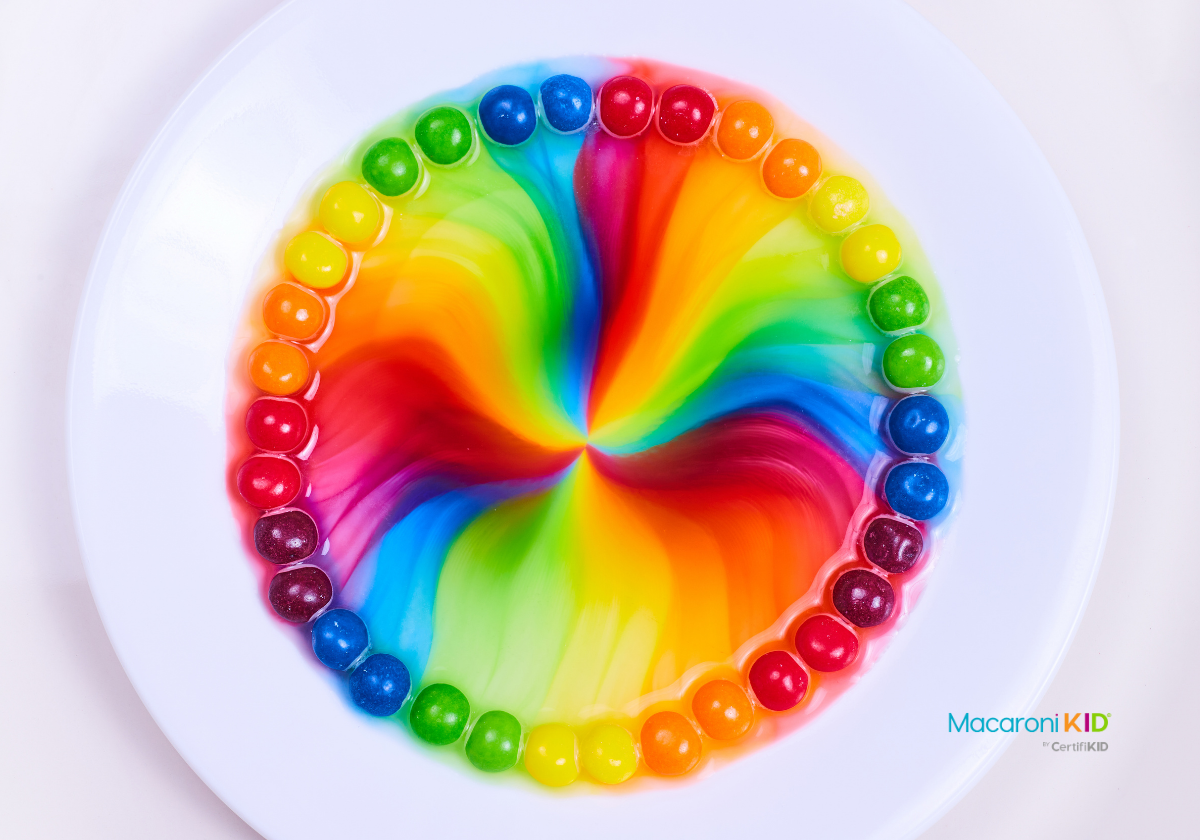 Nicholas J. Klein | Canva Nicholas J. Klein | Canva |
This one feels a little like magic, which is probably why kids love it.
What kids learn:
Color dissolving, patterns, and how water moves through the candy coating
What you need:
- A plate
- Skittles
- Warm water
What to do:
- Arrange the Skittles in a circle around the edge of the plate.
- Pour a small amount of warm water into the center.
- Watch the colors spread inward.
What’s happening:
The candy coating dissolves in the water, and the colors spread out from each piece to create a rainbow effect.
A few mom-to-mom tips before you start
- Don’t overthink it. Kids do not need these to look Pinterest-perfect.
- Let them make guesses before you explain what’s happening.
- Pick one experiment, not all five. This is supposed to help, not become a project.
- Take the messier ones outside when you can.
Simple science wins for spring
These easy spring science experiments are a nice reminder that learning does not have to be complicated to be memorable.
Sometimes it’s just bubbles in the backyard, a jar on the counter, or a few drops of color and a little curiosity to create a memorable STEAM afternoon at home with your kids. Have fun learning!