
The foundation model directly contributes to the UAE National Artificial Intelligence Strategy, laying the groundwork for more autonomous and intelligent wireless networks.
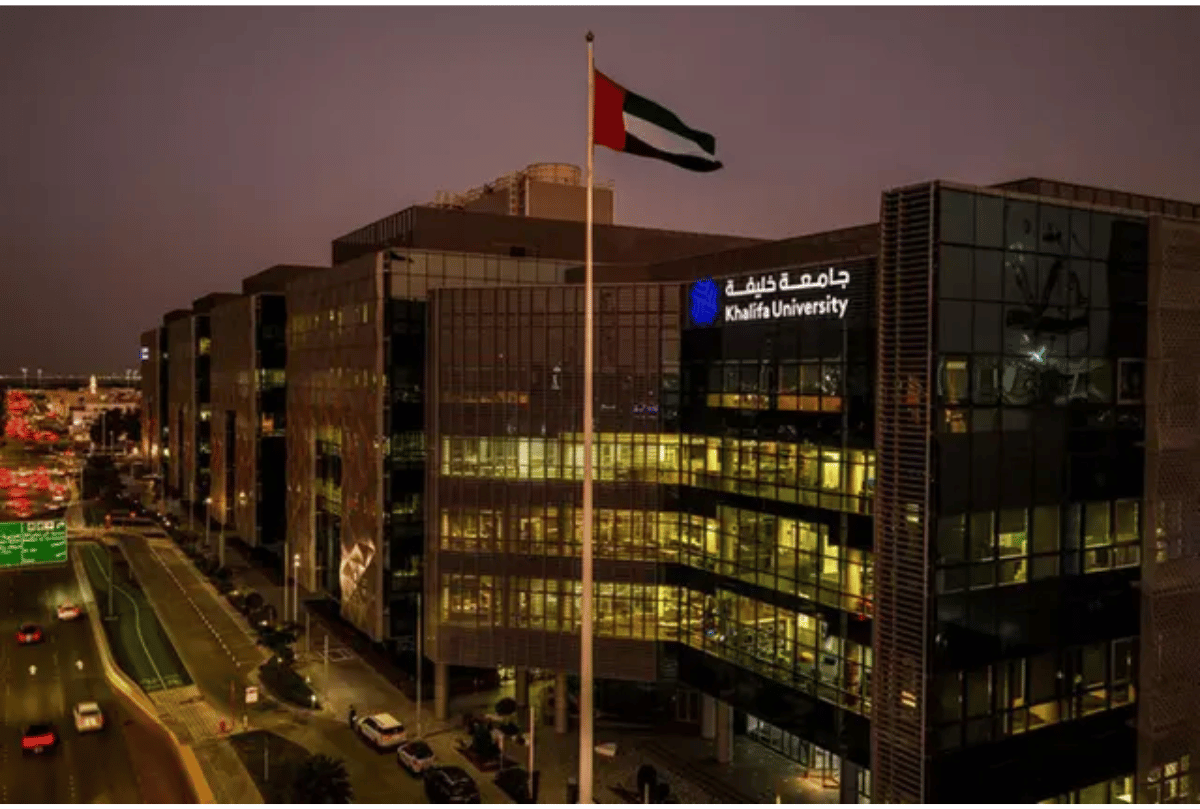
Khalifa University of Science and Technology ’s Digital Future Institute announced the launch of ‘RF-GPT’ a first-of-its-kind radio-frequency AI language model capable of interpreting wireless signals, overcoming a major limitation in telecom AI where language models typically operate only on text and structured network data.
RF-GPT showed consistent performance improvements in radio frequency spectrogram tasks, outperforming existing baseline models by up to 75.4%, demonstrating strong radio frequency understanding. RF-GPT also correctly counted the number of signals in a spectrogram ~98% of the time, which general-purpose AI models almost never achieve.
RF-GPT works by turning radio signals into visual patterns that artificial intelligence can understand. Once converted, AI systems can analyze those patterns and answer questions about what is happening in the wireless spectrum using plain language. The foundation model directly contributes to the UAE National Artificial Intelligence Strategy, laying the groundwork for more autonomous and intelligent wireless networks.
The project was developed by Khalifa University researchers led by Professor Merouane Debbah, Senior Director, Digital Future Institute, and includes Post Doctoral Fellows Hang Zou, Yu Tian, Research Scientists Dr. Lina Bariah, Khalifa University, Dr. Samson Lasaulce, Universit´ e de Lorraine, and Dr. Chongwen Huang and PhD student Bohao Wang from Zhejiang University.
“The launch of ‘RF-GPT’ reflects Khalifa University’s long-term focus on innovation in digital infrastructure to advance AI integration across strategic sectors, and next-generation connectivity research, aligned with national priorities. Initiatives such as this model contribute to UAE’s fast growing human capital and research capabilities necessary to support the UAE’s evolving digital ecosystem.”
– Professor Ahmed Al Durrah, Associate Provost for Research, Khalifa University
“RF-GPT represents a turning point for spectrum intelligence, moving from isolated, task-specific radio frequency pipelines toward a unified RF-language interface. We gave a language model its first glimpse of the electromagnetic spectrum and the view is already remarkable. Imagine what it will see next. By making the physical layer quarriable in natural language, we open the door to AI-native radio systems where RF perception can directly support network optimization and policy decisions, a crucial step toward future AI-native 6G networks.”
– Professor Merouane Debbah, Senior Director, Digital Future Institute
RF-GPT was trained using approximately 625,000 computer-generated radio signal examples, and is designed for telecom operators, network engineering teams, and spectrum authorities, supporting increasingly complex wireless environments. The model performed strongly across tasks such as identifying signal types, detecting overlapping transmissions, recognizing wireless standards, estimating device usage in Wi-Fi networks, and extracting data from 5G signals.