
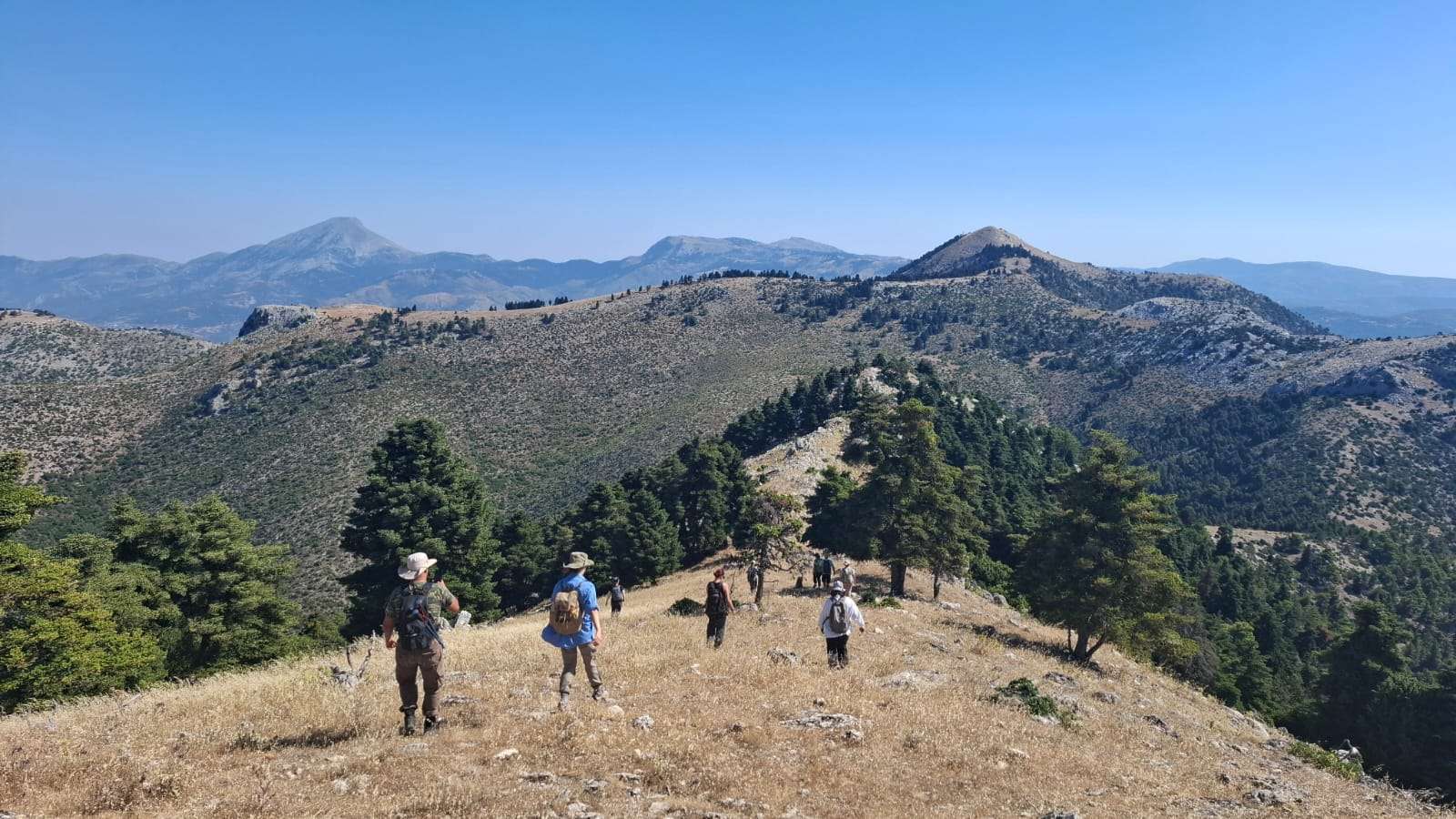
Archaeologists working near the ancient Greek city of Eretria (Greek: Ἐρέτρια), on the island of Evia (Euboea), Greece, have identified a network of ancient sites that reveals long-term human activity in the region. The large-scale survey is mapping how communities lived and organized the landscape over thousands of years.
The project is led by the Swiss School of Archaeology in Greece in collaboration with the Ephorate of Antiquities of Euboea. Fieldwork carried out between 2021 and 2025 focused on the plain stretching from Eretria to the nearby Sanctuary of Artemis at Amarynthos.
Hundreds of structures and artifacts were recorded
Across an area of about 30 square kilometers (≈11.6 square miles), researchers recorded more than 200 structures and collected hundreds of surface finds. These include pottery fragments, tiles, and stone tools. The material indicates that the region was occupied from prehistoric times through the medieval period.
Researchers say the findings indicate repeated, continuous use of the land. The evidence points to changing patterns of settlement and activity over time, reflecting shifts in social and economic life.
Rural landscape reveals settlements and networks
The survey uncovered a complex rural environment. Archaeologists identified around ten settlements, likely ancient demes, along with farmsteads, cemeteries, and quarries. They also documented rock-cut olive presses, medieval chapels, and sections of ancient road systems.
These features suggest a structured landscape where agriculture, production, and movement were closely linked. Road networks appear to have connected smaller settlements to larger centers, such as Eretria, and to nearby religious sites.
Technology helps uncover hidden remains
Researchers used both traditional field methods and modern technology to document the area. Surface finds were recorded and georeferenced, then entered into a Geographic Information System to map their distribution across the landscape.
The team also used LiDAR, a remote sensing method that scans terrain beneath vegetation. This technology revealed hidden features such as buried walls, terraces, and ancient routes that are not visible on the surface.
Data traces development from prehistory to the modern era
By combining survey results with excavation data from Eretria and the sanctuary at Amarynthos, researchers are building a comprehensive dataset. The material traces the region’s development from the late Neolithic period to the 19th century.
Researchers say this approach helps connect evidence from urban, rural, and religious contexts. It provides a clearer understanding of how communities adapted to environmental and social changes over time.
Findings support heritage protection efforts
The study also has modern implications. Detailed mapping of archaeological remains can support efforts to protect cultural heritage sites that face increasing pressure from urban development.
Researchers say the project not only deepens understanding of ancient life in Eretria and Evia, but also helps safeguard the region’s historical landscape for the future.