
Travel is notoriously hard on your digestion. Jet lag, dehydration, stress, and even slight disruptions to a regular meal schedule can result in unpleasant bathroom difficulties. But the next time you’re struggling with toilet troubles away from home, try to remember: At least you’re not dealing with it in outer space.
“I was thinking about how even on Earth, travel is one of the biggest constipation triggers,” Sarah Jane Bunger tells Popular Science. “[It’s] always going to make this perfect storm of constipation while on Earth. So it’s only going to be more and more exacerbated once you go outside Earth.”
It’s Bunger’s job to think about these things. She’s the global research and development lead for Dulcolax, where she oversees anything and everything tied to new formulas and clinical activities for the laxative and stool softener. But even after more than 13 years in the business, she was honored to learn the medication was available to a new demographic: the astronauts aboard Artemis II.
“We weren’t propositioned ahead of time. It was a lovely surprise for us that we were included,” she says of Dulcolax’s inclusion in NASA’s official Formulary and First Aid Kit.
Supplements like Dulcolax—specifically bisacodyl—are included on the World Health Organization’s list of essential medications, something keenly monitored by NASA’s medical team. At the same time, spacecraft cargo storage is always at a premium, so astronauts need meds that both get the job done and take up as little room as possible.
“I always think of the infamous example of sending a female astronaut up with, like, 100 tampons,” says Bunger, referring to Sally Ride’s historic first mission. “They want to make sure that they’re not overpacking, but that they have everything on hand that the astronauts might need to treat themselves while they’re up there.”
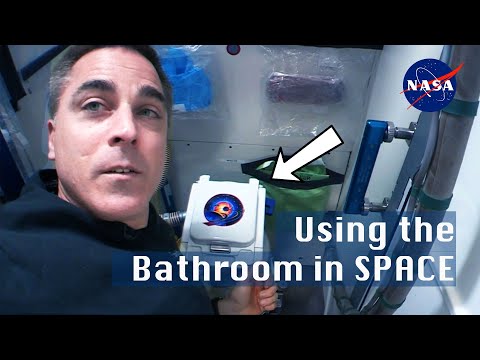
How to use the Bathroom in Space
Bunger explains that constipation can be particularly troublesome for astronauts during the first few days in space while their bodies adjust. Eating is predictably difficult in space, although not necessarily for the reasons you think. Zero gravity makes digestion harder on an astronaut’s body because their organs and musculature must work in conditions they’re not evolved to handle. Bunger likens the digestive tract to an elastic material like leggings. While peristalsis—a muscle’s ability to contract and produce wavelike motions—helps move an object through the stretchy passageway, gravity is always lending a hand. Remove the earthbound physics altogether, and all that’s left is the peristalsis.
“That’s why they’re still able to swallow, even without the help of gravity. So there is some impact from the lack of gravity up there,” Bunger says.
Luckily, laxatives like Dulcolax are engineered to work both on- and off-world. The medication aboard Artemis II is the same as the types found in grocery stores, and features a protective coating that guards it against corrosive stomach acid. This allows it to delay dissolving until it reaches the lower GI tract. Bisacodyl also works on contact, so it doesn’t need to be metabolized by the kidneys or liver.
As helpful as the laxatives may be during the Artemis II mission, Bunger hopes their inclusion in the first aid kit has wider ramifications for everyone, not only astronauts.
“Honestly, if I could pick a benefit coming out of this, it would be that it helps address the stigma [of constipation] for some consumers,” she says. “If even astronauts are dealing with this, then you shouldn’t feel bad about the fact that maybe your GI tract is a little bit off, too.”
While not on the official list of mission experiments, there is also the possibility of real scientific progress thanks to laxatives in space. Bunger points out that no one has yet to study the effects of taking them while traveling to the moon.
“I would settle for a stock report,” she suggests. “I don’t need to know who took it and I don’t need to know when. I just want to know that it was taken.”

2025 PopSci Best of What’s New