
The fashion industry is undergoing a cruel process of “eliminating the false and retaining the true.”
In the past few years, affected by live – streaming, many brands have fallen into a strange cycle: the GMV in the live – streaming rooms has repeatedly reached new highs, but when calculating the accounts at the end of the year, the profits have been completely devoured by inventory and advertising costs.
“Being able to sell” and “being able to make money” have become two different things.
However, in such an environment, a group of “outsiders” are quietly making money. They don’t engage in price – cutting competition. Instead, they rely on accurate target audiences and a high repurchase rate to become survivors in the industry.
According to the data of Tmall Fashion, during the spring new product launch period, a total of 1,110 emerging brands had an overall year – on – year GMV increase of more than 60%, and more than 300 emerging brands had a growth rate of more than 100%.
This is what really deserves further exploration. Why have they survived while doing the same fashion business? What have they done right?
01. The rise of emerging brands no longer depends on the trend
The differentiation in the Chinese fashion market is becoming more and more obvious. The overall situation of basic categories remains unchanged, but on the other hand, mid – to high – end emerging brands are starting to emerge. They target more segmented consumer segments in terms of design, fabric, style, and scenario expression, and have successfully achieved growth.
This change is not the traditional “consumption upgrade.” After all, it doesn’t mean that the fashion industry has entered a stage that is more friendly to new brands, nor does it mean that simply raising the price range and making the visual presentation more refined can create growth.
Today, to succeed in building a brand in the fashion industry, one still has to put in “real efforts.” A senior person in the fashion industry told 36Kr, “The more a business depends on the quality of the target audience and the brand – customer relationship, the more difficult it is to grow in the extensive flow of traffic.” Consumers may like a skirt, a shirt, or a pair of shoes, but they won’t necessarily identify with the brand and become its loyal fans.
Moreover, there are more realistic pressures, such as the unavoidable return rate and profit issues. Mid – to high – end fashion brands require more refined expression and a longer period of brand awareness building. However, once they are involved in the competition of low – quality traffic, the high return rate, high trial – and – error cost, and thinner profit will quickly eat up the premium space that design and quality should bring.
There is also the often – mentioned issue of returns on originality. It is difficult for the original value in the fashion industry to stay with the original creators. Once the product strength fails to meet the requirements, the advertising cost, return loss, and discount pressure will come all at once, and the seemingly promising sales volume will soon decline.
More accurately, the era of making money by luck is over. The industry is now more clearly rewarding those brands with real “internal strength”: accurate target audience positioning, solid product strength, efficient supply chain, personalized brand expression, and refined business rhythm are all indispensable.
02. The three thresholds that really make a difference
Whether a brand can be recognized, screened, and seen is almost the first threshold that every emerging brand will repeatedly encounter.
For mid – to high – end emerging brands, this threshold is particularly crucial. They are not naturally suitable for competing for volume by offering the lowest price, and it is also difficult for them to repeatedly harvest traffic with a set of highly homogeneous content. Design and style expression need to be explained to consumers over a long period, and they also need a more suitable target audience to be converted into orders.
The problem is that for a long time in the past, e – commerce distribution was better at amplifying popular products and brands, and resources naturally concentrated on mature suppliers. By the time a new brand is really noticed by the platform, it has often spent a lot of trial – and – error costs.
In the past two years, changes have begun to occur. From the platform’s perspective, for example, Tmall clearly set “supporting high – quality brands” as the platform’s direction in 2025. At this year’s TopTalk, this direction was further publicly strengthened. High – quality brands and high – quality products are placed in a more prominent position.
In other words, the platform has started to observe the brand’s overall awareness, supply trends, audience value, and operational capabilities. It not only looks at traffic but also at potential. During the recent spring new product launch period, this logic has been translated into specific actions. Trendy content, hidden gem brands, and super fashion releases have been moved forward as a whole, and more than a hundred emerging brands have been pushed to more prominent positions. In essence, this is to shorten the distance between “having potential” and “being seen.”
On the merchant side, some emerging brands have started to actively use the new tools and new entrances provided by the platform to enter the scope of being recognized and amplified earlier.
LEDIM WANG provides a sample of a trend – driven women’s clothing brand. They are sensitive enough to market trends. Their growth not only depends on their fashion sense but also requires being “seen” by more consumers. The brand’s person – in – charge mentioned, “The quarterly trend updates make the team’s direction clearer and allow them to lock in hot tracks earlier, while the special support for new products helps new products avoid being drowned out by traffic noise at the initial stage.”
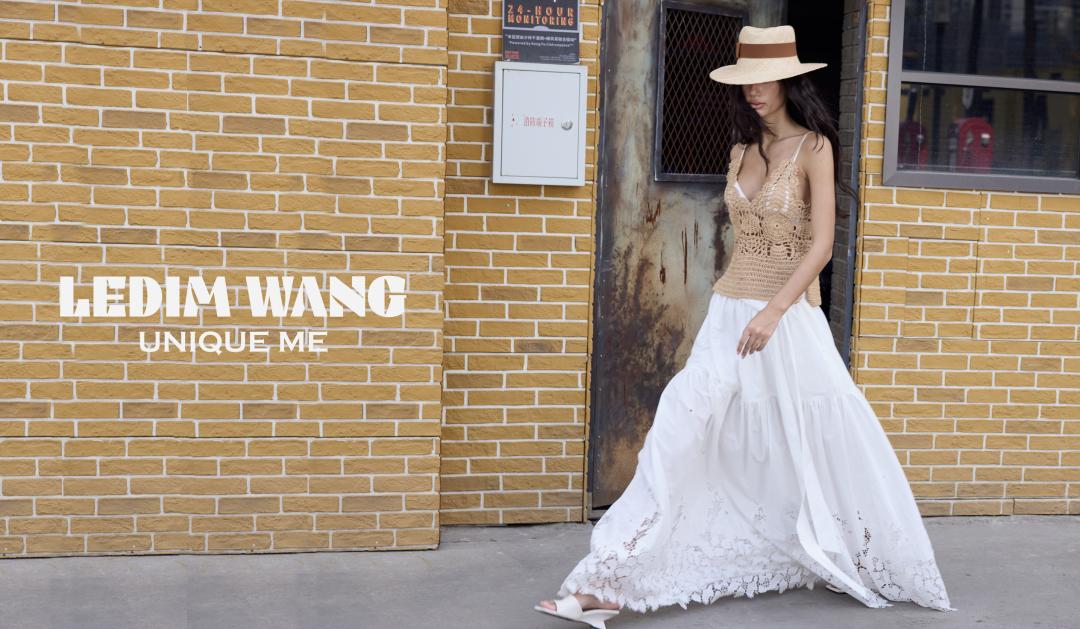
The emerging women’s clothing brand LEDIM WANG
In women’s clothing business, this step is crucial. Whether many styles can become popular often becomes clear before they start to gain significant momentum. The earlier the trend is judged, the more accurate the product selection rhythm is, and the more resources can be concentrated on potential styles.
During this spring new product launch, LEDIM WANG used limited – time inflated shopping credits to amplify member benefits on the one hand, and increased traffic through large – scale live – streaming events on the other hand. Then, they converted the “super moment” at the end of the month into in – store live – streaming sales. During the large – scale live – streaming event in March, the average daily number of viewers in the live – streaming room increased by 700% year – on – year. At the “super moment” of the store’s new product launch at the end of the month, the in – store live – streaming sales amount increased by 300% year – on – year.
Behind these figures is the adjustment of the operational sequence. LEDIM WANG first judges potential styles based on trends at the front – end, and then uses member benefits and live – streaming rhythms for conversion at the back – end, making the screening of new products, the new product launch rhythm, and the subsequent follow – up more closely connected.
cotton lab provides another sample. The logic of men’s clothing is indeed different from that of women’s clothing. The basic – style high – quality men’s clothing brand track that cotton lab has entered does not rely so much on strong style impact. What really determines conversion is whether consumers can understand the value of the product’s fabric, style, and craftsmanship in a short time.
The ace new product “Goose King Down Jacket,” which was the top – selling product in the store in the autumn and winter of last year, did not perform well at the initial stage of its launch. The brand used the new product operation window and new product promotion tools to quickly send the new product into a more effective exposure range. Then, by adding means such as double – 11 consumer coupon subsidies and new – customer gift money, it initially boosted the sales volume and finally achieved gradual growth. For men’s clothing brands that focus on basic styles and rely on fabric and style to convince consumers, the biggest fear for new products is to be drowned out before being understood. Only by solving the problem of “being seen” first can we talk about transactions later.
KEIGAN/KAIJIAN is different. It represents a sample of a designer brand that has formed a style recognition and is continuing to upgrade. The key issue it faces is no longer just being seen from scratch, but how to promote the brand to a higher level while controlling the trial – and – error cost.
The person – in – charge of KEIGAN/KAIJIAN mentioned that the brand has gradually obtained a clearer amplification path through growth mechanisms such as the Thousand – Star Plan and Hidden Gem New Brands with relatively controllable investment. The combination of marketing resources, transaction subsidies, and communication matrix not only helps to increase the brand’s popularity but also helps the brand reduce ineffective trial – and – error and focus the limited budget on the nodes where it is easier to gain momentum.

The emerging women’s clothing brand KEIGAN/KAIJIAN
The second threshold is the precipitation of brand assets. It is not too difficult for a fashion brand to make a single transaction. The difficult part is to turn a single transaction into a second and third one, and turn temporary popularity into real brand awareness. Trend – driven women’s clothing needs to solve the problem of how to prevent the popularity from being consumed at once. Basic – style high – quality men’s clothing needs to solve the problem of how to make the product information be fully understood. For style – based designer brands, the problem is how to continuously retain high – quality customers.
First of all, of course, it is necessary to find the right people. The person – in – charge of KEIGAN/KAIJIAN feels that different platforms have different characteristics and audiences. On Tmall, there are at least three high – quality customer channels. “A sufficient number of joint marketing and IP scenarios can match the paths of some mid – to high – spending customers, and high – value customers such as 88VIP, which can be precipitated as the brand’s core assets.” On this basis, the brand will also open offline stores this year and try an online – offline integrated business model.
After finding the right people, many emerging brands will get stuck in the next problem: the business links are too fragmented. They spend money to attract customers at the front – end but have no ability to retain them at the back – end. Now, some brands have started to connect these actions in their operations on platforms like Tmall, converting a single transaction into a longer – term consumption relationship.
For example, LEDIM WANG has started to try to take “grass – planting across the whole off – site network and using Tmall as the main platform for reception” as the next direction. It tries to precipitate the attention brought by content promotion on various platforms into search weight and store assets as much as possible. The focus of its operation has also shifted from “chasing traffic wherever it is” to “guiding external attention back to its main base as much as possible.”
After operating in different positions and channels, the emerging men’s clothing brand cotton lab believes that Tmall is closer to the underlying logic of long – term operation. Its person – in – charge mentioned that the most different thing about Tmall is that it meets both “customer quality” and “brand expression”: on the one hand, users come with a clearer awareness of quality and brand; on the other hand, through the flagship store, the brand can be fully presented, providing users with incremental information on fabric, craftsmanship, style, and multi – scenario adaptation.

The emerging men’s clothing brand cotton lab
Behind these three brands are the problems that emerging brands must face. Some need to solve the problems of trend judgment and new product rhythm first, some need to solve the problems of product understanding and cold – start conversion first, and some need to solve the trial – and – error cost and high – quality customer precipitation in brand upgrading.
However, it can be seen that the emerging brands that are breaking through at present have a different starting point for operation compared with before.
Previously, the most difficult part for many emerging fashion brands to grow from 0 to 1 and from 1 to 10 was not the product itself, but that it was difficult for product strength to automatically translate into growth in the early stage.
Good design, good texture, and good service do not automatically translate into higher weight in the distribution system. In many cases, it is still the low – price, homogeneous, and strongly stimulating supplies that take the lead. As a result, emerging brands have to spend more to build up their popularity first and then exchange it for transactions. The front – end investment is getting heavier and the profit margin is getting thinner.
Now, platform resources are starting to flow more concentratedly to emerging brands, which indicates that the platform’s sorting of supplies is changing. Originality, product completeness, and long – term business value are gaining higher weight.
Emerging brands have the opportunity to take fewer detours and enter a positive cycle earlier. From now on, whether a brand can grow depends not only on whether there is market demand but also on what kind of business environment is willing to truly give it opportunities.
03. The future of mid – to high – end designer brands is ultimately a competition of “finding the right people”
The rise of emerging brands is a personalized node that has emerged in a suitable platform environment like Tmall after the differentiation of the Chinese fashion market.
The so – called personalized supply is not just about having more stylish products, a higher price range, or a more refined visual system. It actually corresponds to the reconstruction of the relationship between the brand and consumers. Brands are facing a more specific, segmented, and picky group of people, while consumers need more stable aesthetic expression, clearer scenario adaptation, and more reliable quality.
LEDIM WANG targets urban women who are willing to pay for aesthetics and values. cotton lab caters to men who value texture, style, and multi – scenario adaptation. KEIGAN/KAIJIAN offers a modern minimalist style with architectural genes.
Behind the different brand supplies, they actually point to the same thing: in the future, it will be difficult for fashion brands to maintain growth based on vague customer assumptions. This also means that the most important competition in the next stage of the fashion industry may no longer be simply “selling to more people” but more accurately “finding the right people.”
Looking at the larger industry landscape, this change will be more obvious. Different platforms solve different problems in brand operation. Xiaohongshu is better at spreading style, aesthetics, and lifestyle, which is suitable for making a group of people interested in the brand. Douyin is more proficient in quickly converting content popularity into sales volume and making a certain product popular in a short time. For more long – term and stable operation, Tmall is a more suitable platform.
“As the core position for high – quality brands, our mission at Tmall is not only to drive business growth but also to help everyone enhance their long – term brand value – to give brands the opportunity to more accurately find their growth space and brand – upgrading direction,” said Mi Lan, the general manager of Tmall Fashion. At the recent TopTalk conference, she clearly stated that Tmall Fashion is committed to building a core growth position for high – quality brands, helping brands achieve steady growth in the entire process from new product breakthrough, user precipitation to long – term brand value construction. She also emphasized, “This year, Tmall will still fully promote marketing throughout the year to comprehensively help brands grow their business and upgrade their brand power on Tmall. Tmall Fashion will work with brand partners to seize every growth opportunity!”
When the platform starts to more clearly allocate resources to high – quality brands, high – quality products, and high – quality customer relationships, the competition logic in the fashion industry is also being rewritten. The one who can better help brands convert traffic into assets, single products into brands, and transactions into profits will be closer to the core of the next – round competition among fashion brands.
How to truly form a closed – loop among good design, good supply, and high – quality users may be the clearest main line in the e – commerce field after the Chinese fashion industry enters the next stage.