
Inside the dense circuitry of an old computer motherboard, thin gold pathways once carried millions of electronic signals per second. When that board reaches a landfill, those microscopic veins of precious metal sit locked beneath layers of plastic and fiberglass, too difficult and expensive for most recyclers to recover.
Now researchers have pulled that gold back out using something most people pour down the drain: whey.

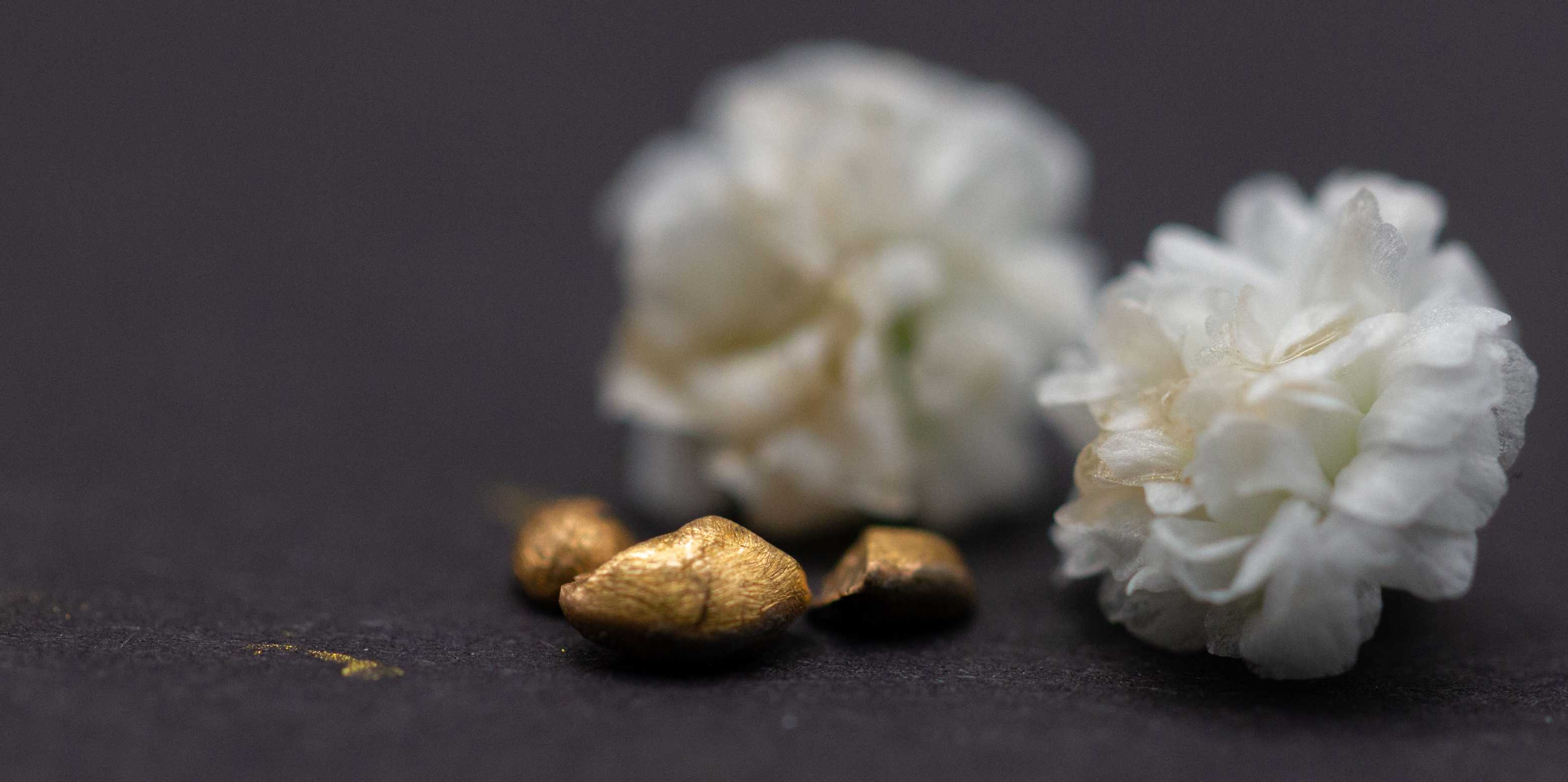
A team at ETH Zurich processed 20 discarded computer motherboards and recovered a 450-milligram nugget of 22-carat gold, approximately 91 percent pure with the remaining 9 percent being copper. The extraction method required no high-temperature furnaces and no toxic industrial solvents. Instead, the scientists used a sponge made from whey proteins, the liquid byproduct left over when milk is turned into cheese.
The Sponge That Hunts Gold Ions
Professor Raffaele Mezzenga and his colleagues began with a problem familiar to every electronics recycling facility. Modern circuit boards fuse metals, plastics, and glass fibers into a single rigid structure. Separating them typically means shredding everything and melting the pieces at temperatures high enough to vaporize the non-metallic components. The energy cost is steep, and the chemical residue requires careful handling.
The team wondered whether a biological material could do the same job more cleanly. Their attention settled on whey, which dairy facilities produce in enormous quantities during cheese manufacturing. Most of it becomes low-value animal feed or waste.
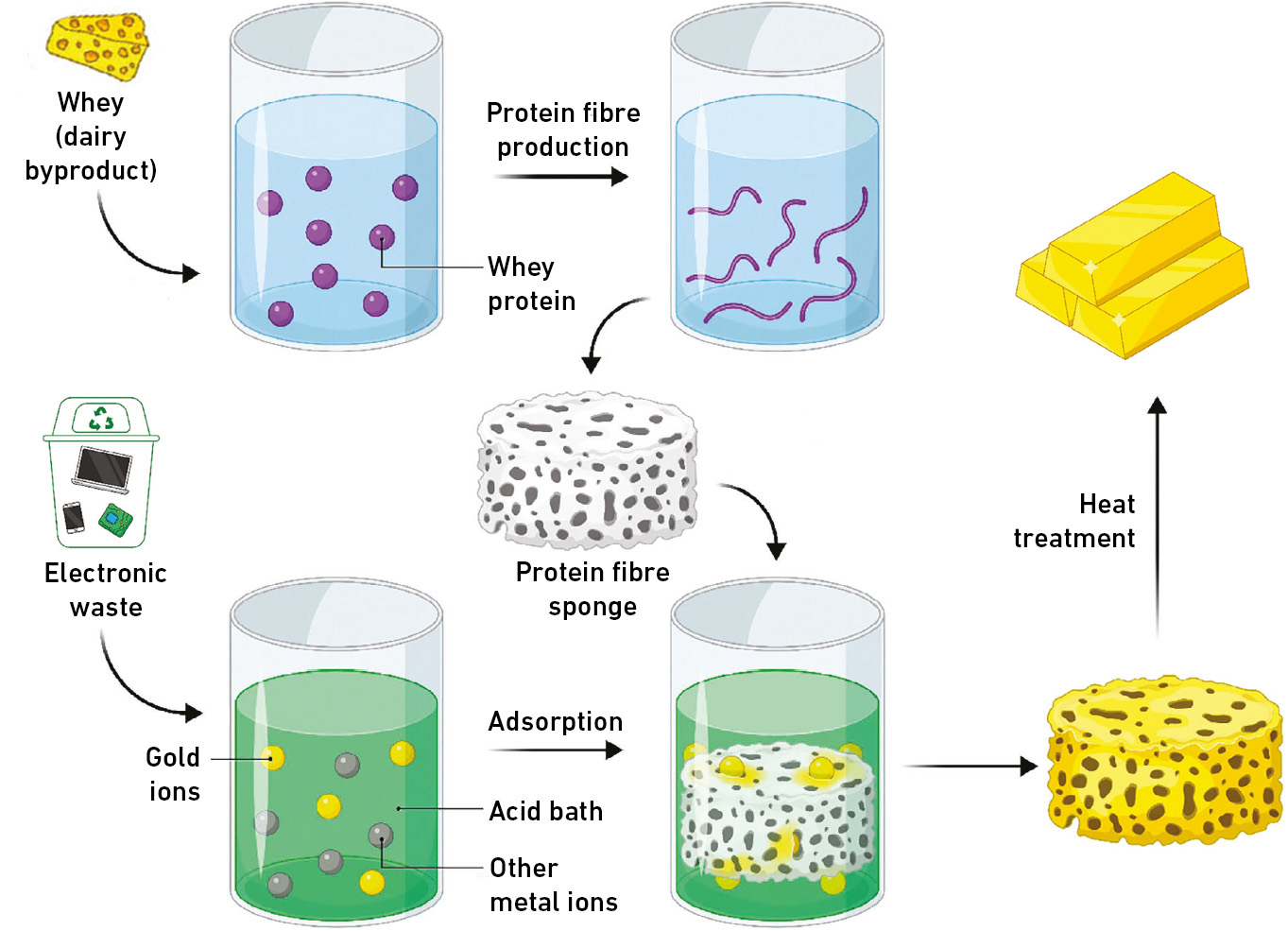
When heated under acidic conditions, whey proteins reorganize into microscopic fibers called amyloid fibrils. These threads tangle together into a gel that, once dried, forms a porous sponge with an internal surface area large enough to interact efficiently with dissolved metals. The findings, published in the journal Advanced Materials, describe how the material selectively captures gold from a mixture that also contains copper, iron, and aluminum.
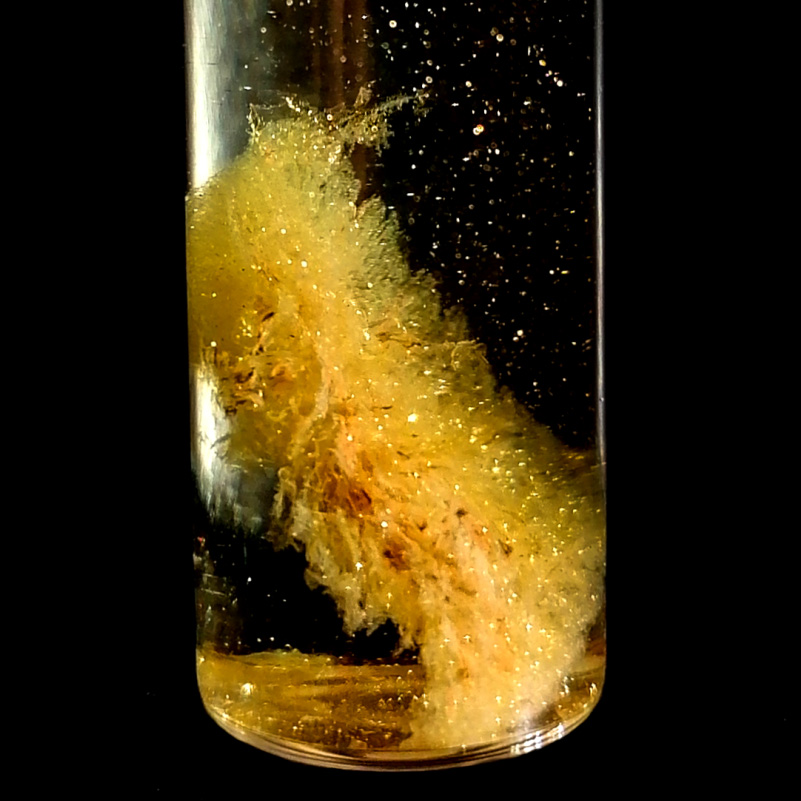
The researchers dissolved the metal components of the motherboards in an acid bath, creating a soup of gold, copper, iron, and aluminum ions. They dropped the protein sponge into the liquid. The amyloid fibrils grabbed gold ions far more aggressively than the other metals present.
Heating the Sponge Releases Solid Gold
Once the sponge had absorbed its fill, the team applied heat. The treatment reduced the trapped gold ions into solid metallic particles that collected on the sponge’s surface. Melting those particles together produced the 450-milligram nugget.
The heating step destroys the protein sponge, but the economics still work. According to the research team, the cost of procuring whey is roughly 50 times lower than the market value of the gold that can be recovered. “The thing I like the most is that we’re using a food industry byproduct to obtain gold from electronic waste,” Mezzenga said, as first reported by ETH Zurich news.
Lead researcher Mohammad Peydayesh noted that the favorable cost ratio could push the method toward industrial adoption. Mezzenga was more direct: “The technology is ready for market.”
Two Waste Streams Become One Valuable Output
The experiment connected two industries that rarely intersect. Cheese makers discard whey. Electronics recyclers discard circuit boards full of metals they cannot economically extract. The ETH Zurich process turns both liabilities into a single asset.
“You can’t get much more sustainable than that,” Mezzenga said.
The team collected motherboards from local waste streams originally bound for landfills or incinerators. Each board contained gold traces applied during manufacturing to ensure reliable electrical conductivity. Those traces are thin, measured in microns, but they add up. Across 20 boards, the accumulated gold weighed nearly half a gram after purification and required no secondary refining before industrial use.
Platinum and Palladium Could Be Next
The researchers now plan to test whether the same amyloid fibril sponge can be tuned to capture other precious metals. Platinum and palladium, both used extensively in electronics and catalytic converters, behave differently from gold in solution. Adjusting the acidity and temperature during fibril formation may shift the sponge’s preferences.
The team also wants to engineer the acid dissolution step so the liquid can be neutralized and reused rather than discarded after each batch. Closing that loop would remove the last significant chemical input from the process.