
Dungeon Master
Welcome to Dungeon Master, PC Gamer’s regular RPG column, where Online Editor Fraser Brown delves into PC gaming’s most beloved and enduring genre. Grab a seat in our badly-lit tavern and please ignore the goblin puke.
At the end of 2024, I resigned myself to the fact that BioWare was no longer capable, or willing, to make the kind of RPGs that once cemented it as the titan of the genre—or to put it more selfishly, the kind of RPGs I wanted to play. After The Veilguard, which followed Anthem, which followed Andromeda, I’d lost faith. I was emphatic and probably a little bit dramatic: I was out and the studio that excited me more than any other RPG developer was long gone.
A year-and-change later has caused my fire to dim, leaving behind disappointment but not as much dismay. I played more Baldur’s Gate 3. I fell head-over-heels for Esoteric Ebb. I annoyed some people by insisting that Crimson Desert was definitely an RPG—and a pretty damn good one to boot. But that distance from The Veilguard has also made room for speculation—could BioWare make a comeback, and what would that even look like?

First, some hard truths for the folks who understandably bounced off The Veilguard.
Article continues below
A lot of people liked BioWare’s last RPG. Reviews were broadly positive—including our own—and it was initially celebrated by EA for becoming its biggest Steam launch. It also managed to net a few awards along the way. While the narrative that BioWare has lost its touch has become increasingly popular and repeated over the last decade—and I believe it to be true—there is no consensus that The Veilguard was a dud.
Anyway, with that out of the way, The Veilguard was a dud. A year and a half after launch and its user review ranking on Steam is sitting at Mixed. In its first three months, sales reached 1.5 million copies, which in isolation is a large number—but was only half of what EA expected it to shift. Publishers like EA frequently have inflated expectations, but I don’t think it was unrealistic in this case. A decade before, Dragon Age: Inquisition almost reached that same milestone in a single week, and went on to become BioWare’s most successful game in its already long history.
Origins, Dragon Age 2, Inquisition and the original Mass Effect trilogy all received significant post-launch support. But like Andromeda, The Veilguard was quickly cast aside. No expansions, and only one surprise bit of DLC, offering some weapon skins and nothing else. What followed The Veilguard’s launch, unfortunately, was redundancies and “downsizing”.
So with its last two RPGs underperforming and being cast adrift, and the failure of the Anthem experiment, how can BioWare make a course correction?
BioWare is dead, long live BioWare
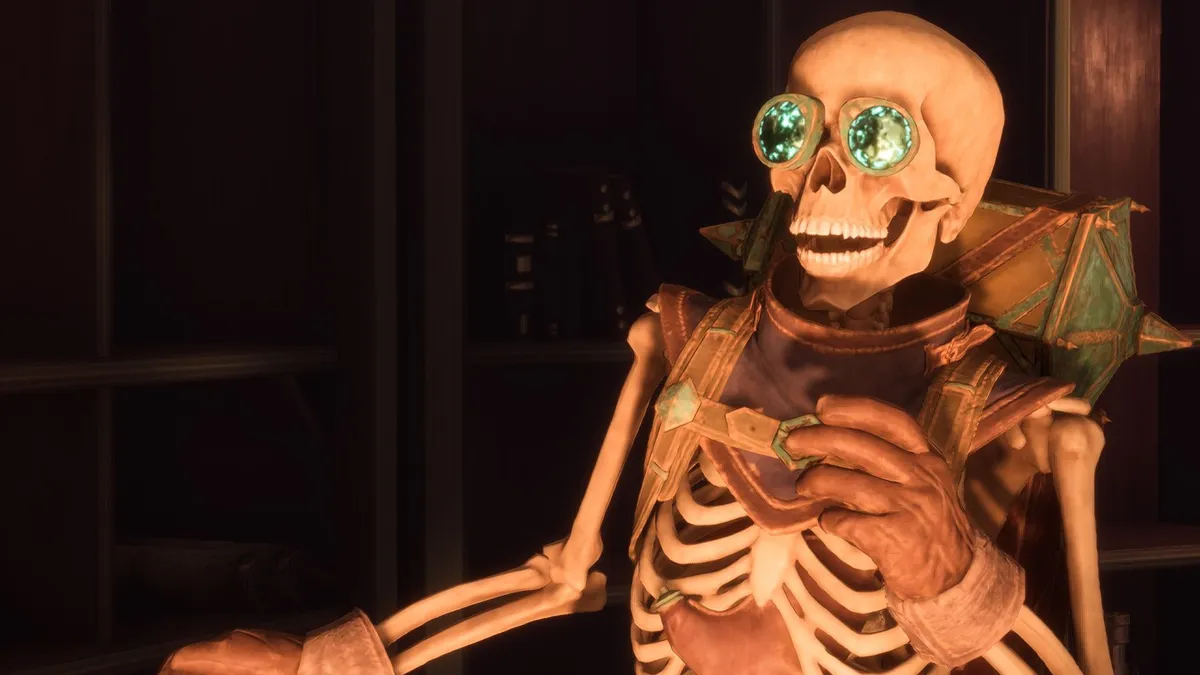
Anthem was a huge mistake. It was so disconnected from the studio’s RPG roots that it held little appeal for BioWare’s primary audience, and it blundered into an established and notoriously competitive market without offering a big hook. But it wasn’t a mistake for BioWare to attempt something different. This is even more true now.
Both BioWare’s long-time fans and the studio itself need to accept that the old BioWare is dead. The redundancies and staff shuffles have gutted BioWare over the years, and while old devs sometimes return, you cannot simply replace everyone—and you cannot shed this much institutional knowledge and expect success by sticking to the same playbook. We will never get another Baldur’s Gate, a KOTOR or an Origins from this company ever again. But with the resources the studio has available, we could get something new.
Here’s the thing: BioWare never used to rest on its laurels. In the ’90s and early ’00s it was bringing tabletop RPGs to PC gamers; then it was taking advantage of console dominance, creating streamlined RPGs that focused on best-in-class storytelling; and by 2007 it was experimenting with cinematic storytelling and shooter mechanics. BioWare’s secret sauce was its ability to read the room. It was always looking for new ways to bring us RPGs.
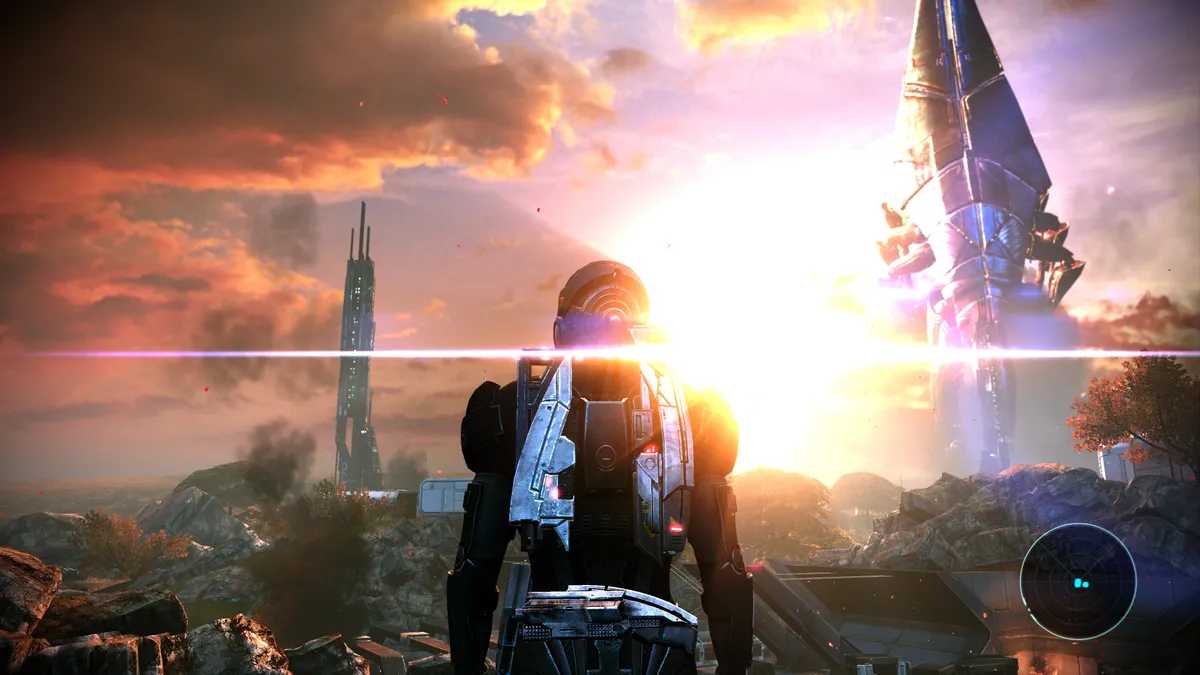
By not putting all its eggs in one basket, the studio weathered the changing industry and maintained its reputation as a juggernaut. Several times over, it reimagined what an RPG could be. If modern BioWare was around in the ’90s, it probably would have stuck with Infinity Engine games. Which would have been fine with me! But these isometric RPGs (temporarily) went out of style, and BioWare would have vanished with them. We wouldn’t even have been blessed with Neverwinter Nights—an all-timer that only the modders and their fans truly appreciated.
Much has been made of BioWare’s incredible legacy, but its ability to move forward and not rely on that legacy is what helped it become such a success story. But this wasn’t simple trend-chasing. BioWare wasn’t just following the crowd. It was leading them.
Then EA acquired it.
EA, let BioWare cook

BioWare’s overlord is undeniably the biggest hurdle to its survival. It would be naive to act like the studio doesn’t have any responsibility for its missteps, but it also found itself in an impossible situation, with executives not just pressuring the studio and breathing down its devs’ necks, but overtly interfering with it.
The endless sequels, the rush to get Dragon Age 2 out the door, the absolutely unhinged pivot to a multiplayer live service game—not just Anthem, but The Veilguard as well, which started out as a singleplayer RPG, switched to live service, and then back to singleplayer again. This is life under EA.
This pressure created an overreliance on its big brands, Mass Effect and Dragon Age, and when BioWare did attempt to get out of its comfort zone after too long resting on its laurels, the results were disastrous. BioWare is just as responsible for Anthem as EA—but the environment it was created in was a product of the publisher. Casey Hudson pitched EA a very EA game—something that could keep making the publisher money forever—but BioWare had no idea how to make this kind of game, the decision makers had no clear vision, and the rest is history.

The studio needs to go back to the drawing board and take a long, hard look at the RPG landscape. Not just to see what’s trendy at the moment, but to predict what kind of RPGs players will want in five years. Where are things heading? It needs space, not pressure.
For a risk-averse publisher like EA, though, whose only real priority is to please investors, this is like asking for the world. The only reason it was excited by the prospect of Anthem was because it thought a live service game would print money—it didn’t see it as a risk because it couldn’t see beyond the big live service successes, despite the massive pile of corpses behind them.
This is also why we’re just getting another bloody Mass Effect. People love Mass Effect, so let’s do it again—while completely ignoring Andromeda.
Mass extinction event
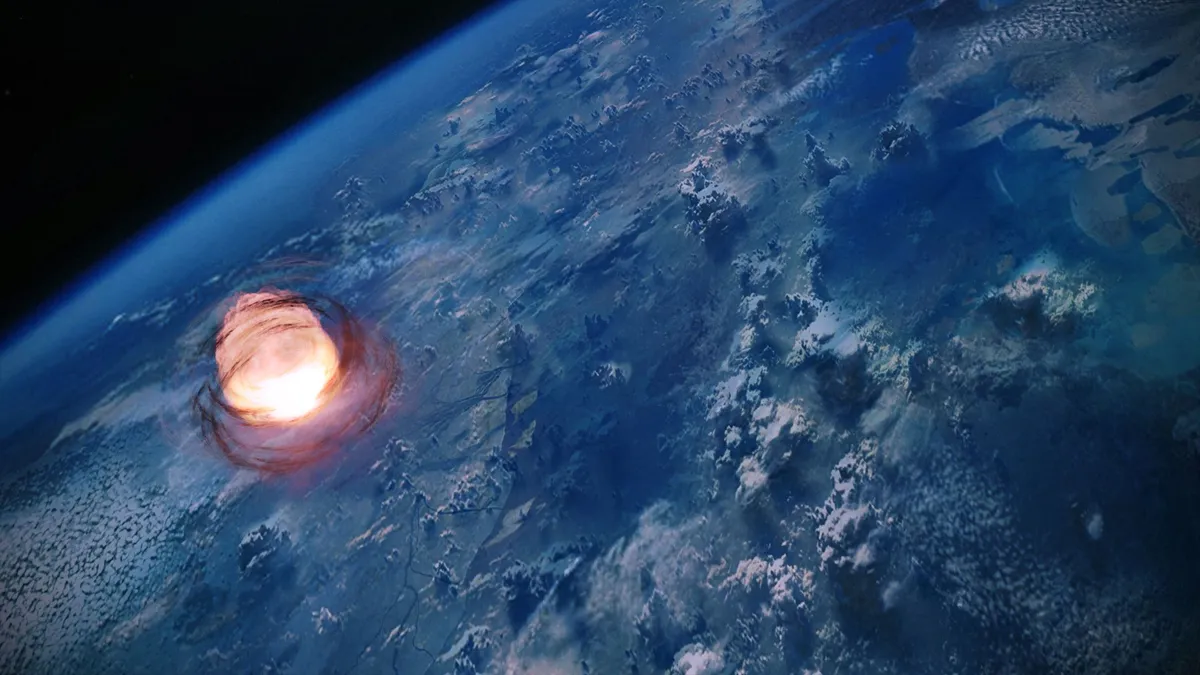
I’m about to lose a lot of you here, I suspect. In fact, I know it. If anyone so much as whispers “Mass Effect”, people go wild. I saw how y’all reacted when we mentioned that Zero Company and Osiris Reborn had big Mass Effect vibes. Regardless, I’m convinced that BioWare should not be making another Mass Effect. It’s too late to stop that train, it’s already left the station, but I don’t see this ending well at all.
Folks, Mass Effect 3 launched in 2012. In videogame terms, it’s absolutely ancient. And as a brand, it’s not been able to even prove itself when it doesn’t have Shepard. Andromeda, on paper, includes most of the things people wanted out of a new Mass Effect: Cinematic storytelling, vastly improved action, denser alien worlds to explore, some more angry krogans. And it was not great.
Awful last minute crunch, the Frostbite Engine (which bit BioWare in the ass in Anthem too) and a dip in writing quality all contributed to this, but beyond that BioWare just never figured out how to replace its heroes and villains. With Shepard and the Geth/Reapers gone, you don’t really have Mass Effect at all.
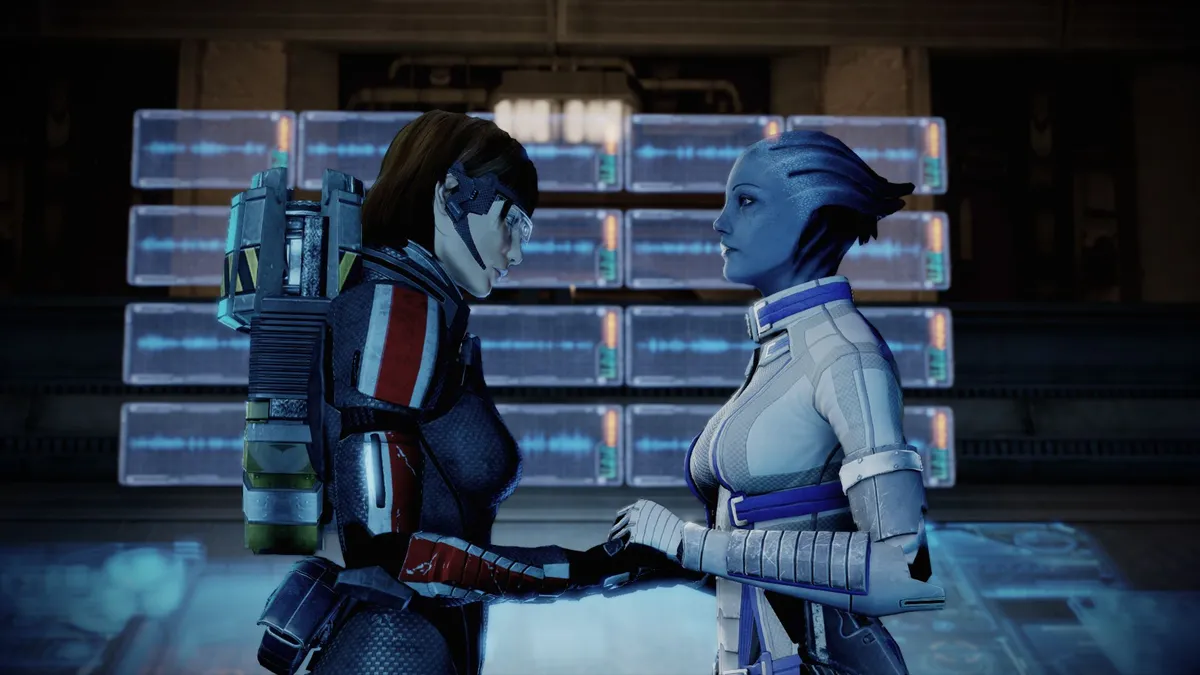
While Dragon Age’s original trilogy successfully played around with different protagonists, art directions and vibes, Mass Effect was always about Shep. It’s their trilogy. And with Shepard presumably out of the picture, we’ve not been given any reason to believe BioWare is in a position to reignite the spark that made those games magic.
The Veilguard’s missteps should also make us extremely worried about the future of its sci-fi sibling. While change is baked into Dragon Age’s DNA, modern BioWare seems so detached from its classic library now that The Veilguard felt more like mimicry than a sequel—as if an entirely new studio had been given the reins.
And that’s because it kinda was—even though it still contained some key veterans, like lead writer Trick Weekes. Weekes is a great writer: They’d been with BioWare since 2005, giving us some of Mass Effect and Dragon Age’s best characters, like Mordin, Tali, Iron Bull and Solas. I mean, if anyone could write a great Dragon Age with the egg-head as the villain, it’s Weekes. But they didn’t. They wrote The Veilguard.
And even that version of the studio is gone now, with Weekes and many others no longer with BioWare.
Back to the start
I don’t see a way for BioWare to thrive without it finding a new identity. Mass Effect is not the way. Dragon Age is not the way. Wheeling out the corpses of beloved games time and time again won’t keep working because it’s already stopped.
Modern BioWare needs to find its own Grey Warden, its own Shepard, liberating itself from the constant comparisons to past glories. And it probably needs to start small.
I don’t mean a short game—not specifically, anyway, though I’d be here for it. I mean that it needs to find a new focus, one or two things it can build a game around. It needs to be given space to experiment and find itself again. It needs to host game jams and do the indie hustle.
And sadly, none of this will be remotely possible because it’s still one of EA’s star studios and the publisher is never going to stop chasing those multi-million launch targets. It cannot be freed from this prison. EA would kill it first.
So unless we can go back 20 years and stop BioWare from getting involved with a private equity firm, which two years later would lead to it getting gobbled up by EA, I think it’s cooked. And it’s so frustrating because there is a path out of this—but nobody will let the studio travel down it.