The end of the world never looked so good.
The upcoming celebration of the year 2000 was not as straightforward as expected. Some people were very concerned about what they believed to be the end of civilization due to a computerized data formatting issue. Many more were looking forward to partying when the ball dropped. Still, many more had a strong sense of optimism and were excited to see how society would evolve in this seemingly futuristic year.
Where else would this flood of emotions show up other than in fashion trends?
THE END OF THE WORLD
Significant strides were made in computers throughout the ‘90s and into the 2000s. However, the hardware was still extremely costly. Both mainframe computers (used by organizations to store massive amounts of data) and personal computers (which could be purchased and hooked up in people’s homes) used expensive memory.
This meant that programmers felt the need to minimize their usage as much as possible. To store more data while saving space, computer engineers used only the latter two digits to represent years (e.g., “85” for “1985”).
However, as the millennium approached, programmers realized that this might lead to widespread confusion. They worried that computers would interpret “00” for the year 2000 as “1900”.
This became a frightening hypothetical for major organizations. Banks that calculate interest rates every day were worried their systems would start collecting interest for negative 100 years instead of one day. Transportation systems and airlines were worried that dates and times would be scrambled.
It evolved into the perfect fearmongering scenario. Doomsayers and other end-of-the-world preachers found willing audiences in people who were scared of the hypothetical effects of the so-called “Y2K bug.” The media did not help, either. It was easy to capitalize on the public’s limited understanding of technology and sell eye-catching headlines warning of imminent chaos.
The US government even formed special committees for contingency planning, spending millions of dollars in order to combat the impending problem.
It turned out to be one giant overreaction. There were a few problems that arose with the changing year in the databases, minus some failed pieces of radiation equipment in a Japanese nuclear energy facility that had no effect on the public.
The Y2K bug was dismissed as a hoax, but its effects, combined with other sentiments about the changing times, lingered in pop culture.
THE FASHION
Leading up to and following the turn of the millennium, people experienced a mix of feelings: fear of the unknown, excitement about wild celebrations, and hope for what the future would bring. These feelings shaped the zeitgeist of the late ‘90s and early 2000s, which, in turn, was reflected in the fashion.
FEAR OF THE UNKNOWN
As January 1, 2000, approached, people became increasingly concerned about societal collapse. If everything fell apart when midnight struck, what type of world would they be forced to face? This overarching fear of the unknown felt within society swiftly bled into the fashion at the time, with dystopian, military-inspired looks rising in popularity.
These looks, which included baggy pants, cargo pockets, camo prints, and chain accessories, embodied one of the alternative aesthetics present in the late ‘90s and early 2000s. Avril Lavigne, a Y2K pop-punk artist, often dressed within this style, incorporating military elements like combat boots and camo pants into her outfits.

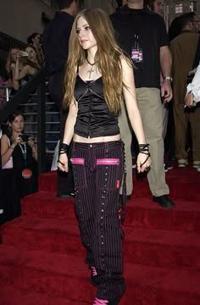
Avril Lavigne emerged as a pioneer of the Y2K aesthetic at the turn of the century.
Many of these trends have made their way into modern dress, which makes sense, given the mirrored fear of the unknown. Now, instead of societal collapse, many fear global tension or war. These parallels within the zeitgeist help explain why these trends cycle back so often.
EXCITEMENT ABOUT THE WILD CELEBRATIONS
While some felt unease heading into the new year, others were ready to celebrate the beginning of a new millennium. People gathered in city squares across the globe at record-breaking numbers. There was dancing, drinking, and partying late into the night. Everyone sought to relish this once-in-a-lifetime event.
The excitement felt by the partygoers extended into the fashion worn both on the big night and for several years after. Notable pieces from the aesthetic include miniskirts, glittery butterfly tops, high heels, and juicy couture tracksuits. Christina Aguilera, Paris Hilton, and Beyoncé were among some of the key fashion icons for this look.
This glittery, pop diva style is really what the modern Y2K aesthetic is all about. Y2K-themed parties bring forth sequined tops and low-rise miniskirts. They signal excess, hedonism, and a desire to let go. Today, people might seek out this look as a form of escapism from the world’s stress, echoing the celebrations of the year 2000.
HOPE FOR WHAT THE FUTURE WOULD BRING
The 2000s likely sounded futuristic to the people of the 1900s, the same way that the 3000s sound futuristic to people of modern day. It tracks that the turn of the millennium would evoke hope within society about what the future would bring. Technology had started advancing at breakneck speeds, and people were obsessed.


iPod Nanos are an enduring example of the technology that defined the Y2K aesthetic.
This societal shift toward technological advancement was evident in the period’s attire. A clear cyber-tech aesthetic emerged, featuring silvery metallic fabrics, iPod Nanos as hair clips, and buggy, wraparound sunglasses. Britney Spears can be found wearing this look in several photoshoots, often with space-inspired backgrounds or interactive tech.
Predictably, the Y2K cyber-tech aesthetic found its way into 2026 fashion trends, including an obsession with digital cameras and icy blue eyeshadow. The modern experience with the rapid advancement of AI technology directly mirrors the advancements of the early 2000s, after all. Now, artists like Doja Cat and Billie Eilish are often seen wearing silver hues and futuristic sunglasses.
Society’s fascination with the future–and all the fears and excitement that came with it–led to a burst of creativity. Fashion trends reflected sci-fiesque aesthetics of the future; survivalist aesthetics related to the “end of the world”; and party-going aesthetics as people prepared to celebrate all night long.
Throughout the 2020s, we have had our own fears of societal collapse. The world today is still rife with its own issues related to pandemics, social justice struggles, and wars. Technology continues to advance at a rapid pace. As the sentiments expressed 26 years ago continue to evolve and remain relevant today, it’s no wonder the era’s fashion trends have also made a comeback.