
In 2014, I interviewed Israeli guitarist David Broza for The Wall Street Journal about his album East Jerusalem/West Jerusalem, recorded with a mix of Jewish and Arab musicians and produced by Steve Earle. It was a very overt attempt to use music to bridge polticial and cultural divides, something I believe in passionately.
Of course, things have only gotten more difficult in the ensuing dozen years, but I still believe in Broza’s vision and his music.
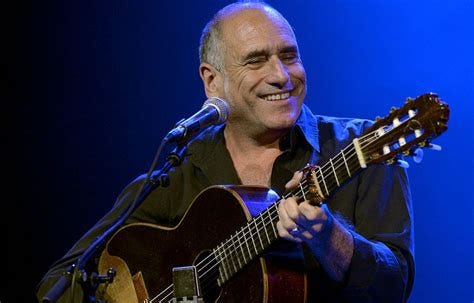
From The Wall Street Journal’s Speakeasy culture blog, 2014.
Last year Israeli musician David Broza recorded “East Jerusalem/West Jerusalem” in a Palestinian studio in East Jerusalem using both Israeli and Arab musicians and produced by singer/songwriter Steve Earle, a crown prince of Americana music. A documentary by the same name captures the process of collaboration and is screening in New York and Miami over the next week. Broza is raising money to fund the completed film.
This Saturday, Nov. 8, there is a sold-out screening of the film, followed by a Q&A with Broza, Earle and Israeli Palestinian singer and activist Mira Awad, who appears on the album. The film will be shown again on Sunday at New York’s Village Cinema, followed by a Q&A with Awad. Awad will also appear with the film in Miami on Nov. 14.
Broza’s first recorded song was 1977’s “Things Will Be Better” (“Yihye Tov”) and he has retained a sense of optimism throughout decades of Israeli Arab conflict. He recently spoke with Speakeasy. The interview is edited for clarity and brevity.
No matter how pessimistic the politics of peace in the Middle East grow, you never seem to lose your optimism. Do you ever waver or lose your faith in the power of art?
No. I worry sometimes that the people I work with may not have the same ability to see the half-filled cup but that’s why we are working together; we generate energy. I am blessed with that quality within me – the ability to see the light rather than the darkness. We live in darkness but someone has to see the light and I see it. You sit alone in a room and walk out with a beautiful song. Where did that come from?
That same sense of wonder infuses everything I do. I guess I’m a dreamer but I’m pragmatic. I don’t just dream; I try to stay involved and work in refugee camps and work with people and try to be a bridge. This is the first time I’m letting the story come out and the first time I’m showing what can happen with music, instead of just hoping the music speaks for itself.
All the people involved allowed this to happen, put themselves in front of the camera and microphone – they are all believers. They may not be positive or optimistic all the time, but they really believe or they wouldn’t do any of this with me.
How did Steve Earle end up producing this album?
Our original connection was [the late Texas singer/songwriter] Townes Van Zandt. A few years ago we found out that we were both working on albums of his songs and communicated about how to handle their releases. For some reason he was the first person I thought of to produce “East Jerusalem/West Jerusalem.” I had the idea of bringing Israeli musicians to a Palestinian East Jerusalem studio, which represents a big psychological threshold for everyone involved and I wanted someone objective, an outsider, to mediate.
Steve just felt like the right person to do that and also bring in the American influence, because I jokingly call this music Country and West Bank. I was pretty sure he would say no for political reasons but before I could finish the sentence, he said, “Just tell me where and when. I’ve been dying to go there.”
Music can bridge a lot of divides because musicians all speak the same language.
There’s no question that music is the easiest way to come together. When we play music, we have to stay in tune and we can’t fake harmony. It either works or it doesn’t. Music has always been the universal language and I really wanted to make a real collaborative recording.
Is that difficult to do in Israel right now?
There is currently a lot of collaboration between Jewish and Israeli Arab artists but almost no collaboration between Israeli and Palestinians from the Palestinian Authority. This is the next level and to make myself more accessible, I went to a small studio in East Jerusalem. That gave them an opportunity to walk in and be part of this environment for eight days without it being in an unreachable Tel Aviv studio. I thought that was the way to make it happen.
I was hoping that by taking up their invitation, I would be able to bring into the project some Palestinian artists and put together a basically Western album. This is not really a world music album, though it has some elements, for instance using the oud, the native instrument of the Middle East. The oud player on the opening of Pink Floyd’s “Mother” is an Israeli Palestinian musician whom I quite sure had never heard Pink Floyd. He hit it so right and beautifully that we created this fusion, which I hope has resonance and sticks with people.
And there’s an interesting symbolism to anyone who knows that Roger Waters, the song’s composer, is quite active in the BDS [Boycott, Divestment, and Sanctions] movement.
Yes! As is Elvis Costello, whose music we also covered, with “Every Day I Write The Book” and “What’s So Funny about Peace, Love and Understanding.” I love their music and they are primarily artists and musicians to me. There was nothing better to me than doing their songs in East Jerusalem. I would like them to think that their music goes way beyond politics… it gives inspiration and hope.
“Mother” comes from the album “The Wall” and we are breaking the wall with this version. You can’t do that by staying away and crying, “Boycott!” Look, I’m not against criticizing Israeli politics. I do it myself – but from within. I don’t stand in Paris, London or Berlin and talk about how awful it is in Israel.
There are so few of us with the hope and spirit for the better, and I say to Roger Waters that it would only help and strengthen us if you came and helped give us that voice. But you’re not giving that. You’re becoming an unwanted entity and then your criticism falls on deaf ears.
Brothers and Sisters: the Allman Brothers Band and The Album That Defined The 70s was my third straight book to debut in the New York Times Non-Fiction Hardcover Bestsellers List, following Texas Flood: The Inside Story of Stevie Ray Vaughan and One Way Out: The Inside History of the Allman Brothers Band. My first book was Big in China: My Unlikely Adventures Raising a Family, Playing the Blues and Becoming a Star in Beijing, about my experiences raising a family in Beijing and touring China with a popular original blues band. It was optioned for a movie by Ivan Reitman’s Montecito Productions. I am also a guitarist and singer who fronts two bands, Big in China and Friends of the Brothers, the premier celebration of the Allman Brothers Band.