
Hi everyone, welcome back to SportsVerse, my twice-weekly newsletter that tells stories you can’t find anywhere else about the intersection of sports, fashion, business, and culture. Today’s newsletter is a guest post by James Davis, founder of SQR EYE Studio and former Highsnobiety strategy director.
Basketball once ruled the fashion world with full court force.
Dial it back only a few years ago, and everything from Marni Jersey Bags to the Nike x Dior Jordan 1 to Tiffany & Co. Basketballs were hot shit. Jerseys, sneakers, equipment – anything remotely basketball related – became a sure-fire way for fashion to generate heat. Then things suddenly went cold. Nike Dunks became a punch-line, NBA Jerseys became trash, Tunnel Walk gods began to retreat. Basketball suddenly began to lose its air of fashion prominence faster than a punctured Aime Leon Dore x Tyrell Winston basketball.
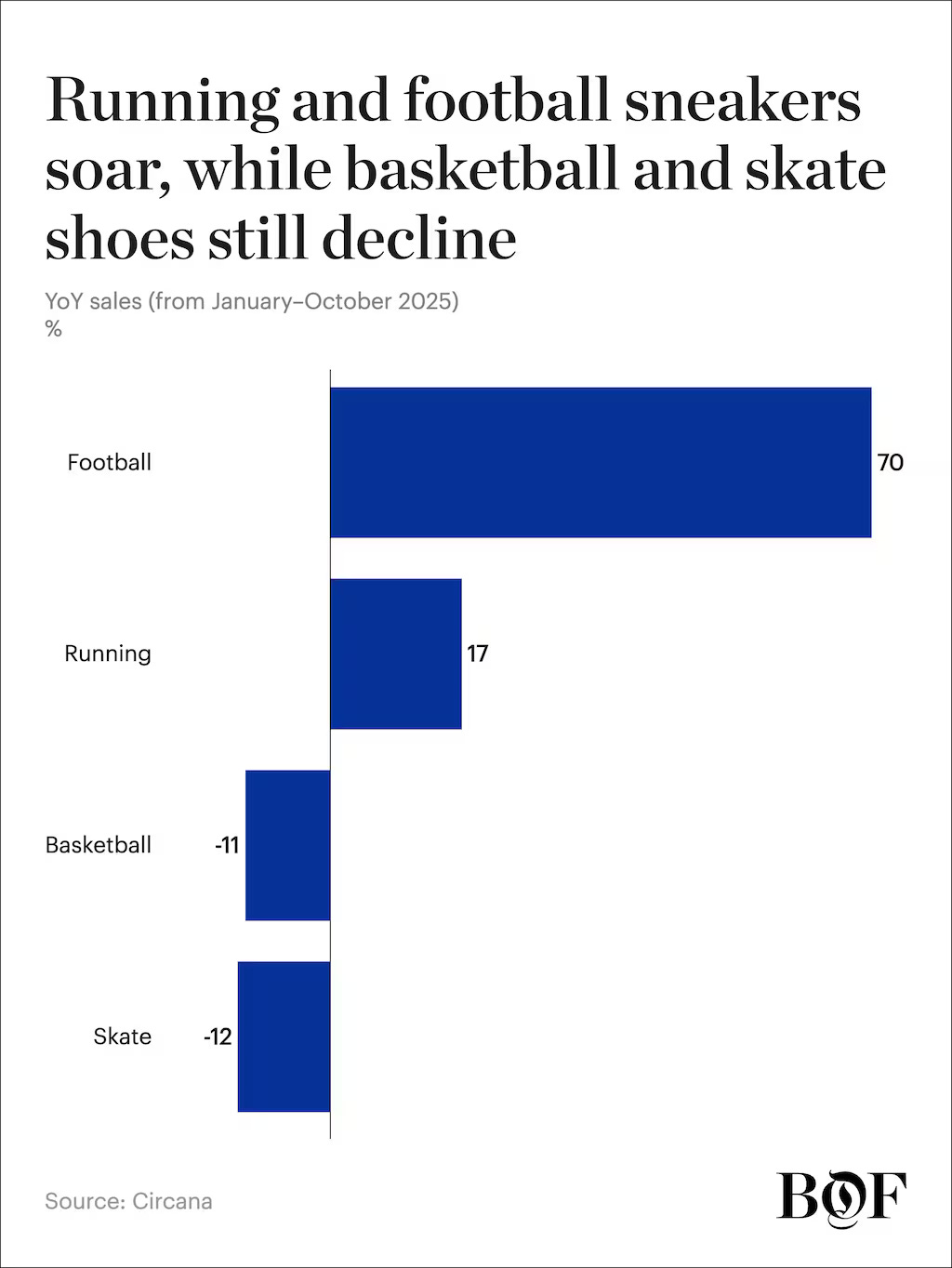
The numbers don’t lie. When it comes to the bellwether of basketball fashion — the sneakers — things aren’t looking great.
According to market research by Circana, basketball shoe sales declined by 11 percent in 2025. NPD Group backs this up; five years ago basketball sneakers accounted for 13 percent of US sales; they’re down to about 4 percent today. Meanwhile, basketball singlets have been replaced by football kits from everywhere from the streets to the runway.
There are signs of life, of course. New signature models across the NBA and WNBA have shown that appetite still exists when the proposition feels fresh. The Adidas AE 1, Nike A’One and Converse Shai 1 prove that basketball can still create demand. But a few sell-outs do not equal a full category refresh in the fashion space.
So the real question is not whether basketball can come back. It can. And it eventually will. The question is how it can speed things up.
While the tumultuous gusts of fashion trends will always influence success, there are ways to pragmatically position the sails.
Three words: refocus, repurpose and recontextualise.
Once the master, now the student – basketball needs to learn from the successes of its sporting peers. Football, running and outdoor have all experienced lasting energy in the fashion space over recent years. Not through nostalgia alone, and not through endless collaboration fatigue, but by reshaping who the category is for, what its products can become, and where its culture can show up.
THE THREE STEPS TO RE-ENERGISING BASKETBALL FASHION
Refocus
Basketball fashion has historically been heavily skewed towards menswear.
A lot of that came from the 90s and 2000s, where basketball’s fashion power was deeply intertwined with hip-hop masculinity. Think oversized jerseys, throwback silhouettes, swagger as uniform. Snoop in Kobe. Nelly in the backward Stackhouse. Bow Wow in the oversized Iverson.
Artists like Missy Elliot and Queen Latifah were absolutely part of that world, but the overall tone remained defined by a very particular kind of male energy.
This just won’t cut it today. The sports categories that have grown in fashion over the last few years have done so by expanding beyond their traditional male default. Football kits got away from the blokes, Patagonia vests got away from the Wall St bros and running shoes finally started to get away from the anatomy of the male foot. None of that happened by accident.
As the womenswear-centric lens entered the category, the outputs often became more expansive, more expressive and frankly more interesting. Suddenly we have Liverpool FC kits that have been transformed into frocks. New Balance football boots have become red carpet slippers. Arc’teryx jackets have become wedding gowns. Salomon trail runners have become infused with Margiela MM9 thigh-high tech stockings. Basketball needs its equivalents.
Football had the Wales Bonner x Adidas Originals Samba moment. Not just a successful collaboration, but a cultural reset. It re-authored the category through a womenswear-focused perspective and brought a female audience along with it.
While basketball has come leaps and bounds in terms of its representation of women (i.e. WNBA, signing women to signature deals), the translation to fashion is still nascent.
The A’ja Wilson A’One sneaker is a great step in this direction. According to Bimma Williams x Tracksuit’s “Collab Of The Year” report, 80% found the collab surprising, which is proof that consumers saw the A’One as a fresh direction for women’s basketball, not just a recycled play. A’ja is one of the best players to ever grace the court. Last year, she won the Finals MVP, the Defensive Player of the Year, the scoring title, the regular season MVP, and she was a WNBA Champion. The only player in NBA or WNBA history to pull that off in one season. Pair that with her strong fashion game, and Nike doesn’t just have “another Jordan” on their hands — this is A’ja’s world.
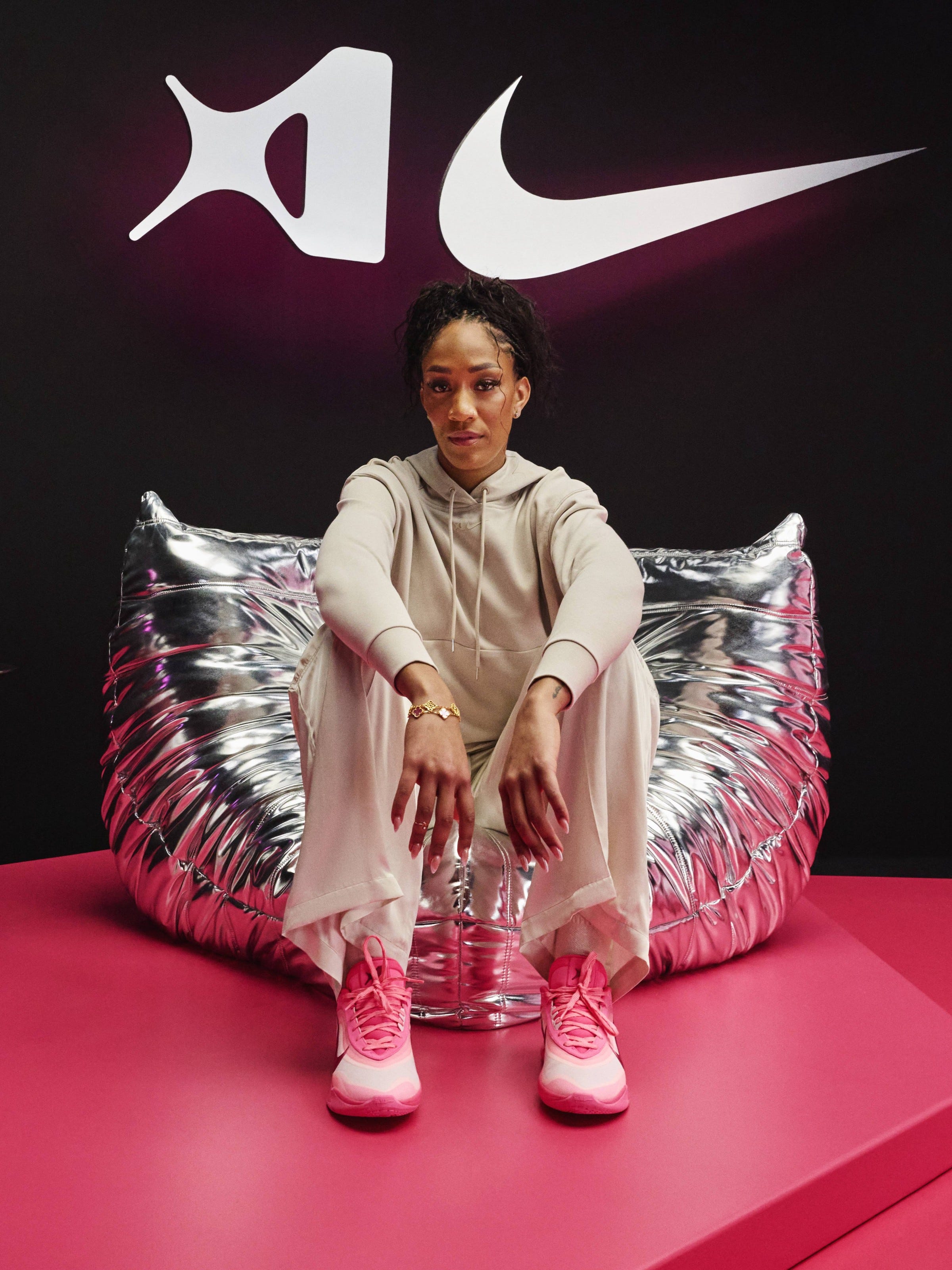
Meanwhile, strong moves from Caitlin Clark’s Kobe 6 Protro, the commercial success of Sabrina Ionescu’s signature sneaker line and Paige Bueckers’ hook-ups with Dapper Dan keep the energy swelling. If basketball wants to regain fashion heat, women cannot sit in the supporting cast. They need to lead the creative direction.
Repurpose
High-top basketball sneakers just haven’t been “it” for a while. While the rise of the Shai 001s might make me eat my words soon enough, the high top silhouette just isn’t for everyone. Moreover, the basketball jersey is still a staple on game day, but its street appeal has lacked the same fashion appeal for a while. Too much of basketball’s product language still arrives exactly as expected.
That is a problem because fashion heat rarely comes from the expected version of a thing. It comes from the translated version.
This is where football has been especially smart. Football attire became source material, transforming into everything from Umbro x Slam Jam’s chainmail suits to Martine Rose’s football suits. The football boot itself — which was previously an unwearable style off pitch — has been successfully retooled by experiments like the Nike Cryoshot where the studs are cleverly wrapped in gel to maintain the codes of on-field play without the hassle. The balance between form and function will win here – a chainmail suit wins the feed with unexpected form while a football boot with gel studs wins the day with a functional retool. One is theatrical. One is practical. Both expand the imagination of the category. Basketball could study the tapes on these.
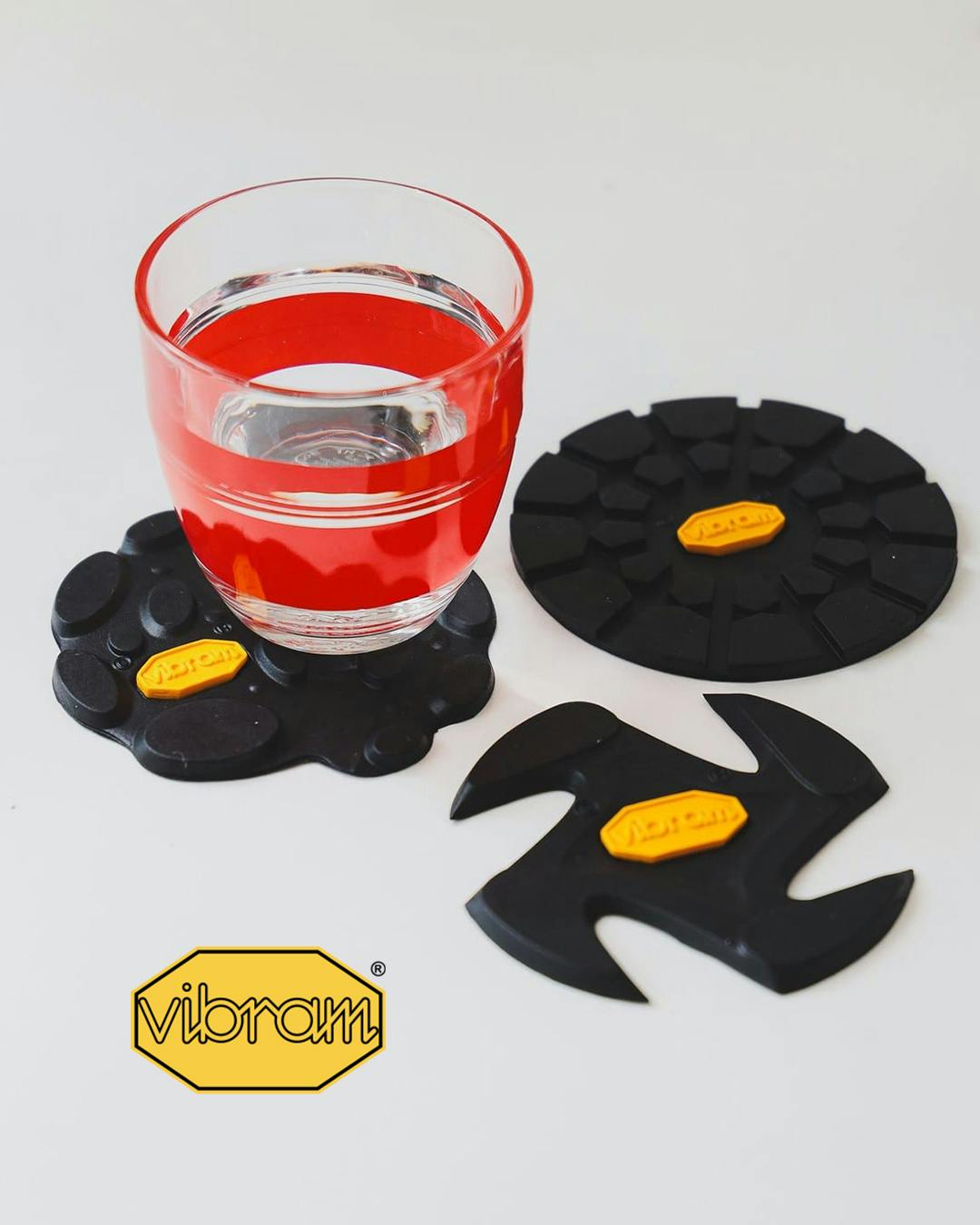
Not every breakthrough has to be a total silhouette reinvention either. Vibram soles have become the “gorp” accent of shoes that should never set foot on the outdoor trail. Loafers, ballet shoes, and even drink coasters have received the Vibram treatment.
How can basketball translate?
Let’s take a look at the AE1’s, one of the best and most commercially successful basketball shoes of recent years. The signature metallic grate could easily live in other places. In fact, it already is: the AE1 NFL cleat was debuted by Travis Hunter earlier this season. That’s a great sport crossover between basketball and football, now how can Adi bring the signature accent of the AE1 to more fashion crossovers? Bags, eyewear, jewellery, luggage, recovery products, furniture details, retail environments. Not as gimmicky, but as a recognisable material signature that helps basketball live beyond the shoe itself.
That is the broader challenge. Basketball cannot rely on sneakers and jerseys to do all the cultural lifting anymore. It needs a more flexible design system.
Some brands are starting to move in that direction. Way of Wade x Li Ning’s focus on post-game recovery is interesting here. Recovery is a real part of basketball culture, but one that has rarely been treated as a lifestyle opportunity. It’s no secret that basketball athletes are switching to more comfortable footwear for their post-game recovery. Why can’t they look good doing it?
Recontextualise
To break out of a fashion funk, basketball needs to break out of its sport altogether.
Cultural relevance now lives in crossover, not containment. Footballers like Kylian Mbappé sit courtside at the European NBA games. Lewis Hamilton is often seen hanging out at Mile High, watching the Denver Broncos (a team he co-owns). If Caitlin Clark isn’t owning the court, she’s likely owning it on the LPGA tour. In a paper I wrote for SoccerBible in 2024, 89% of their audience said they loved it when they see athletes crossover into other sports. So what about products?


When football’s Total 90 — an iconic 2000s footwear and apparel line designed by NIke — was finding its way back into the cultural bloodstream, one of the smartest styling moves came through tennis. Last year, Carlos Alcaraz showed up in a sleeveless T90 warm up tee – a look that straddled Joga Bonito Ronaldo and 2000s Lleyton Hewitt. Simple pairings like this can set the social world alight. Football and tennis may seem like unlikely bedfellows in a sporting context, but in a cultural context – Alcaraz is a die hard football fan of Real Madrid, David Beckham (ex Real Madrid) comes to watch him play at Wimbledon, the Spanish national football team stops practice to watch him win the French Open, and he is regularly was even recently spotted playing keepy-ups with tennis balls. Crossing over nostalgic performance products between tennis and football, and using dynamic sports icons like Alcaraz to platform it – it’s a heat play that gets the sportstyle spaces talking.
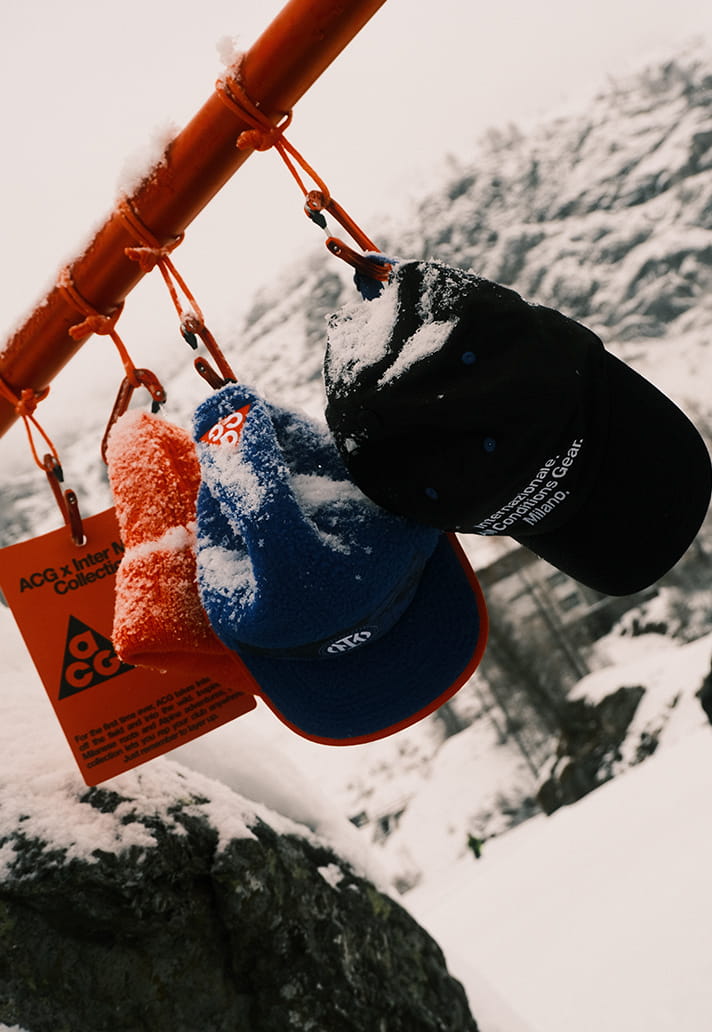
Not only should one recontextualise the product, they should also recontextualise the culture. Recently, Nike ACG took to the mountains to cast an unexpected outdoor lens over football. It took All Conditions Gear very literally, and hosted a football tournament in the snow with Inter Milan. The match, played five-a-side over two 30-minute halves, followed the so-called “rules of nature”, with snow, rocks and trees acting as obstacles – or opportunities – within the game. All players wore the new and exclusive Nike ACG x Inter fourth kit, featuring the iconic Black, Hyper Blue and Safety Orange colour palette. The entire collection was unveiled outdoors through a striking open-air installation. We’ve seen in-game jersey reveals before – Jordan x PSG, Palace x Adidas x Juventus – but to completely recontextualise the game of football through an outdoor lens, with new rules and a dynamic outdoor product display, this stylistically changes how a sport can be seen. The Nike ACG x Inter Milan kits then come to symbolise this idea – making them infinitely cooler than your run of the mill collaboration.
Basketball Will Come Back. But Not By Running the Same Old Drills
The trend cycle moves fast, and it will undoubtedly return to basketball.
There is already movement. Signature shoes are regaining energy. Athletes like Shai Gilgeous-Alexander, A’Ja Wilson, Anthony Edwards, Sabrina Ionescu, Angel Reese and Tyrese Haliburton are giving the category a new personality. Designers like Willy Chavarria are bringing unexpected heat to vets like James Harden with Adidas’ Vol. 10 model.
Even resale signals suggest that key basketball franchises still hold serious cultural equity when the proposition is right. Travis Scott’s fragment Jordan 1 had 4.4 million sign ups late last year, setting an industry record.
So no, the category is not dead, nor will it ever be. It just needs an energy rehaul.
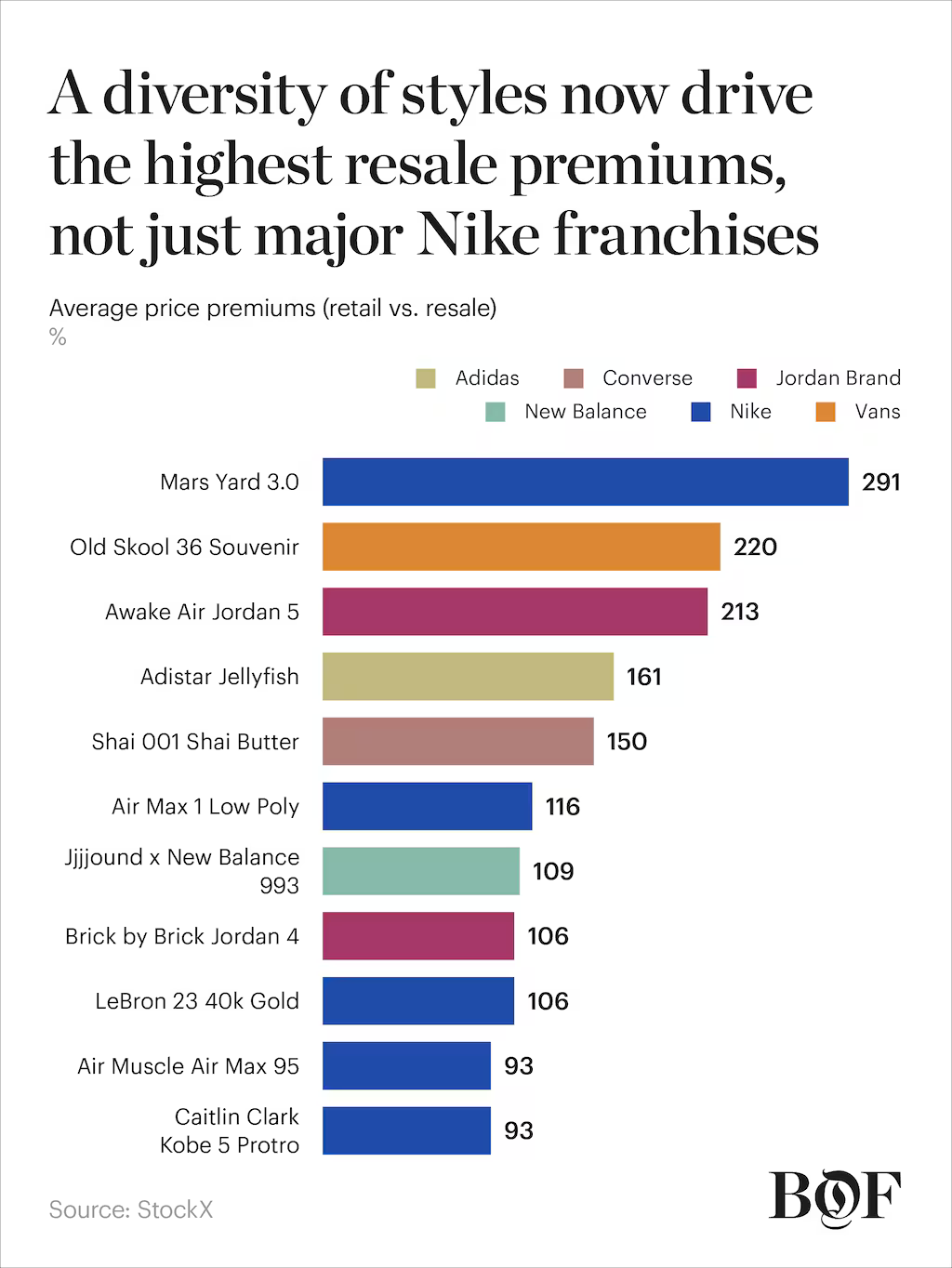
Fashion trends will always move in cycles. Heat cannot be controlled. But it can be influenced. For basketball, that means doing three things well.
Refocus on who the category is speaking to.
Repurpose the codes into new product forms.
Recontextualise the culture in unexpected spaces.
And as you may have worked out by now, this isn’t just a recovery strategy for basketball. It’s a blueprint for any sport trying to matter in fashion again.
That’s all for today, friends. Thanks for coming along for the ride. And thanks to James for joining us today.
See you next time,
DYM