Following seven hours of fierce debate, the Knesset Finance Committee approved the allocation of nearly NIS 100 million ($33 million) in funds for Haredi education institutions on Tuesday evening, part of a larger NIS 1 billion ($331 million) transfer that was halted in December by the High Court of Justice because it was not voted on by the parliamentary panel nor undergo the requisite deliberations.
While the rest of the funds have since been distributed, the court last month ordered the committee to hold a meeting to discuss the remaining NIS 98 million. December’s order was issued in response to a petition submitted by lawmakers from the opposition Yesh Atid party, which accused the government of funding educational institutions that do not teach core curriculum subjects as required by law.
The money is slated for the schools networks of the United Torah Judaism and Shas parties, known as Chinuch Atzmai and Ma’ayan HaChinuch HaTorani. Lawmakers on both sides of the aisle pushed back against Finance Ministry claims they were informed last year that the funds were allocated before being approved.
In a statement before the committee discussion, Yesh Atid noted the vote was taking place on Holocaust Remembrance Day and said that “while in the previous budget they cut NIS 3.3 million from aid for Holocaust survivors, today in the Finance Committee they are discussing the transfer of about NIS 100 million to Haredi educational institutions.”
These are the “priorities of the draft dodgers and the corrupt,” Opposition Leader Yair Lapid’s party added.
The committee vote was boycotted by the opposition, whose members stood up and declined to take part as the transfer of the necessary background material on the level of secular education in Haredi schools — which the High Court ordered presented to lawmakers — was delayed until the debate was almost finished.
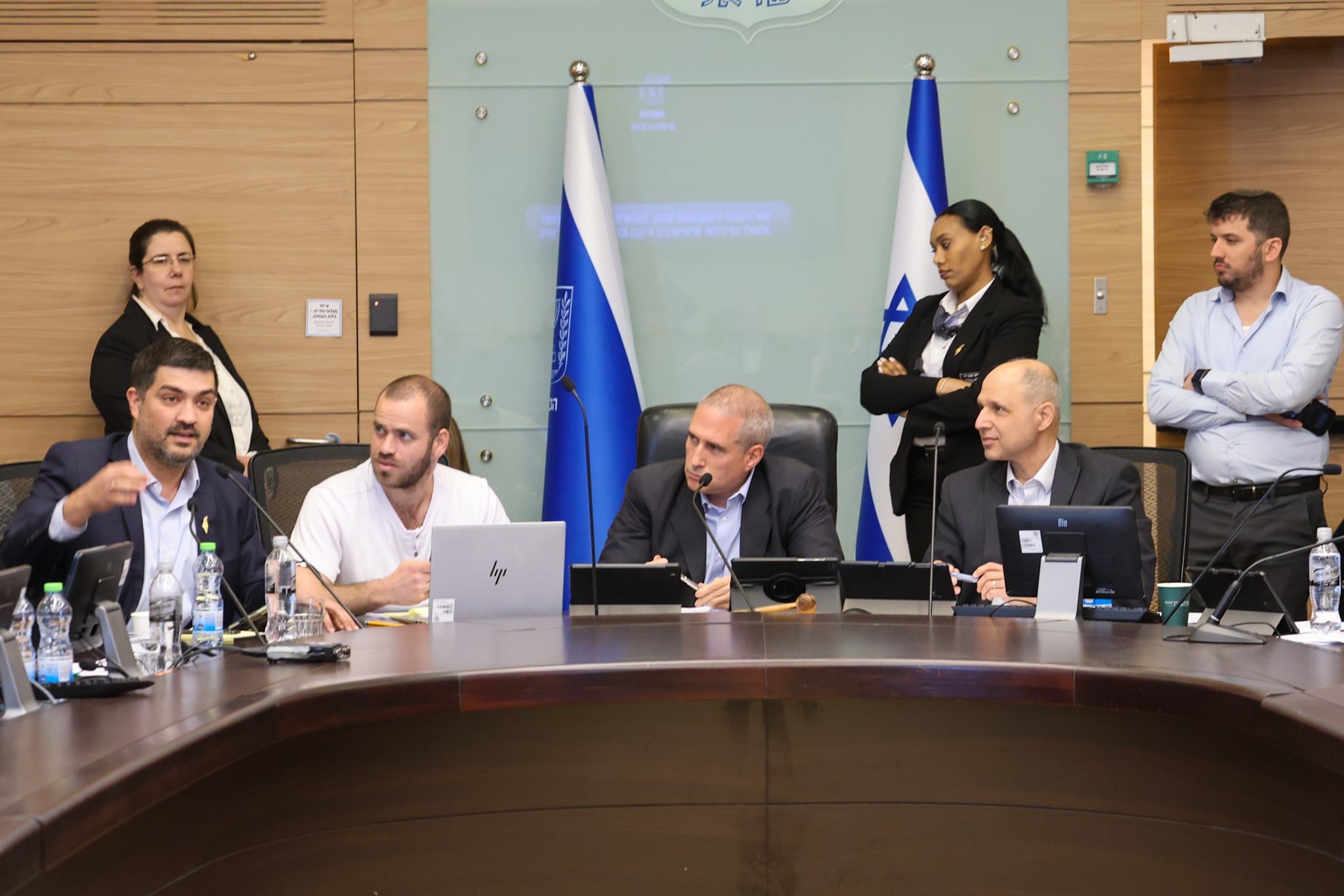
Lawmakers decried efforts to fund schools which fail to teach required core subjects, noting that the data provided by the Education Ministry indicated that only 6.9 percent of elementary school English teachers in United Torah Judaism’s associated network were qualified for their positions. The data also showed that only 13.6% of middle school math teachers were qualified.
“Tonight, the coalition stole another NIS 98 million from you. After 7 hours of discussion in the Finance Committee and an hour before the vote, we were sent about 700 pages of data from the Education Ministry on the scope of core studies in private Haredi education,” tweeted committee member Vladimir Beliak of Yesh Atid, complaining that committee chairman Hanoch Milwidsky of Likud refused to delay the vote so lawmakers could review the material.
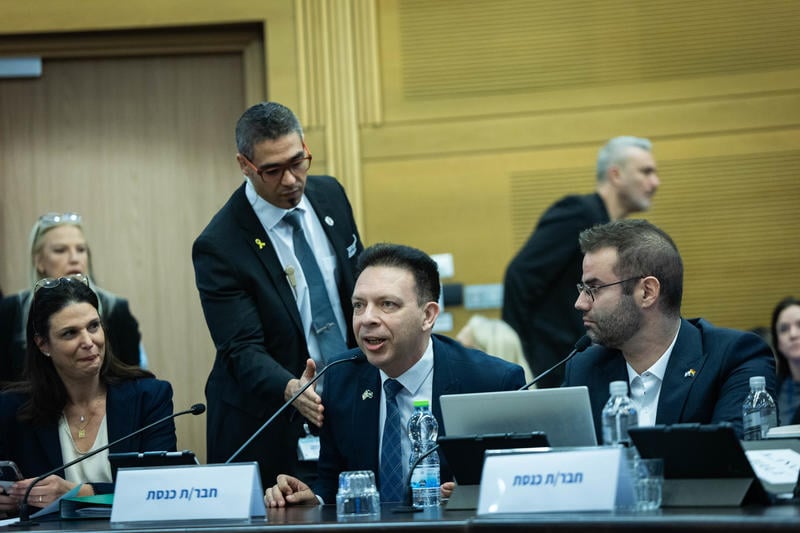
Yesh Atid MK Moshe Tur-Paz, who attended the meeting but is not a member of the committee, similarly denounced the vote as “illegitimate” in a statement to The Times of Israel.
Haredi girls schools generally have more secular studies than boys schools, which offer little secular education. According to a Channel 13 news report from earlier this year, Haredi schools currently have almost no instructors qualified to teach subjects such as English and frequently only break out textbooks when Education Ministry inspectors come to visit, while the government turns a blind eye.
Despite this, 2026 state budget, which was passed last month, contained massive increases in funding for Haredi education. In addition, during the overnight vote on the budget, the coalition inserted a surprise reservation onto the agenda to allocate approximately NIS 800 million ($255 million) to ultra-Orthodox programs and institutions, including yeshivas.
In total, according to a tally by Channel 13, the move boosted allocations to Haredi educational institutions by more than NIS 1 billion, from NIS 4.1 billion ($1.3 billion) to NIS 5.17 billion ($1.65 billion).
Attorney General Gali Baharav-Miara subsequently blocked the transfer, asserting it likely violates High Court of Justice rulings against providing specific welfare benefits to Haredi men who have not enlisted for military service.
Addressing the committee following the vote on Tuesday, United Torah Judaism MK Yitzhak Pindrus asserted “there is no such thing” as teachers in Haredi schools without teaching certificates and that “the level of English and Math in Beit Yaakov” girls schools “is the highest in the country.”
In a WhatsApp message to The Times of Israel, Uri Regev, the President and CEO of Hiddush-Freedom of Religion for Israel, said his organization tried “to convince the court to delve into the substantive side of the funds’ transfer: namely, that the required prerequisites for the transfer are not being met, first and foremost full compliance with the core curriculum. However, the judges did not want to get into that, at least not at this stage. Instead, they viewed the process primarily as intended to examine the formal legality of the transfer.”

Regev’s organization was one of the litigants who petitioned the High Court against the transfer of the funds.
“What occurred in the committee, and the fact that the Education Ministry’s data was presented only at the last minute, spanning hundreds of pages without the committee chair seeing a need to postpone the hearing to allow for study of the new material, will form the basis for continuing the legal challenge against the lawfulness of the fund transfer,” he said.
Earlier in the day, the committee began deliberations to formulate a wartime economic assistance bill for businesses harmed by the war.
During the debate, lawmakers called to enshrine in law terms for compensation that will provide economic certainty in similar situations down the road.