The transition from wolves to the familiar domesticated dogs is a long-standing mystery that scientists are actively working to solve. Why is it important to understand the history of dog domestication? It’s a mirror that reflects valuable insights into human history, our ancestors’ movements, and their interactions with animals.
The domestication of dogs began approximately 30,000-50,000 years ago with Eurasian gray wolves, marking the first time any animal species began to transition from a completely wild existence to one reliant on humans. Modern dogs and wolves share the gray wolf as their common ancestor, so their genetic similarity is remarkable, with their DNA being 98.8% to 99.9% identical.
Although the exact moment of the split between dogs and wolves remains unknown, researchers like Dr. Carly Ameen are using scientific methods to pinpoint it. Deoxyribonucleic Acid (DNA) is the molecule in all living organisms that stores and passes genetic information from one generation to the next. By studying the genomes (an organism’s complete set of DNA) of both wolves and dogs, researchers are working to determine when dogs first branched off from wolves on the phylogenetic tree of evolutionary history.
As they analyze wolf DNA, scientists also gather genetic information on dogs, gaining a better understanding of dog traits, behaviors, and adaptations. The work provides important clues to the biological evolution and diversity of the dog breeds we know and love today.
Recent evidence suggests that early humans began selectively breeding dogs for desirable traits about 11,000 years ago to reduce their “wild” wolf-like tendencies. More recently, during the Victorian era of the 1800s and early 1900s, people focused intensely on breeding for specific traits, characteristics, and behaviors. This practice led to genetic isolation, the restriction of genetic mixing between populations due to geographic, ecological, or reproductive barriers.
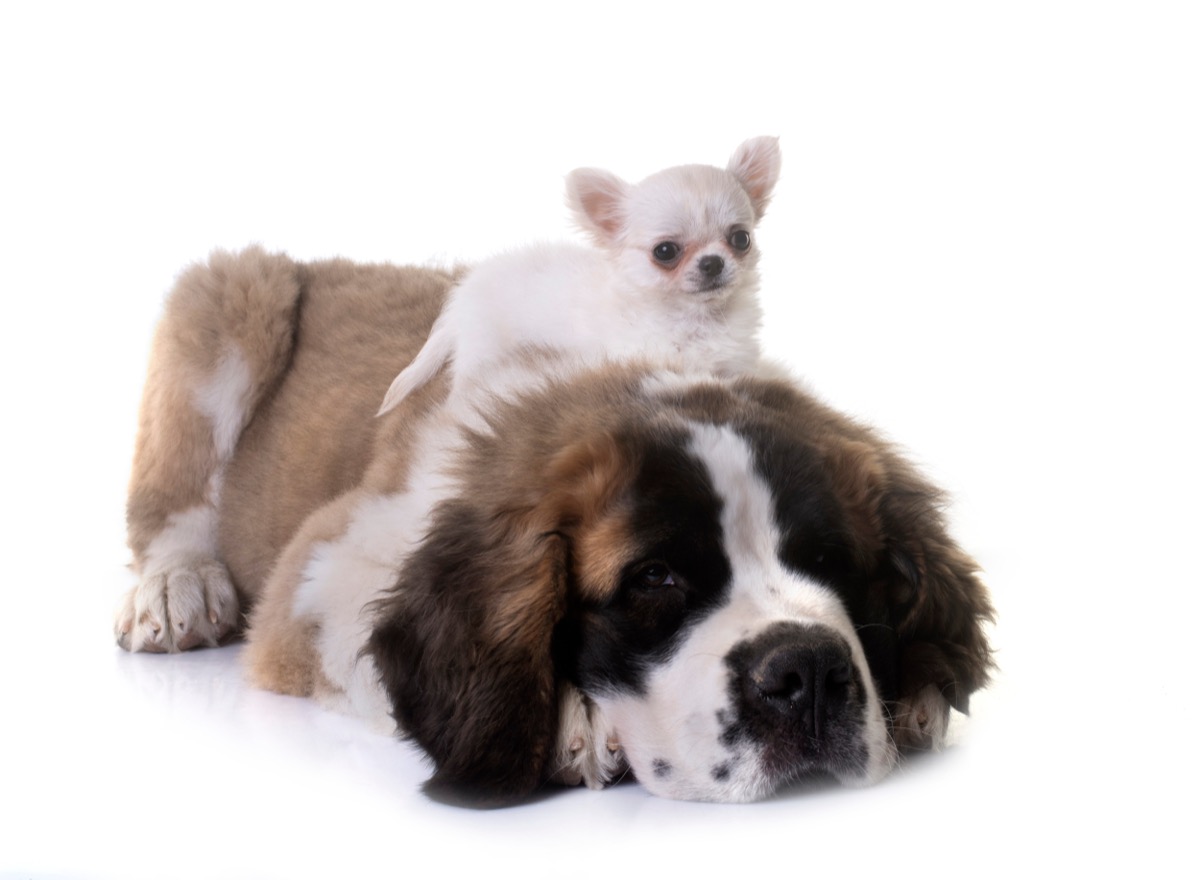
So, why is a Chihuahua’s DNA more recently linked to a wolf’s than a Saint Bernard’s DNA is? Genetic isolation! Saint Bernards have lost a significant portion of their wolf DNA as they were bred for traits such as friendliness and large size, while Chihuahuas have retained many wild genetic characteristics.