
Rhys Williams, Ph.D., assistant professor of forensic science, provided critical forensic analysis in a case involving the fraudulent cremation
and disposal of pets at an unlicensed pet crematorium in Baltimore County, leading
to a 20-year sentence for the main perpetrator.
 Williams, who specializes in forensic anthropology, analyzed samples of purported
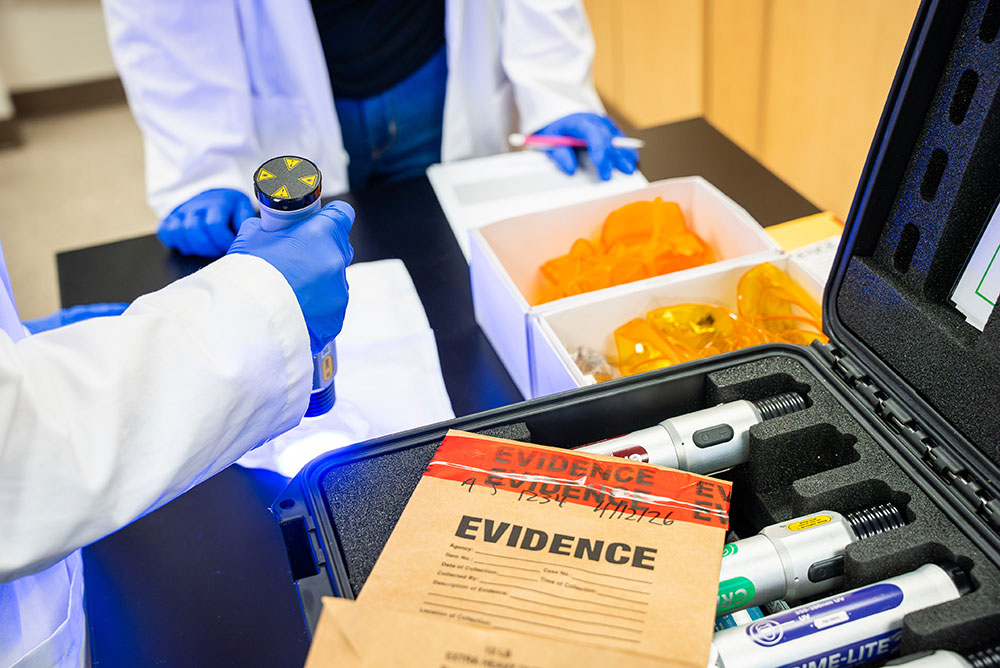
ashes given to pet owners with a suite of physical identification, alternate light
sources, and elemental analysis. He was able to conclude that the samples did not
include legitimate cremated remains.
“It showed clearly there were no fragments of animal bones,” said Williams. “It was
just mixtures of building materials and substrate, and elementally, none of it had
the composition of uncontaminated cremated bone.”
The forensic evidence helped prosecutors make the case for theft and malicious destruction
of property. The result was a 20-year prison sentence for the main perpetrator—far
exceeding the average sentence and accountability for crimes against animals, fraud,
and mishandling remains.
“The forensic evidence helped support that the cremations were not legitimate,” Williams
explained. In addition to the analyzed cremation evidence, detectives searched the
property and discovered 38 pets rotting in the back of a hearse in the garden.
Williams became involved in the case in May 2025 when a member of the public contacted
Baltimore City Animal Control to find out if the remains they had been given were
actually the cremated remains of their pet. Loyola’s forensic science department regularly
works with local animal control agencies and shelters in Maryland and recently received a grant to provide forensic training and evidence collection kits to those agencies from
Show Your Soft Side, an all-volunteer nonprofit that works to prevent animal cruelty.
For Williams, who received an internal Summer Research Grant, his work will continue as he conducts further research by visiting crematoriums
and expanding his database.
“At Loyola, we’re establishing an institute to help investigate crimes against animals,”
he said. “There’s not much support given to animal crime. If there’s a murder or human
crime, the DNA is analyzed with more priority. When it comes to pets, it gets pushed
back for months in the backlog, possibly a year, and the cruelty against animals may
proceed during this time. So, we’re tackling it from a few different angles, getting
the animal forensics to really push forward and build strong support, resources, and
training for animal crime investigations around Baltimore, Maryland, and beyond.”
This case has driven the Pet Cremation and Burial Services Consumer Protection Act
in the Maryland General Assembly, which has now passed the House of Delegates and
the Senate. Governor Wes Moore will sign the bill in Annapolis.