

If you had told me ten years ago that I could play the most demanding AAA games anywhere without needing a powerful system (or any kind of system, to be honest), I would have laughed. Cloud gaming has been on my radar for a while, but I’ve always been skeptical. Could it really replace the way we’ve been gaming for years?
Now that I’ve spent a few days with Nvidia’s GeForce Now, the answer isn’t so straightforward. What I’ve experienced over the past couple of days feels like a glimpse into the future of gaming, but the real question is, is it ready for the present?
GeForce Now Rating: 8.5/10
Pros:
- Impeccable visuals that can be experienced on almost any device with a good display.
- Single-player experience is unparalleled, with virtually zero noticeable input lag, strong enough to rival native gaming.
- Excellent value for money considering the level of performance and visual fidelity on offer.
Cons:
- Requires a consistently stable and high-speed internet connection.
- Multiplayer can be challenging due to input lag; only recommended for casual play.
GeForce Now is about as good as cloud gaming gets right now
Since the release of Crimson Desert, I’ve been lost in the world of Pywell, but my system wasn’t strong enough to do the game proper justice – and I’m running an RTX 4060. That alone shows how demanding the game is. When I got my hands on GeForce Now, I learned that some of the games are powered by RTX 5080 GPUs with full ray tracing, DLSS 4, multi-frame generation -all of it. I didn’t waste a second jumping in to see how the already beautiful world of Crimson Desert would look on GeForce Now.
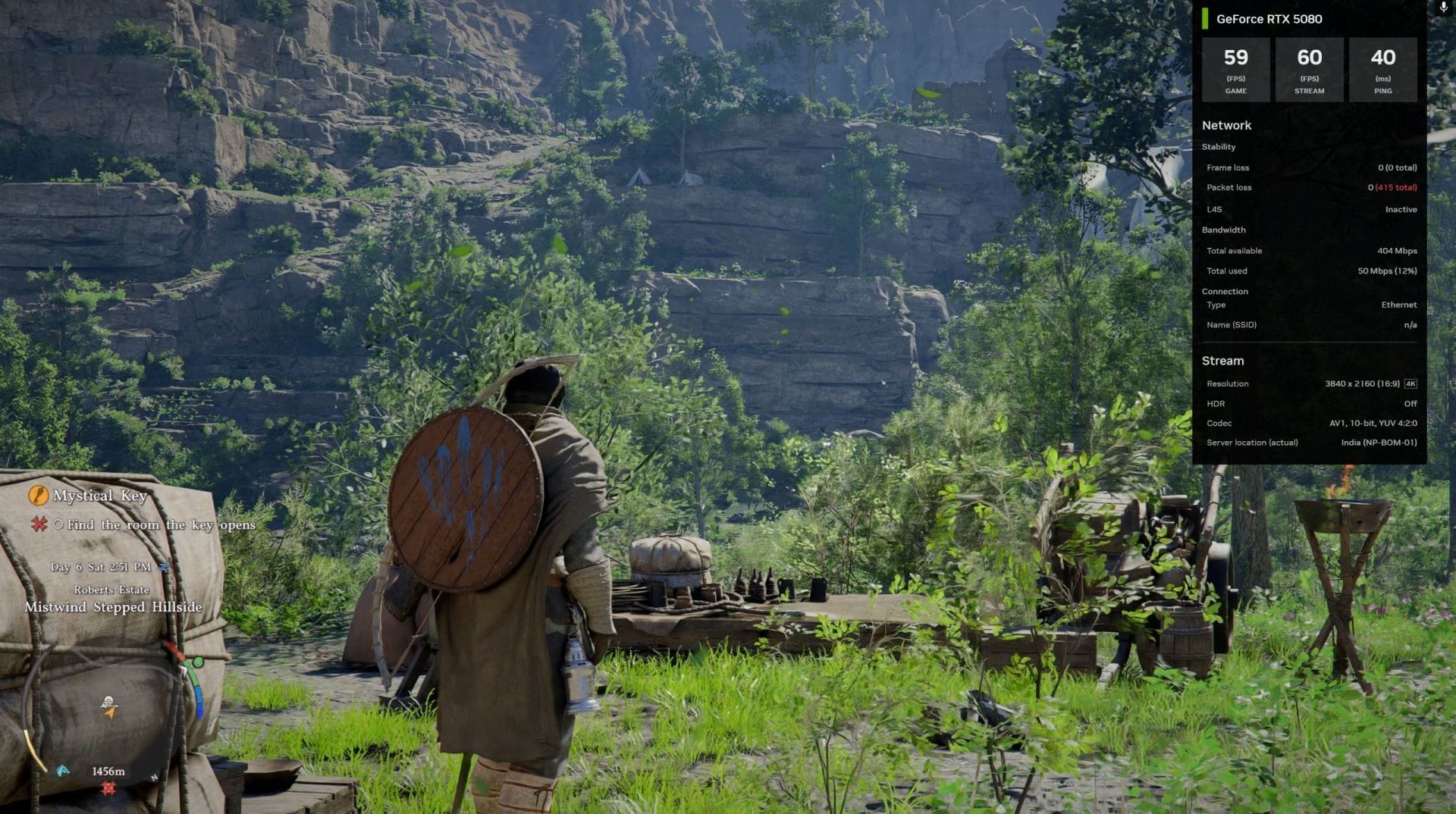
I still had some skepticism about how well the servers would handle a game like this. But if I’m being honest, I couldn’t even tell for a second whether I was running the game natively on my PC or if it was actually streaming from a server.
Now, it’s not like this is my first experience with cloud gaming. I’ve tried Xbox Cloud Gaming before, and while that subscription service gives you access to games (unlike GeForce Now), the experience here feels completely different. As far as I remember, I lost interest in cloud gaming because it always felt laggy and jittery, with noticeable input delays. If it couldn’t even handle a single-player game properly, multiplayer felt completely out of reach.
However, things have changed. I might sound like a bit of a tech noob, but this marvel of technology has genuinely impressed me beyond my expectations. However,it’s not all sunshine and rainbows when it comes to cloud gaming. There are still some things that bothered me. But first, I want to talk about the sheer insanity of what Geforce Now can give us in terms of visual fidelity – something I’m still struggling to fully believe.
Visuals are impeccable with almost non-existent input lag
I wanted to push the visuals as far as possible without compromising performance. I tried several games, but when it comes to pure visual fidelity, Crimson Desert really does an impeccable job. Naturally, I wanted to see how it would look at 4K 60 FPS with everything maxed out. Since my review copy didn’t have a TV app, I used GeForce Now on my PC and set my TV as the primary display. The experience was beyond anything I imagined cloud gaming could be. Even with ray reconstruction enabled, I was getting a stable 60 FPS.
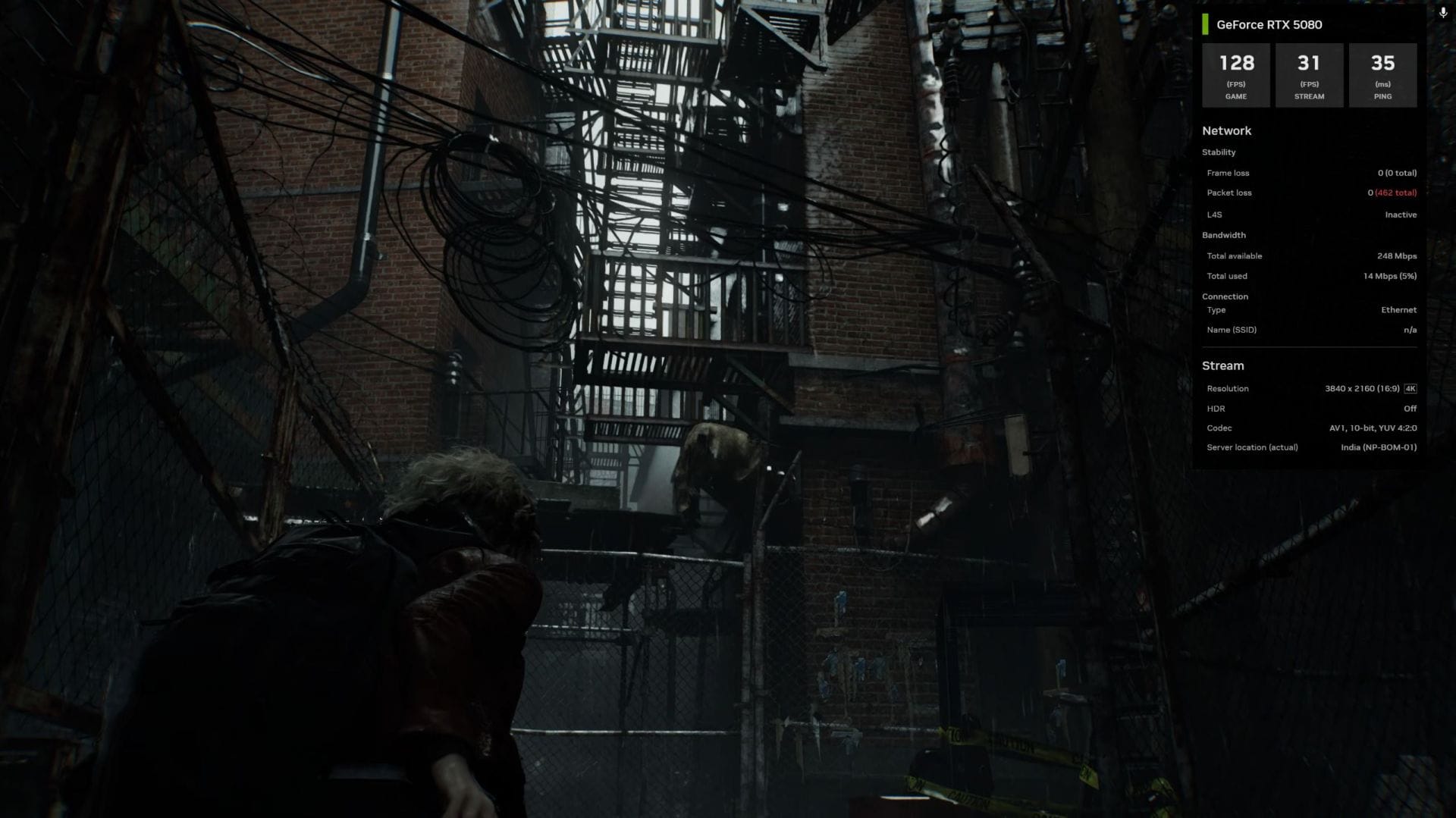
I tested several games at 4K, and even in Resident Evil Requiem, I was seeing around 130+ FPS with everything maxed out. So performance isn’t really an issue with GeForce Now. Since the games are running on an RTX 5080 (and sometimes a 4080), raw power was never my concern, the real question was stream quality and input lag. For single-player games, the stream held a stable 60 FPS, and there was no noticeable input lag.
However, all of this comes with one key requirement: a stable, high-speed internet connection. I’m on a 100 Mbps plan, and my initial tests were done over Ethernet (I’ll get to Wi-Fi shortly). The app itself indicates whether your bandwidth is sufficient, and there are multiple presets you can choose from. The Cinematic preset pushes everything to the max, delivering the best possible visual experience.
An alternative, but not a replacement
Things get a bit more complicated when it comes to multiplayer and competitive games. GeForce Now does offer a Competitive preset that can go up to 360 FPS in certain titles (like CS2), but that’s limited to 1080p. I tested both CS2 and Warzone, and while they are playable, it comes with a caveat. It feels viable only if you don’t own a proper setup or just want to try things out. In that sense, GeForce Now works as an alternative for multiplayer gaming, but not a replacement, especially when every millisecond of latency and packet loss matters.
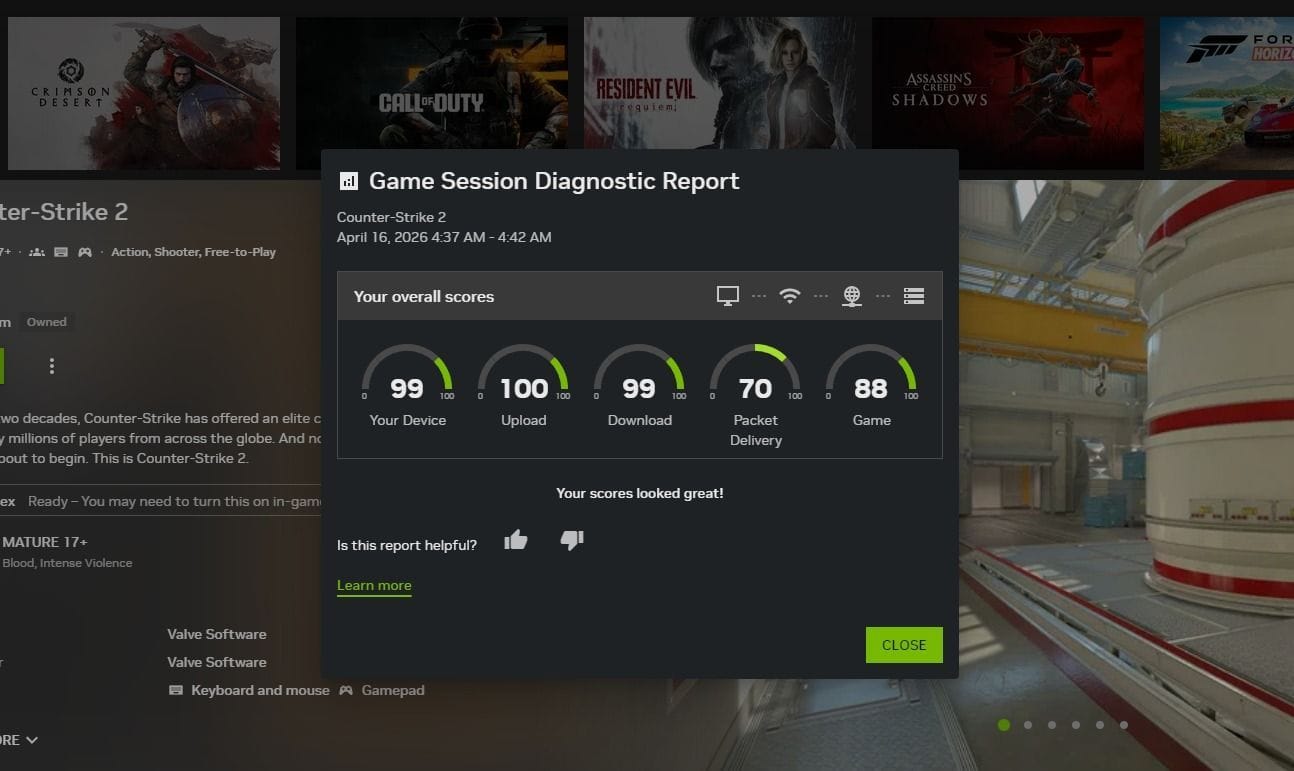
Also, in reality, I didn’t really get more than 250 FPS in Counter Strike 2. One good thing about the app is that it does give you a session report after you have finished a game. However, for CS2, the data wasn’t accurate. Even thought I had massive packet loss during the session, it didn’t show up on the report.
In Warzone, I was getting a consistent 35 ms ping (stream), which is about the lowest I could achieve at my place. Even then, taking fights felt difficult due to the added input delay. Things improved slightly in Warzone Casual, where most encounters were against bots, but once I reached the endgame, the lag became noticeable again. Against real players, the stream clearly struggled. In-game, Warzone showed around 50 ms ping (in-game), which would normally feel smooth on a native system, but that wasn’t the case here.
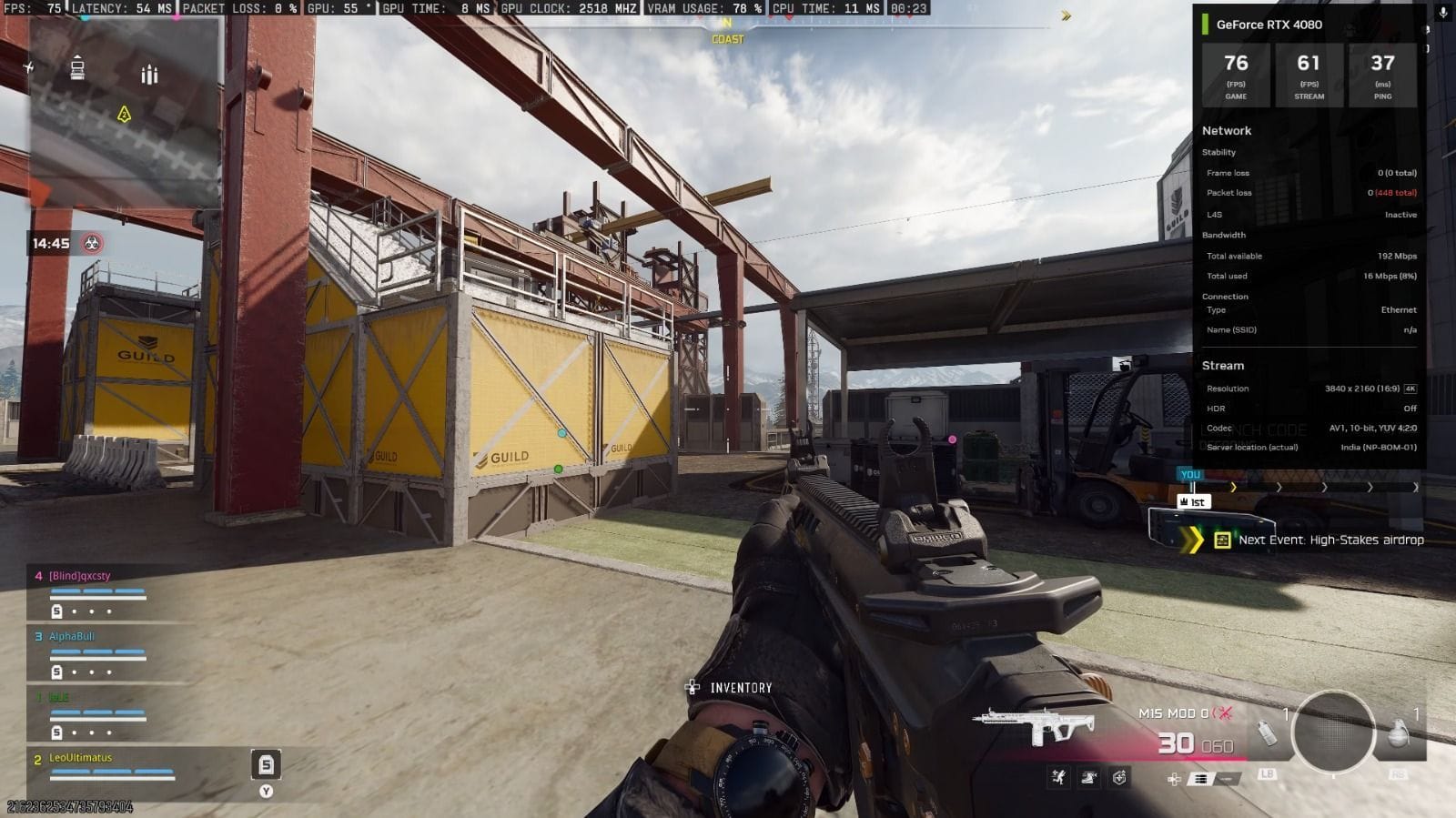
So, does that mean you can’t play competitive games at all? Not really. You can, but it’s not a replacement for a native setup. If you just want to casually try multiplayer titles, GeForce Now is a great starting point. But if your primary goal is competitive FPS gaming, cloud gaming isn’t quite there yet.
Cheapest OLED gaming experience you could get right now
As I mentioned earlier, my initial tests were on Ethernet, but I also spent time testing Wi-Fi. And it’s worth noting, if you don’t have a 5 GHz network, you’re likely to run into issues. I tested on both my laptop and phone, and for single-player games, the experience still felt remarkably close to native.
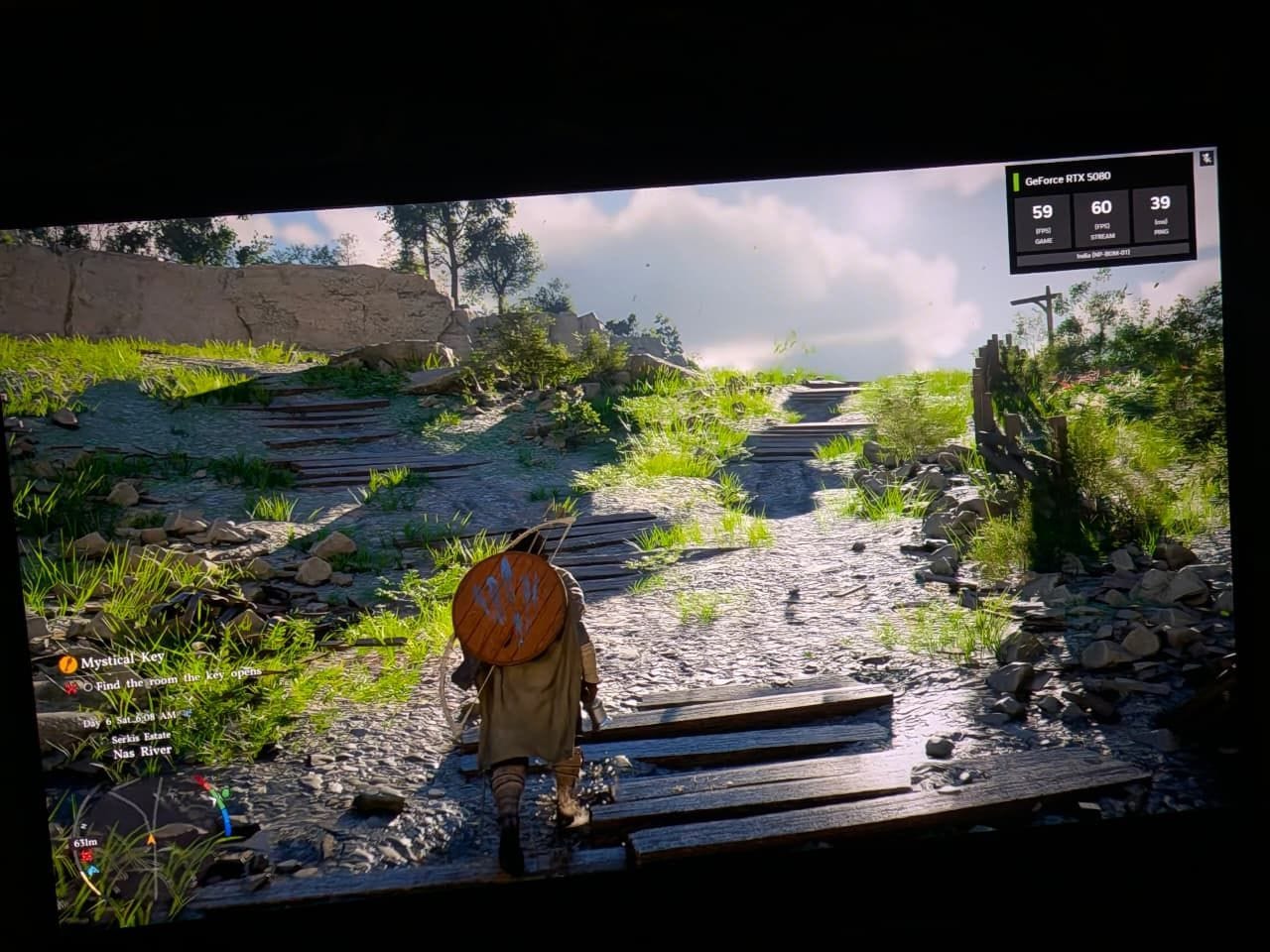
Since both devices have OLED displays, I really wanted to see how some of the most demanding worlds would look. Be it Forza Horizon 5, Assassin’s Creed Shadows, Crimson Desert, or Clair Obscur: Expedition 33, the level of visual fidelity I was aiming for was easily achievable with nothing more than a solid internet connection
Considering the price point GeForce Now comes at, when you compare it to the kind of visuals and performance you’re getting across multiple devices, it genuinely starts to feel like a deal that’s hard to ignore.
Who is this truly for?
Unlike other subscription services, GeForce Now doesn’t include games, you need to own them. So the question becomes: who is this really for? The answer isn’t straightforward. For someone like me, who wants the flexibility to play across different devices anytime, anywhere, GeForce Now has started to feel like something I actually need to consider. However, I’ve only tested the Ultimate tier, so I can’t speak for the other plans. But if NVIDIA can deliver this level of performance consistently, it’s hard not to see GeForce Now as something inevitable.
It’s also hard to go back after experiencing games I love at settings I wouldn’t normally even dare to try out.
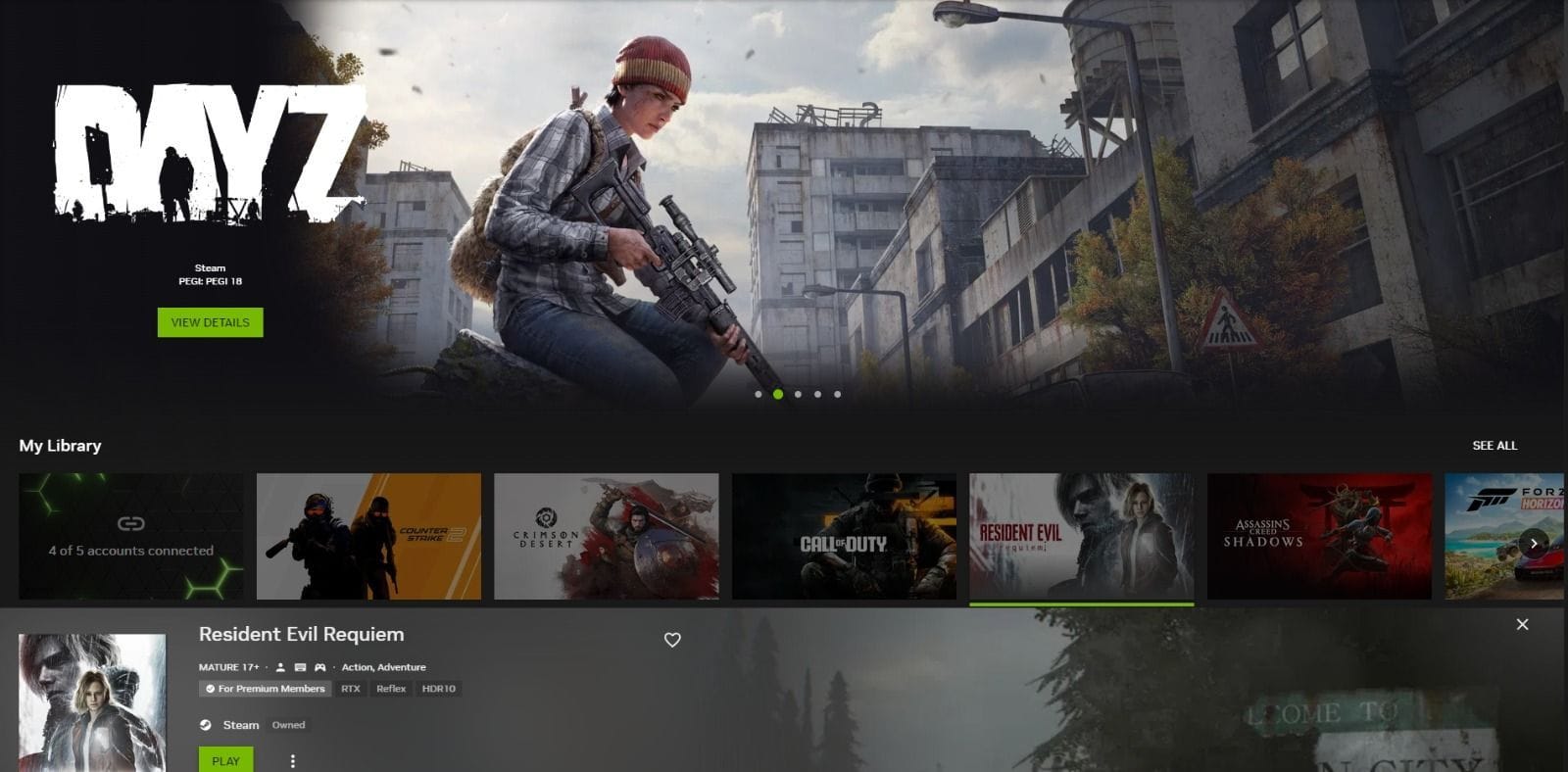
Accessibility is a privilege, and being able to access my entire library instantly, and at this level. was something I wasn’t fully prepared for. However, GeForce Now still has a long way to go. It’s not a replacement for native gaming, especially when multiplayer is involved. Owning your own system is still the benchmark..
But when it comes to single-player experiences, it’s both impressive and a little scary. What it can already do feels like a glimpse into where the world of gaming is headed. And if this is just the beginning, it genuinely feels like the future of gaming is on its way to be changed, forever.
Edited by Debabrata Naiya