
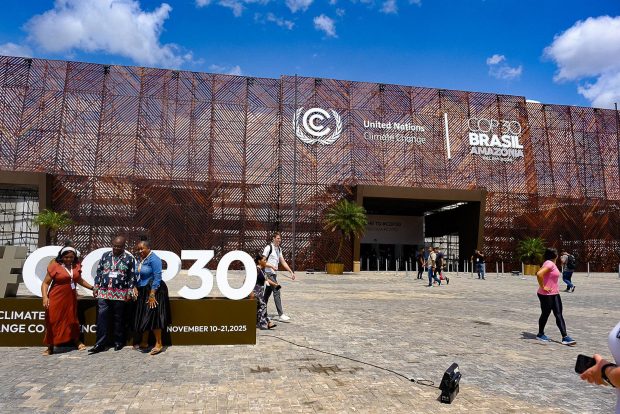
Photo by Alberto César Araúj, Amazônia Real via Flickr
Hopes of landing an early deal at the UN Climate Conference in Brazil have been dashed, with nations split over options presented in the first draft of the deal published on Tuesday.
Brazil’s president Luiz Inácio Lula da Silva arrived in the Amazon city of Belém on Wednesday for a meeting with top COP30 negotiators in a bid to smooth tensions over the thorny issues of the transition away from fossil fuels and climate finance as the talks move towards their scheduled conculsion on 21 November.
But by the end of Wednesday, a revised draft of the deal had not been published for countries’ perusal.
The annual COP summit is meant to take place over 12 days but often runs over as countries negotiate the finer details of the deal text.
Call for a fossil fuel roadmap
At the start of this week – the second week of COP30, which began on 10 November – backing for a proposed fossil fuel roadmap picked up pace with 82 of the circa 193 nations at the summit in support.
COP28 in Dubai in 2023 culminated in an agreement to transition away from fossil fuels. The EU and small island states like Vanuatu in the Pacific – which is particularly vulnerable to climate change and among the most vocal nations on climate issues at UN fora – had been pushing for commitment to a fossil fuel phase-out.
However, the final text referred instead to a transition away from fossil fuels in energy systems “in a just, orderly and equitable manner”.
At COP29 last year in Azerbaijan there was no decision on exactly how to begin the transition and fossil fuels were not explicitly mentioned in the summit’s final documents.
The ‘Mutirão Call for Fossil Fuel Roadmap’ at this year’s summit proved a welcome return to the issue for those countries dismayed by the lack of action. Mutirão is a Portuguese word that translates to ‘collective action’ and is the theme of this year’s COP in Brazil.
France, Germany, Colombia and a number of small island developing states had called for the roadmap at the beginning of the conference, and the UK had signalled its support. Negotiators are expected to release a proposal on or before 21 November.
However, Ralph Regenvanu, climate minister of Vanuatu, told news agency Reuters that Saudi Arabia was resisting the plan and COP30 president Andre Correa do Lago confirmed on Tuesday that the idea of a roadmap had so far been rejected by other Paris Agreement signatories.
Read more: Landmark deal to cut global shipping emissions hits major hurdle
Businesses urge support
The We Mean Business Coalition has published an open letter to the COP30 presidency and government representatives, urging them to lend their support to the adoption of a fossil fuel roadmap.
The letter has around 120 signatories, including major business groups together representing more than 100,000 companies – including Unilever, EDF, Volvo and H&M Group – as well as C40 Cities, a global network of nearly 100 city mayors, and tens of other organisations.
“A robust, credible roadmap would help countries and businesses plan the shift to clean energy, strengthen energy security and reduce costs for consumers,” the letter reads.
“Anchoring the roadmap in real-world momentum toward clean energy and electrification would provide much-needed clarity for investment and national implementation.”
It said a roadmap should reflect the “different starting points” across the Global North and South, and be co-developed to support a just transition that “improves health outcomes and economic resilience”.
“This will need finance, technology and market reforms,” it said.
Read more: First climate ‘tipping point’ has been crossed, finds major report in stark warning ahead of COP30
Climate finance, information integrity, and strategies for NDC implementation
Other contentious issues in COP30’s deal package includes pinning down how rich nations will provide finance to poorer countries to switch to clean energy, and plans to launch a UN-backed global market for trading carbon offset credits.
The latter is understood to have hit a snag as governments dispute over the funding to get the market up and running.
On a more positive note, it was announced at the start of the summit that a Declaration on Information Integrity on Climate Change had been launched.
The declaration establishes shared international commitments to address climate disinformation and promote accurate, evidence-based information on climate change. As of 12 November, it had been signed by 10 countries: Brazil, Canada, Chile, Denmark, Finland, France, Germany, Spain, Sweden, and Uruguay.
NDC clinics have also taken place at the summit to enable countries to share strategies for implementing their nationally-determined contributions.
The workshops brought together government representatives and officials from key ministries, financial institutions and the private sector to exchange lessons and best practices on issues such as setting priorities, identifying gaps in investment planning, and designing financing strategies to deliver national climate commitments.
The challenges identified include fragmented institutional coordination, capacity constraints, data gaps, finance bottlenecks, and policy and governance instability.
Participants put forward ideas and shared experiences on galvanising high-level political leadership, developing new investment frameworks and planning tools, adopting innovative financing approaches, and harnessing private sector engagement.
Read more: As the Paris climate agreement turns ten, it’s showing its age