
Editor’s Note: This is an excerpt from WBUR’s Saturday morning newsletter, The Weekender. If you like what you read and want it in your inbox, sign up here.
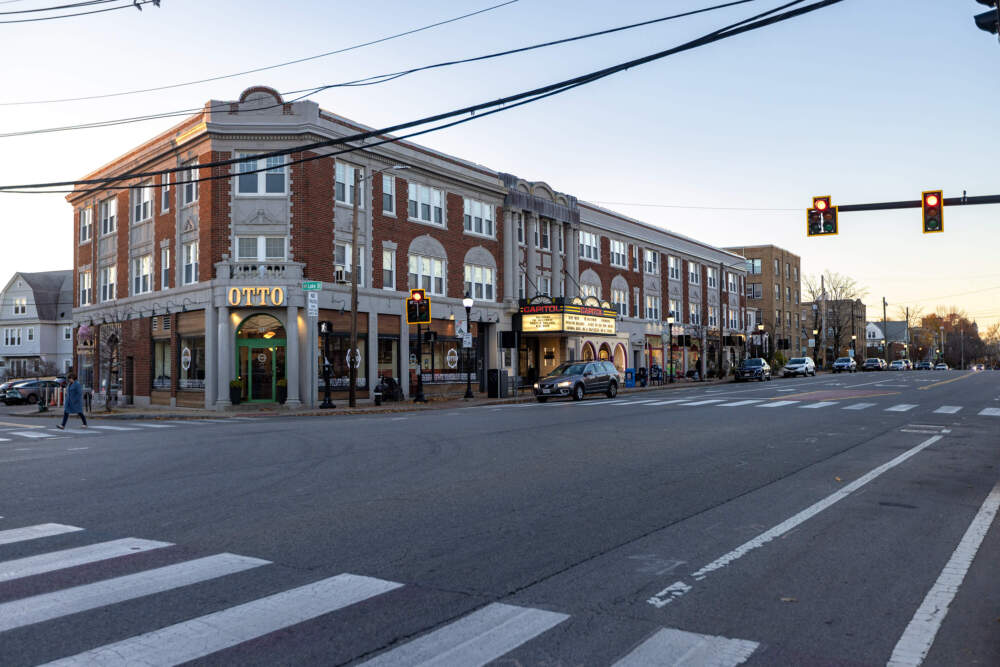
On a quiet stretch of Massachusetts Avenue in Arlington — sandwiched just between Otto Pizza and Quebrada Bakery — stands a movie house that’s 100 years old. Almost.
The Capitol Theatre will mark its centennial anniversary this coming Tuesday, Nov. 25. The way we watch movies has changed since the Capitol was built. The theater has, too.
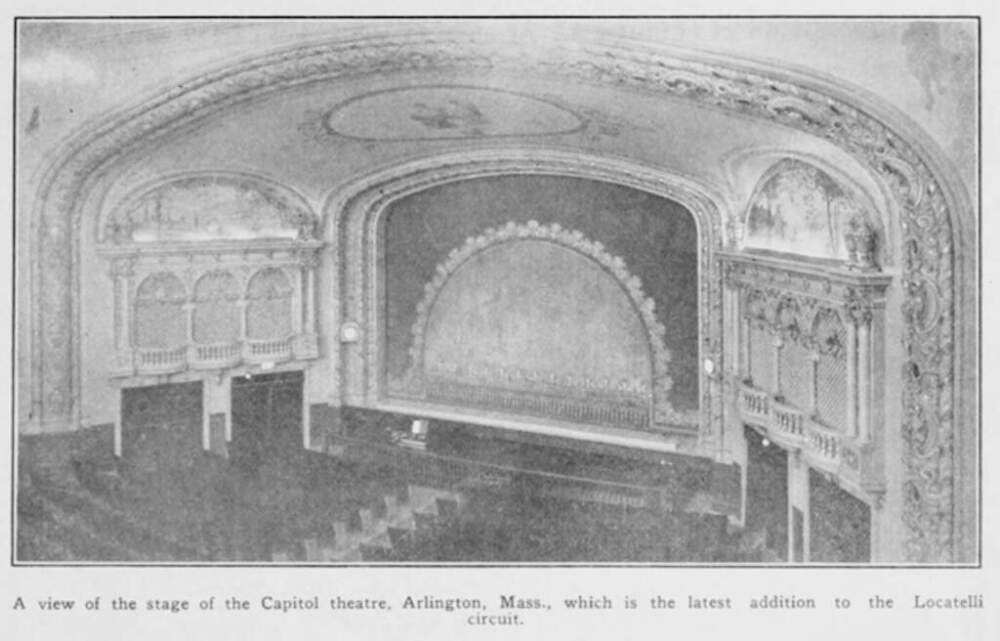
Once a 1,600-seat hall anchored by a grand proscenium with a pipe organ, the Capitol was sectioned off to create a six-screen multiplex in the 1980s, a change meant to satisfy contemporary moviegoers. But over the last few decades, it’s been the Capitol’s old features — not the new ones — that keep people coming back.
“We don’t have reclining seats and a robot that you can order popcorn from. But I think that’s kind of why people enjoy us in a way,” Jamie Mattchen, the theater’s director of operations, recently told me.
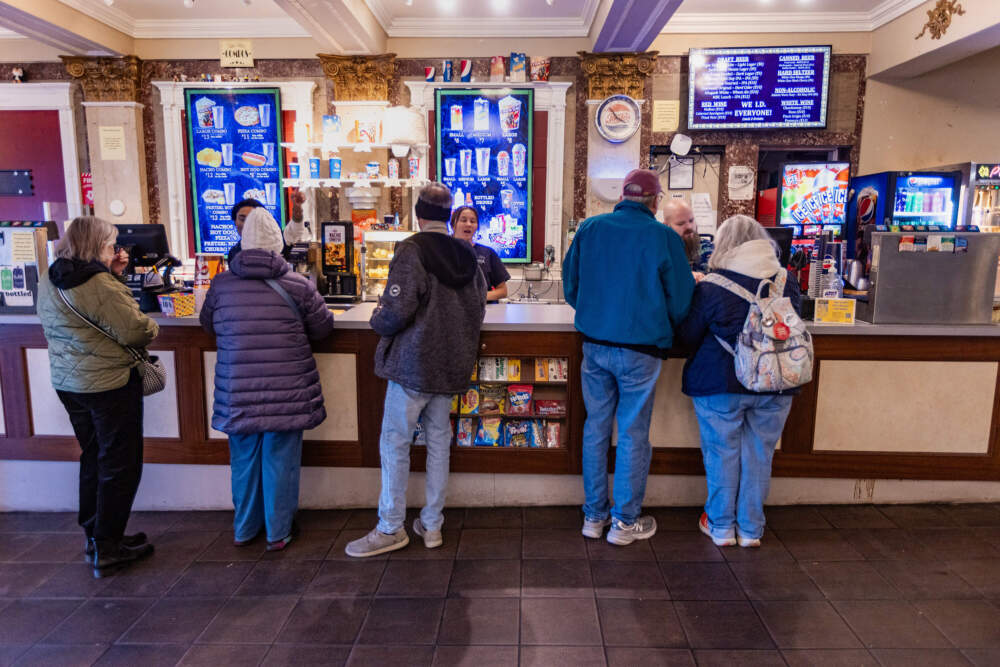
The ornate proscenium — a wide stage framed by curtains with an arched ceiling above it — is still standing in the theater’s main cinema. They’ve also got a walk-up window where you can grab a ticket for whatever’s showing and open seating in the theaters — no-fuss elements of a bygone era.
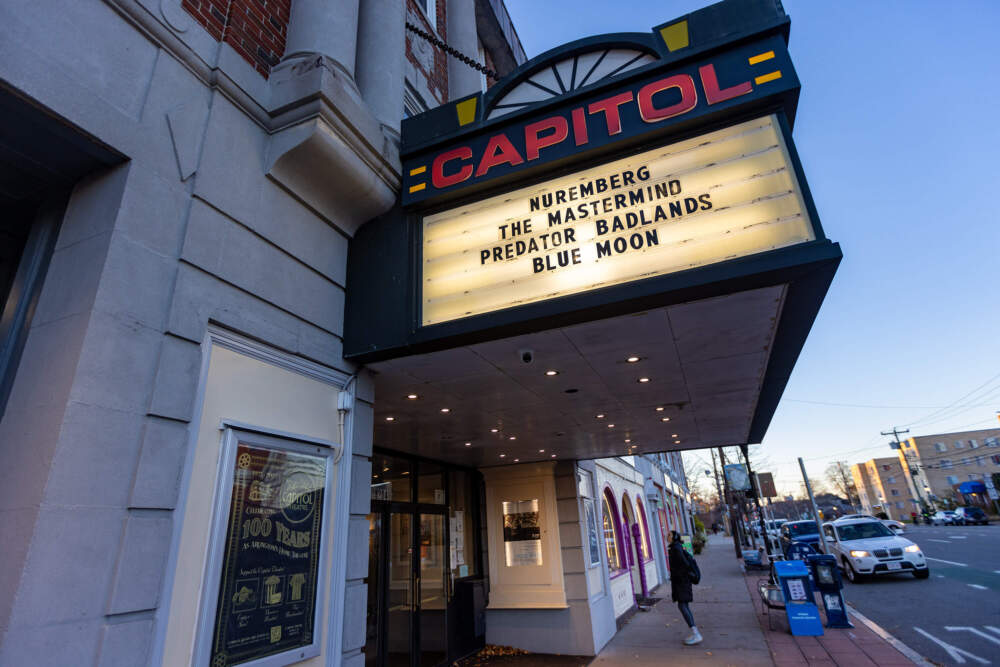
Mattchen and her team began a centennial celebration for the Capitol back in September with a retrospective series leading up to the theater’s birthday. Starting with Charlie Chaplin’s “The Gold Rush” (a film as old as the theater itself), the movie series features crowd favorites from the last century, screened in chronological order, like “Singin’ in the Rain,” “The Sting” and “E.T. the Extra Terrestrial.” The big finale on Nov. 25 is a screening of “Casablanca.”
The retrospective isn’t just an opportunity to rewatch the hits. Mattchen hopes that local audiences will take the time to appreciate the many hands that have ushered the small independent theater through the rise of chain multiplexes and the more recent decline in moviegoing over the last century.
The early years
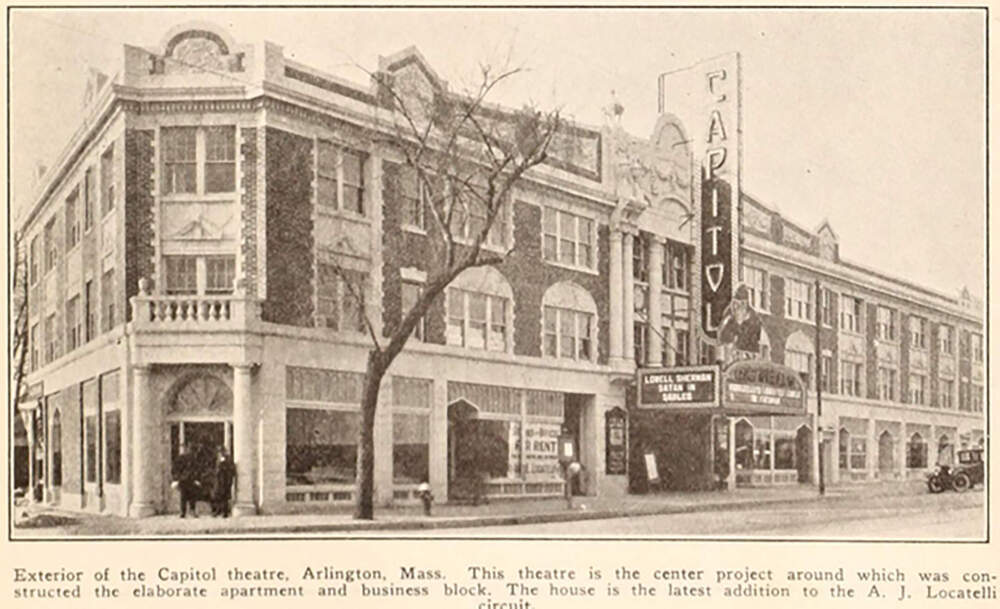
The Capitol Theatre building was built in 1925 by real estate developer Albert J. Locatelli, who also owned the now-defunct Central Theatre and Ball Square Theatre in Somerville. The building reportedly cost approximately $500,000 to build at the time, equivalent to over $9 million in today’s dollars.
“As one enters the lobby, they are so impressed with its beauty and grandeur that they are led to think that perhaps it is all a dream,” read the front page of the Arlington Advocate on Nov. 27, 1925, just a few days after the theater’s opening.
The main theater also had a large pipe organ that was played to accompany silent films, as the first “talkie” would not debut for another two years. “It was a live performance every screening,” Mattchen said.
Some of the glitz and glamour, like a painting of the town crest above the stage, has been lost to time, said Mattchen. “But the original ornate design is still there and parts of the organ are still there,” she added.
The Capitol’s stage also hosted vaudeville performers, but it was mainly a movie house, according to Liz Aragao, the theater’s marketing director. A photo from just a week or so after its opening shows the movie the theater was playing at the time was “Satan in Sables,” a silent film about a young woman entangled with a wealthy Russian aristocrat who won’t commit to her. (Anora, anyone?)
Under new management
Locatelli didn’t own the theater for long. By the 1940s, Arthur F. Viano — who also owned the Regent Theatre in Arlington Center and the Somerville Theatre in Davis Square — was at the helm of the Capitol. It remained in his family until 1979, when the building was sold to Melvin Fraiman. Rather than convert the space into apartments, Fraiman decided to operate the theater himself, said Mattchen.
It was Fraiman who multiplexed the single-screen theater in the 1980s to keep it competitive. “As time went on, a single gigantic theater just wasn’t sustainable unless you had something that’s gonna pack the house every night,” said Mattchen.
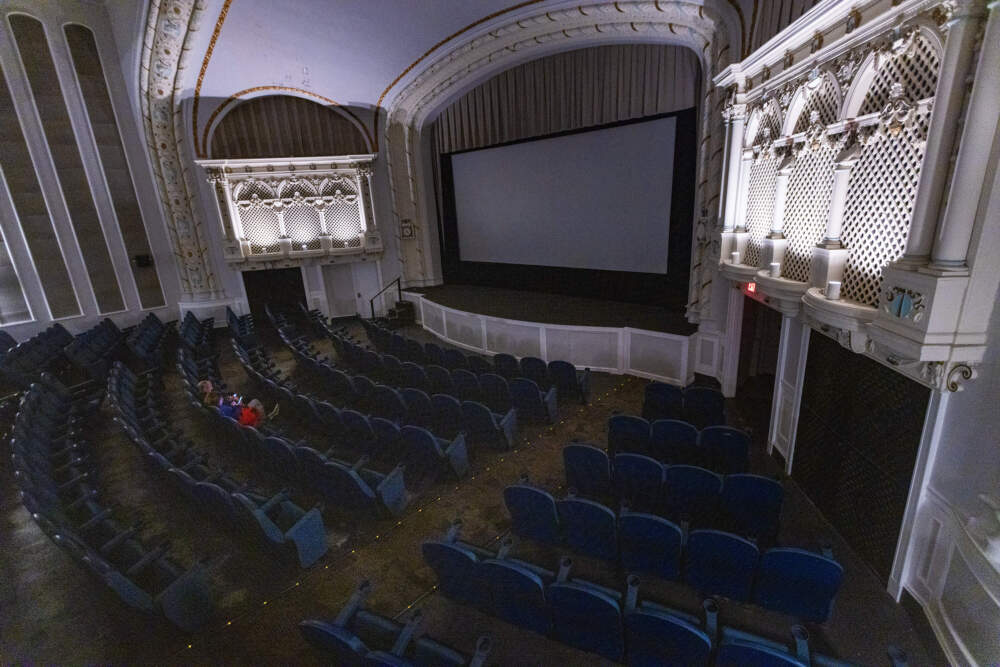
The theater’s main cinema still features the proscenium stage, but with a fraction of the seating capacity. “It’s like a 300-seat theater,” said Mattchen. The balcony and the back end of the first floor were converted into two theaters each. The dressing room — where vaudeville performers would get prepped — became a very small theater. “So then the Capitol went from one theater to six,” Mattchen said.
The Fraiman family held onto the theater for four decades, until this past May. That was when Richard Fraiman, Mel’s son, turned the keys over to a coalition of employees under the name CSB Theatres, including Mattchen and Aragao. According to Mattchen, the Fraimans never intended to become movie theater operators. “It was a happy accident through the family real estate business,” she said. “[Richard] trusted us to be the new stewards since we worked for him for years.”
Mattchen, who has been the Capitol’s general manager since 2008, says co-owning the theater is “lifetime achievement.”
“I’m still kind of pinching myself that it all worked out and I can say I’m one of the owners here,” said Mattchen. “You know, a part of this history belongs to me now.”
Like the Capitol’s previous stewards, Mattchen and co-owners Ian Judge and Jay O’Leary must contend with the advancing media landscape. “Theaters don’t get much exclusivity anymore,” Mattchen said. She recalls a time where the Capitol couldn’t even show movies if they were screening at a nearby theater. “Things like that have just kind of gone by the wayside because streaming has kind of bulldozed everything,” she added.
Keeping up the theater isn’t easy, either. “It’s definitely an old building, and sometimes it feels all of its 100 years,” said Mattchen. But she says the new ownership group is a scrappy team determined to push the theater forward another century.
“It’s definitely a labor of love. And it’s never been just a job to any of us,” she said. “I couldn’t walk away, even if it was the best option for me. I have to be here and carry it through.”
P.S.— Ahead of Tuesday’s special “Casablanca” showing, the retrospective series continues this weekend and Monday with “Titanic,” “Legally Blonde,” and “Moneyball.” Get details for those showings here.