

The pros and cons of tourism in Greece, based on online reputation during the latest peak season, are highlighted in the new Key Sentiment Indexes report by the Institute of the Greek Tourism Confederation (INSETE).
Thorough data analysis revealed that Greece’s online reputation was overshadowed by crisis-driven coverage from July to September, causing a sharp drop in the sentiment index.
While sentiment is not predictive of travellers’ planning, a positive online reputation is
essential to generate favourability towards destinations and travel brands, particularly
when choosing a destination, the report notes.
Extreme weather, disruptions and tensions harm Greece’s online reputation
From July 2025 to September 2025, Greece was mentioned 335.3k in social
conversations in relation to travel, generating 8.5M engagements, shared by 81.9K
unique authors from over 200 countries.
But not all of it reflected a positive sentiment towards Greece as a destination.
Data showed that in 2025 the country suffered a sharp drop in online reputation during the tourism peak season, which is traditionally July to September.
Extreme weather- and climate-related destruction as well as rising political tensions caused Greece’s Net Sentiment Index to fell sharply to 15 in those months, placing the country last among benchmarked destinations.
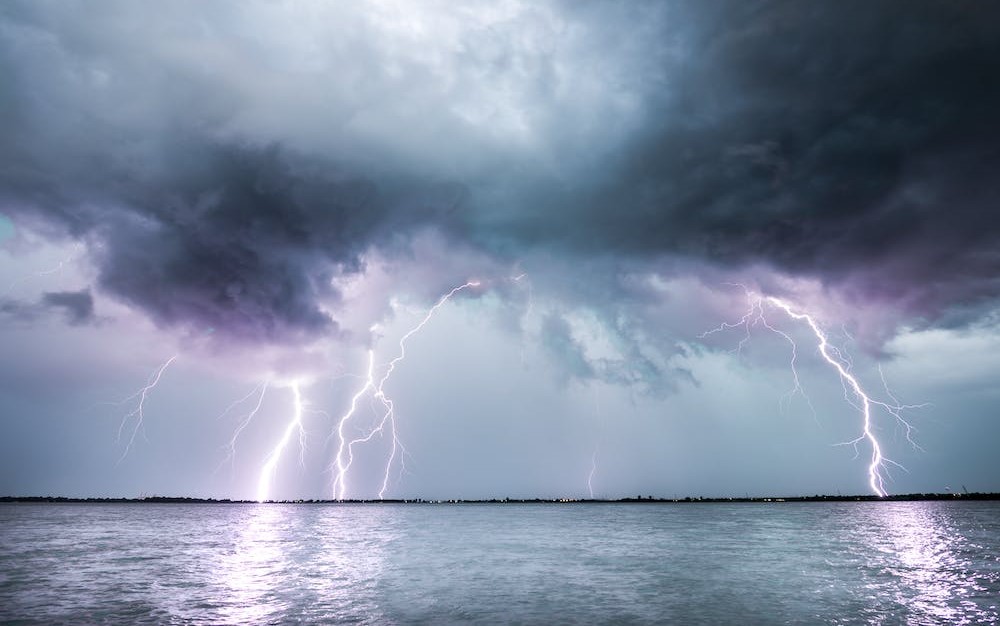
Wildfires across multiple regions forced evacuations and caused fatalities amid 44°C heat during that period, with foreign offices warning travellers of continued fire risks. Additional extreme weather with powerful winds and storms in early August disrupted ferries to Mykonos and Paros, leaving thousands stranded and two tourists dead. Flooding in Zakynthos and Kefalonia brought further travel chaos, and extreme heat even forced the closure of the Acropolis on specific days, preventing tourists from visiting the country’s most glorious sightsee.
Meanwhile, Pro-Palestinian protests on Syros and clashes between Israeli tourists and locals added to instability.
Culture remains strongest reputational asset of Greece
Amidst those crises, Greece’s cultural narrative remained its strongest reputational asset, capturing the highest share of online attention.
“Online stories celebrating cultural sites and authentic local identity continued to shape Greece’s image as a destination rich in meaning and atmosphere,” INSETE’s report observes.
Hospitality and gastronomy also retained strong positive sentiment online for the country.
Overall, Greece captivated travellers with its mix of coastal beauty and cultural richness.
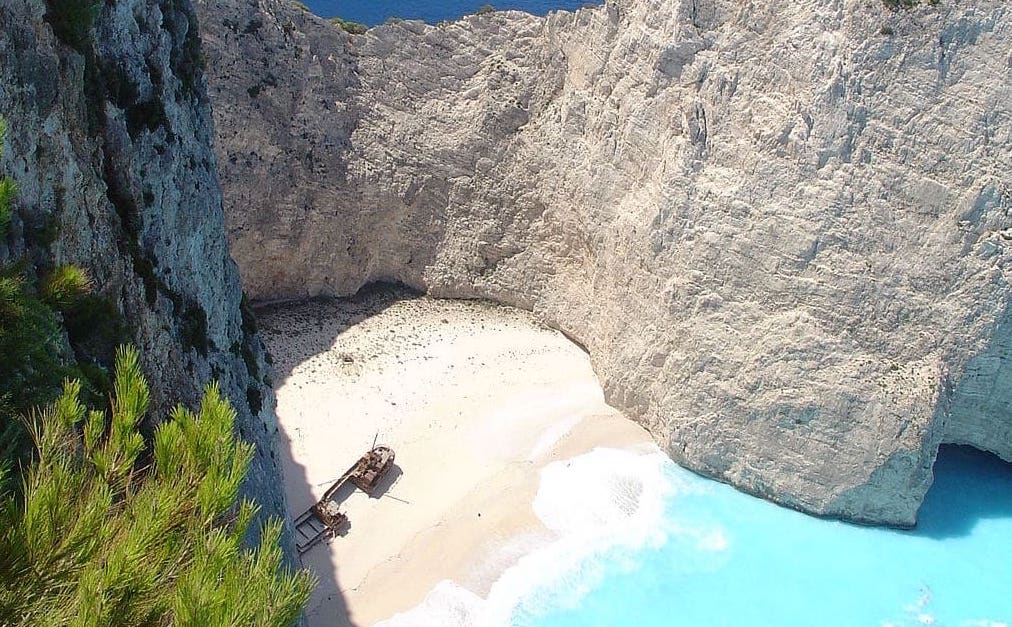
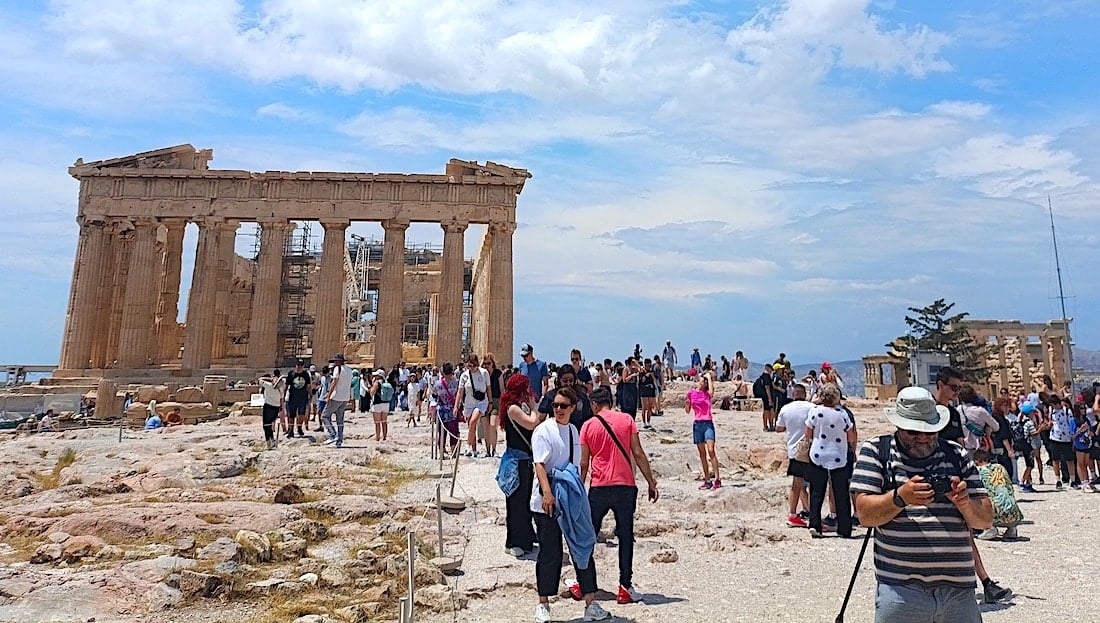
The Acropolis, Meteora’s monasteries, Astypalaia’s tranquil charm, and Kefalonia’s striking turquoise bays were among the most celebrated online narratives for Greece, alongside immersive experiences.
Olive picking in the Peloponnese, hiking through Crete’s Rouvas Gorge, sea turtle spotting in Zakynthos, and volunteering with local animals reinforced the destination’s appeal for travellers seeking authenticity and connection, according to data.
Athens blended ancient grandeur with vibrant local life, and across the islands, Santorini stood out for infinity pools.