
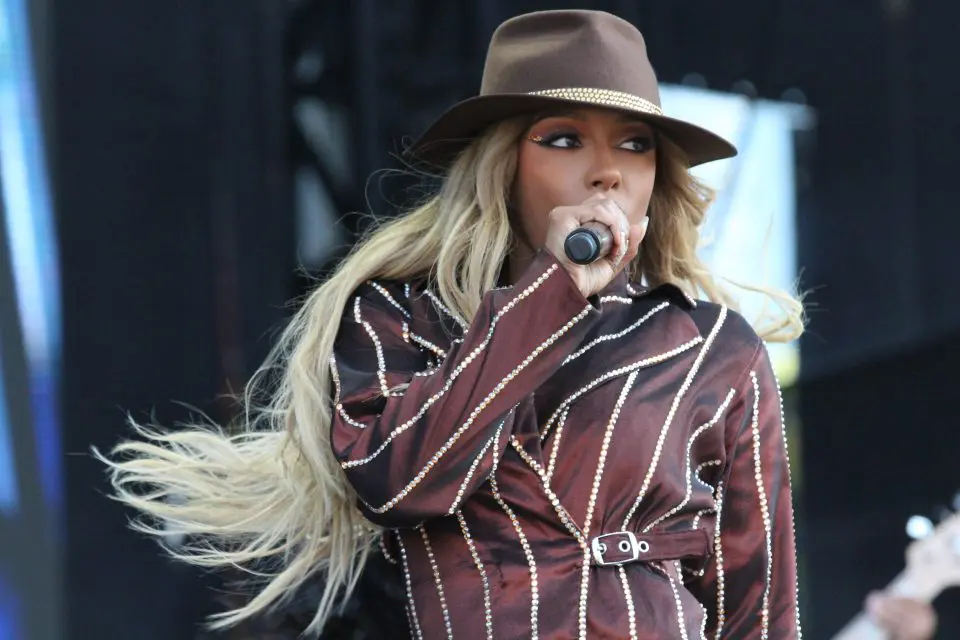
In recent months, the rise of AI-generated artists has ignited a significant debate in the music industry, highlighting concerns from key figures like Victoria Monét and raising questions about AI’s impact on artistic authenticity.
Xania Monét’s debut single, “How Was I Supposed to Know?” from her EP Unfolded, has already made waves, charting on Billboard’s R&B Digital Song Sales chart. This success has prompted reactions from various artists, including Khalid, SZA, and Kehlani, who have expressed their apprehensions about AI’s role in the music industry. Victoria Monét, in particular, has been vocal about her disapproval of AI-generated artists.
During an interview with Vanity Fair, Monét expressed her concerns about Xania Monét, emphasizing the need for AI artists to be clearly labeled as ‘artificial’ to prevent confusion. She stated, ‘It’s hard to comprehend that, within a prompt, my name was not used for this artist to capitalize on. I don’t support that. I don’t think that’s fair.’ Monét fears that the growing popularity of AI artists could overshadow the work of human creators, making it difficult for them to compete.
“It definitely puts creators in a dangerous spot because our time is more finite,” she explained. “We have to rest at night. So, during the eight hours, nine hours we’re resting, an AI artist could still be running, studying, and creating songs like a machine. How would any human ever compete with that?”
Monét further suggested that AI artists should be clearly labeled as ‘artificial,’ as food products are. She believes that while AI has the potential to be a powerful tool, establishing ethical guidelines is crucial to protect human creators from being overshadowed by machines. ‘We’re introducing a tool with a lot of potential, but without the guidelines to protect the people who may be affected by it the most, which would be the creators,’ she stated.
On the other side of the debate, Telisha “Nikki” Jones, the creator of Xania Monét, remains steadfast in her belief that AI can coexist with human artistry. In a recent interview with Gayle King, Jones described Xania Monét as an extension of herself, emphasizing the real emotions and soul behind the AI-generated lyrics. Despite King’s critique of Xania’s singing abilities, Jones defended her creation, stating, “I wanted to reveal myself because I wanted people to know there was a real person behind Xania.”
Jones acknowledged the backlash that AI artists face but argued that innovation often invites criticism. “Any time something new comes about and it challenges the norm and challenges what we’re used to, you’re going to get strong reactions behind it,” she remarked. She views AI as a tool that can enhance creativity rather than replace it.
The ongoing debate about AI in music raises essential questions about the industry’s future. As artists like Victoria Monét advocate for protecting human creativity, the challenge remains to find a balance between embracing technological advancements and preserving the essence of artistic expression. The conversation surrounding AI-generated artists is far from over, and it will be crucial for creators, industry leaders, and fans alike to engage in discussions that shape the future of music.
In conclusion, as the music industry navigates this new landscape, the voices of artists like Monét will play a vital role in ensuring that human creativity is not lost in the age of artificial intelligence. Ongoing industry discussions are essential to define AI’s place in music and protect artistic integrity.