

The strangely ebullient new single from FELIX! concludes with a 10-minute-long voiceover in which the Brockton rapper relates, in painful detail, a catastrophic move to Los Angeles to seek his fortune. The tale ultimately ends in redemption for its protagonist, but as a snapshot of the current state of the music business, it’s pretty dire. FELIX! paints a picture of a fickle industry liable to kick young talent to the curb at the drop of a hat, one in which no amount of aptitude or diligence is enough to guarantee a place to sleep at night.
FELIX! is one of two promising upstarts represented in this month’s local music roundup. The other three artists on this list have been at it for decades, remaining steadfastly creative even as it has become increasingly difficult to make music a full-time vocation (and many of them don’t). They provide a model for artistic vitality in a soul-sucking industry – a spark of light in an otherwise dark tale.
What is Winterpills singing about? It’s hard to know for sure. The band is prone to mysterious imagery and memorable turns of phrase. “I remember being something wild, once.” “An open door/ I know it’s for me/ I’m in the story.” And my personal favorite, “Do-si-do and mourn your childhood.” The lyrics on the group’s new album, “This Is How We Dance,” resonate with import, like a dream whose meaning fades but leaves a lingering surreality in waking life. It helps that the music itself — indie-rock with folk flourishes — is familiar in a way that eludes pinning down. Was that melody reminiscent of Elliott Smith or the Shins? Why does this song somehow remind me of both Neil Young and Pink Floyd? It only takes a single listen for the songs to lodge themselves in the back of your consciousness like the memory of someone you knew intimately, a long time ago.
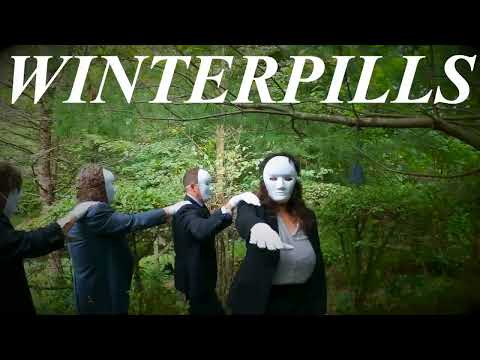
Winterpills was founded in 2003 in Northampton, anchored by the symbiotic twin vocals of Philip Price and Flora Reed. For the first decade or so of its existence, the band released a new album every two or three years, cementing its reputation in the small but vibrant music scene of Western Massachusetts. “This Is How We Dance” is Winterpills’ first album in nine years. In its promotional materials, the group blames the pandemic for the long gap between albums, and it’s possible to detect a certain wistfulness in the material, a yearning for bygone days. “This Is How We Dance” may have taken nearly a decade to produce, but it does not sound overly labored over, only honed — a reminder that sometimes, fallow times turn out to be the most fruitful. — Amelia Mason
Beloved Boston guitar hero Duke Levine stays busy touring the world with Bonnie Raitt, but he’s found time to put one of his favorite live projects onto disc. These are instrumental reworkings of the sounds that were on the radio when Levine was a teenager, ranging from the prog-rock of King Crimson to the silky soul of Barry White (his “I’m Gonna Love You Just A Little More Baby” is turned into a medley that finishes with Steely Dan’s “Night by Night”). The sources range from the treasured (The Band’s “Whispering Pines,” done Stevie Wonder style, and Elton John’s still resonant “Border Song”) to the infamous (“Ram On” by Wings).
Helping elevate the musical magic is an all-star band that features Levine’s longtime collaborator Kevin Barry on lap steel and guitar, Paul Schultheis joyfully adding the sound of vintage 1970s keyboards, and the perfect grooves of percussionist Yahuba Garcia-Torres and the Club d’Elf rhythm section Mike Rivard (bass) and Dean Johnston (drums). Guest spots come from progressive bluegrass pioneer Darol Anger, jazz trumpeter Phil Grenadier and Boston roots rocker Dennis Brennan. The ‘70s may have been a time of musical excess, but Levine’s trademark taste and tone prove that there were plenty of melodic gems worthy of these creative reimaginings. The album is appropriately available on 8-track as well as CD and a Bandcamp download. — Noah Schaffer

Duke Levine celebrates the release of “The Super Sweet Sounds of the ‘70s” with a pair of shows Dec. 16 at the Lizard Lounge in Cambridge.
This single from “Industry Plant” by FELIX! — a member of Brockton collective Van Buren Records — can be disorienting on first listen. The body wants to move in response to the infectious hooks, charismatic rapping and blistering synthetic drums, but the lyrics give the mind and heart pause. The song details the “best year, worst year of my life,” one characterized by self-doubt and shame. “And I felt like, God was not on my own side/ And I guess everybody was right/ And I guess I shouldn’t have left lakay,” he raps, using the Haitian-Creole word for “home.”
It’s all suddenly replaced by droning swelling synths and an off-the-cuff monologue. Over the next 11 minutes and change, FELIX! takes us through that tumultuous first year after he left Brockton and moved to Los Angeles: the highs of potential label deals, the crushing disappointment as they fall through, the despair of homelessness and hunger, and the glimmer of hope in a track recorded with R&B legend Brent Faiyaz. It is a veritable odyssey of emotional vulnerability, which brings the first two minutes into focus. The song is a celebration of trials overcome, and we should all dance our hearts out. — Lukas Harnisch
Meditative and contemplative are hardly the first words that come to mind when one thinks of ska music. But Boston’s Westbound Train has always traveled on a track that goes in a different and unexpected direction, drawing inspiration from the soul of Stax Records, the groove of modern roots and dub reggae, and even the atmospheric bent of indie rock over their nearly 25 years as a band.
Frontman and trombonist Obi Fernandez’s gravelly vocals nicely contrast with the smooth horn section, rounded out by trumpeter Rich Graiko and saxophonist Carlos Menezes Jr. as Fernandez delves into the human condition on songs like “Slippery Slope” and “We All Need Rescue.” Keyboardist Gideon Blumenthal and guitarists Alex Brumel and Alex Stern add an extra sonic dimension to the thoughtful “L.M.A.” “Hold the Line” and “Like a Sunset Over Water” have an irresistible rocksteady feeling fueled by bassist Thaddeus Merritt and drummer Eric Novod, plus perfectly deployed percussion by Fernandez and Graiko. It all adds up to another inspiring and rewarding record by a versatile band that looks like it will be going strong for another 25 years. — Noah Schaffer
Avid WBUR readers may remember YANINA as the Mass. Tiny Desk fan favorite. The pop and R&B artist won over listeners with an acoustic recording of her original song “We’re the Clowns.” The track tells the story of a couple in a tumultuous relationship. “If I scream right now and the walls fell down, would you give it up? We’re the clowns right now, and if they all found out I believed you, I’m the fool,” YANINA sings.
YANINA, who studied at Berklee College of Music, previously released covers on SoundCloud. As of Oct. 25, a studio version of “We’re the Clowns” is her first original song available on all streaming platforms. This version is fairly stripped down, like her NPR Tiny Desk submission. YANINA’s stunningly smooth vocals reverberate across a sticky electric bassline. Haunting voices join her on the first chorus and melt away as she sings about feeling stupid for trusting a deceptive partner. The voices rejoin and soar in soft harmonies. They enter chaotically before stacking in unison. YANINA’s voice weaves in and out of crisp clarity and a muffled quality that seems to mirror the emotional arc of the track. — Maddie Browning