
Not to rush the season or anything — the box stores, television ads and social media feeds have done that — but I want to call attention to a Christmas song you’ve probably already heard this year. It’s part of the elevator music Christmas playlist in stores and on holiday mixes. It’s “Do You Hear What I Hear?”
An opening dialogue goes like this: Two questions are put to a little lamb by the night wind, “Do you hear what I hear?” and “Do you see what I see?” and the answers are “a song high above the trees,” and “a star dancing in the night.” So already, the song evokes an image of the first Christmas as told in Luke 2 — the star, the angels singing, a lamb and a shepherd, plus it’s nighttime.
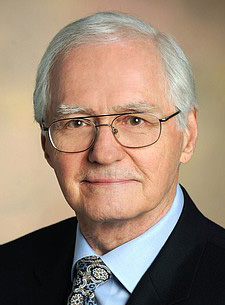
Richard Conville
On the surface, it’s just another pop-culture Christmas tune. But I learned a surprising fact about the song this week. It’s a prayer for peace.
Toward the end of the song, the shepherd boy tells the “mighty king” a child has been born, then the king says to the people everywhere, “Listen to what I say! Pray for peace, people, everywhere.”
The song was written in 1962 in response to the Cuban Missile Crisis, the two-week standoff between the U.S. and the Soviet Union over the USSR’s installation of missiles in Cuba capable of hitting major cities and military installations in America. A nuclear exchange would have launched World War III and killed millions. The world held its breath.
Noel Regney wrote the words to the song and his wife, Gloria Shayne Baker, composed the music. Turns out, Regney fought with the French resistance during World War II and was tortured and nearly died at the hands of the Nazis. It was Regney himself who said in a later interview the song was a prayer for peace.
Peace is something we could use right now, too.
Rather than peace, our president is making war on all but his hard-core MAGA base. For example, he ridicules reporters who ask questions that reveal his bizarre attraction to dictators. While Trump has ordered the killing of suspected drug runners in the Caribbean (some 21 boats have been sunk, when you include those in the Pacific, accounting for 83 deaths), he has announced he will seek a pardon for the former president of Honduras, strongman-dictator Juan Orlando Hernandez, whose 2024 conviction was for trafficking tons of cocaine into the U.S.
For example, the president’s ICE agents are arresting all the people they can who “look like” they may be undocumented (gotta meet those quotas!). You know: People a little shorter than “normal,” a little darker than “normal,” and who speak Spanish. Moreover, those same agents ignore due process, guaranteed to all in the 14th Amendment. Their reckless actions sow seeds of fear, distrust and resentment of law enforcement.
The president is declaring war on our allies abroad. He wants no allies; he wants only to be feared. He has taken the side of Russia at every turn in dealing with the war in Ukraine. He has diverted hundreds of FBI agents from counterintelligence work to immigration work, thus exposing us to ongoing threats from China, Russia and North Korea.
“Our world must be larger than Trump’s world.”
Our president is declaring war on Congress and its constitutional responsibility for declaring war.
Trump is declaring war on the thousands of immigrants in this country who are making enormous contributions to our scientific research, enriching our culture and boosting our economy. He is declaring war on our constitutional guarantee of due process. He is declaring war on our free press by regularly ridiculing reporters and commentators and by threatening to revoke the licenses of television news organizations.
It’s time for peace. The country is tired of the president’s kowtowing to dictators, his trashing of allies, his bypassing of Congress and the Constitution and his supporting incompetent sycophants.
Resistance is required.
But the warfare is not all there is. There is much more. Our world must be larger than Trump’s world. Some of you know the work of singer-songwriter-poet Carrie Newcomer. Recently, she carried a poem called “Almanac of the Soul” by Harv Hiles in her Substack, “A Gathering of Spirits,” that gave me some peace:
Our wandering planet tilting away from the Milky Way now looks out toward the vast emptiness of intergalactic space. … We seem a long way from home, and yet while we are here what loveliness and tranquility we find at the edge of the galactic expanse. We pick flowers at the edge of the abyss; that is our nature.
Yes, such courage is our nature. Amid the ongoing warfare against all I cherish, I can “pick flowers at the edge of the abyss,” and so can you.
Do you hear what I hear? Above the din of warfare are songs of hope. Do you see what I see? Above the fog of war are stars. While we pick flowers at the edge of the abyss, we can also make prayers for peace.
Richard Conville is professor emeritus of communication studies and service-learning at The University of Southern Mississippi and a long-time resident of Hattiesburg, Miss., where he is a member of University Baptist Church.