Finance Minister Bezalel Smotrich on Thursday threatened the country’s banks that he would double a proposed tax on their excess profits to 30%, should they cancel any benefits or financial relief schemes for customers.
“I saw a threat from the banks that they will cancel benefits for consumers if the tax is imposed on them,” Smotrich said. “If benefits for consumers are canceled, I will double the tax from 15% to 30%.”
Smotrich, earlier this week, announced plans to introduce a law to tax commercial banks 15% on excess profits as he accused them of taking advantage of high interest rates to boost their profits, especially during the challenging war period, and vowed to break their hold.
Israel’s commercial banks, including Hapoalim, Leumi, and Discount, have raked in record profits over the past two years as they continued to cash in on high interest rates, credit fees and other charges paid by thousands of households and businesses mired in war and economic hardship during the war with the Hamas terror group.
Hapoalim shares dropped 4% at the close of trading in Tel Aviv on Thursday, but are up a whopping 76% this year, while Leumi was down 3.5% after soaring 71% from the start of 2025.
In an attempt to cool rising inflation, the Bank of Israel, like other global central banks, steadily hiked interest rates from a record low of 0.1% in April 2022 to a high of 4.75%. It lowered the benchmark rate in January 2024 by 25 basis points and to 4.25% last month as inflation slowed.
After coming under public scrutiny and at the request of the Bank of Israel, the country’s lenders earlier this year agreed to set aside NIS 3 billion ($942 million) over the next two years to pay for a new program that includes benefits and leniencies in credit and fees to help retail customers cope with the economic repercussions of the Gaza war.
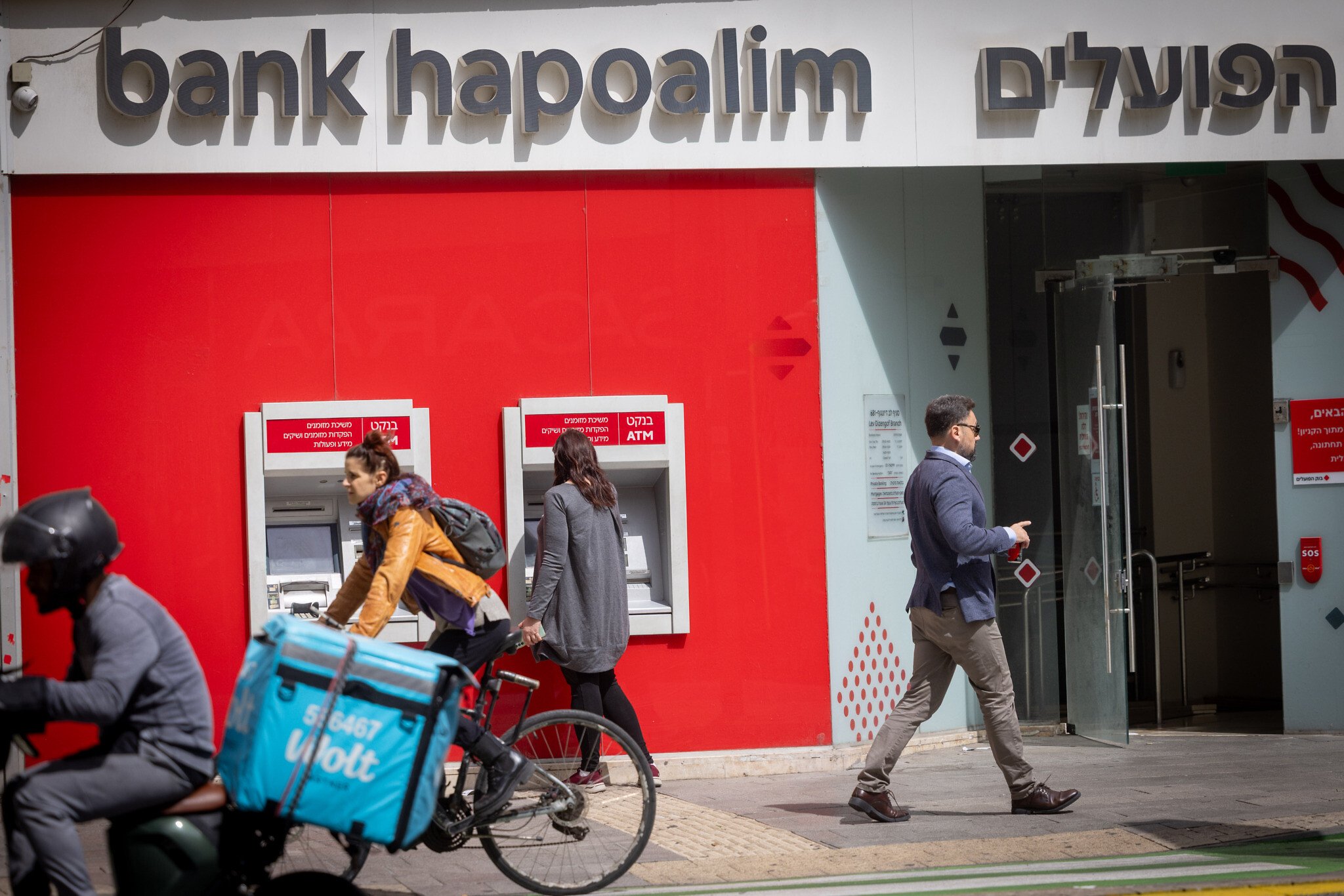
“It can’t be that the banks that profited from interest rate increases at the expense of Israeli citizens and did not lend a hand in the war will benefit from high rates without any efficiency on their part,” Smotrich said. “Instead of taking responsibility during the war they filled their pockets.”
According to the proposed draft law, a special tax of 15% will be imposed on bank profits that are more than 50% above the annual average of their earnings in the years 2018 to 2022.
“A large portion of the banks’ profits is generated from high interest rates,” said Smotrich. “Unfairly, this interest is passed on to the public quickly and fully in the form of loans and overdrafts, but slowly and partially in deposits.”
“It is right that part of these profits will return to the Israeli public,” Smotrich added.
The special tax surcharge, which will be applicable for five years, is expected to boost state revenues by NIS 1.13 billion ($3.55 billion) in 2026 and by NIS 1.5 billion ($471 million) in each of 2027 to 2029.
The Association of Banks in Israel fiercely opposed the proposed tax surcharge and said in response that Smotrich is “making arbitrary decisions without any economic logic and contrary to the public interest.”

“The public needs to understand that it holds about 90% of the banks’ shares and therefore taxing the banks means taxing the public,” the association said, adding that long-term pension saving plans are invested in banks’ shares.
The Bank of Israel expressed its opposition to a sectoral tax surcharge, arguing that additional sectors benefited from the increase in interest rates.
“There is no fundamental difference between profitability created from a successful investment in an asset and profitability created from choosing a financial strategy,” the central bank said.