
Artificial intelligence is no longer an add-on to computing education. By 2026, it is actively reshaping how universities organize majors, colleges, and institutional priorities. One of the clearest signals of this shift is the recent decision by the University of Wisconsin–Madison to create a standalone College of Computing and Artificial Intelligence (CAI). The move reflects a broader transformation underway across higher education, where computer science, data science, information science, and statistics are no longer treated as adjacent disciplines, but as a single strategic core for the modern university.
The UW Board of Regents approved the proposal in December 2025, setting the stage for the new college to begin operations on July 1, 2026. While structurally significant, the decision is not sudden. It represents the culmination of nearly a decade of investment, enrollment growth, and recognition that AI now cuts across every academic and economic sector.
From CDIS to a Full College: Why Governance Had to Change
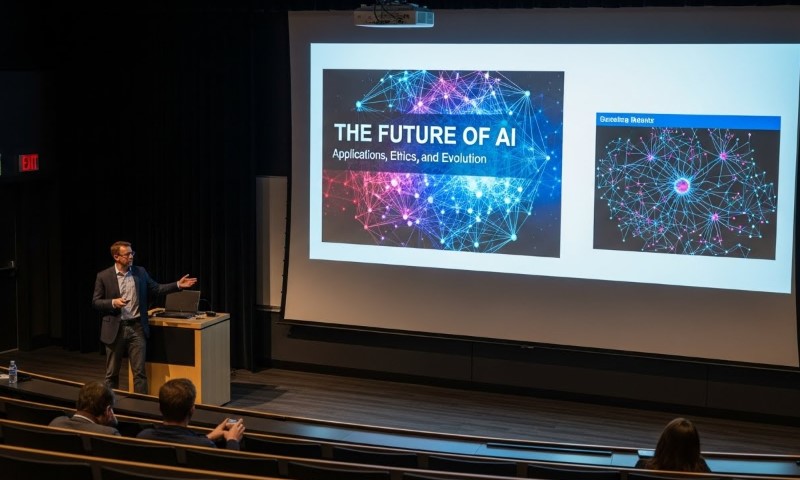
UW–Madison created the School of Computer, Data & Information Sciences (CDIS) in 2019 within the College of Letters & Science. At the time, the goal was to break down barriers between computing-related disciplines while maintaining traditional college governance. Within six years, that structure proved insufficient.
Student demand expanded faster than anticipated, interdisciplinary research intensified, and the operational complexity of AI-related teaching and infrastructure increased. A school embedded within a larger college has limited flexibility in faculty hiring, degree creation, fundraising, and cross-campus coordination. A standalone college has far more autonomy.
Table 1: Structural Differences Between a School and a College
The Regents’ approval acknowledges that computing and AI have reached a scale where incremental adjustments are no longer sufficient.
Enrollment Growth as a Forcing Function
The clearest internal driver of reorganization is enrollment. UW–Madison did not create a new college in anticipation of demand. It did so after demand had already reshaped the campus.
Table 2: Growth of Computing-Related Majors at UW–Madison
This growth matters because enrollment is not evenly distributed across traditional disciplines. Students are gravitating toward fields that promise relevance in an AI-shaped labor market. The university’s decision formalizes what students have already voted for with their course selections.
Why Computer Science, Data Science, Information Science, and Statistics Now Belong Together
The new college will unite three existing units: Computer Sciences, the Information School, and Statistics. This alignment reflects how AI systems function in practice rather than how departments were historically organized.
Computer science provides the systems, algorithms, and software foundations. Statistics provides inference, uncertainty measurement, validation, and experimental design. Information science provides governance, retrieval, privacy, human-centered design, and institutional context. AI requires all three simultaneously.
Table 3: How Each Discipline Contributes to AI Systems in Practice
Treating these as separate academic silos no longer reflects how AI is built, deployed, or regulated. The CAI structure aligns education with real-world workflows.
Preparing Students for an AI-Saturated Economy

One of the most important shifts embedded in the new college is a redefinition of what it means to be “prepared” for the workforce. AI tools increasingly automate routine coding, analysis, and content generation. The value of a degree now lies in judgment, integration, and accountability.
UW–Madison leadership has emphasized that the college will serve not only majors, but the entire campus. Students in medicine, education, agriculture, humanities, and social sciences will increasingly rely on computing and AI literacy. The college is designed as a shared resource rather than a closed pipeline.
This has real consequences for students. Coursework is becoming more interdisciplinary, analytically demanding, and writing-intensive. Many students already supplement this workload with external academic support platforms such as EssayPro when navigating complex research papers, technical writing, and cross-disciplinary assignments tied to AI-related courses.
Ethics, Governance, and the Public Interest
A defining feature of the CAI proposal is its explicit attention to ethics and societal impact. UW–Madison leadership consistently frames AI as both a technological opportunity and a moral challenge. This framing is not rhetorical. AI systems affect patient care, public benefits, hiring decisions, education access, and political communication.
Housing information science and statistics, alongside computer science, ensure that ethical considerations are not treated as optional add-ons. Data provenance, consent, bias, and accountability become part of the technical curriculum rather than external critiques.
This approach reflects a broader recognition across higher education that AI competence without ethical grounding is incomplete preparation.
Wisconsin’s Economy and the Statewide Role of CAI
The creation of CAI is closely tied to Wisconsin’s economic structure. Agriculture, manufacturing, health care, insurance, and biotechnology are all undergoing AI-driven transformation. The state requires not only software developers, but professionals who understand how to integrate AI into regulated, safety-critical, and socially sensitive environments.
The new college is positioned as a hub for research partnerships, talent pipelines, and statewide outreach. This aligns with the Wisconsin Idea, which emphasizes public benefit beyond campus boundaries. AI accelerates both opportunity and risk, making that mission more urgent.
Financial Strategy and Institutional Caution
Despite the scale of the initiative, UW–Madison is taking a restrained financial approach. The new college will initially rely on resources transferred from CDIS, reusing existing administrative structures and limiting new hires. Leadership has emphasized a lean startup model rather than rapid expansion.
Private corporate and philanthropic funding is expected to supplement operations, with major announcements anticipated in early 2026. Importantly, the college’s launch does not depend on speculative revenue. This reflects an understanding that academic credibility in AI depends on long-term stability, not short-term hype.
Why This Case Matters Beyond UW–Madison
UW–Madison has not launched a new academic college since 1983. That fact alone underscores how significant this decision is. The creation of CAI signals that AI has crossed a threshold where existing structures are no longer adequate.
For students choosing majors in 2026, for faculty shaping research agendas, and for policymakers watching workforce development, this move offers a clear lesson. AI is not just changing what is taught. It is changing how universities organize themselves to teach it.