

12 of the Best Interviews Scientific American Did in 2025—on AI, Headaches, and More
From an interview with author Mary Roach to a chat with cardiologist Eric Topol, here are 12 of the most eye-opening conversations we had this year
Scientific American spends a lot of time asking questions—to authors on their new science-related books, to scientists in the lab on their latest discoveries and to experts who help us develop deeper understandings of these discoveries. Here are 12 of our favorite interviews that we did this year. They raise and answer questions from “Should ChatGPT be your therapist?” to “Why haven’t we cured headaches yet?”
Space
How Many Moons?
On supporting science journalism
If you’re enjoying this article, consider supporting our award-winning journalism by subscribing. By purchasing a subscription you are helping to ensure the future of impactful stories about the discoveries and ideas shaping our world today.
Astronomer Edward Ashton helped discover that Saturn has a whopping 192 more moons than we thought. He told Scientific American about the way he found all those hidden natural satellites and about the technique known as “shifting and stacking” that is used to make a quasi-flip-book of images of potential moons.
The Story of CO2
Senior desk editor for physical science Lee Billings spoke with science journalist Peter Brannen about his latest book, The Story of CO2 Is the Story of Everything, to discuss how the same chemical compound is both a harmful pollutant and is “essentially the key thing that makes Earth a special, habitable place.”
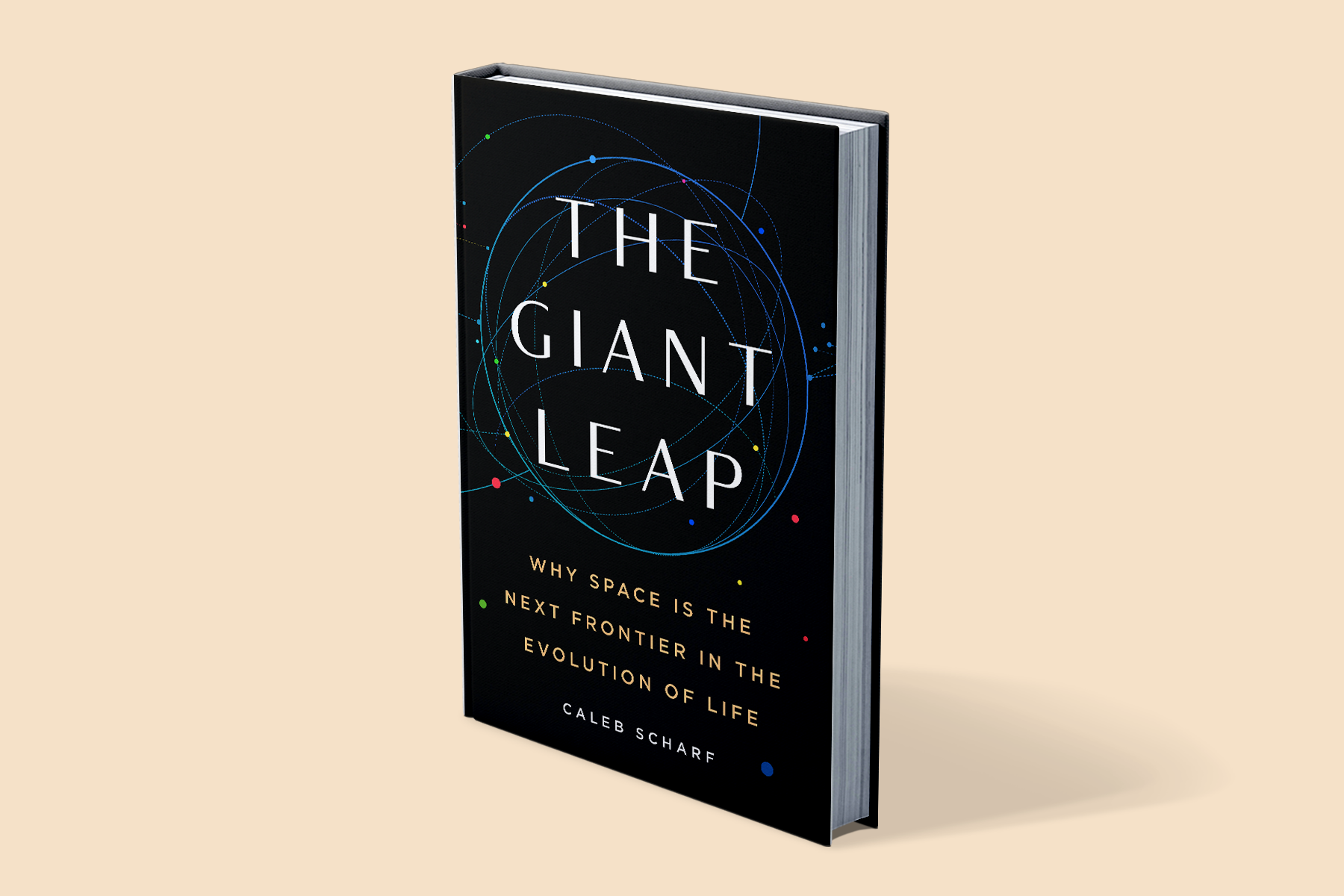
Life’s Journey in Space
Author Caleb Scharf discussed what he calls the “Dispersal,” or the study of how life will have “increasingly divergent trajectories” as a result of space travel. Scharf told us he is “thinking of our unfolding space age as another sort of evolutionary leap.”
Seeing Auroras from Space
In April four passengers aboard a SpaceX rocket looped around the planet from pole to pole, giving them a potentially unprecedented view of Earth’s auroras. Senior reporter Meghan Bartels spoke with Katie Herlingshaw, a space physicist at Norway’s University Center in Svalbard, about how the Fram2 mission aimed to shed light on this shimmering phenomenon.
Health
What Is ‘Personhood’?
Mary Ziegler, author of Personhood: The New Civil War over Reproduction, discussed the Trump administration’s IVF policy recommendations and the way our definitions of personhood affect science and medical policies overall.
Where Is the Headache Cure?
Science Quickly host Rachel Feltman spoke with Undark editor in chief Tom Zeller, Jr., who wrote The Headache and deals with cluster headaches, to learn about why this common ailment isn’t quite understood and is certainly not cured.
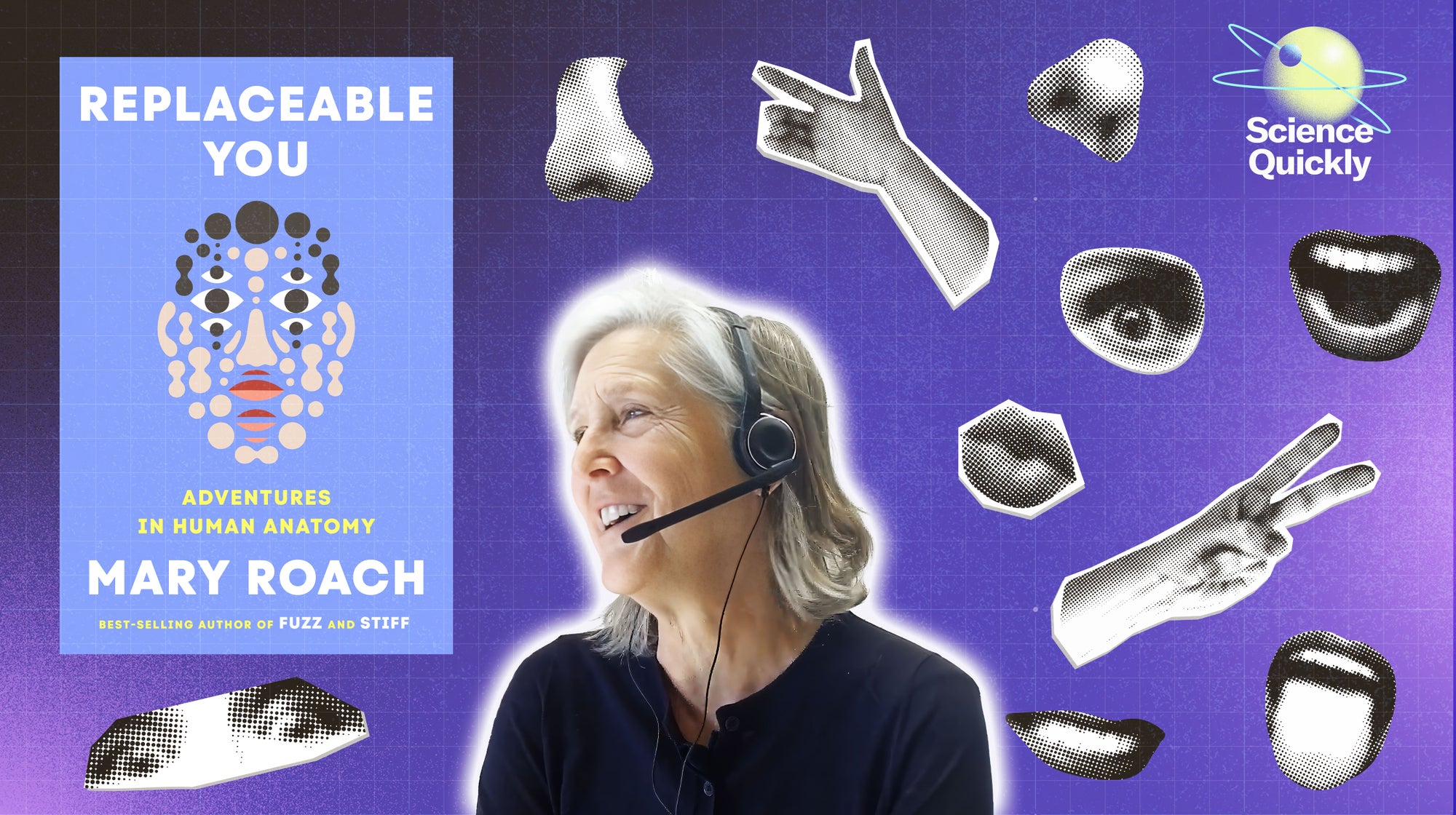
Mary Roach has a new book about body parts.
Book cover: W.W. Norton & Company; Alona Horkova/Getty Images; Illustration by Scientific American
How Do You Replace a Body Part?
Feltman also spoke with Mary Roach about her latest book, Replaceable You—named one of Scientific American’s best nonfiction books of the year. Feltman and Roach laughed about the odd inspiration for this book and the complexity of actually replacing body parts.
How Long Can We Live?
Health and medicine editor Lauren Young spoke with Eric Topol, a cardiologist and genomics professor at Scripps Research in La Jolla, Calif., and author of Super Agers, about how people are fascinated with “biological clocks” and whether the science backs up claims that we will likely live longer than we ever thought possible.
Math & Technology
Leave Therapy to Humans
Mind and brain editor Allison Parshall spoke with licensed psychologist C. Vaile Wright about the dangers of using chatbots as personal therapists. Wright, senior director of the American Psychological Association’s Office of Health Care Innovation, explained the concerns around bots come from the fear that they “can sound very convincing and like they are legitimate—when of course, they’re not.”
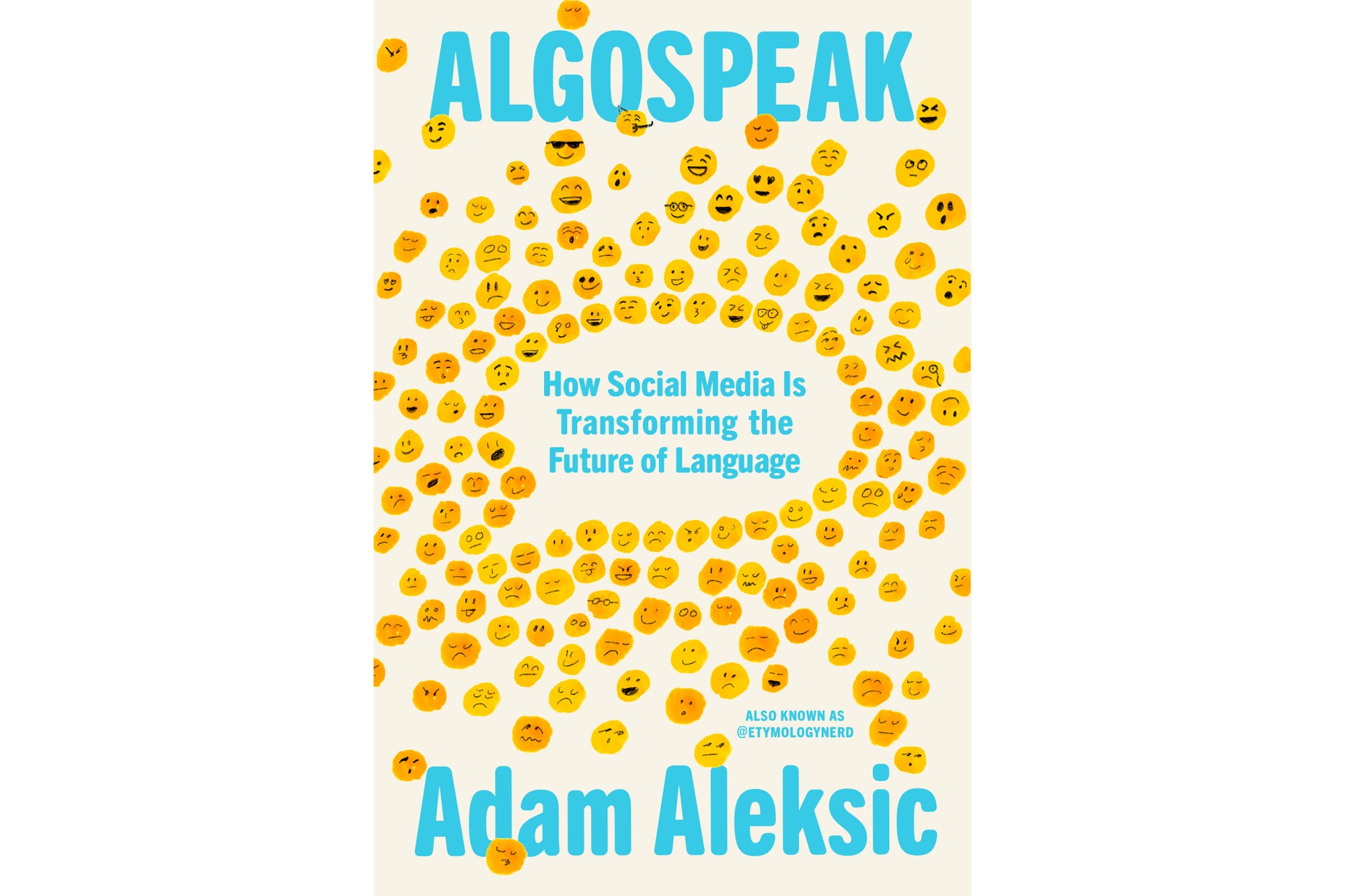
Do You Speak “Internet”?
What do terms like “brain rot” actually mean? And should you be concerned about Skibidi Toilet jokes told in schoolyards? TikTok sensation and linguist Adam Aleksic, author of Algospeak: How Social Media Is Transforming the Future of Language, dissected how social media algorithms are creating such new trends around slang and our speech patterns overall.
An AI Epic
Karen Hao, the author of Empire of AI: Dreams and Nightmares in Sam Altman’s OpenAI, one of Scientific American’s best nonfiction books of the year, joined Science Quickly to discuss the reality—and potential future—of AI development. Hao explained why she frames AI companies as ‘empires’ in the book and what AI future she’s optimistic about.
Debunking a Mathematical Conjecture before High School Graduation
At 17 years old, Hannah Cairo disproved the Mizohata-Takeuchi conjecture, breaking a four-decade-old mathematical assumption, so naturally Scientific American reached out to talk to her about her incredible work. Cairo told us that she’s loved math her whole life and believes “mathematics is an art.” We couldn’t agree more.
It’s Time to Stand Up for Science
If you enjoyed this article, I’d like to ask for your support. Scientific American has served as an advocate for science and industry for 180 years, and right now may be the most critical moment in that two-century history.
I’ve been a Scientific American subscriber since I was 12 years old, and it helped shape the way I look at the world. SciAm always educates and delights me, and inspires a sense of awe for our vast, beautiful universe. I hope it does that for you, too.
If you subscribe to Scientific American, you help ensure that our coverage is centered on meaningful research and discovery; that we have the resources to report on the decisions that threaten labs across the U.S.; and that we support both budding and working scientists at a time when the value of science itself too often goes unrecognized.
In return, you get essential news, captivating podcasts, brilliant infographics, can’t-miss newsletters, must-watch videos, challenging games, and the science world’s best writing and reporting. You can even gift someone a subscription.
There has never been a more important time for us to stand up and show why science matters. I hope you’ll support us in that mission.