
- Agricultural adaptation in Africa is underfunded and smallholder farmers remain highly vulnerable to climate shocks despite in international funding pledges, say African stakeholders.
- They call for increased adaptation funding for the agricultural sector, but are skeptical that other countries will fill the shortfall.
- Climate finance is concentrated in a few countries and largely excludes the most vulnerable nations, leaving farmers with limited access to funds for climate-smart practices.
- Stakeholders call for public financing, better early-warning systems, loss-and-damage support, and the implementation of climate-smart agriculture.
The agriculture sector’s adaptation to climate change in Africa remains severely underfunded, say stakeholders after the U.N. climate talks came to a conclusion in November 2025. Despite an increase in financial pledges for adaptation at the climate conference, on the ground, there’s a gap of approximately $365 billion through 2035, and skepticism that international institutions will help fill the shortfall.
“We need to keep reminding the world that this is a matter of urgency. The longer we wait to address issues, the more exponentially the costs rise,” Jiwoh Abdulai, the environment minister of Sierra Leone, told Mongabay. “We say this because we understand governments around the world are tightening their budgets, they’re reducing overseas development assistance.”
According to latest estimates by the Global Center on Adaptation, at current funding levels, Africa will have $195 billion for overall adaptation by 2035, falling short of the more than $1.6 trillion researchers say may be needed. Agriculture remains the major recipient of current climate adaptation finance, receiving around 26% (or $3.4 billion) per year.
“The current gap in climate adaptation finance for African agriculture is not just a funding shortfall — it is a continuation of an unequal global economic order where those who did the least to cause the crisis carry its heaviest burdens,” said Samuel Ogallah, head of the climate change unit at the African Union. African governments provide almost as much adaptation finance in the form of grants as multilateral and bilateral financiers.

Across Africa, smallholder farmers dominate the agricultural sector. Haseeb Bakhtary, agriculture and food systems lead at Climate Focus, said around $71 billion a year may be needed to support the 65 million farmers who farm plots of 10 hectares (25 acres) or smaller. This adaptation money would incentivize agroecological practices that are climate resilient and nature positive, provide digital climate services, and secure resilient livelihoods through early-warning systems and adaptive safety nets.
The latest estimates by Family Farmers for Climate Action show that only around $810 million in international climate finance — just over 1% of what may be needed — is channeled to small-scale agriculture across the world. Smallholders in East Africa are in most need of adaptive finance.
“When compared to current finance flows to small-scale agriculture in Africa, the gap is unforgivable,” Bakhtary said.
To fill the gap, a report by Climate Focus suggests redirecting and repurposing harmful subsidies, reforming international finance institutions, and creating a fairer global tax system.
Smallholder farmers produce up to 80% of the food consumed in sub-Saharan Africa, and up to 70% of these farmers rely on rainfed agriculture. Because of this reliance and changing rainfall patterns, say researchers, farmers and major food crops continue to be highly vulnerable to climate shocks, such as drought, floods and storms.
In many regions, climate change has made rainfall patterns less predictable, with some areas experiencing prolonged droughts while others face extreme flooding. Sometimes, extreme weather shifts happen in the same area, as seen in regions in Nigeria, a phenomenon known as “weather whiplash.” Many farmers get little or no reliable, timely information that could help them prepare, adapt or avoid losses, and receive little access to climate finance.
“To adapt African agriculture to a changing climate would entail profound changes, ensuring that early-warning systems as timely and accurate information, helping to reduce the vulnerability of smallholder farmers on the continent,” said Patricia Nying’uro, a climate scientist and Kenya lead on the Intergovernmental Panel on Climate Change (IPCC).
Africa is disproportionately impacted by climate change. However, Africa’s fossil fuel emissions are expected to rise rapidly in the future.
“Putting Africa farmers first in climate information systems can be a game-changer but finance is crucial,” Nying’uro told Mongabay in an exclusive interview.
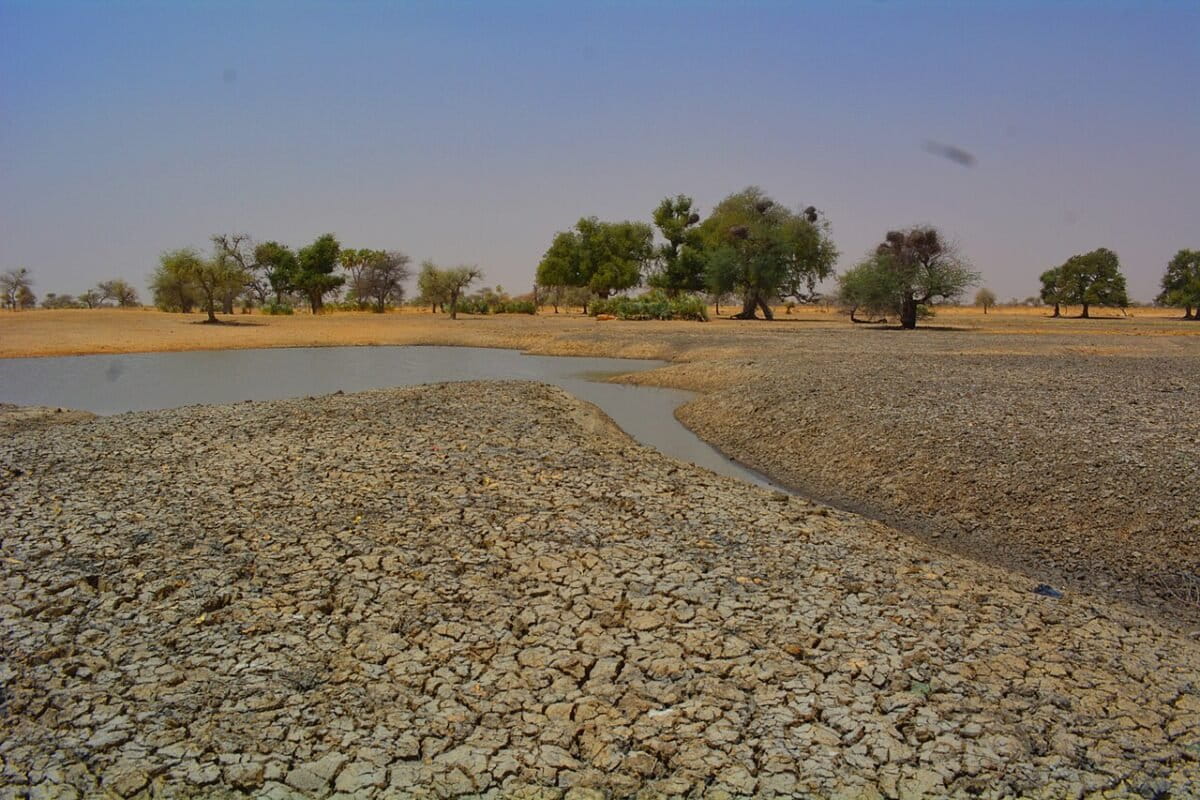
While more expensive early-warning systems for farms and solar-powered irrigation systems have been implemented in some countries in Africa to mitigate agricultural damage caused by climate change, Nying’uro said the majority of smallholders in Africa are still struggling to access financial support to implement basic climate-smart agricultural practices.
Such practices include conservation agriculture, diversified crop rotation, and agroforestry, which can combine trees, crops and livestock in a single ecosystem.
There also remain huge regional imbalances in the flow of climate finance on the continent, Ogallah told Mongabay.
According to a report by the Climate Policy Initiative (CPI), international climate finance in Africa is concentrated in 10 countries that receive 46% of total funding, including Kenya and the Democratic Republic of Congo. With the exception of Uganda, these recipients don’t overlap with the 10 African countries most vulnerable to climate change impacts, such as Somalia and the Central African Republic.
While stakeholders are looking to increase adaptation finance to the agricultural sector, the quality of the finance is also important and contested, they said.
“As an imperative of climate justice, Africa is looking for public financing rather than loans in COP30. We cannot finance adaptation using loans,” said Philip Kilonzo, head of policy, advocacy and communications at the Pan African Climate Justice Alliance (PACJA).
African nonstate actors also expressed alarm at the lack of progress in implementing the Global Goal on Adaptation (GGA), a framework to assess progress on adaptation rather than a funding mechanism. Some parties at the climate conference, they said, have tried to force through half-baked indicators, while conversations at the climate conference were hollow.
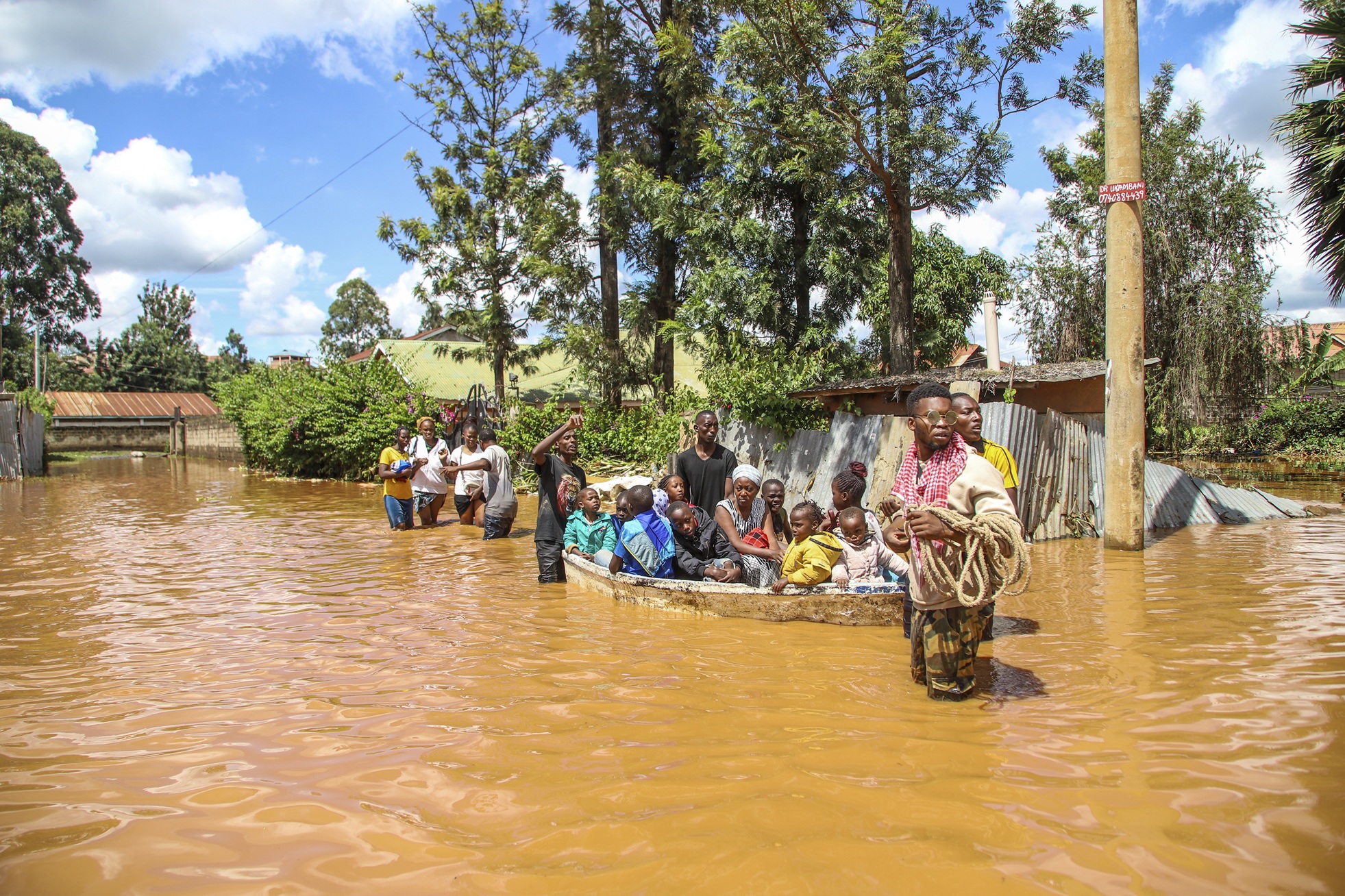
“Loss and damage [also] remains critical to manage the risks associated with climate events with agriculture being identified as the single most impacted area,” said Pedro Chilambe, a researcher on climate finance at the Alliance of Bioversity International & International Center for Tropical Agriculture (CIAT).
As of June 2025, $788.8 million has been pledged to the loss and damage fund (known as the Fund for Responding to Loss and Damage, or FRLD), to help industrially developing nations impacting by climate change. Of this, $582.5 million has turned into actual contributions. It aims to disburse the first $250 million by 2027 to the countries most affected by climate change.
The most recent estimates by the CPI highlight that Africa’s climate finance flows must at least quadruple annually until 2030 to meet the investment needs for implementing their latest emissions reduction pledges under the Paris Agreement, known as their nationally determined contributions (NDCs).
Banner image: A farmer in Bauchi State, Nigeria, woke to find his farm flooded with water in October 2022. Nigerians are experiencing “weather whiplash” with successive periods of extreme weather such as drought and flooding. Image by Sadiq Mustapha via Wikimedia Commons (CC BY-SA 4.0).
‘Weather whiplash’ cycles of floods & droughts imperil Nigerian farming
Latest Mongabay podcast episode: How ‘Adventure Scientists’ provide pioneering data for conservation. Listen here:
Citations:
Mosha, N. F., & Ngulube, P. (2025). Adoption of climate change mitigation and adaptation strategies among smallholder farmers in African countries: A systematic review. Discover Sustainability, 6(1). doi:10.1007/s43621-025-01983-3
Omotoso, A. B., Letsoalo, S., Olagunju, K. O., Tshwene, C. S., & Omotayo, A. O. (2023). Climate change and variability in sub-Saharan Africa: A systematic review of trends and impacts on agriculture. Journal of Cleaner Production, 414, 137487. doi:10.1016/j.jclepro.2023.137487
Feedback: Use this form to send a message to the author of this post. If you want to post a public comment, you can do that at the bottom of the page.
