
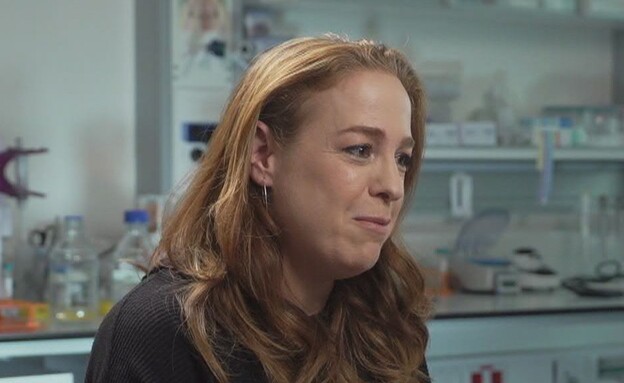
JERUSALEM (VINnews) — Prof. Yifat Merbl, a researcher from the Department of Systems Immunology at the Weizmann Institute of Science, is summing up an almost unimaginable year, as reported by Israel’s Channel 12. At the age of 48, at the height of a complex and turbulent period in Israel, she was selected by the prestigious journal Nature as one of the ten people who shaped the face of science in 2025.
Subscribe to our Daily Roundup Email
The discovery that brought her to the forefront of global attention concerns a new immune mechanism hidden within the process of protein degradation in the body. Prof. Merbl chose to study what she calls the cell’s “trash cans” — the place where proteins are broken down and shredded. She discovered that some of the fragments produced in this process are capable of directly fighting bacteria, a finding described as a “gold mine” for the development of potential antibiotics and innovative cancer therapies. Speaking about her persistence in pursuing the research despite skepticism around her, she said: “In the end, what determines everything is natural curiosity and passion — and I wasn’t willing to give that up.”
However, Prof. Merbl’s path to the top of academia was far from conventional. Numerous certificates hang in her office, but one is conspicuously missing: a high school matriculation certificate. In her youth, the education system failed to accommodate her. In 10th grade, she was told she was unfit for the framework, and in 11th grade it was decided not to allow her to take the matriculation exams, including in chemistry, a field in which she is now deeply engaged. She left school with a deep sense of failure and confusion.
For years, she was considered “wasted potential,” as she describes it, and worked in temporary jobs. The turning point came when she scored 752 on the psychometric exam (out of a maximum 800 points), a result that surprised even herself. From there began an impressive academic journey: from studies in computational biology at Bar-Ilan University to a PhD at the prestigious Harvard University. Despite her success, feelings of not belonging and fear of failure accompanied her throughout the way.
Only at the age of 43 was Prof. Merbl formally diagnosed with attention deficit hyperactivity disorder (ADHD). She said that had she been diagnosed earlier, she might have spared herself much suffering, but today she understands that her different way of perceiving reality may have enabled her to find scientific solutions in places where others did not think to look.
The past year posed both physical and political challenges for Prof. Merbl’s laboratory. Last summer, an Iranian missile struck the laboratory building at the Weizmann Institute directly, completely destroying the equipment on which her research depended. She did not give up: she ran to the ruined building in flip-flops to salvage whatever she could, and within less than two months, she had reestablished a fully functioning laboratory.
Alongside the physical destruction, Prof. Merbl is also contending with the academic boycott of Israel. She described cases in which Israeli researchers were excluded from research grants and invitations to conferences were made conditional on future approval of Israeli participation. Nevertheless, as a Zionist and a former military officer, she is determined to continue her work in Israel. For her, the goal is clear: “The question is not whether we will leave, but how we will make it happen here.”
Prof. Merbl’s vision for the future is especially ambitious. She aims to establish an international center that will leverage research into protein quality-control mechanisms to treat severe diseases such as Alzheimer’s and cancer. She is no longer afraid to set lofty goals and hopes to achieve breakthroughs that will have a tangible impact on humanity. When asked about the possibility of winning a Nobel Prize in the future, she admitted it would be an immense source of pride for the country.
Her story has become a source of inspiration for many parents and children struggling with similar difficulties in the education system. After Nature published its list, she received moving messages from parents thanking her for the hope she gave their children. She emphasized that “it’s allowed not to succeed, but it’s forbidden not to try,” and encouraged the younger generation to hold fast to their curiosity and passion.
Finally, when asked what she would say to 16-year-old Yifat Merbl who had been expelled from school, she answered simply: “Well done. I’m proud of you.”
Follow VINnews for Breaking News Updates