
A recent study from the University of Hawai‘i combines ʻike Hawaiʻi (Hawaiian knowledge), ʻōlelo Hawaiʻi (Hawaiian language), and Western marine science to shed new light on one of the ocean’s most elusive predators, the Cookiecutter shark.
Rarely seen but often noticed, the Cookiecutter shark is named for the distinctive wounds it leaves behind, according to a press release from the University of Hawaiʻi. Instead of tearing flesh, the small shark removes neat, circular plugs of meat that resemble the cut of a cookie cutter.
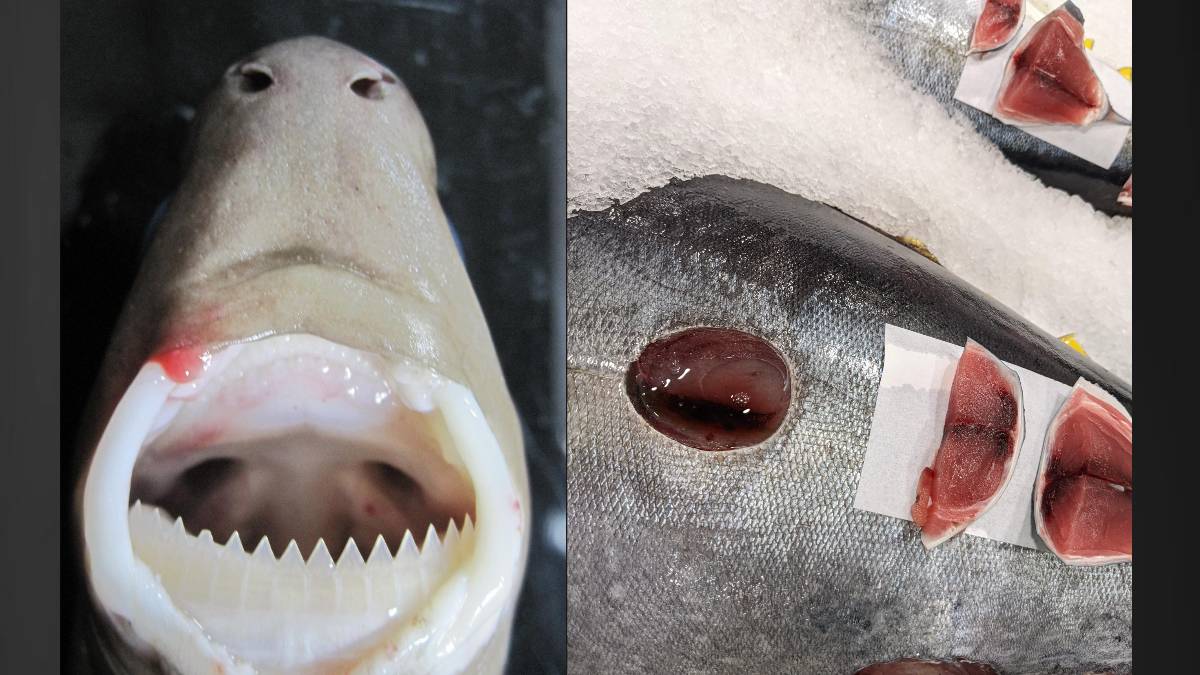
These unmistakable bite marks are commonly found on prized fish such as ʻahi poʻonui (bigeye tuna) and aʻu kū (swordfish), providing scientists with rare clues about the shark’s behavior in the deep, open ocean.
“What makes these sharks so fascinating is that we rarely see the shark itself outside of occasional catches in scientific nets, yet their bites are clear and well-documented by fishers,” said Justin Suca, an assistant professor in oceanography at UH Mānoa. “We’re learning about them by studying when and where those bite marks appear on fish in Hawaiʻi’s largest and most economically valuable fishery.”
The interdisciplinary study was led by Suca, J. Hauʻoli Lorenzo-Elarco, an assistant professor of ʻōlelo Hawaiʻi at Honolulu Community College and PhD candidate at the University of Hawai‘i at Hilo Ka Haka ʻUla O Keʻelikōlani College of Hawaiian Language, and biologist Donald R. Kobayashi, who played a key role in initiating the study along with Hing Ling Chan, both from NOAA’s Pacific Island Fisheries Science Center.
Published in Marine Ecology Progress Series, the study analyzed a larger dataset than previous research, examining bite patterns recorded across Hawaiʻi’s longline fisheries over many years. The results reveal clear and persistent trends: Cookiecutter shark bites occur most often at night and are closely tied to lunar cycles, with higher activity during darker, low-illumination periods.
Alongside the scientific analysis, the researchers reviewed Hawaiian-language sources, including historic nūpepa (Hawaiian-language newspapers), and considered knowledge shared across Polynesian cultures to better understand how the shark may have been recognized in Hawaiʻi. While no direct references were found, the team believes Hawaiian ancestors were likely familiar with the shark’s distinctive bite marks.
“Our kūpuna (elders) may never have encountered the shark itself,” said Lorenzo-Elarco. “But they almost certainly encountered the evidence it left behind, the distinctive bite marks on fish they brought in from the open ocean.”

From that understanding, the team developed a new Hawaiian name for the cookiecutter shark, nahunaiki, meaning “little bites,” and created an ʻōlelo noʻeau (Hawaiian proverb) describing its bite patterns and connection to nighttime conditions. Developed by utilizing elements of traditional Hawaiian proverbs, the ʻōlelo noʻeau says, Muku ka malama, nanahu ka nahunaikio o ka pō, When the new moon arises, the cCookiecutter shark bites. This ‘ōlelo noʻeau is aimed at helping current and future generations of ocean stewards connect the lunar cycle to the bites of this shark.
The study also includes an abstract written entirely in ʻōlelo Hawaiʻi, highlighting how Indigenous knowledge and modern science can work together to reveal patterns that might otherwise remain unseen.
Its findings build on earlier University of Hawai‘i at Mānoa research that linked moonless nights to rare cookiecutter shark bites on humans, particularly swimmers in Hawaiʻi’s ocean channels, suggesting darkness plays a key role across very different types of encounters.