
Recently, have you been scrolling through various apps’ annual reports quite a bit? By the last month of 2025, Grape Jun always feels that the gaming industry should also produce an annual report to allow people to review the situation.
If we were to write such a report, of course, the overall market data should be placed on the first page. Actually, the data looks quite impressive. This year, the revenue of domestic self – developed games exceeded 350 billion yuan, and the industry scale exceeded 390 billion yuan, with a year – on – year increase of 10%. The net profit of listed game companies on the A – share and Hong Kong stock markets from Q1 to Q3 increased by 38.6 billion yuan, a year – on – year increase of 23%, and R & D investment also increased by 11.9 billion yuan…
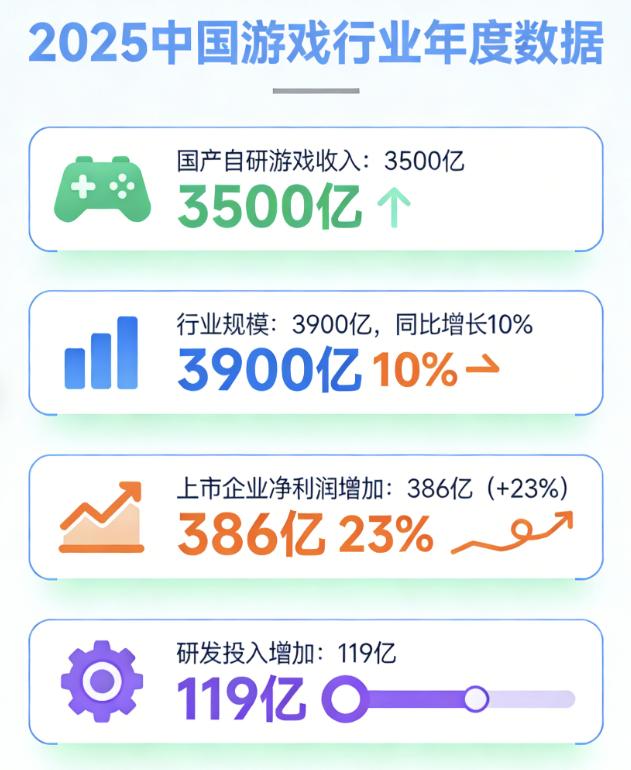
This picture was generated by Doubao, pretending to be an annual report.
With such strong data leading the way, the high – quality development of the industry seems to have truly become a consensus. So, is 2026 a sure thing? Is the summary of this annual report also quite positive and optimistic?
However, Grape Jun has a rather cruel view: In 2026, most teams may have to reverse their thinking. In the past, the logic was to develop a game first and then find traffic. In the future, it may become “develop a game for the sake of traffic.”
There must be people who dislike this statement, after all, the smell of commercialization is too strong.

But the reality is that games are, after all, a business, and for most teams, business is the top priority. In the past two years, the underlying logic of this business has been undergoing drastic changes.
App annual reports usually only report good news. If there were an A – side and a B – side, the B – side of the gaming industry’s annual report should closely follow this review of the situation: Behind the prosperity, the charts are becoming more and more rigid, and it is getting harder and harder for new products to break through. Among the top 100 on the iOS best – selling list, both the number of new products on the list and their time on the list have decreased. Only a very small number of long – standing hit products are making more and more money. In 2025, the revenue of long – standing hit products increased by 14% year – on – year, and the growth rate even outpaced the overall market.
So, what exactly went wrong? If we have to summarize, traffic is a big problem.
The high cost of traffic is not only an old topic but also the norm. In the past two years, regardless of the size of the team, almost everyone has been going all out to grab traffic, not even caring about losing a little face. The essence behind this is that the traditional R & D – distribution – operation chain is becoming ineffective. Winning traffic through content dissemination, fission, and natural distribution has become the foundation for game teams to stand on.
But how many teams can truly realize and achieve this? This is the real problem. So, facing 2026, practitioners may have to change their strategies. At the very beginning of project initiation, they should implant the thinking of content platforms. A game that can survive 2026 not only needs to be fun but also good – looking and easy to spread.
Breaking this statement down for a detailed analysis, there are mainly three levels from the implementation perspective. Let’s discuss them one by one.
01 R & D Side: Develop Good Games and High – Quality Content
First, let’s talk about the R & D side. In the past decade, the core barriers in game R & D may have been hard – core capabilities such as art quality, content production capacity, and industrialization level.
In the past two years, there has been a new soft indicator that R & D should pay more attention to: material output rate.
In other words, whether the content is more conducive to dissemination is something that should be considered from the very beginning of R & D. In 2025, the daily opening times of mobile game apps increased, but the game time decreased. This means that players are becoming more casual and fragmented. They may spend more time watching than actually playing.
This is the primary reason why I say teams should “develop games for the sake of traffic.” In this context, your game’s visuals, levels, and gameplay highlights should also be the materials and highlights for short – videos and live – streams.
So, how to do it specifically? In a nutshell, it takes three steps to put the creator’s perspective upfront.
Step 1: Pay attention to the game’s appeal. Embed more visual spectacles, social interactions, and dissemination gimmicks into the gameplay to attract players to share and trigger fission.
Step 2: Focus on infrastructure. Actively provide players with low – threshold dissemination tools, such as built – in one – click editing, automatic highlight clip functions, and UGC creation tools, so that players can help you consume some of the content.
Step 3: Keep an eye on AI. In addition to content production, AI technology may have miraculous effects on a small number of projects. For example, using AI to create innovative gameplay and intelligent NPCs may bring about emergent content and stimulate players’ interest.
After the sandbox game “Club Koala” by Kunlun Wanwei launched the AI image – generating gameplay, the weekly output of players’ UGC content increased by 8 times, the sharing rate directly increased by 120%, the cost of acquiring new users decreased by 31%, and the peak number of active users increased by 65%. In all aspects, the results were a sure – win.
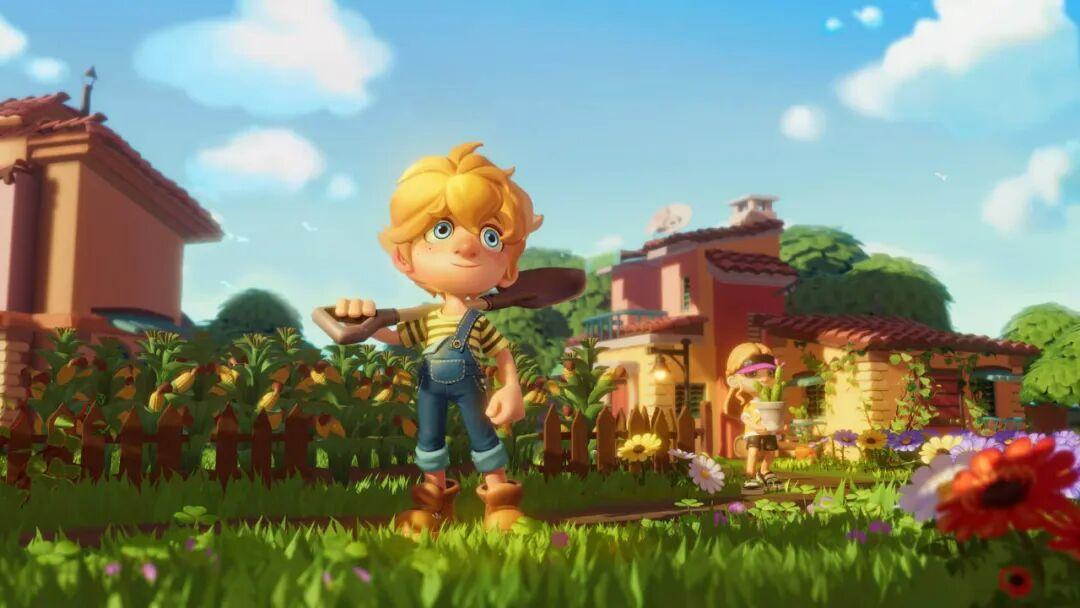
“Club Koala”
02 Operation Side: The End – Goal of Marketing is Omnipresence
After discussing R & D, let’s talk about the operation side. First, a small conclusion: In 2026, whether it’s an app or a mini – game, the end – goal of long – term operation is the so – called “full – scenario coverage.” This term sounds intimidating, but in fact, it mainly involves two levels:
First, create a multi – platform experience to achieve traffic interconnection.
The mini – game market in 2025 is a good example. Although this market has passed its peak explosive period and the growth rate has slightly slowed down, the scale is still increasing. A more critical piece of data is that nearly 50% of the products in the top 100 of the mini – game best – selling list also have app versions, and the DAU of multi – platform interconnected products is more stable, with LTV more than 20% higher than that of single – platform products.
In the past, many people may have thought that mini – games were just fast – moving traffic products. But the current situation shows that mini – games have been developing towards a more multi – platform and long – term trend, and the multi – platform experience is not mutually exclusive but may be complementary.
Second, manage version updates and special marketing events to achieve scenario interconnection.
Regarding major version updates, we had an in – depth exchange with several game companies this year. The importance of version updates goes without saying. As mentioned before, the leading games in the industry are no longer just selling products but providing a “continuously evolving content service.” The ecosystem built by these new goals and social topics is what makes games gradually become IPs.
On this basis, there is another point worth emphasizing: In the past, version updates were mostly about gameplay and content. However, now, scenarios are becoming less restricted. Expanding scenarios to offline through large – scale events such as festivals or cross – border collaborations with variety shows, cultural tourism, and sports events will become a very important option for game companies in their operations.
This year, the Airdrop Festival of “Peacekeeper Elite” was a very successful example. Under this theme, they organized sports events and cultural tourism collaborations, and managed live – stream and short – video content, directly integrating the marketing activities into players’ lifestyles. The live – stream of the event was watched by 173 million people across the network, there were 350 hot search topics on all platforms, and it also returned to the top 1 on the iOS best – selling list. It can be said that with this move, the game achieved a revival.

What has been mentioned above is the common understanding that game companies should have at the operational level. However, behind these, there is another aspect that cannot be ignored: the changes in platform mechanisms.
If we talk about the biggest arena for long – term game operation, Douyin is probably it. Recently, the platform also released data: Nearly 70% of game users in China follow game content through Douyin.
Meanwhile, ByteDance’s marketing platform, OceanEngine, has also sent an important signal: Their traffic mechanism and advertising system are being upgraded, which will bring about some significant changes.
The core changes in the traffic mechanism are, on the one hand, the expansion of the traffic structure. The traffic pool that game companies can reach is expected to expand by 1.5 to 1.8 times, significantly raising the ceiling. On the other hand, the sorting factors are being re – structured. In the future, traffic distribution will no longer simply rely on bidding but will also comprehensively consider more diverse factors.
If the traffic mechanism determines the water level and flow direction, the advertising system determines the utilization rate of the water. OceanEngine’s future advertising system will greatly enhance its ability to understand the content of the game and its materials, and will estimate and sort based on the combination of products and materials. This means that for duplicate products and homogeneous materials, only one advertisement will ultimately generate consumption, and the past brute – force advertising approach will basically become ineffective.
These changes directly lead to three key words for future traffic acquisition: Douyin mini – program operation, GMV revenue, and user experience. In other words, in the past, as long as you had enough money, you could buy the most traffic. In the future, the platform will also assess the quality of your operation and the richness of your material content to more rationally distribute traffic.
So, in 2026, buying traffic will no longer be a mindless bidding business. In – depth user operations such as position management and private domain accumulation will become new hidden benefits in 2026.
03 Growth Side: Social Interaction is the Cure, AI is the Fuel
Finally, let’s talk about the growth side. Regarding the solution at this level, there may already be some common understanding among people: The best cure for the lack of growth is still social interaction.
Facing fragmented user groups, a set of general advertising materials can no longer impress most people. Although algorithm – based recommendation is accurate, simply relying on algorithms to find users is no longer the best option. At this time, word – of – mouth marketing among users has become the best method again.
The data of game products vary, and it may be difficult to compare them. However, the new changes in the Douyin ecosystem are a good illustration: In 2025, 20% of Douyin users shared content every day.
Users’ social sharing is on the continuous rise. If game companies can use in – game gameplay and out – of – game content to establish better social dissemination channels, long – term operation will no longer rely solely on aggressive traffic buying but will have an additional core growth source.
However, in terms of content, game companies still face the challenge of insufficient production capacity. This is where the previously mentioned AI comes in handy again. After two years of rapid development, AI technology has evolved from a mere creative assistant to a tool for industrial – scale content production.
Data from OceanEngine shows that with the help of AI capabilities, the development cycle of game trial materials can be shortened by 5 times. Through the large – model technology of Volcengine, end – to – end automation can even be achieved. From material creation to gameplay generation and finally to advertising placement, high – quality materials can be produced in just 1.5 days.
In addition to social fission, live – streaming, as a core growth driver, is also undergoing a form upgrade in 2026.
Under the long – term operation concept, the event live – streaming model has broken through the limitations of the short – term burst of traditional live – streaming, extending the coverage period to 11 days or even longer.
In OceanEngine’s practice, this long – cycle, highly interactive live – streaming strategy has not only increased the interaction rate of game live – streaming rooms by more than 50% but also achieved a single – live – stream exposure of over 20 million UV and a peak concurrent viewership of over 200,000. For example, “Time Grocery Store” used a combination of short – videos, vertical – screen live – streaming, and variety – show models to produce hit content, setting records of 120 million cumulative views and 150 million cumulative likes for live – streaming.
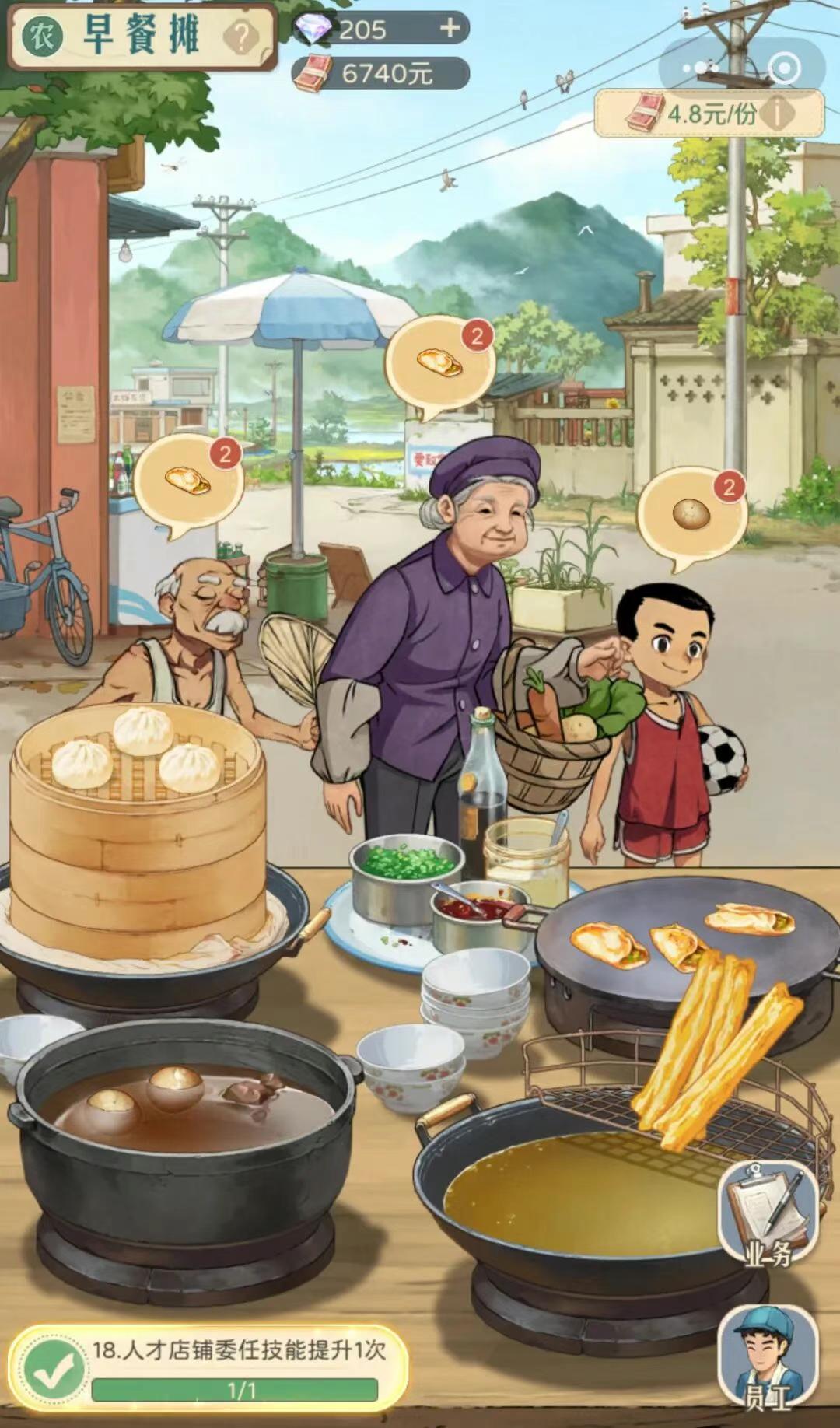
“Time Grocery Store”
At the same time, dual – component live – streaming is also changing the traffic conversion logic. In the past, there was only one download button in the live – streaming room. Now, with the dual – component function, while guiding downloads, through the second component such as joining a community and receiving benefits, deep – level user retention can be directly achieved in the live – streaming room, turning live – streaming into a conversion platform integrating promotion, download, and community accumulation.
04 The Future Battlefield: Mastering Traffic
Now, let’s look back at that cruel view at the beginning.
“Develop games for the sake of traffic.” In essence, this is because in the gaming industry in 2026, there won’t be as many traffic dividends.
But this is not a dead – end. It is a natural phenomenon in the industry cycle. On the contrary, at this stage, the new dividends should be content dividends and technology dividends, and there is still a lot of room in them.
So, what Grape Jun means is not that the gaming industry will be deeply trapped in the traffic whirlpool in the future, but that most game companies need to understand traffic better.
At this stage, the amount of traffic – buying budget is no longer the most critical indicator. The key is how well and efficiently you can operate traffic with the same budget.
This situation can probably be summarized in one sentence: Traffic drives R & D. It may sound helpless, but it is also an inevitable path for the industry to mature. This means that many teams must evolve from simple developers into content ecosystem operators with a holistic view.
Because in the future competition, technology and gameplay are just the minimum entry tickets. The content operation ability to see through the essence and master traffic will determine the longevity of a product.