
The year 2025 was a wild year for movies; a reclamation period where audiences defiantly swarmed to theaters in droves, all while the idiotic specter of lumbering, monopolizing media conglomerates and their fetishization of AI as the great lifeless hope of capitalism tried, and failed, to steal their attention away. Transformative filmmaking was projected on 35mm and 70mm formats around the world, most notably “Sinners” and “One Battle After Another,” and sparked a revolution in distribution that moviegoers are clearly eager to engage with. Ironic, considering that Warner Bros., the studio that produced each of those titanic, deeply political, and original projects from auteur filmmakers, is actively seeking the destruction of the film industry as we know it. You’d think they’d simply take the W. Audiences saw THREE incredible Stephen King adaptations, and one god awful one, sang along as a nearly ignored Netflix animated musical become a theatrical and global sensation, witnessed Guillermo Del Toro finally bring to life a monstrous passion project, and cheered as a guy got pulled apart by an unwieldy MRI machine. For my part, I cried more at the movies this year than in any year previous; a testament to what I found sitting in the dark of the theater that I couldn’t find outside of it. Films like “28 Years Later”, “Eephus”, “Superman”, and even “The Monkey” shook me to my foundation and enriched my soul when nothing else could. In 2025, the theater became a solace in the eye of globally dictated blood and chaos, a sanctuary where perhaps we all found a little hope together. This year, we saw filmmakers speak boldly and unapologetically in a human voice, saying, “We reject your mandate for apathy and hatred and artificially regurgitated solipsism. We choose to love and to remember. We choose to fight for the good and to express our feelings as only people can do. We choose the movies.”
And I’m glad they did.
There are literally dozens of movies from this past year that should be seen and celebrated, studied and acclaimed, championed and beloved well beyond the confines of 2025. While I am in no position to proclaim the BEST films of the year, these are just a few of my favorites (in no particular order):
EEPHUS

Carson Lund’s tragically wholesome ballpark elegy “Eephus” begins and ends with perhaps the most famous words spoken in baseball history. It is no coincidence that those words also happen to be in mourning, a dying man’s eulogy for himself before thousands of weeping, hot dog wielding, mourners. “Today I consider myself the luckiest man on the face of the earth,” said Lou Gehrig, the “Pride of the Yankees,” in July 1939. Gehrig was retiring from professional baseball after his diagnosis of amyotrophic lateral sclerosis, now known as Lou Gehrig’s disease, a devastating illness that progressively destroys the motor neurons of the brain and often leads to memory loss. “Eephus” portrays the destruction of memory in its own way, of old men and young staring down the barrel of a future without the guideposts of the past for support, unsure how to move on from the game which has given them solace, community, and, for a few sunny hours every weekend, purpose. This is a movie about death, glory, petty grievances, perseverance, heartbreak, and spat sunflower seeds. It is a movie about baseball, and I felt its effect in my bones.
SINNERS
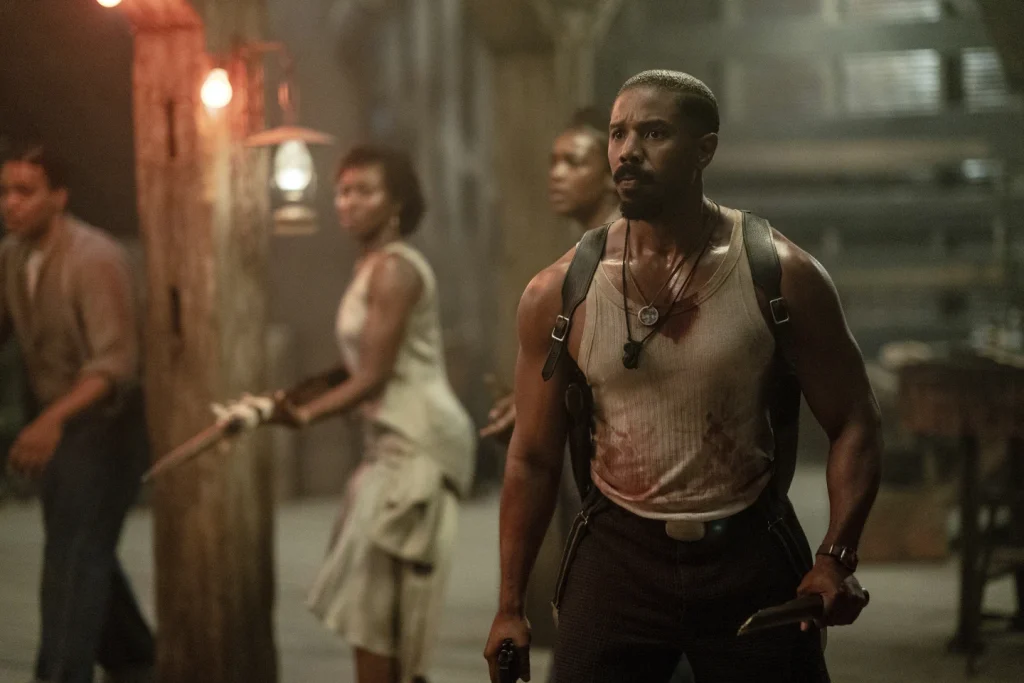
The story of Robert Johnson is instilled into the DNA of “Sinners,” the legendary guitar player who is said to have sold his soul to the devil to embody the blues; a legend that has been warped beyond its intended meaning. In the original incarnation, Johnson did not sell his soul to some pitchfork-toting Christian Devil, but to a trickster god of African origin called Legba. Coogler, a devotee of authenticity in each of his films, is on record as saying that this is his interpretation of the myth, as anyone who has seen “Sinners” can readily attest. From the opening frames and notes of Ludwig Göransson’s masterful score, it is soon apparent that, while vampires are promised and will undoubtedly deliver the bloody goods, music is the magic that Coogler ascribes to. The ache of the blues, the wail of a singer on a stage; these are not simply performances, but conjurings also of ancestors, tragedies, and triumphs. Music, perhaps unlike any other form of expression, is transformative in that way, transmogrifying who we are, were, and could be with those who heard those notes and songs long ago and are now long dead. There is a sequence in the movie, the grandest statement in a film overflowing with them, where Coogler exemplifies this point in a manner that overwhelmed me to the point of tears through a manifestation of life and love and dance and culture that spoke more to the soul of man in one song than most articulate in an entire body of work. I was moved and transported. It felt like magic.
DEAD LOVER

A film that announces itself as something wholly original, delightful, and disgusting from frame one, “Dead Lover” is precisely the kind of movie that horror film festivals are all about. A black box fever dream that feels as if John Waters directed the fantasy sequence from “Lisa Frankenstein,” “Dead Lover” follows the unnaturally wholesome story of a young gravedigger who pines to the moon for a lover to sweep her off her feet even though she ever-reeks of the dead and damned. A film whose ingenuity I can only equate to last year’s sublime “Hundreds of Beavers,” “Dead Lover” holds audiences in a spell of expressionism that is wholly its own, jet-fueled by the giddiness of the film’s small cast who lovingly craft an experience as fully realized as any Hollywood blockbuster, just with more spit, goo, and whimsy.
THE MONKEY
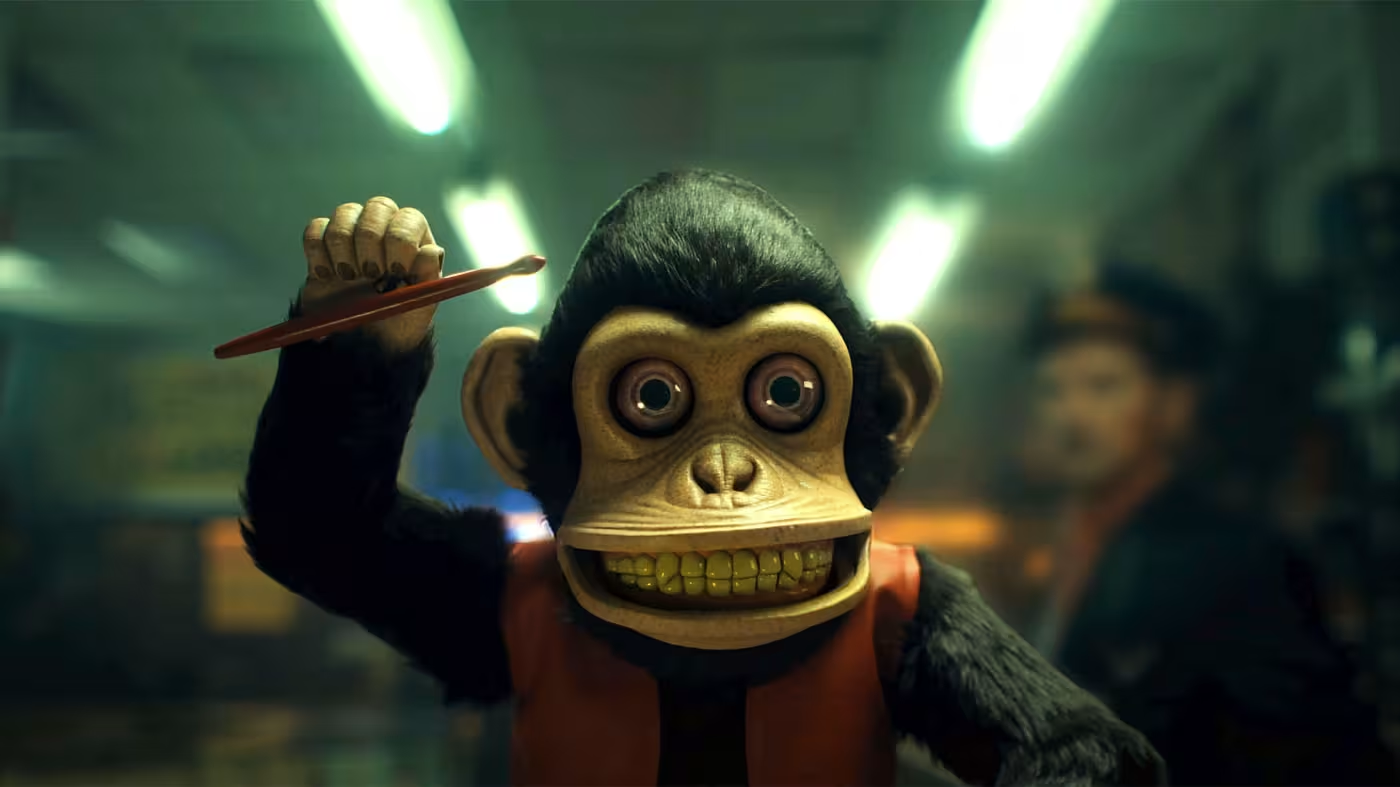
I was amazed at what Osgood Perkins was able to pull off with “The Monkey,” especially the ending. I won’t give things away; that would be no fun. But the film is brisk 98 minutes long, and does not crescendo with the climactic confrontation you might expect. Instead, the final moments of “The Monkey” settle for an absurd poignancy, a necronomi-calm if you will, that surely goes down as my favorite ending of a film that I’ve seen in a long time. The world is a scary place, and you don’t have to go to the movies to see planes falling out of the sky or people dying in increasingly bizarre ways. What “The Monkey” posits, which hit me in a very personal place, is that life cannot be extricated from death, nor death from life. Each is a part of the other’s bargain, and a debt is always owed for the privilege of drawing breath on this Earth. This is a movie about the absurdity of death and how its presence lingers just outside our field of view most days until our number is up. That’s scary, but it’s also kind of hilarious when you think about it. Like “The Monkey” itself, death can’t be outrun, destroyed, or bargained with. It’s the great equalizer, and in the face of imminent ruin, what else is there to do but snub your nose at the inevitable, bask in the blood, and dance?
ONE BATTLE AFTER ANOTHER
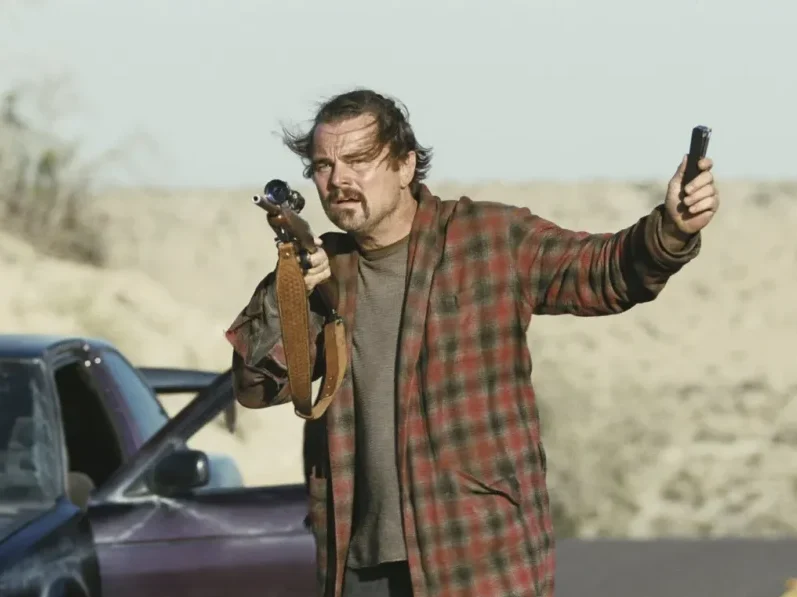
What Paul Thomas Anderson (PTA) is able to conjure with his latest, the explosive and heartfelt “One Battle After Another,” is a miracle; a film that is somehow a crowd-pleasing epic about socialist revolutionaries raging against the machines of imperialists and racist overlords that is somehow as funny as it is thrilling and as subversive as it is a rollicking good time. At nearly three hours, the film has not an ounce of fat on it; impossibly crafting a perpetual escalation of tension, drama, and slapstick antics that feel effortless and inevitable. Ballasted by two top-tier buffoon performances from Leonardo DiCaprio and Sean Penn, and crystallized into something truly special by Teyana Taylor and Chase Infinity, “One Battle After Another” is a staggering achievement of filmmaking and was in no way a film I thought PTA had in him.
THE LONG WALK
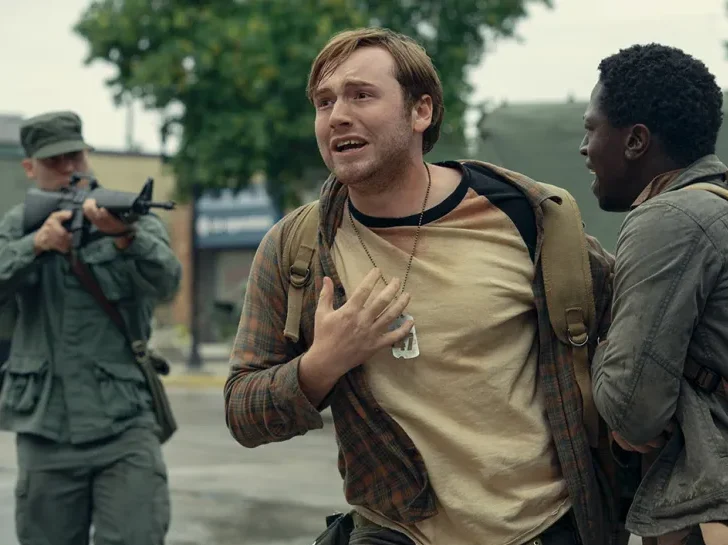
“The Long Walk” is a war film. Much like the original novel, first written by a 19-year-old Stephen King before being published under the pseudonym Richard Bachman in the 1980s, the film by Francis Lawrence stands in the shadow of a great sacrifice of young bodies on the altar of national pride. For the teenage King, the vile monolith of worship was the Vietnam War. For Lawrence and screenwriter J.T. Mollner, it seems the great evil at whose feet lie the eager dead is American Exceptionalism and the capitalistic whims of fascism. The weapon wielded by this fanatical enemy to life’s sanctity is hope, the hapless fodder are the poor and the naive, and the bloody shrapnel left lying in the dirt is nothing less than the lifeblood of the future, wasted in the ditch like so much road kill or sun-faded soda bottles filled with stale urine. Oh, amber waves of grain, indeed.
MARTY SUPREME
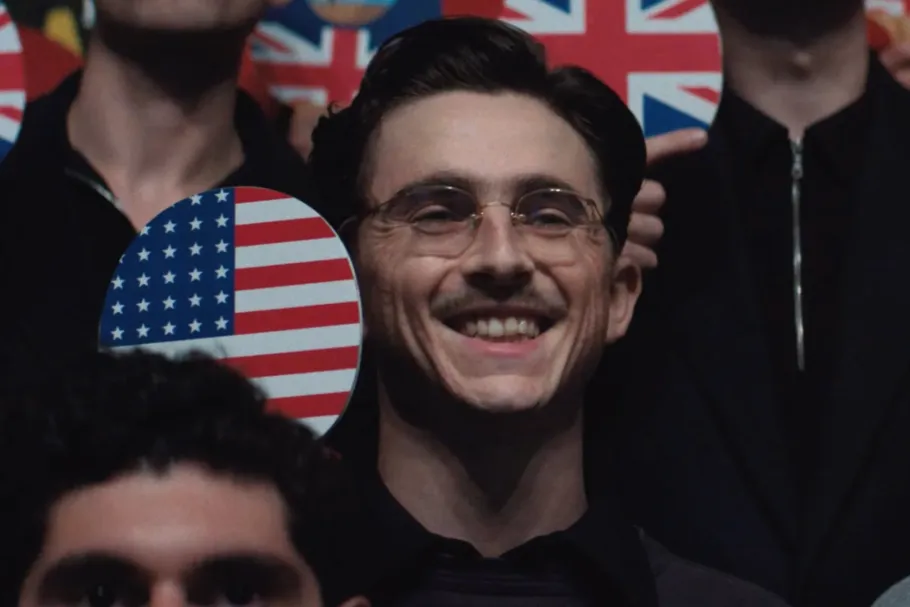
The central figure of “Marty Supreme,” Marty Mauser, is a jerk, a compelling one, yet a certifiable jerk all the same. A compulsive liar, a hustler, a con man, and an objectively selfish, self-centered narcissist, Marty is at once repulsive and captivating; a bad decision waiting to happen that you can’t help but partake in. He’s American in the sense that he is the unyieldingly passionate, yet boorish and glory-obsessed, representative to the world for a sport nobody cares about. His characteristics represent the worst and best of us: tenacity, persistence, an aspiration to greatness, but what value is greatness gained by running roughshod through the lives of every single person one comes in contact with? “Marty Supreme” is an American story, a crowd-pleasing, nail-biting sports drama about one man’s dogged persistence to do something that leaves his mark on the world. That he accomplishes this is undeniable, but at what cost?
40 ACRES
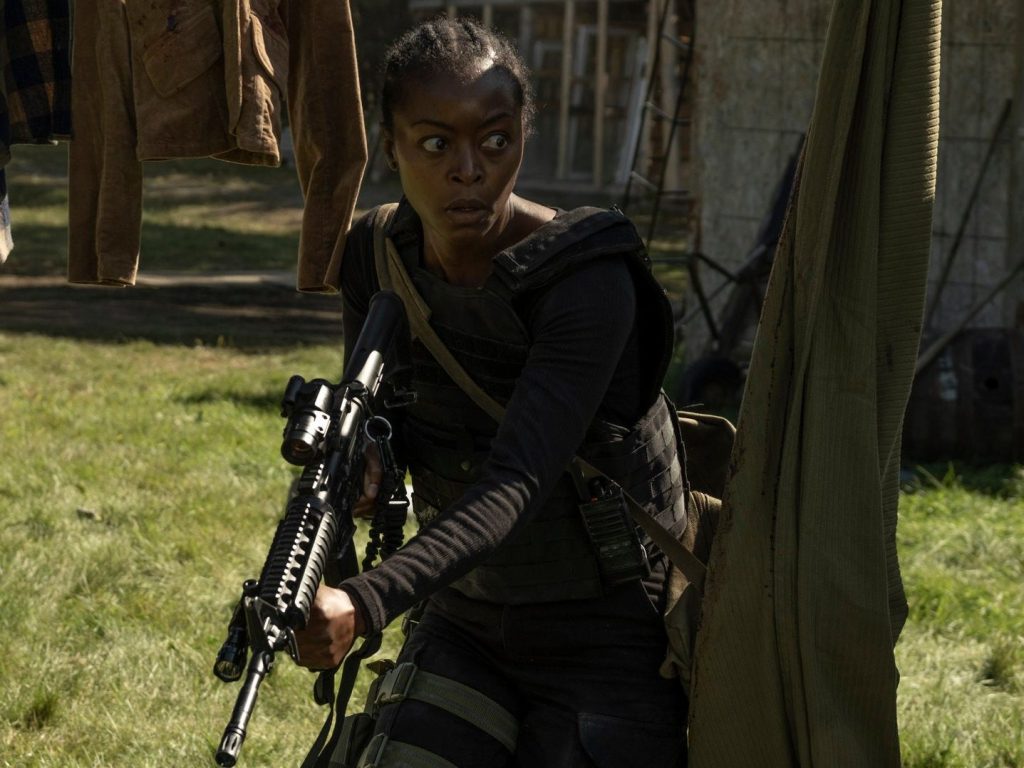
R.T. Thorne’s debut film, the post-apocalyptic thriller “40 Acres”, is the kind of movie you leave needing to tell someone about. A taut, deeply felt, entertaining, insightful, and emotionally raw experience; “40 Acres” is what we go to the movies to see; the human condition in all its myriad forms fighting to find its way in a world of chaos and blood. If I could, I would reprogram at least 25% of theaters across the country to switch from playing the new dinosaur movie stomping its lumbering, pointless corpse across multiplexes for this: a simple movie about complicated people, a bloody movie steeped in the joy of family, a fantastic movie that I know I will be proselytizing about for quite a while.
WAKE UP DEAD MAN: A KNIVES OUT MYSTERY
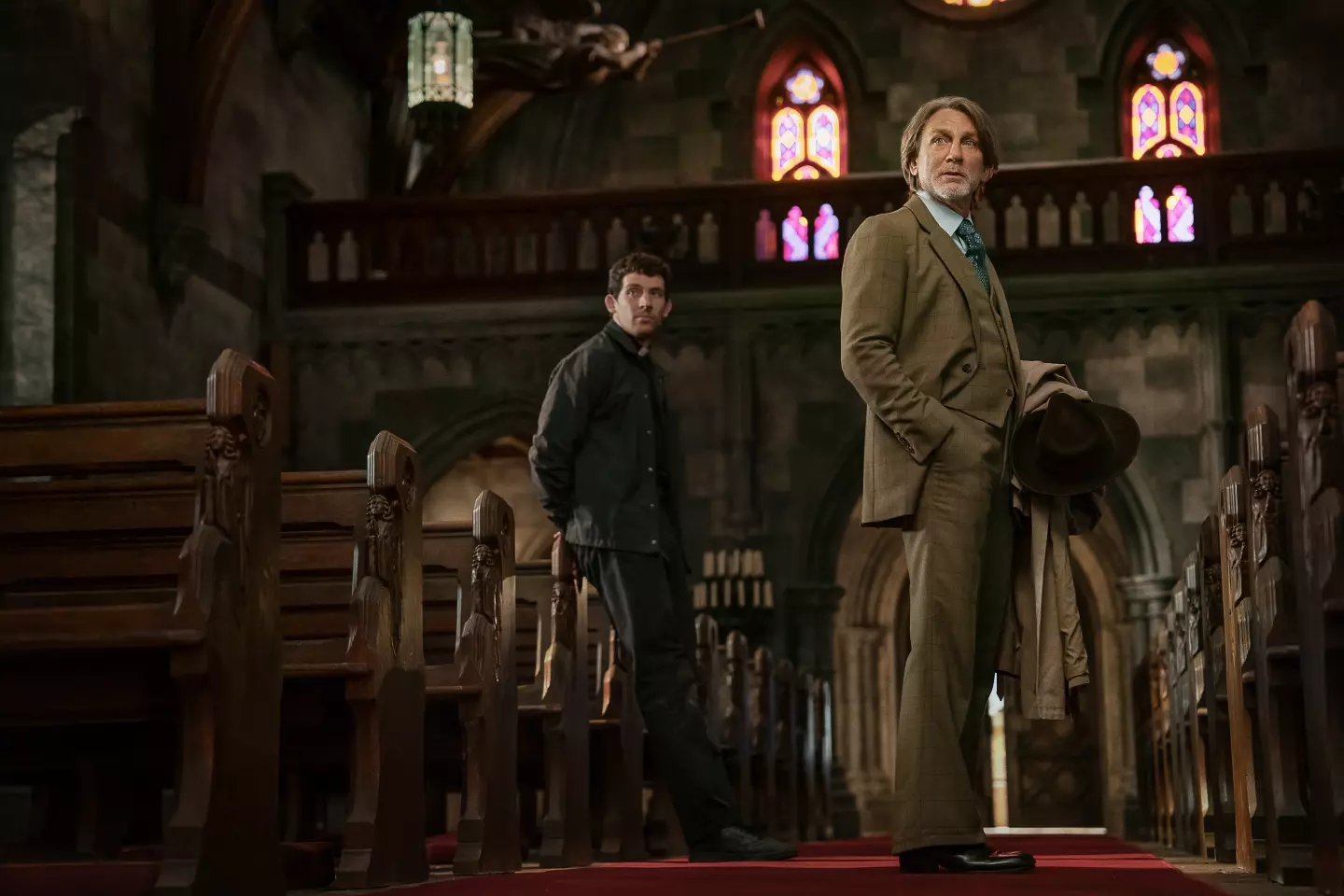
The mystery of faith is ever-present in Rian Johnson’s latest Benoit Blanc mystery film, “Wake Up Dead Man.” The most thematically rich of the three films produced thus far, alongside “Knives Out” and “Glass Onion,” “Dead Man” finds Daniel Craig’s Blanc working to solve the Good Friday murder of a fire and brimstone spewing Father Wicks (Josh Brolin), who lords over a calcifying Catholic Church in New England, stabbed to death while standing alone in a closet. Witnessed by six of Wick’s most radical acolytes, the humanist second in command of the church, Father Judd (Josh O’Connor), is in short order the prime suspect. Desperate and alone, Father Judd falls to his knees in his church, begging God for help. On cue, the church doors swing open, and so enters his southern fried salvation. Benoit Blanc, Daniel Craig’s mellifluous, dandy detective, believes in Father Judd’s innocence and begins his work to understand the spiraling psalm of a hate-spewing priest, now dead, and the thorny band of wolves in his congregation, now suspects. Twists and turns commence, leading the self-appointed heretic Blanc to face down that which his own rational mind cannot fathom, the mystery of faith laid out bare and eternized upon a slab for dissection, while the doubtful, earnest Father Judd is forced to unearth the value of religion in the face of unyielding human pestilence.
28 YEARS LATER
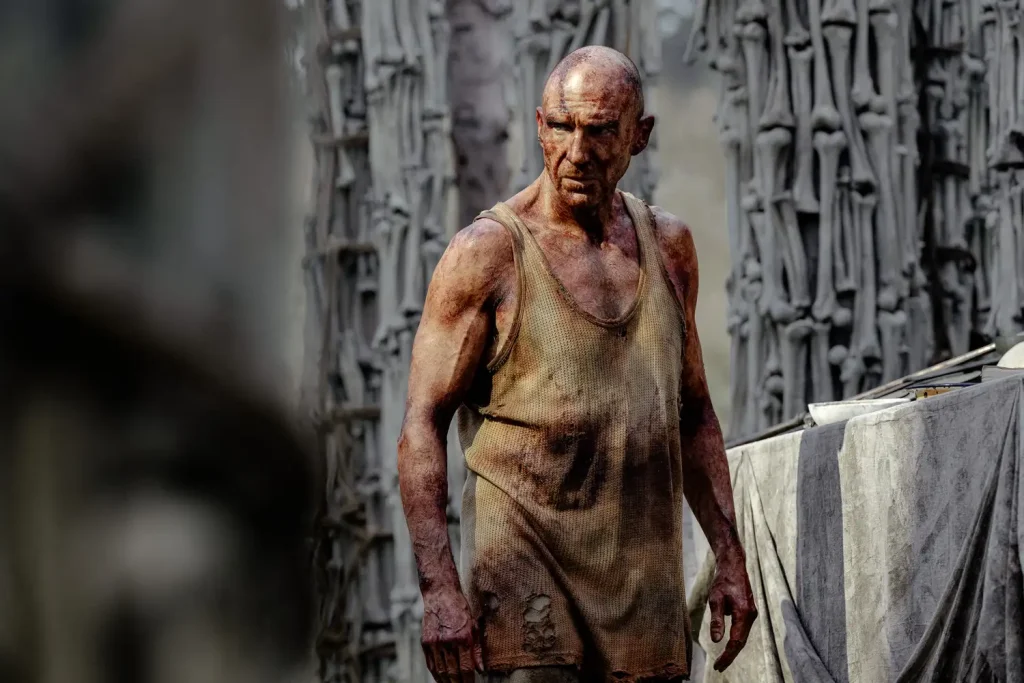
COVID-19 looms large over “28 Years Later” as thematically as 9/11 loomed over “28 Days Later”. And in truth, how could it not? The aftermath of a civilization devastated by an assassin that is as silent as it is deadly has left all of us with a lingering terror that we perhaps rarely acknowledge but retain all the same. There were so many dead, so many needless dead; friends, neighbors, grandparents, and teachers. We hear numbers like 700,000 deaths between March 2020 and October 2021, and cannot begin to fathom the toll; with the exception of those tasked with manning the front lines of ICUs across the country, that is, who may not have been soldiers, but certainly combatants in an unholy war. Most of us cannot imagine 700,000 anything, let alone whole human lives. How could we? Boyle and Garland attempt to offer a visualization for us of such a loss, a memento mori that is as gruesome as it is lovely and as subversive as it is devastating. One of the most striking visuals of the film features a bone forest, with piles of femurs and tibias lashed together like some petrified temple of decay beside a towering pile of human skulls. This display is the centerpiece of the film’s final act, which left me a blubbering mess. For a film ostensibly about zombies ripping flesh from bone, an extended vigil in remembrance of the thousands of needless dead was not one I expected, nor was I expecting Fiennes to offer a deeply contemplative and empathic performance that is as awards-worthy as any he’s ever undertaken. We can remember the dead as numbers, or we can remember who they were as people, with eyes that saw and minds that dreamed. In any other film, such a borderline “Texas Chain Saw Massacre” level display of human viscera would be thrilling and playfully distasteful, not poignant and reverential. “28 Years Later” is a horror film, just not in the way you’d expect.
Honorable Mentions
SUPERMAN
AVATAR: FIRE AND ASH
FRANKENSTEIN
WEAPONS
LIFE OF CHUCK
BRING HER BACK
K-POP DEMON HUNTERS
FINAL DESTINATION: BLOODLINES
EDDINGTON
DIE MY LOVE
BLACK BAG
IT ENDS
For more movie recommendations, and to see my Top 10 list change in real time as more 2025 movies make their way to New Orleans, CLICK here to follow me on Letterboxd.
You’ll be glad you did.