
Situated in Tianjin City in China, the Goldin Finance 117 is the world’s tallest unfinished skyscraper that has resumed construction after a decade of long dormancy. Known as the world’s tallest “ghost skyscraper,” the 597-meter (1,959-foot) tower has stood unfinished since 2015, stalled by severe financial challenges. Designed by P&T Group as a bold symbol of China’s real estate ambition, the project once promised to redefine skyscraper architecture in the industry. Its prolonged pause turned it into a powerful example of how widespread economic problems in the country are, making its revival a construction milestone with renewed optimism and reflection.
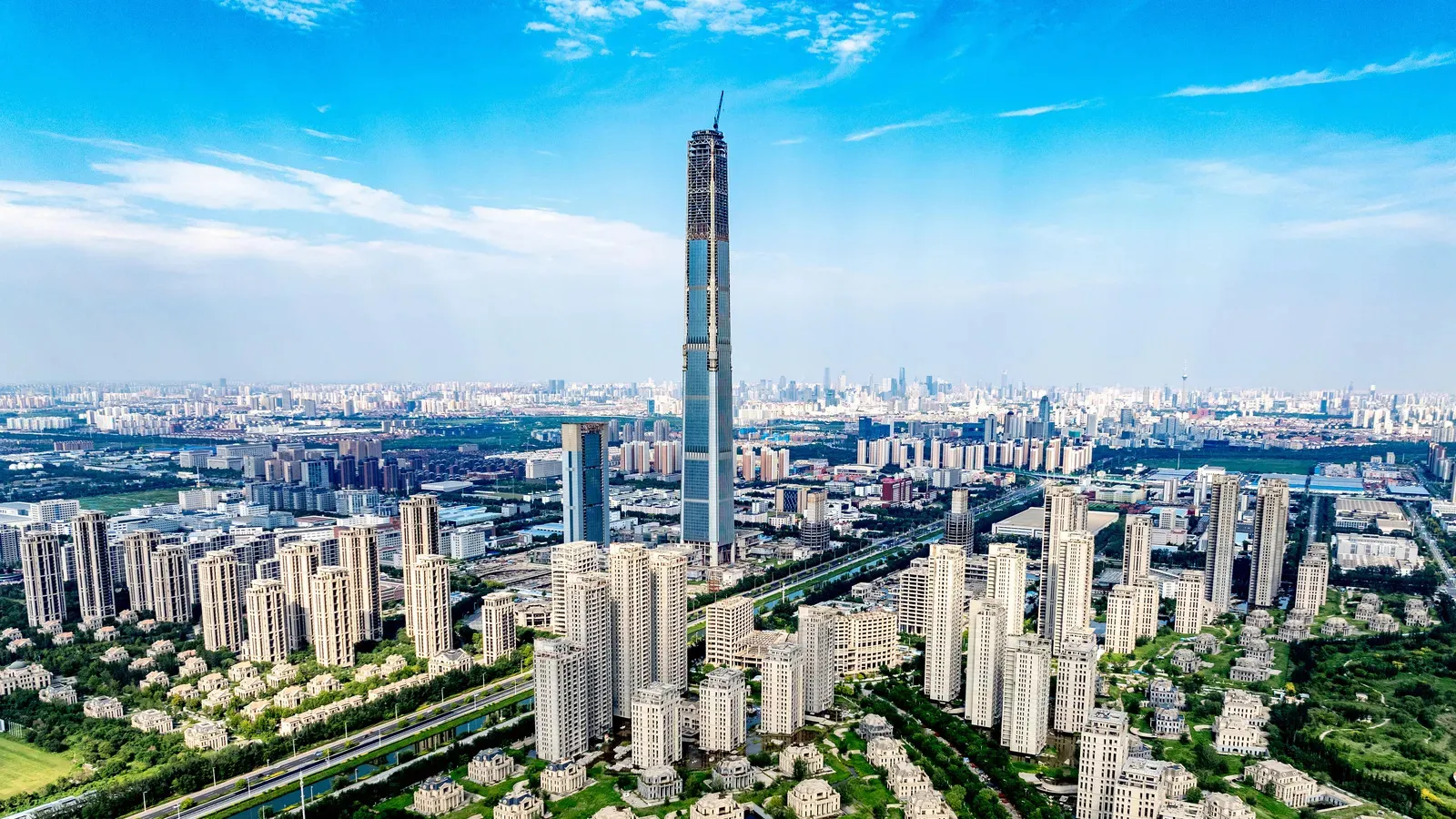
Designed as the defining landmark of Tianjin’s emerging metropolitan CBD, the tower rises to a height of 597 meters across approximately 117 levels. When completed, it will become China’s second-tallest building after the Shanghai Tower and the fifth-tallest skyscraper in the world. The tower is thoughtfully organized into three office zones, with a public observation deck on the 116th floor and a five-star restaurant at the summit. Inspired by the symbolic form of a “walking stick,” the design conveys ideas of prestige, power, and prosperity.
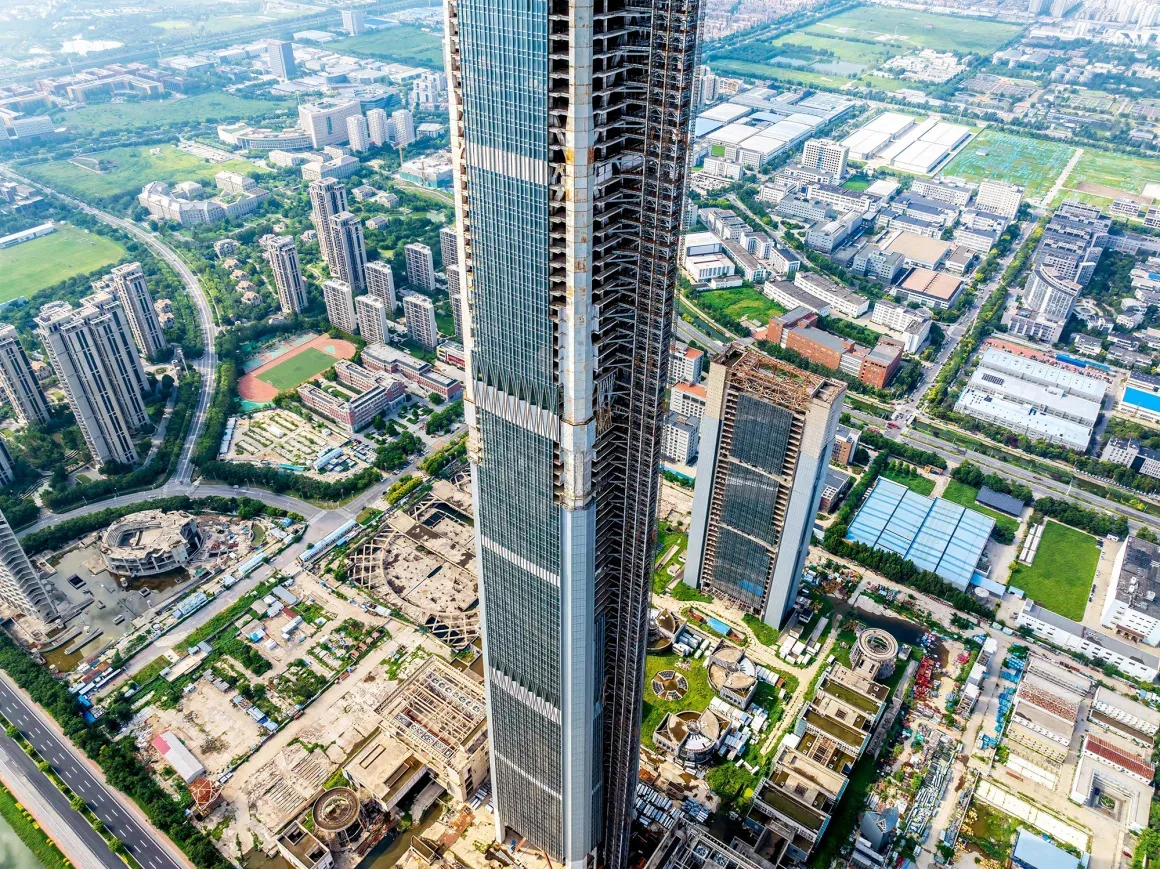
Developed as a striking feat of engineering, distinguished by its advanced structural system designed to withstand extreme forces. A reinforced concrete core works integrated with a perimeter steel frame supported by mega columns and mega braces, ensuring stability against earthquakes and strong winds. The structural design strategy places the tower among the most technically ambitious skyscrapers in the world. After a decade-long pause, the project has returned with a renewed focus on durability, incorporating sustainable construction methods and innovative, corrosion-resistant materials.
Project Halt
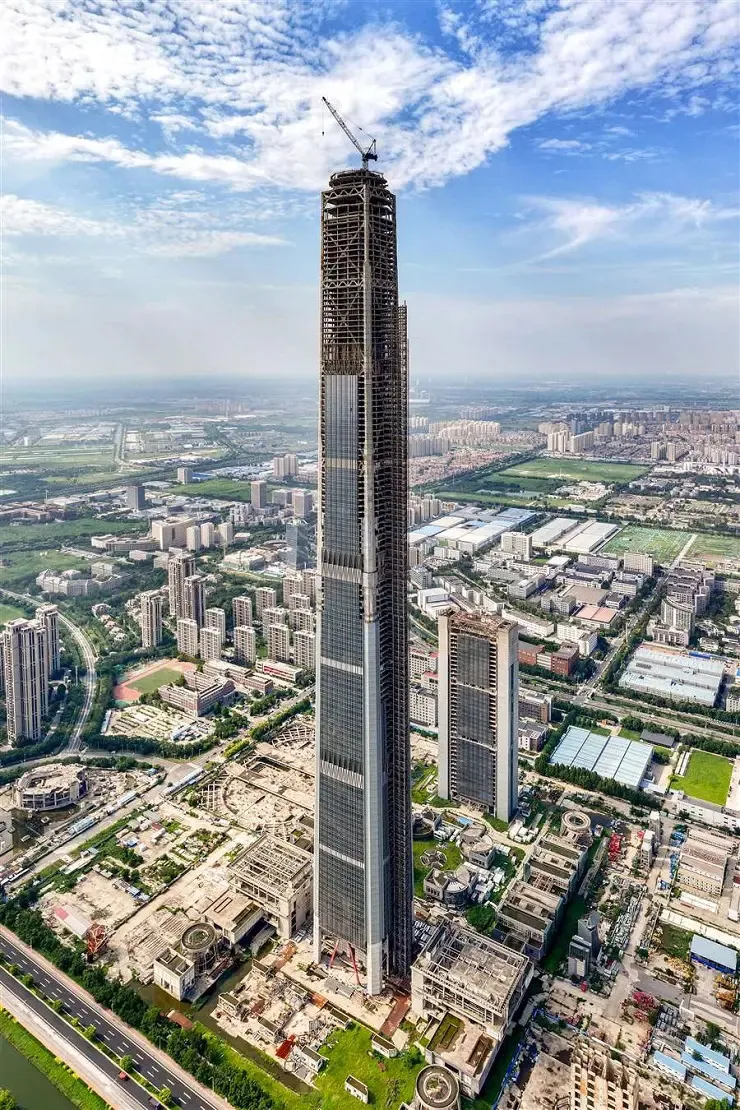
Once envisioned as an architectural icon, the tower instead became an incomplete icon due to funding issues that created a strain on its construction. It stands as an example of designs with ambition outpacing reality and dreams left unrealized. Its prolonged pause frustrated stakeholders while turning the skyline into a quiet reminder of excess and uncertainty. Under today’s regulations, a project of this scale would no longer be approved, as it was not approved at the time it started construction in 2008. Now, the revival of construction after a decade signals a broader governmental push to breathe new life into stalled mega-projects, even amid ongoing economic pressures.
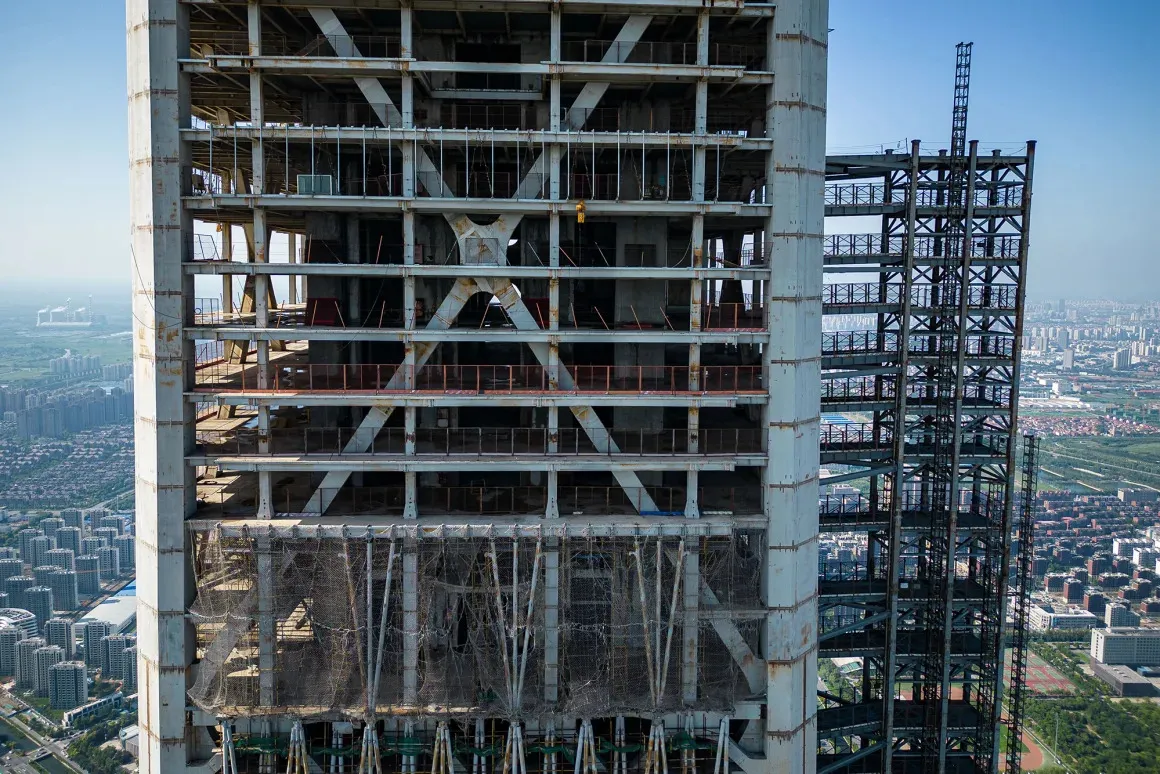
The skyscraper’s tapered form is inspired by a diamond, conceived to combine visual elegance with aerodynamic performance, expressing luxury and structural intelligence. Designed to withstand strong winds and seismic forces, its advanced engineering aimed to support a complex mix of commercial, residential, and hospitality functions in a single structure. Architectural elements not only shaped its striking profile but also concealed essential mechanical systems, reinforcing the tower’s technical ambition.
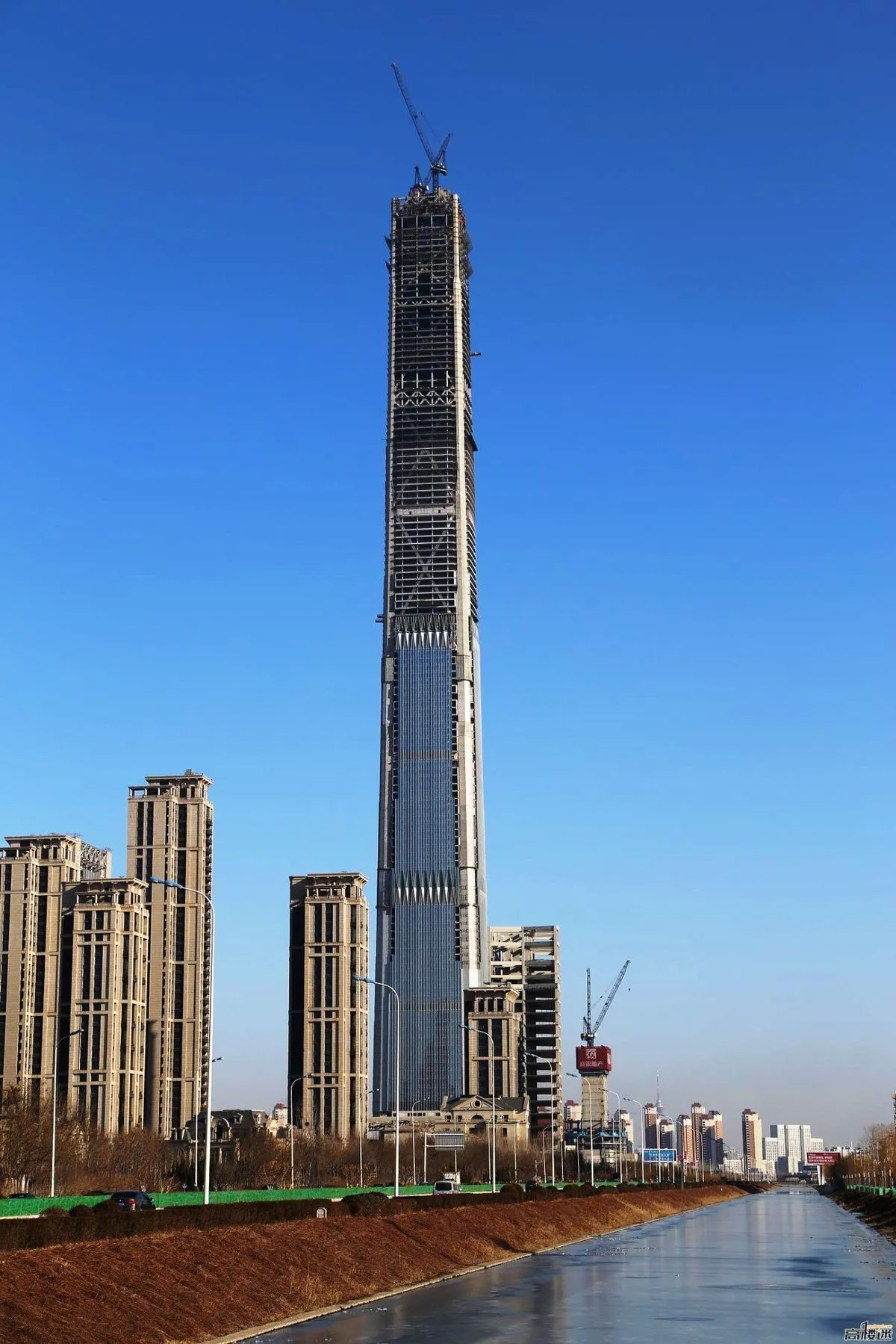
Sustainability is imbued in the heart of Goldin Finance 117’s original vision, with energy-efficient systems, including advanced HVAC technology, low-emissivity glazing, and intelligent building controls, incorporated into the design. Aimed to reduce environmental impact while delivering high levels of indoor comfort.
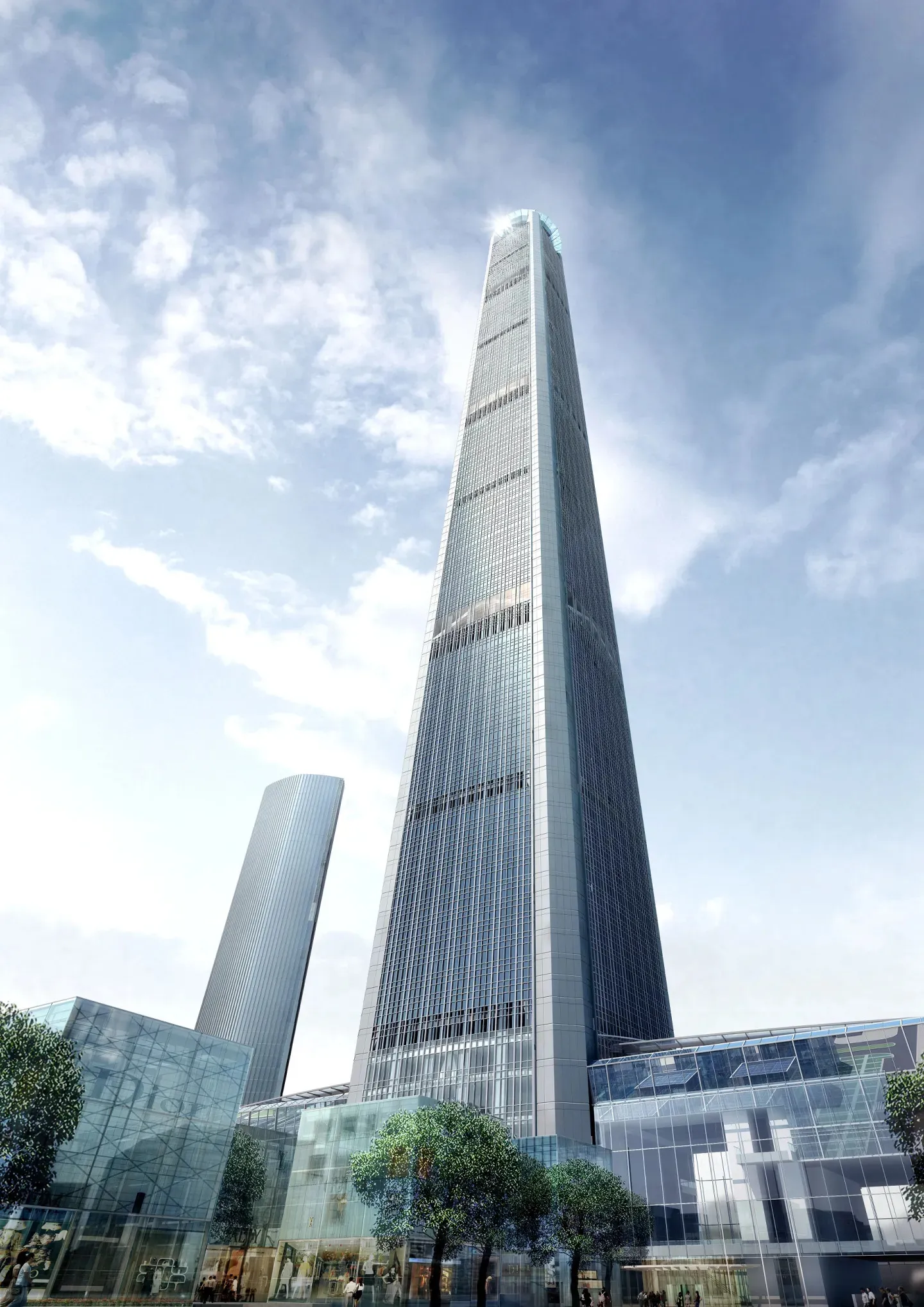
Years of halted construction and prolonged inactivity have cast doubt on the tower’s sustainability ambitions and real-world impact. As work resumes, it stands simultaneously as a bold vision of progress and a reminder of how easily ambition can outpace practicality.
Goldin Finance 17 Project Details
Project name: Goldin Finance 17
Location: Tianjin, Northern China
Architect: P & T Group
Construction Year: 2008 (Initiation)
Suspension Year: 2015
Resumption Year: 2025
Completion Year: Expected 2027
Photography: Rendering – P & T Group
Costfoto (Nur Photo)/ Anadolu Agency/ CFOTO (Future Publishing)/ Max-Im1