
In Hollywood, there’s an old joke among wannabe actors scraping by doing odd jobs between auditions: “Well, right now I’m parking cars, but what I really want to do is direct!” The punchline comes from the canned line that established actors so often feed interviewers and talk show hosts when discussing their career goals. Practically every working actor of some repute has offhandedly mentioned their interest in directing a film at one time or another. But the joke also points to how difficult it is to direct in the first place — how much of a studio’s financial trust, production insurance and rapidly moving parts have to come together to make a film happen. If becoming a working actor is hard, proving your worth behind the camera is ten times as tough, especially when the audience’s expectations are heightened by a pesky little thing: name recognition.
Just like not everyone is destined to be an actor, even fewer actors have what it takes to direct.
This year has seen several notable names attempt to direct their debut feature films. One great thing about being an established Hollywood actor is that, when you finally take that inevitable swing at helming your own film, fame usually equates to prestigious premieres at film festivals and a whole bunch of cultural hubbub. Scarlett Johansson’s “Eleanor the Great” had a glitzy premiere at Cannes and some novel cross-promotion with her stint co-hosting “Today” alongside Jenna Bush Hager. Fresh off a knockout role in “Babygirl” and being signed to play a Beatle, Harris Dickinson’s “Urchin” also scored a coveted spot at the same festival. And then there was Kristen Stewart, whose terrific debut, “The Chronology of Water,” ran the festival circuit last summer to great fanfare, and will expand into more theaters in January.
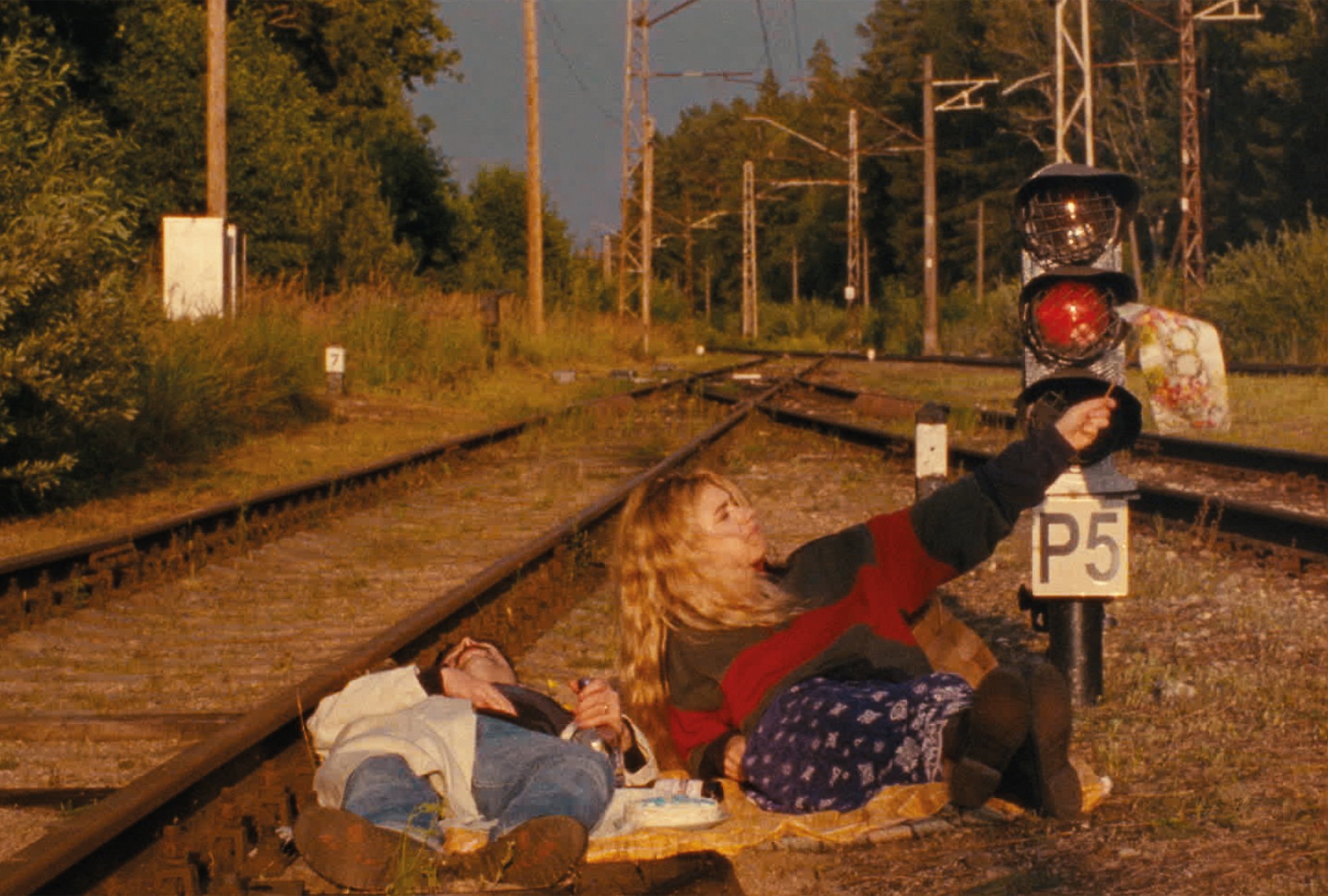
(Les Films du Losange) Imogen Poots in “The Chronology of Water”
With Stewart’s debut feature fresh in the public’s consciousness and garnering awards buzz, it’s peculiar that Kate Winslet — whose pedigree is arguably stronger than Stewart, Dickinson and Johansson’s combined — had her directorial debut all but dumped onto a streamer. Winslet’s “Goodbye June,” about a family coming together over the holidays when their terminally ill mother takes a turn for the worse, was unceremoniously plopped onto Netflix on Christmas Eve, far from the red carpet rollout one would expect for an artist of her stature. Given the narrative and thematic overlap between “Goodbye June” and “The Chronology of Water,” this dissonance is even more curious. Here are two films largely about torturous family dynamics; why is Winslet’s getting the shaft? The answer points right back to that old actor-director joke. Just like not everyone is destined to be an actor, even fewer actors have what it takes to direct.
Though it’s not for a lack of trying. In Winslet’s case, it’s more the baffling lack of compelling material. Working with a decent if cloying screenplay by Joe Anders, Winslet aims to capture all of the intimate moments and outsized chaos that large families are prone to weaving between. She’s even working with the actor-turned-director cheat code, starring in her own film as well as directing it. For actors struggling to convey their vision behind the camera, stepping back in front is a surefire way to salvage at least some of the film with their own ability. But in “Goodbye June,” it’s not the cast that’s underperforming; it’s Winslet.
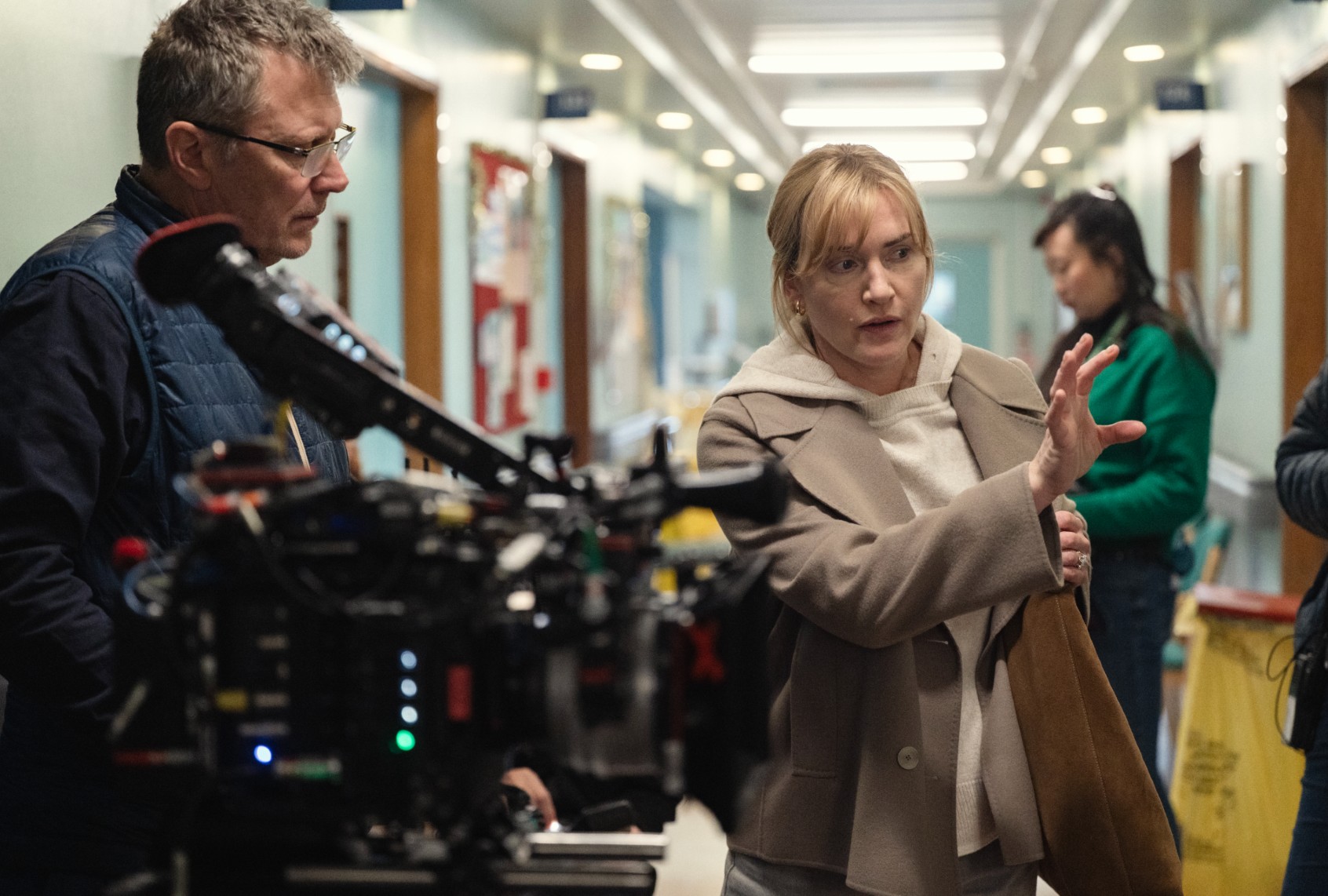
(Kimberley French / Netflix) Kate Winslet directing on the set of “Goodbye June”
In the film, Winslet plays Julia, the strong-willed eldest sibling of the Cheshire clan, too often charged with being the glue holding her family together. On top of trying to manage her own marriage and three young children, Julia has to keep a watchful eye on her less successful sisters, Molly (Andrea Riseborough) and Helen (Toni Collette), and her sweet but aimless brother, Connor (Johnny Flynn), who lives with their parents, June (Helen Mirren) and Bernie (Timothy Spall). It’s a tall order, and when June has a fall that sends her back into the hospital — and soon after, hospice — Julia must wrangle her dysfunctional family and rally them all to face the inevitable.
“Goodbye June” mulls over the beauty of life and the indignity of death, but never fully engages with either facet of our relatively short existence. Mirren, Winslet and Flynn are especially lovely in the movie’s quieter moments, but rarely do they linger long enough to stay with the viewer after Winslet calls “cut.”The film is filled with predictable turns and familiar spats that could be found in any other family drama, and suffers greatly from its narrative proximity to “The Family Stone,” a far better and more memorable film wrestling with the same subjects in thoughtful ways that are far more meditative and character-focused. (It doesn’t help the film’s case that “The Family Stone” is especially relevant this year, following Diane Keaton’s death. And while that’s no fault of Winslet’s, it does impress just how forgettable “Goodbye June” is compared to its classic holiday predecessor.
Want more from culture than just the latest trend? The Swell highlights art made to last.
Sign up here
“The Chronology of Water,” on the other hand, is a wholly unforgettable turn for Stewart, who lets her actors do all the storytelling while she remains laser-focused on exploring artful and stylish new storytelling modes. The film is a free-flowing adaptation of Lidia Yuknavitch’s memoir, lyrically detailing its author’s experiences with swimming, substances and sexual abuse, and led by a commanding, ferocious performance from Imogen Poots. In her refusal to shy away from the grime and grit of Yuknavitch’s story, Stewart creates a startlingly raw atmosphere that ricochets between discordant and truly inspiring. “The Chronology of Water” is glaringly loud at one moment and soft as silk the next, and Stewart’s confident directorial eye makes these vast leaps feel earned and, more importantly, human.
Watching “The Chronology of Water,” one can instantly understand what would draw an artist like Stewart to the project. Throughout her career, Stewart has made a notable name for herself, choosing surprising, boundary-pushing roles designed to stretch an actor’s abilities. Her performances in “Personal Shopper,” “Clouds of Sils Maria,” and “Spencer” aren’t just some of the finest work of a young actor of Stewart’s caliber; they’re genuinely interesting, speaking to who Stewart is as a person, a performer and a woman. “The Chronology of Water” feels like the natural next step: a film that refuses to dull its bite and forces the viewer into its abrasive tone, confident that they’ll grow accustomed to its rhythm. Beyond that, Yuknavitch’s story is that of a woman desperately trying to escape the shadow of her younger years and find her place as an artist in the world. Surely, the star of the “Twilight” franchise can understand that.
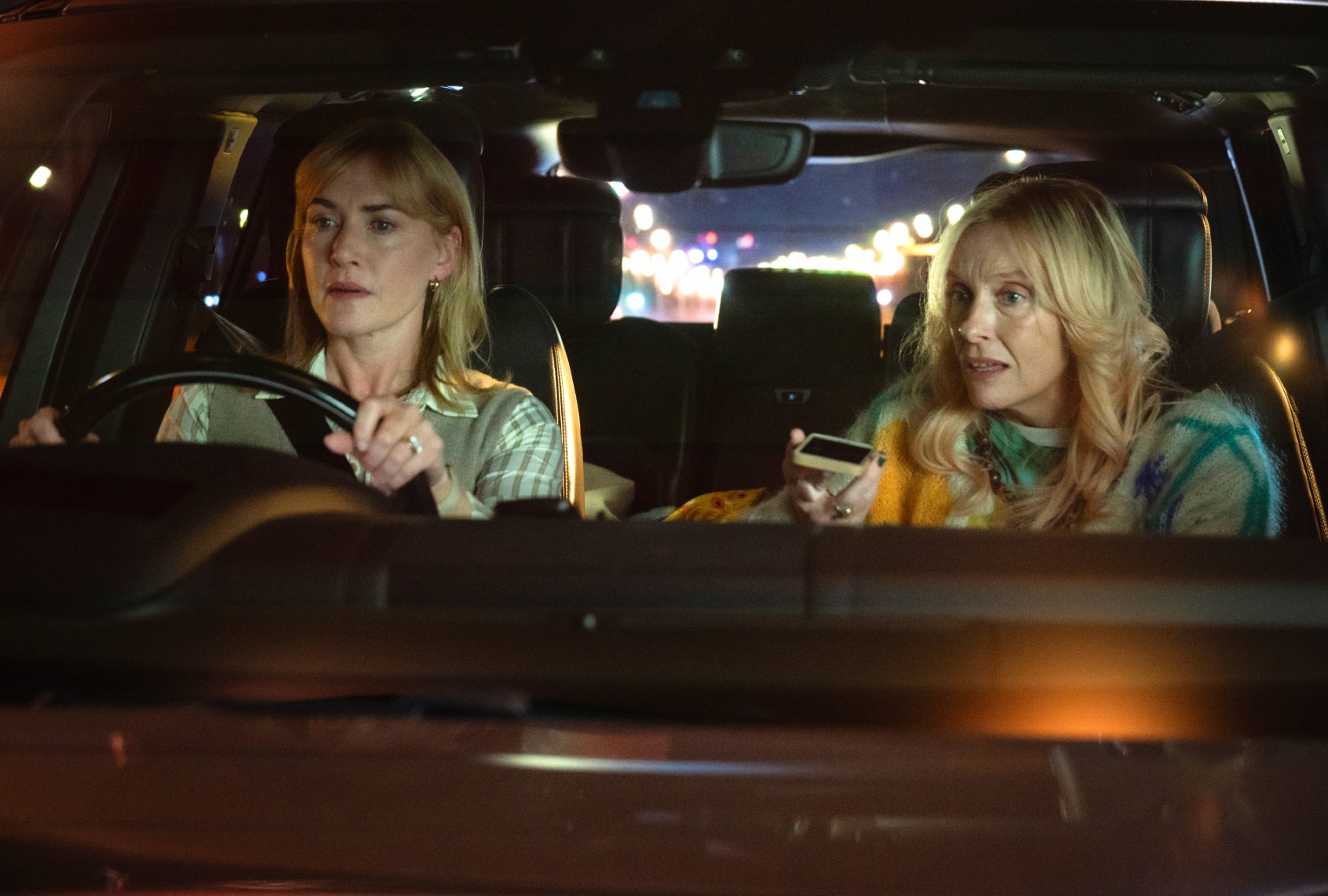
(Kimberley French / Netflix) Kate Winslet and Toni Collette in “Goodbye June”
But in Winslet’s case, I can’t get a reading on why “Goodbye June” is the film she’d want to debut with as a director. Other than the fact that the story is set in Britain, there’s no sense of Winslet in the movie, no clue as to why this film in particular was so special that an actor of such incredible esteem would say, “Yes, this is the one.” Perhaps it’s because “Goodbye June” is an easier foray into directing; it doesn’t require formal style or a whole lot of heavy narrative execution, just the occasional balancing of some more sentimental emotional beats, which, to her credit, Winslet does quite well. But when I think of Winslet’s career, I think of big, bold swings and daring roles. I think of blockbuster gold and indie artistry alike. I don’t think of someone who likes to play it safe. And while every film doesn’t need to be an intensely demanding challenge, it’s perplexing that someone with such a compelling on-screen presence has trouble translating that force to her first outing as a director.
Winslet will almost surely direct again, as will Stewart. But a lot is riding on a debut feature. The first film is a make-or-break for many actors turned directors. Take Bradley Cooper, who, for the last 10 years, has directed almost as frequently as he’s acted. I was let down by Cooper’s “Maestro” and “Is This Thing On?” — the latter is one of the biggest whiffs of the year — but I’ll remain perpetually curious about his directorial output after “A Star Is Born,” which still holds up as one of the great mainstream films of this century. I’ll have the same curiosity and grace for Stewart’s next projects, but I’m not sure I can say the same for Winslet. “Goodbye June” is far from a catastrophe, but it’s perhaps a greater sin that the film would be far more interesting if it were. And while it’s disappointing that such a formidable industry figure could bungle a major career pivot, at least she’ll never have to go back to parking cars.
Read more
about stars stepping behind the camera