
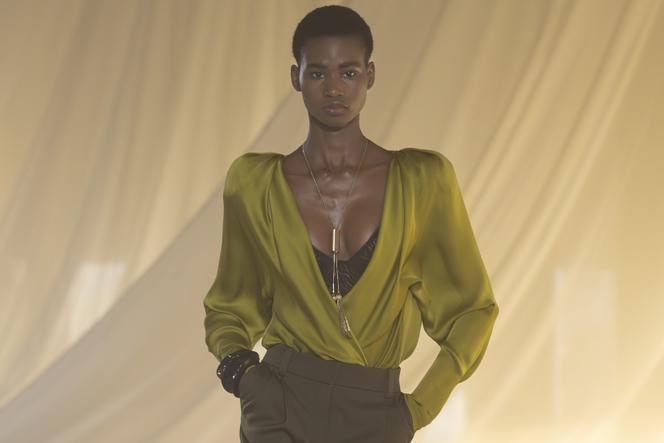
In 2022, “sexy” was everywhere on the runways. A trashy version, it had echoes of the 2000s: low-rise jeans, crop tops and micro-miniskirts. After influencing street fashion, it eventually faded away from the scene. But during this autumn-winter 2026-2027 Fashion Week, which is currently taking place in Paris until March 10, the idea of a sexy woman is making a comeback, but in the exact opposite form: one of extreme elegance.
That is the approach Antonin Tron hopes will relaunch Balmain. The designer was appointed in November 2025 to replace Olivier Rousteing who, after 14 years as artistic director, had established a maximalist, flashy aesthetic. No doubt in order to turn the page, but also because the archives naturally led him there, Tron chose to take the opposite approach. “Looking at the work of Pierre Balmain [1914-1982], who, after the war, felt an urgent need to open a couture house, I was struck by the modernity of his work,” the designer explained.
The 40-something chose to reinterpret certain dresses from 1946, “all opulence and restrained sensuality,” featuring deep necklines. He also revisited other pieces in draped jersey from 1953, “very similar” to what Tron designed for his own label, Atlein (which he put on hold for Balmain). Pierre Balmain’s connection to Hollywood also inspired Tron to create jackets with broad shoulders and slit skirts reminiscent of film noir heroines. Animal motifs, drawn from the founder’s apartment decor and rendered in pearls, also sparkled on coats and straight skirts.
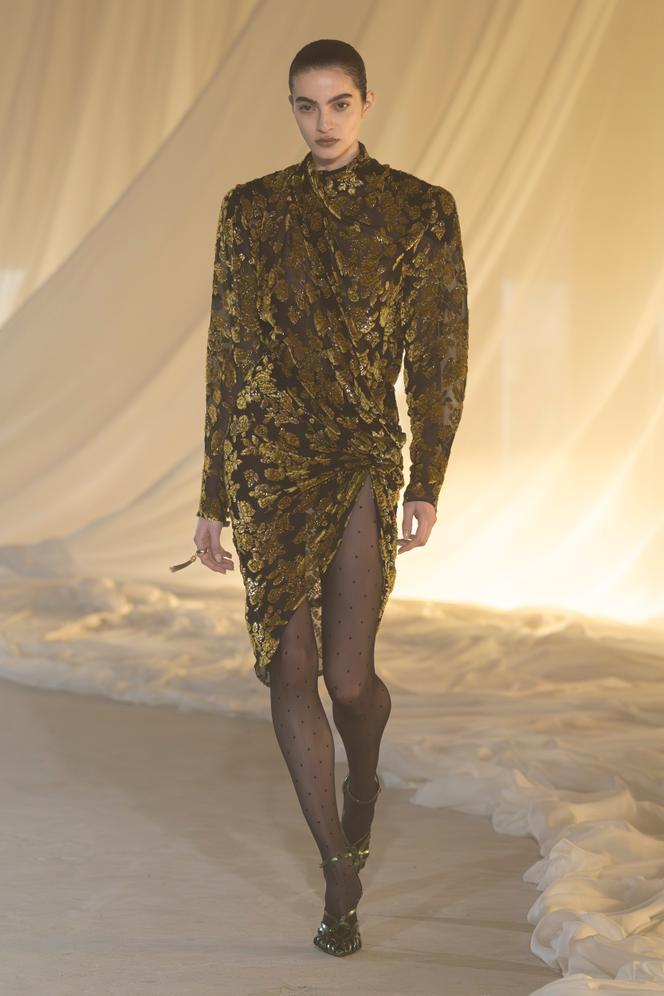
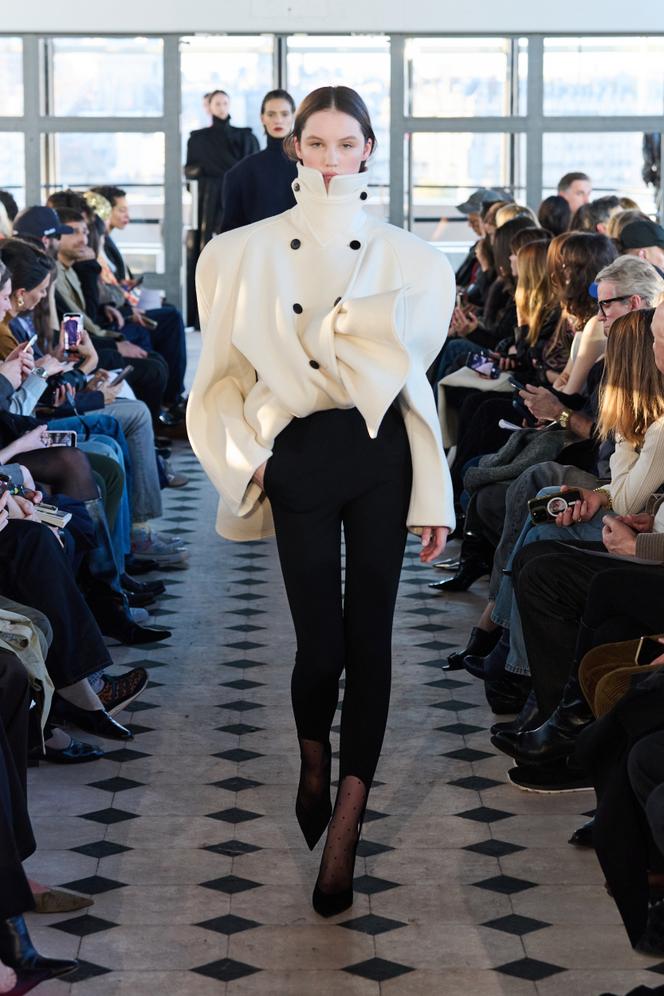
The result is both flattering and wearable. One can easily imagine how customers of yesteryear might be won over by the draped leather skirt or the gold-buttoned jacket, and how the sharp trench coats and trousers might attract a new audience. Its only shortcoming is perhaps its proximity to the work of Anthony Vaccarello at Saint Laurent, who occupies a similar niche and for whom Tron previously worked for several years as a freelance designer.
Saint Laurent also comes to mind while watching the show by Burç Akyol. The independent designer shares with the historic house a taste for a Parisian style that is both elegant and charged with eroticism. Long, broad-shouldered coats, draped silk skirts in bronze or purple, tailored men’s trousers, vinyl leather jacket and vertiginous stiletto: The collection still lacks a bit of singularity, even if it is beautiful and consistent with his previous eight years of work.
Shiny leathers
Ever since Haider Ackermann took over as artistic director at Tom Ford in September 2024, he has been refining a formula that, this season, has reached near perfection. His collection starts with razor-sharp tailoring: perfectly cut suits, unbuttoned shirts, pencil skirts and high heels form the formal foundation of a collection executed in luxurious fabrics. He spices it up with sheer materials (chiffon blouses or PVC skirts), low waistlines flirting with indecency and shiny leathers.
The resulting staging transforms the models into characters: They enter in groups, sizing each other up, crossing paths. This group effect gives them a sense of realism and intensifies their seductive power. Some wear lacquered red lips; others, smoky eyes. With shaved heads or tightly pulled-back buns, they are both striking and unsettling, chic and alluring. “Seduction is a dialogue,” said Ackermann in a cryptic statement that leaned more toward poetry than explanation. He understands well that, to spark desire, it helps to maintain an air of mystery.
At Alaïa, Pieter Mulier has made his audience accustomed to stylistic feats that reflect the spirit of the founder, Azzedine Alaïa (1935-2017), who liked to create sculptural, sometimes audaciously bold looks for women – but whose genius for tailoring always brought grace to the silhouettes. This season, however, the Belgian designer is delivering a much more restrained collection than usual, as it is his last. One month ago, Mulier announced that he would be leaving the house to join Versace.
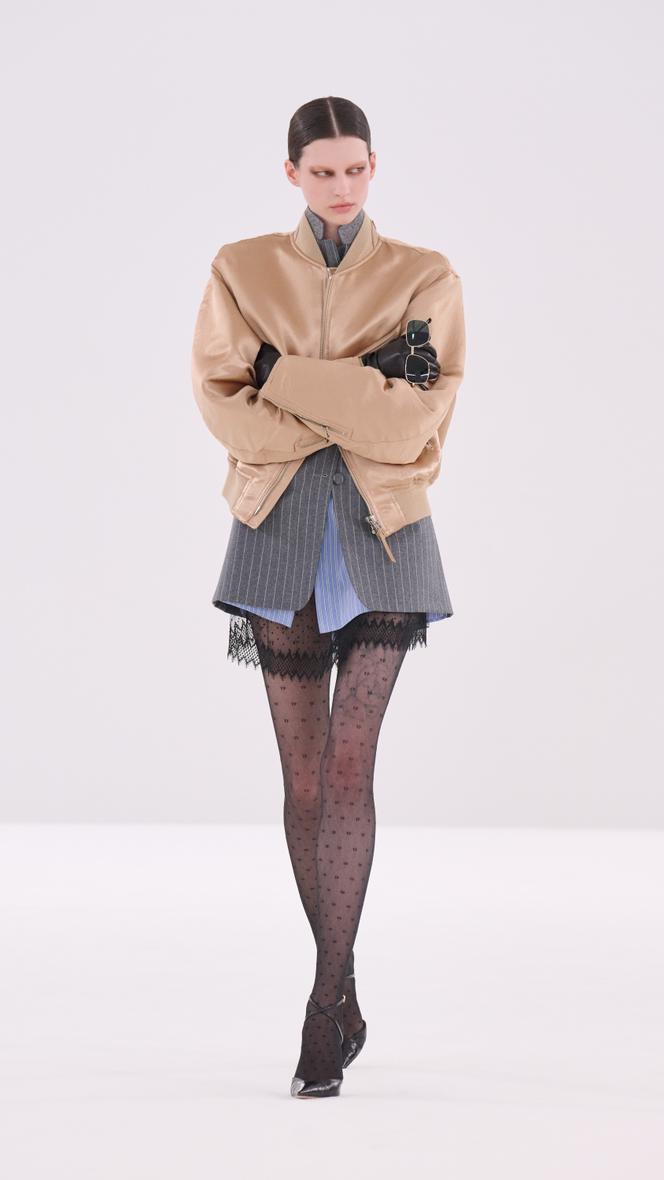
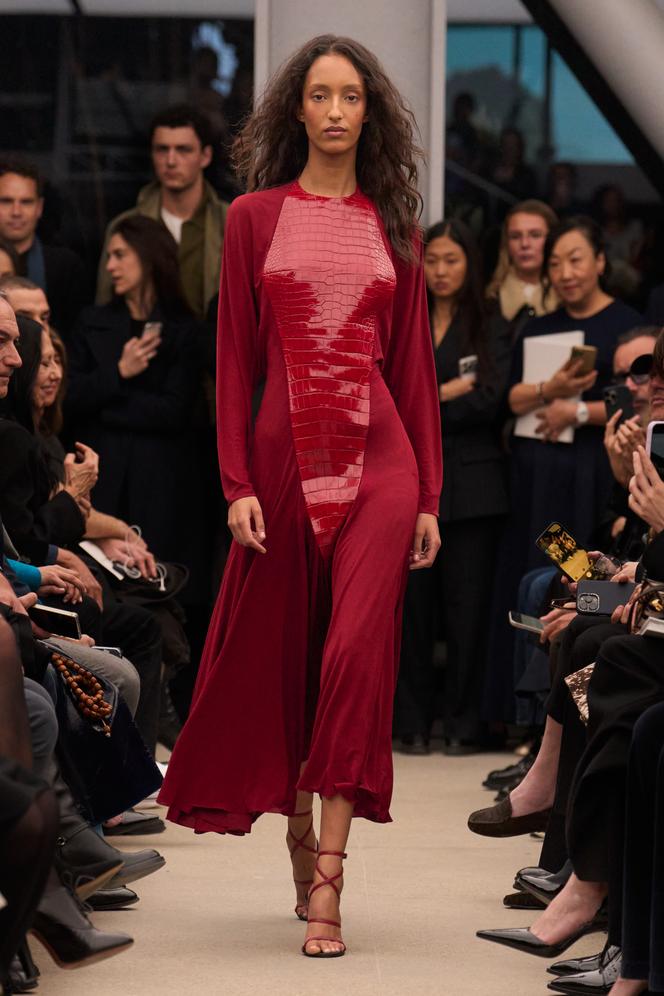
“This is a collection of real clothes to wear. We started working with the atelier by asking: What is a dress? How about an Alaïa dress? It is precision, perfect tailoring, reduction. I am leaving behind a vocabulary I have learned over these past five years. I am passing it on to the next person,” the designer explained, visibly moved at the end of a show attended by more than 500 people, including many fashion students.
On display were dresses like second skins in viscose or wool, trapeze coats in colorful leather, trousers cut out at the sides, skirts cascading with ruffle. The body is sculpted, revealed or suggested through creations that recalled the past, whether that of Alaïa or of Mulier himself. “When you depart, you keep it calm, you talk about roots, you show what you have learned, very humbly,” the Belgian designer elaborated. This is not his most dazzling collection, but it is the most fitting under the circumstances; it reveals a clear vision of what defines the essence of Alaïa, as well as a foundation for his successor to further build upon.