Palestinian Authority President Mahmoud Abbas ousted his finance minister on Monday for allowing payments to Palestinian security prisoners through an old mechanism that awarded them based on the length of their sentence, a Palestinian official and a second source familiar with the matter revealed to The Times of Israel.
Abbas’s office announced earlier Monday that PA Planning and International Cooperation Minister Estephan Salameh had replaced Omar Bitar as finance minister through the PA’s official Wafa news outlet, but did not provide a reason for the cabinet shuffle.
The two sources told The Times of Israel that Bitar’s dismissal followed an internal investigation revealing that he had authorized payments to some Palestinian security prisoners outside the new system that the PA established earlier this year, which conditioned those welfare stipends strictly on financial need, rather than on the length of one’s sentence.
The reform had long been demanded by the US, Israel, and many of the PA’s Arab and European backers, with some accusing Ramallah of incentivizing attacks on Israelis and dubbing the old policy “pay-to-slay.”
Abbas signed a decree in February scrapping the old system and publicly reiterated that it was no longer in place in remarks to the UN General Assembly in September.
While the vast majority of payments under the old system had indeed ceased, as the new system came into place, a small portion of prisoner families managed to receive stipends through the old payment mechanism, including inmates who were incarcerated after the reform was announced, the two sources told The Times of Israel.
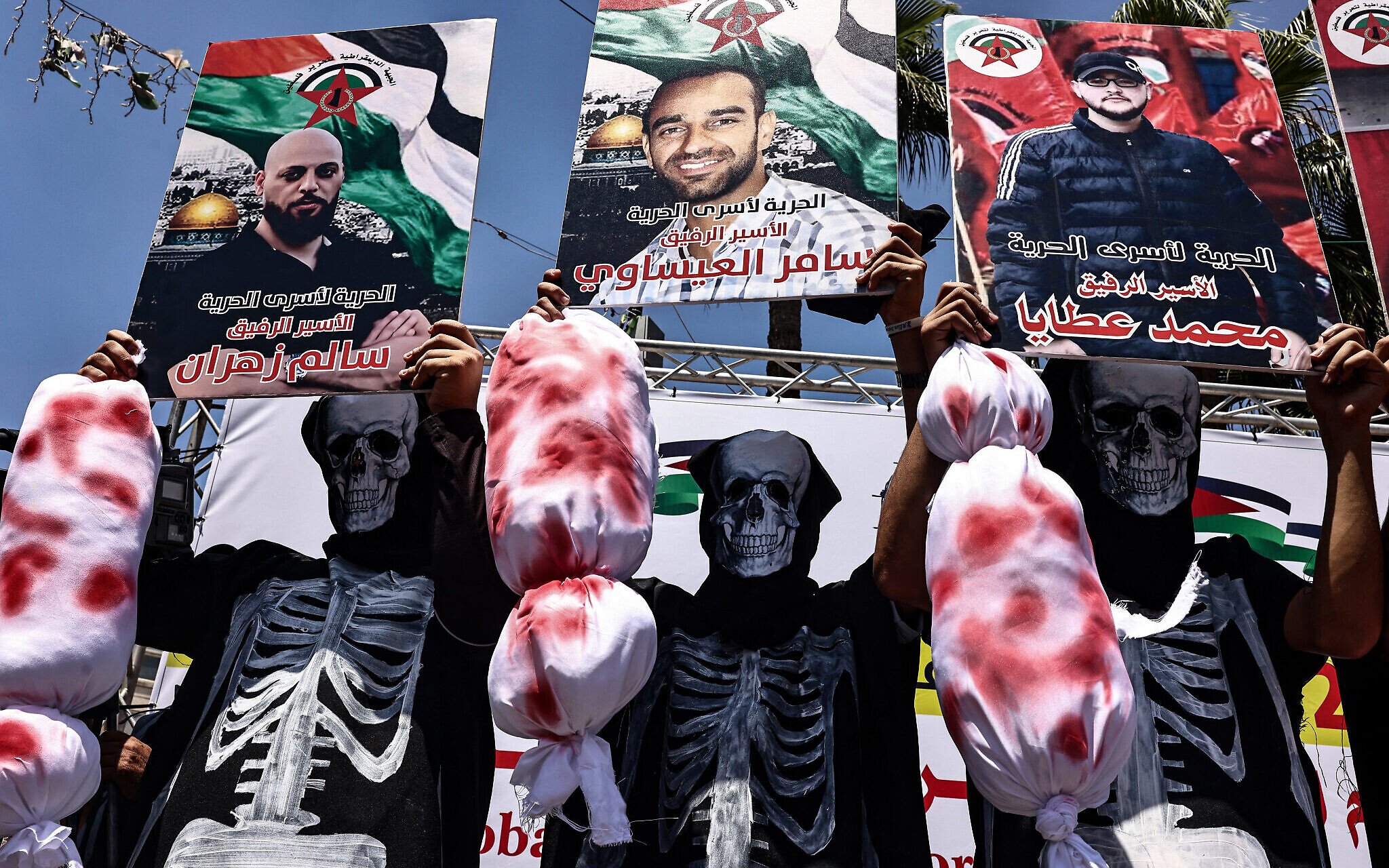
The development highlighted the pressure that Ramallah is facing from families of prisoners who are fuming over the slashing of payments they had been receiving for years.
The Palestinian official said Abbas’s decision to fire Bitar demonstrates that Ramallah is serious about implementing the prisoner payment reform.
But Israel’s Foreign Minister Gideon Sa’ar was not convinced.
“Dismissing the Palestinian Authority’s finance minister will not absolve the dismisser, Mahmoud Abbas, and the PA of their complicity in pay-for-slay and responsibility for the ongoing payments to terrorists and their families,” Sa’ar wrote on X, following The Times of Israel’s revelation.
“The Palestinian Authority is trying to fool the world. It won’t work. The truth is stronger,” the foreign minister added.
A PA spokesperson did not respond to a request for comment on the matter.

In September, The Times of Israel revealed that Ramallah had shared a document with European and Arab donor countries, updating them that it had completed the establishment of its new welfare program and finished phasing out the old system.
The document prepared by the body behind the program, the Palestinian National Economic Empowerment Institution (PNEEI), states that new criteria for adjudicating welfare stipends have been adopted and that over 3,000 individuals were accordingly notified that they no longer qualify for government assistance. At the same time, more than 2,000 households were informed that they would now be able to receive allowances for the first time under the new arrangement.
With Israel continuing to withhold hundreds of millions of dollars of the PA’s tax revenue funds, Ramallah has been unable to issue the first round of welfare payments. However, the update shared with European and Arab officials in September stated that stipends for the month of June would be allocated based on the updated eligibility standards.
While that ended up being the case for the vast majority of prisoners, some continued receiving payments through the Finance Ministry, rather than PNEEI, the Palestinian official and source familiar told The Times of Israel on Monday.
Palestinian leaders long sought to defend the old prisoner payments, describing them as a form of social welfare and necessary compensation for victims of a callous Israeli military justice system in the West Bank.
But the scheme exposed Ramallah to persistent criticism from the West and Israel, with the latter arguing that it demonstrated the PA is not a true partner for peace.
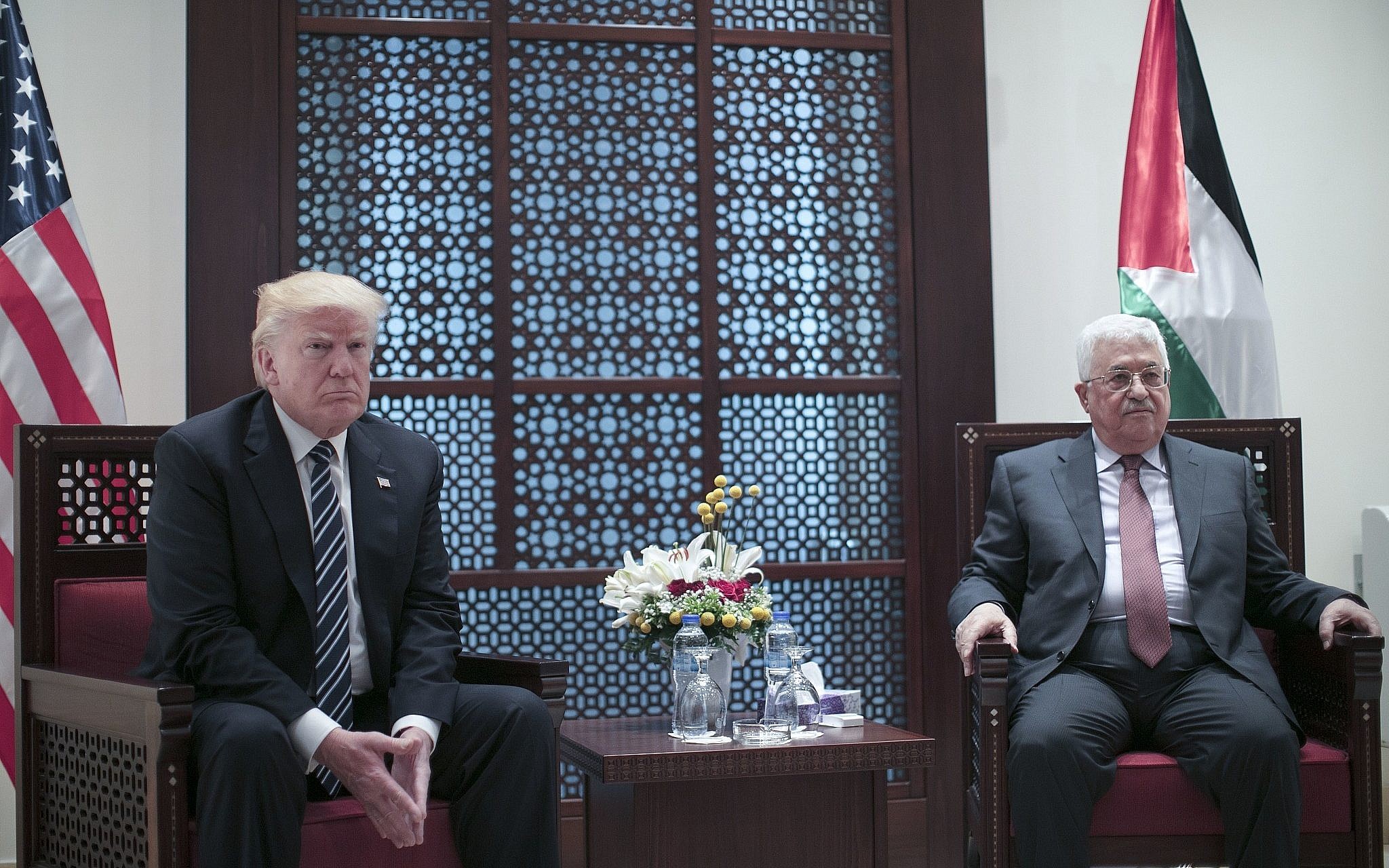
After years of pressure, Abbas began taking steps during Joe Biden’s administration to establish a new system allocating welfare stipends strictly based on economic need. He held off on announcing the move until after US President Donald Trump returned to office, hoping the reform would buy him some much-needed goodwill with the new administration.
Reforming the welfare policy is designed to bring the PA into compliance with the 2018 congressional legislation known as the Taylor Force Act, which suspended US aid to the PA as long as it continued granting prisoners stipends based on time served.
Earlier this year, the PA invited the US to send a delegation to Ramallah in order to certify that the new system is in place. But that invitation has gone unanswered, as the Trump administration has been largely uninterested in unfoldings in the West Bank.
The PA official said Monday that Ramallah still hopes that the US will send a team at the beginning of 2026 to conduct an audit of the new welfare system.
US officials did not immediately respond to a request for comment on Abbas’s decision to fire his finance minister.
Hady Amr, who served as US special representative for Palestinian affairs during the Biden administration and led Washington’s push for Ramallah to reform its prisoner payment system, told The Times of Israel Monday that “the PA spent considerable time and energy conveying to the international community — including the prior and current US administrations, European and Arab countries — that they were ending the framework of their program and creating a genuine needs-based social safety net that would apply equally to all.”
“Notwithstanding expected internal pressures, and whatever happened [regarding Bitar’s firing], it’s clear that if the PA does not move forward [with this reform] as it has publicly committed to do, it will have lost credibility, especially with those it had made these commitments to,” Amr said.