
Reconstructing time from decades of air samples shows bryophytes releasing spores earlier as the climate warms.
In the Arctic, mosses and other bryophytes are providing early evidence of ecological shifts linked to warming temperatures. By analyzing environmental DNA preserved on air filters collected over more than three decades in northern Sweden, researchers have reconstructed when these plants released their spores, uncovering evidence that their reproductive calendars are shifting earlier as the climate warms.
Bryophytes, plants that lack proper roots or a vascular system to transport nutrients and water, rely on spores for propagation. While bryophytes thrive in arctic and subarctic environments, their reproduction is susceptible to temperature and humidity changes. Reproduction in these plants greatly depends on moisture levels, both on the ground and in the air. As different species of bryophyte choose to release their spores at different times during the year, the make-up of the spore cloud reflects these differences. So shifts in seasonal or cyclical events can be a strong indicator of bryophyte response to a changing climate.
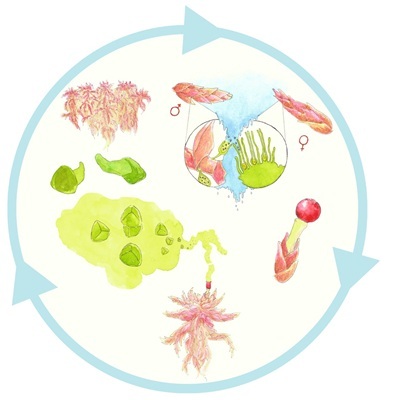
“Almost all bryophytes have wind-dispersed spores, similar to wind-dispersed pollen from many vascular plants, e.g., trees like birch, beech, oaks, spruce and pine,” Nils Cronberg, a researcher at Sweden’s Lund University and author on the study, wrote in an email to Advanced Science News. “Pollen grains are sculptured and can be identified under a microscope, whereas bryophyte spores look much the same.” Environmental DNA (eDNA) taken from air samples containing bryophyte spores offers a monitoring advantage.
Cronberg and colleagues analyzed a subset of data collected as part of the Swedish Biodiversity in Time and Space project from 1974 through 2008. Over the course of three decades, 380 air filter samples were collected at a permanent radionuclide monitoring station in the boreal forest of Kiruna, in northern Sweden. DNA was isolated and genomes sequenced to identify a great variety of organisms, with bryophytes accounting for about 5% to 10% of data. The research team focused on 16 bryophyte genera that were well represented in the genomic data.
“The data could be assembled and a time series sort of ‘reconstructed’ backwards in time, using these air filters that had been stored,” Fia Bengtsson, a researcher at the Norwegian Institute for Nature Research in Norway, and coauthor on the study, wrote in an email to Advanced Science News.
The eDNA not only told researchers which bryophytes were releasing spores but also when they released spores, corresponding with peaks in DNA levels. By analyzing data across the 35-year period, the researchers could then study how reproduction timing has shifted with the seasons and climate change. While the average annual temperature over the study period at the site was −1°C, the average temperature in Kiruna has been rising by 1.7°C.
The researchers found distinct shifts in the timing of when spores were first released in spring, how long spore dispersal continued for and when the event wound down. By the end of the 35-year study period in 2008, most bryophyte taxa began their sporulation season four weeks earlier on average, with the midpoint of the season advancing by four to seven weeks. But the timing of sporulation ending varied across taxa, with later ends and significantly longer seasons for several taxa.
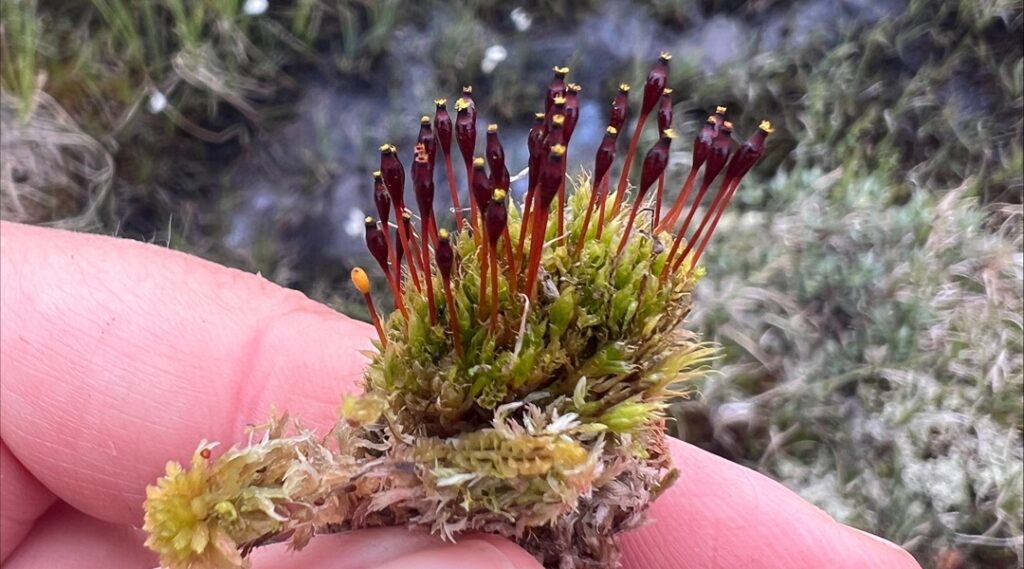
“Bryophyte growth is very directly affected by temperature, and we think that the sporophytes may get further in their development before winter hibernation if the weather is warmer for longer. Then they can ‘get started’ and start sporulating earlier in spring,” said Bengtsson. “Also, warmer springs could break dormancy sooner, or lead to less snow or faster snow melt … and allow the spores to be spread earlier, as the vegetation would be exposed earlier.”
Previous studies have shown similar advances in flowering in vascular plants, in the arctic and subarctic regions, advancing about two days for every decade between 1970 and 2000. Bryophytes seem to be more susceptible to a rapidly changing climate in the far north, with sporulation advancing about 8 days in every decade.
In the future, the researchers hope to understand changes in bryophytes at the species level, with detailed sequencing data becoming more available. “We are interested in delving deeper into peat mosses, which are prominent in the surrounding vegetation in Kiruna,” added Cronberg.
Reference: Fia Bengtsson et al., Rapid shifts in bryophyte phenology revealed by airborne eDNA, Journal of Ecology (2025). DOI: 10.1111/1365-2745.70180
Featured image credit: Fia Bengtsson et al.