
Market Overview
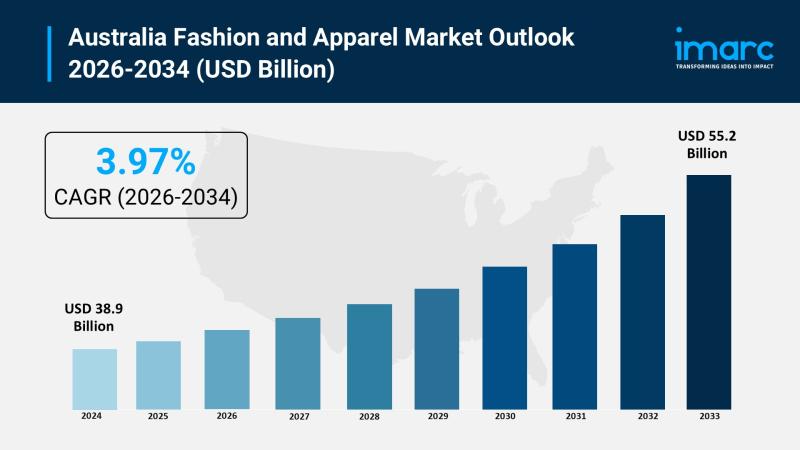
The Australia fashion and apparel market reached a size of USD 38.9 Billion in 2025 and is expected to grow to USD 55.2 Billion by 2034. The market is projected to grow at a compound annual growth rate (CAGR) of 3.97% during the forecast period 2026-2034. Key growth factors include rising disposable incomes, increasing consumer interest in sustainable fashion, and the growing dominance of digital shopping platforms. The influence of social media personalities and demand for customization and inclusive sizing further fuel market expansion.
Request a Sample Report with the Latest 2026 Edition: https://www.imarcgroup.com/australia-fashion-apparel-market/requestsample
How AI is Reshaping the Future of Australia Fashion and Apparel Market:
• AI-powered personalization engines are enhancing shopping experiences by recommending products based on consumer browsing history and preferences, improving engagement and sales.
• Digital transformation initiatives such as the AFC’s FashTech Lab pilot program use AI and digital sampling to reduce sampling time by two-thirds and cut textile waste by 225 meters.
• AI-driven virtual try-on technologies and mobile shopping apps support seamless omnichannel retail strategies, merging physical and digital consumer interactions.
• Australian brands are adopting AI for supply chain optimization, allowing faster time-to-market and efficient inventory management.
• AI facilitates the growth of direct-to-consumer models and subscription-based services, enabling innovative engagement with customers.
• The integration of AI with sustainability efforts helps brands achieve transparency in production, aligning with consumer demand for ethical and eco-friendly fashion.
Market Growth Factors
Rising disposable incomes combined with urbanization are key drivers of growth in Australia’s fashion and apparel sector. As more consumers migrate to metropolitan areas, a cultural shift towards fashion-conscious lifestyles emphasizing individuality emerges. Supported by higher middle-class earnings, consumers spend more across luxury and fast fashion categories. Urban centers provide greater exposure to diverse fashion trends and promotional activities, while online platforms amplify reach. This urban concentration fosters dynamic consumption and market diversification, bolstering demand across apparel segments.
Sustainability is a major trend transforming the Australian fashion market. Brands are adopting sustainable materials such as organic cotton, recycled polyester, and biodegradable textiles. The Australian Fashion Council’s Social & Environmental Toolkits, launched in collaboration with the City of Sydney and The Growth Activists, guide businesses to align their goals with UN Sustainable Development objectives. Circular fashion models like garment recycling initiatives such as RCYCL, supported by eBay’s Circular Fashion Fund, promote reducing waste while appealing to eco-conscious consumers, reinforcing market growth driven by environmental responsibility.
Digital transformation and e-commerce growth are reshaping how consumers engage with fashion in Australia. Online shopping is the preferred method for many, accelerated by pandemic-induced shifts. Retailers implement omnichannel strategies integrating physical and online stores, leveraging AI for personalized shopping and virtual try-ons. The AFC’s FashTech Lab demonstrated technology-driven improvements by cutting sampling time and costs significantly. These innovations enable brands to offer convenience and customization, driving market expansion as consumer preferences shift towards technology-enabled retail experiences.
Browse the Latest 2026 Report with TOC & List of Figures: https://www.imarcgroup.com/australia-fashion-apparel-market
Market Segmentation
Type Insights:
• Formal Wear
• Casual Wear
• Sports Wear
• Safety Wear
• Others
Distribution Channel Insights:
• Online
• Offline
End User Insights:
• Men
• Women
• Kids
Regional Insights:
• Australia Capital Territory & New South Wales
• Victoria & Tasmania
• Queensland
• Northern Territory & Southern Australia
• Western Australia
Key Players
• Acler
• APG & Co
• Camilla and Marc
• Cotton On Group
• Country Road Group Pty Ltd
• Lorna Jane
• R.M.Williams
• The Aje Collective
• The Iconic
• Zimmermann
Recent Development & News
• July 2025: M&S entered the Australian market through its first international wholesale partnership with retailer David Jones, offering top-selling womenswear, lingerie, and sleepwear online and in 24 department stores, enhancing brand reach and consumer access.
• May 2025: SHEIN launched Aralina, a new label influenced by Australian culture emphasizing simplicity and sustainability. The brand focuses on loungewear, swimwear, athleisure, and everyday apparel, catering to consumer demand for comfort and authenticity.
• May 2025: R.M. Williams partnered with the Australian Fashion Council to create the country’s first National Manufacturing Strategy for the fashion and textile sector, aiming to revitalize local manufacturing, foster innovation, and build a globally competitive industry.
Note: If you require any specific information that is not covered currently within the scope of the report, we will provide the same as a part of the customization.
Ask an Analyst for Your Customized Sample Report 2026 Edition: https://www.imarcgroup.com/request?type=report&id=28761&flag=C
Contact Us
IMARC Group,
134 N 4th St. Brooklyn, NY 11249, USA,
Email: sales@imarcgroup.com,
Tel No: (D) +91 120 433 0800,
United States: +1-201-971-6302
About Us
IMARC Group is a global management consulting firm that helps the world’s most ambitious changemakers to create a lasting impact. The company provides a comprehensive suite of market entry and expansion services. IMARC offerings include thorough market assessment, feasibility studies, company incorporation assistance, factory setup support, regulatory approvals and licensing navigation, branding, marketing and sales strategies, competitive landscape and benchmarking analyses, pricing and cost research, and procurement research.
This release was published on openPR.