
Baldur’s Gate 3 has many amazing qualities, all of which have been discussed, praised, and showcased ad nauseam. In fact, it barely warrants mentioning just how phenomenal an RPG Baldur’s Gate 3 is. Perhaps this is why I find it so difficult to discuss the things it gets wrong. It isn’t that there are so few faults with the game; rather, the distractingly wonderful aspects of BG3 obfuscate any meaningful discussion surrounding its weaker points. That isn’t to say no one has dared speak ill of Baldur’s Gate 3, but rather that criticism is typically brushed off, despite being, more often than not, perfectly valid.
Baldur’s Gate 3 has a plethora of flaws, perhaps the biggest of which, in my opinion, is its divisive cast of companions. Despite being the selling point for many RPG and D&D fans, I have found there to be a fundamental flaw with the motley crew that follows you around as you desperately attempt to wrench a tadpole from your eye. In fact, these companions pose so much of a challenge to my enjoyment of the game that I find myself teetering on giving up entirely. Baldur’s Gate 3’s companions aren’t terrible, but they’re lacking a crucial feature that would make them infinitely more endearing and undeniably more interesting.
Baldur’s Gate 3’s Companions Are Too Comfortable With The Player
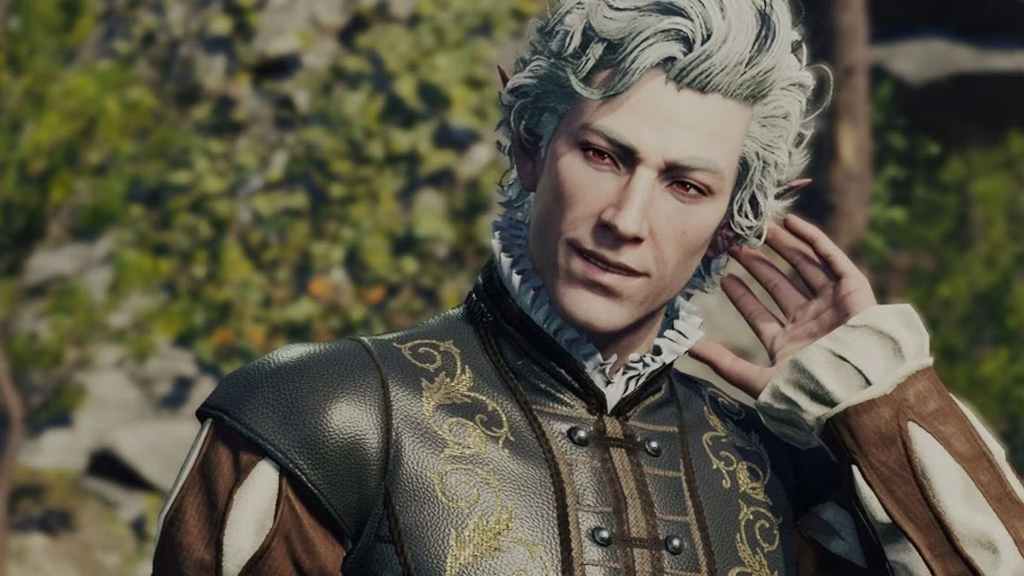
One of the few things I knew about Baldur’s Gate 3 before finally jumping into it was just how lustful, shall we say, its companions are. I had heard endless references to bedding a bear and an all too passionate vampire, and was frankly intrigued to see how it all played out. After all, I am, of course, no stranger to romance in video games, whether it is marrying the love of my digital life in Stardew Valley (Abigail is obviously the only choice) or desperately trying to explain to my non-gamer wife why a particularly unsafe-for-work cutscene between Geralt and Yeniffer in The Witcher 3 was playing on the TV.
Typically, romance in video games comes about after hours upon hours of deep and meaningful conversation or shoving gifts in your love’s face. Even in shorter experiences, love is treated as something hard to obtain, something you typically need to work for, or plays a crucial and central role in the narrative and is thus expanded upon greatly through dialogue and cutscenes. The same is true of D&D, at least if you have a good GM, as true romance with an NPC or fellow player rarely comes about after a brief encounter. I felt as if this would be the case with Baldur’s Gate 3, especially as there are so many options for romance in the game.
However, that is absolutely not the case. In fact, romancing your companions in Baldur’s Gate 3 is one of the easiest things to do in the game, as apparently, my comically ugly tiefling is the object of every single person’s affection. No matter how hard I tried to remain neutral, or indeed how little I spoke to another character (I’m looking at you, Wyll and Lae’zel), they fell head over heels for me, robbing any import the thrill of the chase had. In fact, I was often actively choosing the options that frustrated Lae’zel as I fundamentally disagreed with her hot-headed attitude, and yet she still propositioned me regardless.
It isn’t even just how easy it is to bed each character that frustrates me. The very forward nature of every companion robs any other forms of connection you may have with them of their significance. Any attempts to build meaningful friendships with these characters felt wasted the moment that friendship was transformed into something else without my consent. It is seemingly impossible to just be friends and not lead on any of the companions, which feels like yet another missed opportunity in Baldur’s Gate 3. Not everyone wants to sleep with every character in your game, Larian, no matter how attractive you make them.
The Lack Of Friction Ruins Baldur’s Gate 3’s Companions
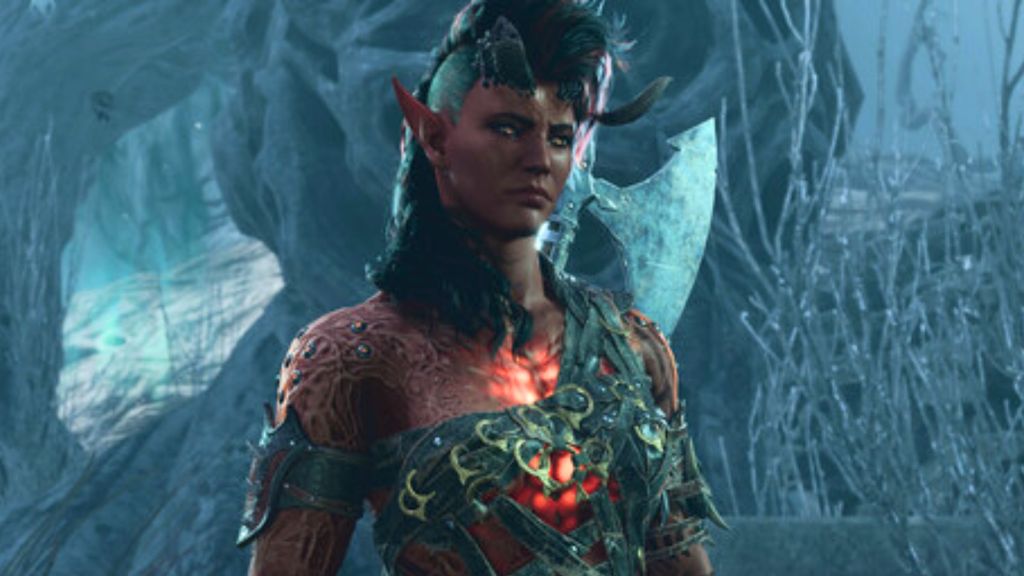
The immediate connection that each companion feels toward the player also results in a complete lack of friction. Aside from Lae’zel, whose inherent nature prevents her from being initially kind to you, pretty much every companion is quickly overly familiar with the player. It doesn’t take much for Shadowheart to open up about her hidden trauma and secret mission, nor does it take long before Gale begins trusting you without a second thought. These characters will pretty willingly open up to you with little prompting from the player. All you need to do is offer them the most basic kindnesses, and you’ve got friends for life.
Of course, both Astarion and Lae’zel are initially confrontational (Astarion threatens you the first time you meet him), but it doesn’t take much to get them on your side, should you want to. As aforementioned, even Lae’zel, the disdainfully unapproachable ball of anger issues, will remark upon how attractive she finds you if you do anything remotely heroic. You can annoy companions by picking dialogue options antithetical to their moral stances, but it doesn’t take much to rebalance the scales and get them onside again. Even without consciously doing it, after well over 30 hours of gameplay (which I appreciate is not very much for Baldur’s Gate 3), I found that no companion had any issue with me.
This issue is compounded by the fact that companions seemingly have no biases toward race or gender. Now, I’m not exactly advocating for Baldur’s Gate 3’s companions to be racist or sexist, but some level of inner conflict within them based on the few options you have control over would lead to a more interesting dynamic between you and them. It creates friction between the character you want to make and the companions you want to befriend and romance, building a sense of risk and reward and forcing the player to work a little harder to win over certain characters’ favor. That feels like a far more engaging system than simply having every companion fancy you no matter what you do, like you’re the protagonist in a shonen anime.
To be absolutely clear, I don’t have an issue with the way each companion is written, nor their individual narratives. I find a lot of them endearing, and those that aggravate me I enjoy even more. However, the little recourse I have in preventing every single one of them from hitting on me, coupled with the utter lack of tension or conflict between us is so frustrating. They end up feeling like a group of sycophantic followers rather than a collection of eclectic and individually minded people. It is a shame, as I had felt like Baldur’s Gate 3’s companions would be the most enjoyable aspect of the game. Instead, they are making me want to quit Baldur’s Gate 3 for good. Well, aside from Karlach that is. Karlach is perfect, and she can do absolutely no wrong.
Do you feel the same way about Baldur’s Gate 3’s companions? Leave a comment below and join the conversation now in the ComicBook Forum!